
Repair of retained hardware
A serviceable lock or latch may be repaired or adjusted once the failed part and door condition are understood. Retention is a technical decision, not nostalgia alone.
Door history · present operation · retained fabric · planned hardware
An original timber entrance may carry several generations of lock preparation, plates and repairs. A Blackheath upgrade brief should record that visible history before deciding what to retain, repair or alter.
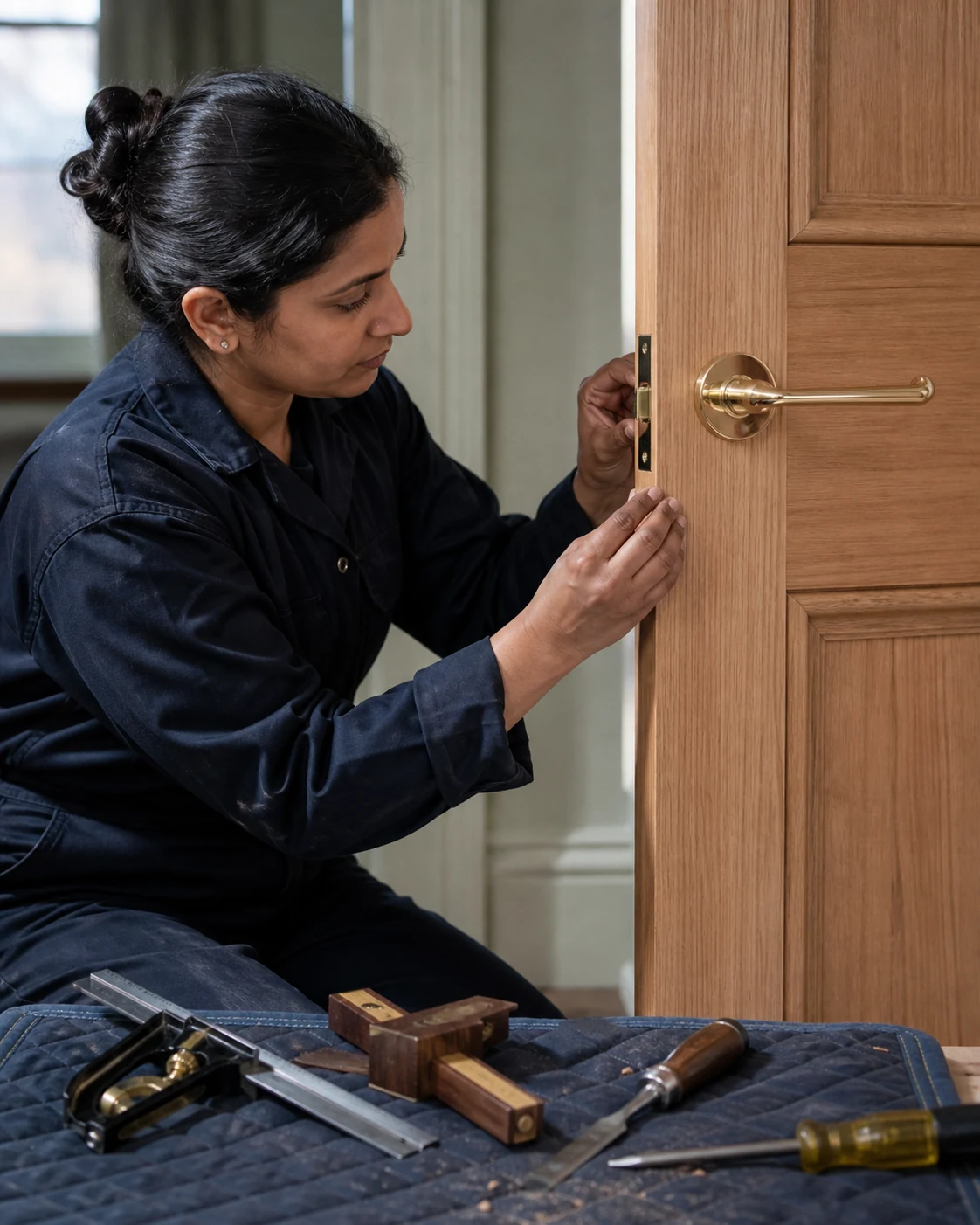
Door-history dossier
A broad backplate can hide an earlier lock position. A filled mortice may sit beside the current case. Paint lines can show that furniture changed even when no paperwork survives. These observations matter because removing one component can reveal work that a replacement does not cover.
Photograph the full door, both hardware faces, the edge and frame keeps without dismantling anything. Gather invoices, product notes or keys already kept with the property, but do not assume they describe every later alteration. State what the door does now and what the owner wants to achieve. A faulty latch, uncertain key control and a desire for different visible furniture are three separate reasons for work.
| Evidence layer | Safe record | Planning value |
|---|---|---|
| Door faces | Current plates, handles, cylinders, knobs and visible filled holes | Shows likely coverage limits and finish changes |
| Door edge | Lock faceplates, markings, screws and nearby older preparation | Supports identification without removing the cases |
| Frame | Keeps, repairs, visible gaps and present latching position | Connects lock choice with actual door operation |
| Keys and records | Sound keys, labels and documents already held | Provides history without treating it as proof of current condition |
| Finish boundary | Paint, veneer, timber detail and surfaces that must be protected | Allocates locksmith fitting, joinery and decoration |
Present operation
An older-looking lock can still operate correctly; a recent-looking escutcheon can cover an older case. Describe whether the key enters and turns, whether the latch retracts, whether the door binds at the frame and whether operation differs while open. Stop at resistance. Do not plane the door, file a keep or lubricate with an unknown product before assessment.
If the project follows a move or key loss, list authorised users separately from the mechanical symptoms. If the entrance belongs to a conversion or apartment block, confirm whether it is private or communal and obtain the appropriate approval. Original timber detail does not override building or fire-door responsibilities supplied by the managing party.
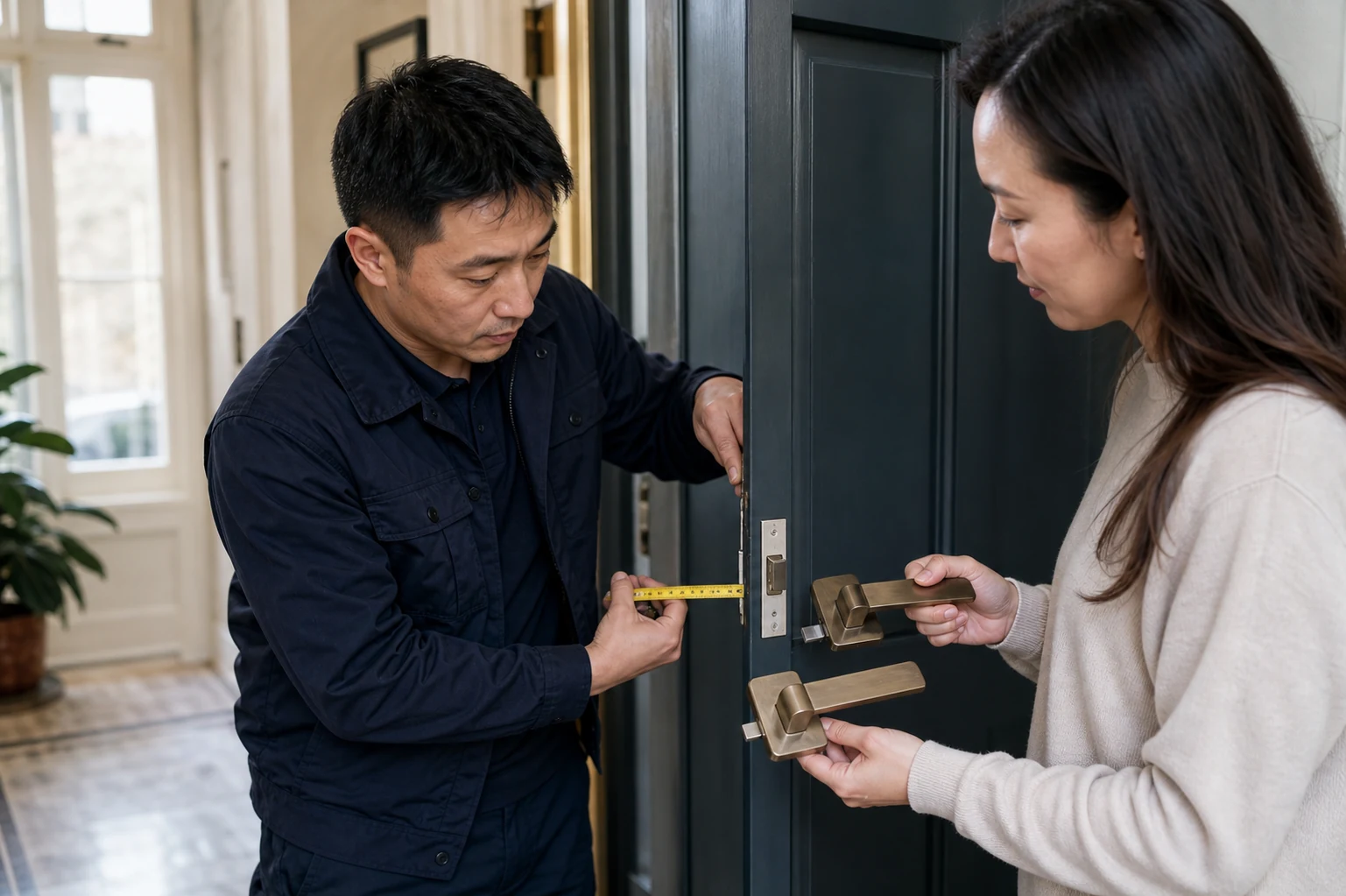
Outcome and retained fabric
| Requested outcome | Assessment question | Fabric decision |
|---|---|---|
| Restore reliable locking | Which lock, keep, hinge or alignment condition prevents normal use? | Repair within sound preparation before unnecessary cutting |
| Stop old keys operating | Which private locks and authorised users form the key-control boundary? | Change only compatible hardware needed for the access goal |
| Replace worn visible furniture | Do fixing centres, spindle and plate coverage suit the retained lock? | Avoid exposing holes or damaging sound timber without approval |
| Add a planned security function | Does the door construction and existing preparation support it? | Agree fresh morticing, drilling and frame work explicitly |
| Repair incident damage | How much damage belongs to lock, leaf, frame or finish? | Separate urgent security from careful permanent reinstatement |
| Coordinate several entrances | Does each door have the same construction, authority and user group? | Specify each opening rather than forcing a common product |
Planned locksmith options
A serviceable lock or latch may be repaired or adjusted once the failed part and door condition are understood. Retention is a technical decision, not nostalgia alone.
Case size, backset, handing, keep and door preparation guide compatibility. A product description cannot replace measurements from the actual entrance.
A planned change after moving or missing keys begins with the relevant doors and authorised users. Common entrances remain under building control.
Knobs, handles, escutcheons and plates should work with the lock and existing fixing points. Finish and function are reviewed together.
Extraction can preserve a sound lock. Keep both pieces and avoid glue or improvised tools before the locksmith examines the keyway.
Split timber, weakened old mortices or frame repair may need a joiner. The locksmith records the required boundary rather than concealing it within fitting.
Quote the intervention sequence
Blackheath does not supply a standard locksmith price. The quote follows assessment, labour, hardware, access and the permitted intervention. A timber-door proposal should explain how concealed findings and surface reinstatement will be handled.
| Stage | Input or action | Boundary to record |
|---|---|---|
| Non-invasive review | Operation, photographs, measurements and existing records | What can be concluded before hardware is removed |
| Controlled exposure | Authorised removal of agreed lock or furniture | Process if older holes, damage or incompatible preparation appears |
| Hardware work | Repair or specified replacement matched to the door | Parts, keys, labour and retained components |
| Door preparation | Approved cutting, drilling and keep adjustment | Locksmith fitting versus structural timber repair |
| Surface reinstatement | Filling, finishing and decoration needed around the work | Named trade and whether the quote includes it |
| Handover | Operational test, keys, photographs and unresolved items | Accepted appearance and follow-on responsibility |
When removal reveals a different history from the expected one, pause. Send the owner or authorised agent a clear image and revised option. A pre-agreed process makes that pause productive without turning it into blanket approval.
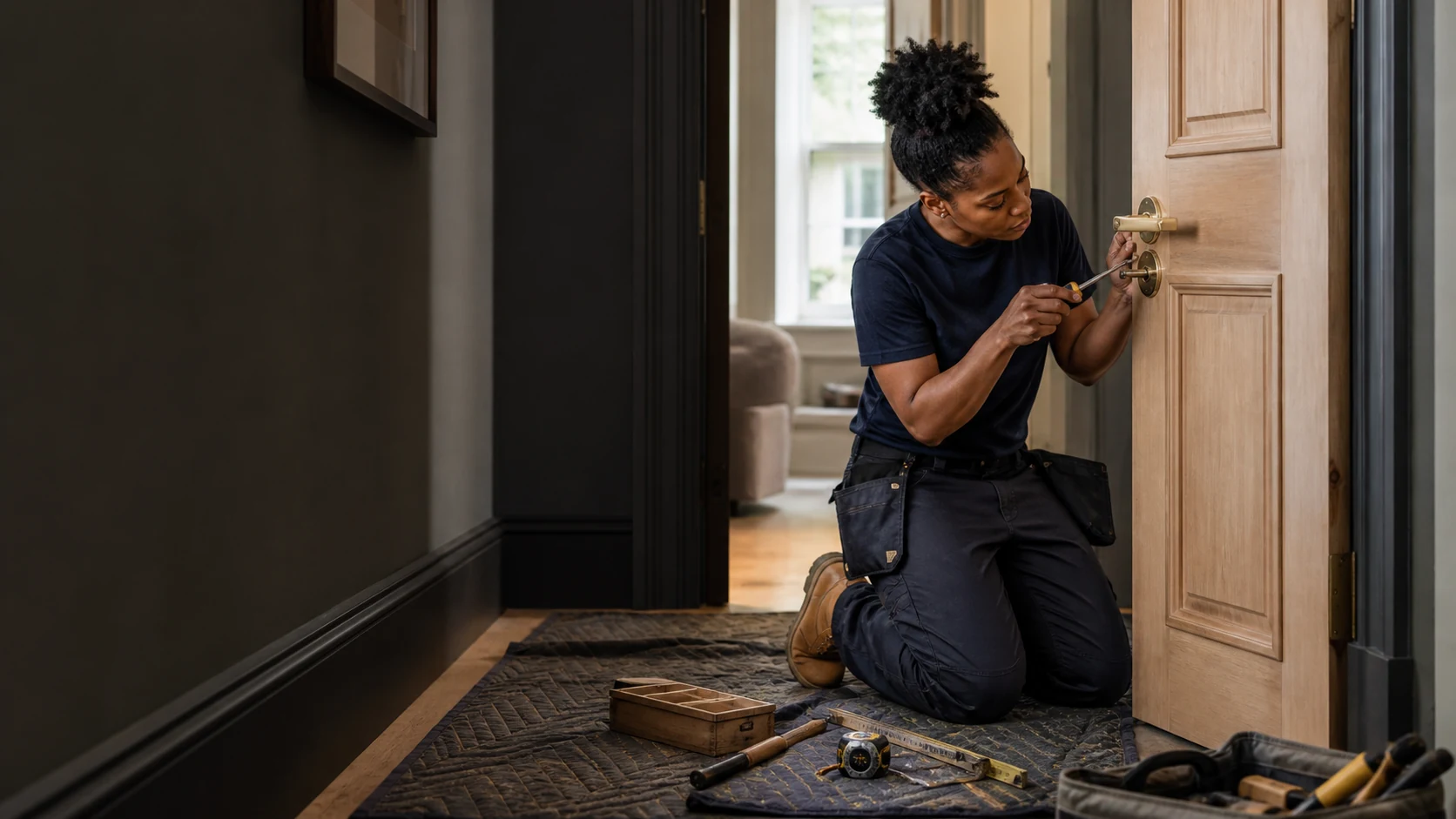
Blackheath property context
A period family house may allow the owner to coordinate the lock, door repair and decoration directly. Even then, several entrances can have different histories and should be recorded individually. A rear or side door should not inherit the front door’s specification without measurement.
In a conversion, the original street door may now be communal while each flat has a later private entrance. Establish which one belongs to the project. One occupier cannot approve a shared alteration solely because the older door forms part of the building’s character.
An apartment block can add management requirements and contractor procedures. Obtain the relevant door information from the building, then combine it with the locksmith’s on-site findings. Permission, technical suitability and visual acceptance are separate approvals.
History-aware handover
Test closing, latching, locking, unlocking and handle or knob operation. Count keys and record which old components were retained. Photograph the finished edge and faces for the property file without exposing key-cut detail.
If joinery or decoration remains, name the outstanding area and responsible person. Add the new hardware details to the door dossier so a future repair does not have to begin by guessing at this intervention.
Blackheath timber-door FAQ
Photograph the full door, both hardware faces, the edge lock plates, frame keeps and visible older holes or repairs without removing parts.
Possibly, if its condition, operation and required security outcome support repair. Age alone is neither a reason to keep it nor a reason to discard it.
Pause before fitting. The owner should choose a different compatible option or approve separate filling, joinery and decoration.
Only after each door is measured and its use, preparation and authority are confirmed. Similar appearance does not prove identical construction.
If it is communal, the freeholder or managing agent should authorise it. Private flat-door work follows the owner or occupier arrangement.
Only if stated. Normal fitting, structural joinery, filling and decorative finish can be distinct pieces of work.
The locksmith should document it and explain the revised options. The named approver decides before cutting or parts change beyond the accepted scope.
Keep hardware details, keys issued, operational checks, finished photographs and any outstanding joinery or decoration.
Nearby south-east coverage
Choose the page matching the actual property and door context.
Document the existing layer before adding a new one
Send the Blackheath address, door photographs, current operation, retained details and person approving concealed findings.
