
Private lockout
State where you are within the building, what happened to the key and how occupancy or authority can be confirmed.
Private lock · common door · credential · power
When managed access fails, record each function separately. A key, fob, intercom, powered release, closer and mechanical latch can belong to different systems and different responsible parties.
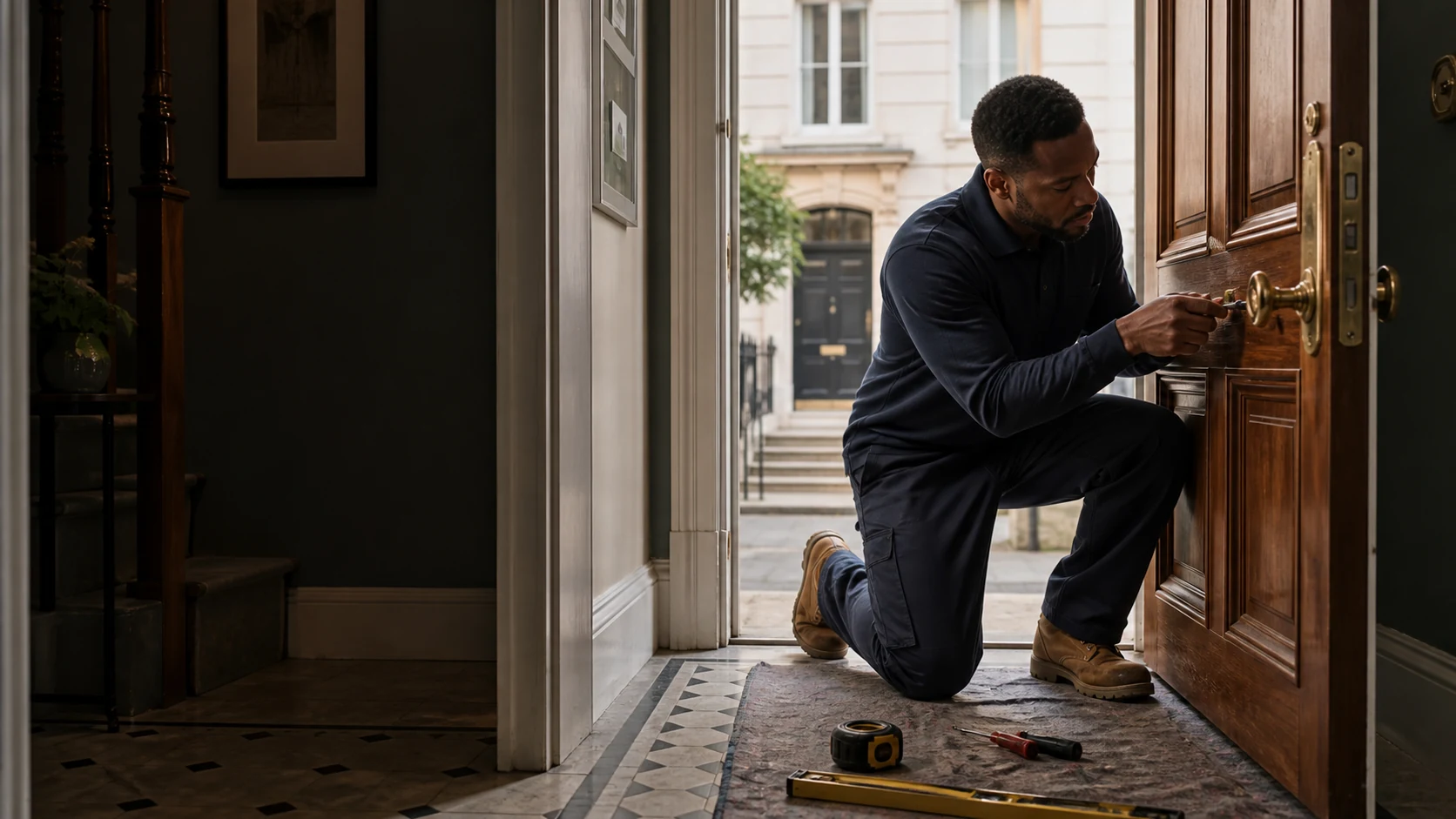
The incident record
Begin with the exact entrance, date and who observed the event. Then record the action: a key was turned, a fob presented, a call made on the intercom or a handle used. Note the response without interpretation. Did a reader light change? Was a release sound heard? Did the latch move? Did the closer return the door fully to the frame?
This sequence gives a managing agent useful evidence for triage. It does not ask residents to test control panels or repeat a failure until it worsens. If the issue affects a private flat door, create a separate line with its own authority and symptom. Combining the common entrance and dwelling lock into one phrase can send the wrong trade or extend work beyond the customer’s rights.
| Record field | Example of useful evidence | Avoid assuming |
|---|---|---|
| Exact door | Block entrance, internal lobby, bin-store gate or private flat | That every door at the address shares one system |
| User action | Mechanical key turned, fob presented or intercom command sent | That the visible device is the failed component |
| Immediate response | Reader indication, sound, handle movement or no response | That a signal proves the latch released |
| Physical door behaviour | Leaf opened, stayed held, rebounded or failed to latch | That power and mechanical alignment are interchangeable |
| Who is affected | One credential, one flat, several residents or all observed users | That a single report represents a building-wide failure |
| Safe evidence | Whole-door image and management reference without exposed controls | That residents should dismantle or reset equipment |
Assign the service
A locksmith can assess authorised mechanical locks, cylinders, handles, latches and some connected door hardware. A powered release, reader, controller, cabling or intercom may need an access-control provider or electrician appointed through management. Hinges, closers, frames and the door leaf can add another repair boundary.
The incident record should be routed to the party responsible for the common entrance. Residents should not commission alterations that affect neighbours without authority. If a private key also operates the common door, management still controls changes to the shared cylinder or key system. A personal lockout at the flat remains a distinct instruction.
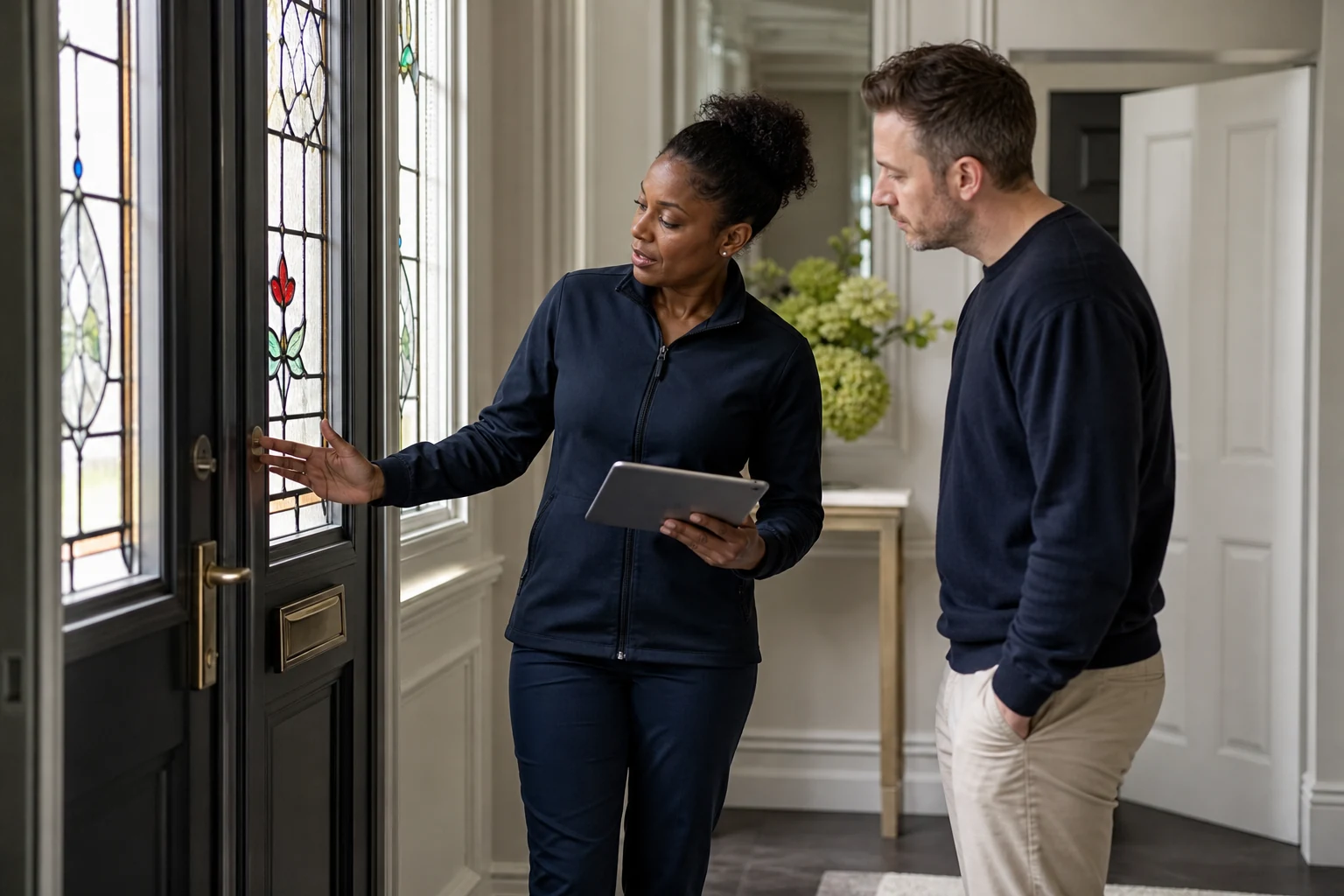
Problem-to-owner routing
| Observed issue | Responsible first contact | Possible work boundary |
|---|---|---|
| Private flat key is stuck or broken | Occupier, owner or authorised property manager | Locksmith extraction, opening and fault assessment |
| Common mechanical key fails for several users | Freeholder, estate office or managing agent | Authorised shared-cylinder, lock or alignment investigation |
| One fob no longer receives access | Building access administrator | Credential status before physical hardware work |
| All fobs read but the door stays secured | Managing agent with incident sequence | Powered release, controller, mechanical latch and door checks allocated appropriately |
| Door releases but does not close and latch | Building management | Closer, hinge, frame and mechanical locking assessment |
| Frame is damaged after attempted entry | Management plus police or insurer route where relevant | Temporary securing, locksmith work and permanent door repair separated |
Private flat line
State where you are within the building, what happened to the key and how occupancy or authority can be confirmed.
Describe key, handle, latch and frame behaviour. Keep an insecure private entrance supervised.
Retain both pieces, avoid glue or tools and say whether the door is open or closed.
Identify legitimate users, lost or unreturned keys and the landlord or owner decision route.
Supply door details, current preparation and any documented building requirement before ordering.
Separate lock and temporary securing from leaf, frame, glazing and decorative repair.
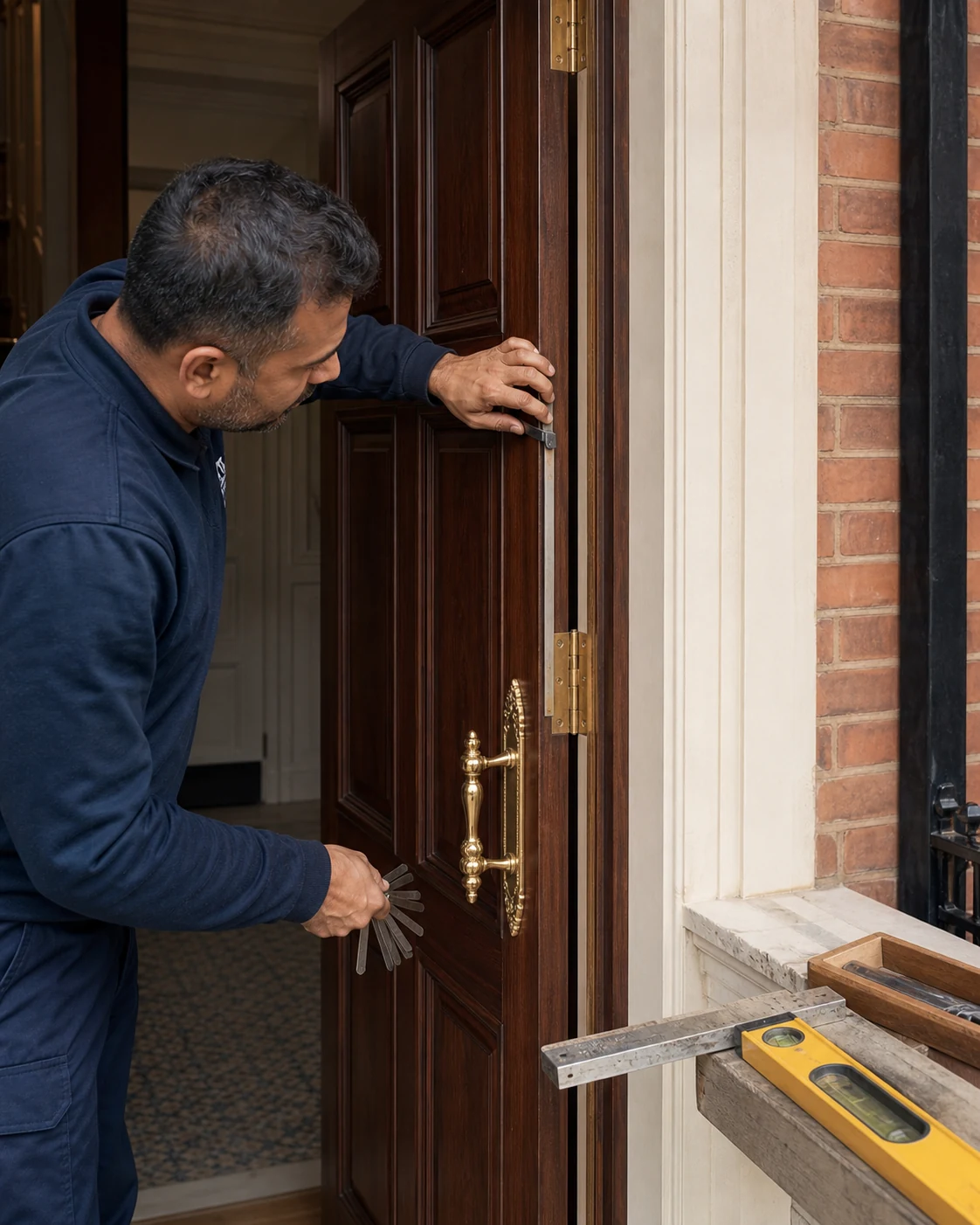
Southwark property context
Southwark enquiries can involve managed apartment blocks, converted buildings and estate entrances. These contexts make an access incident record useful because residents, caretakers and contractors may describe the same door differently. Use the block, entrance, floor and flat, plus a stable door label where the building has one.
In a conversion, the freeholder may control the street door while each flat owner controls a private entrance. On an estate, a housing or management team may hold the access-control record and appoint providers. In a managed apartment building, reception can coordinate arrival without deciding the technical scope.
No building type proves whether a door is fire-resisting, electronically controlled or fitted with a particular lock. Refer to current building records and responsible parties. The locksmith can report observed mechanical condition without extending the finding into an unsupported system or compliance conclusion.
| Setting | Add to the incident record | Management boundary |
|---|---|---|
| Managed apartment block | Reception process, controlled floors, exact common and private doors | Contractor admission versus approval of work |
| Converted building | Freeholder contact, common entrance users and private flat owner | Shared lock decision versus dwelling instruction |
| Estate entrance | Block, estate reference, caretaker contact and affected residents | Resident report versus estate-appointed service |
| Internal communal door | Location within route, credential behaviour, closer and latch response | Access administration versus mechanical repair |
| Private door behind common access | Occupancy evidence, door state and owner or landlord contact | Private locksmith work versus building system |
Incident closure and quote
Price follows the actual access, assessment, labour, parts and system boundary; it cannot be inferred from Southwark alone. A managed incident may involve investigation before a repair is defined. The quote should state whether it covers a private door, a common mechanical component or only the first assessment.
Management and the service provider use the same door label and chronological symptom.
Mechanical, electronic, structural and authority limits are made visible.
Labour, parts, keys, access and conditional findings receive the right authorisation.
Operation tests, unresolved systems and next owners return to resident and manager.
Do not mark the whole incident resolved because one component works after attendance. The completion note should say which user actions were tested, what remained unavailable and who owns the next step.
Southwark locksmith FAQ
Record the exact door, user action, reader or intercom response, release sound and physical latch movement. Avoid opening panels or repeatedly testing a failing system.
No. It may show only one part of the sequence. Credential, controller, powered release, mechanical latch, closer and frame still need to work together.
The freeholder, estate office or managing agent responsible for that entrance should authorise work and provide the building reporting record.
A locksmith can address authorised mechanical elements where appropriate. Intercoms, cabling, controls and powered releases may require an access-control or electrical service.
Create a separate private-door brief with your authority, door state and key or handle behaviour. Do not merge it into a common-access incident.
No routine advice can override building safety and security arrangements. Report the fault promptly and follow the responsible management procedure without improvised wedging.
Only if the provider and written scope cover it. Closer, hinges, lock, frame and powered release should be identified as separate possible contributors.
The first scope may cover access and investigation. Labour, compatible parts and follow-on work should be explained and approved after findings rather than guessed upfront.
Provide the door identifier, functions tested, mechanical findings, work completed, keys or parts, limitations and any electronic or structural matter requiring another owner.
Nearby coverage
Use service links for the actual task and current nearby pages for other access contexts.
Record the action and response before assigning the trade
Send the stable door identity, incident sequence, affected users and management contact for an evidence-led service route.
