
Operation record
Describe closing, latching, locking, unlocking and handle return at completion.
Daily use · actual exposure · maintenance record
A planned upgrade should suit how the entrance is used and cared for, not just how the new hardware looks on fitting day. Audit users, closing behaviour, actual exposure and maintenance responsibility before selection.
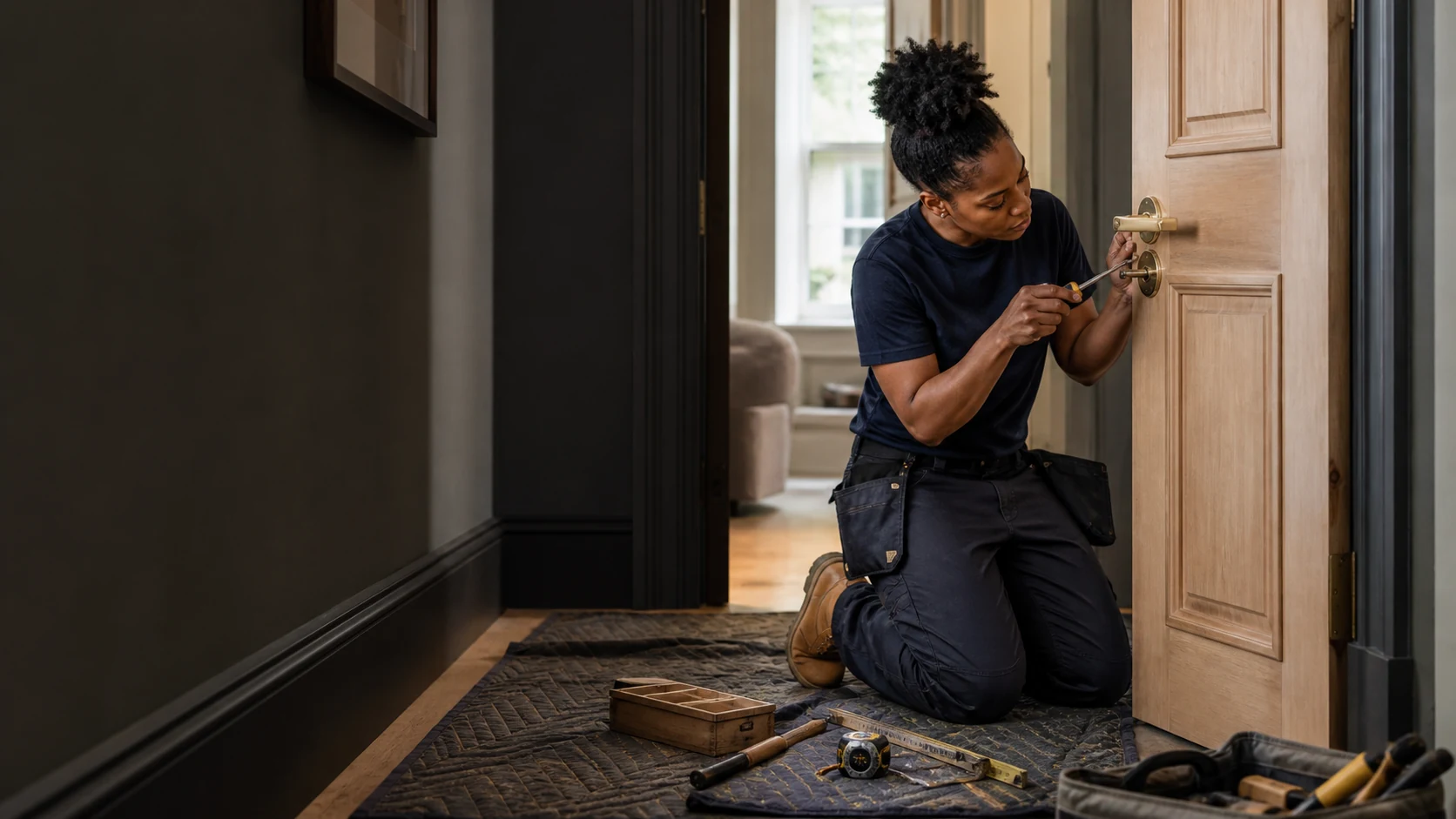
Use-and-care audit
A lightly used private entrance and a communal door passed through many times have different operating contexts. A garden gate faces different conditions from an internal flat door. Instead of applying a broad property label, record the people using the entrance, how it closes, whether it is sheltered and who responds when operation changes.
The audit should distinguish an existing fault from an upgrade objective. If the key is already stiff or the latch misses the keep, diagnose that relationship before new hardware is selected. If operation is sound but key control or a documented requirement has changed, state that clearly. The proposed product can then be assessed for compatibility with the door and intended care.
| Audit subject | Information to record | Why it guides the upgrade |
|---|---|---|
| Authorised users | Residents, visitors, management access and required keys | Defines key issue and operation from each permitted side |
| Normal door cycle | How the leaf closes, latches, locks and is reopened | Reveals functions that the completed work must preserve |
| Actual exposure | Shelter, direct weather, external face and threshold conditions | Provides product and care context without assuming it from location |
| Existing door condition | Frame contact, hinges, previous repairs, cut-outs and finish | Prevents new hardware being asked to correct an unaddressed door fault |
| Responsible caretaker | Owner, resident, landlord, manager or appointed maintenance party | Shows who receives product guidance and reports future changes |
| Required evidence | Current insurer, lease, management or project wording | Allows documented characteristics to be compared with the real requirement |
Existing condition first
Test the normal door sequence without force. If the door is already open and safe, compare key, handle and latch operation away from the frame. Record rubbing, changed gaps, loose furniture and previous repair plates. Keep fixed hardware assembled; the survey should reveal preparation rather than being preceded by resident dismantling.
Door movement can affect a serviceable lock, while worn lock parts can also resist on a well-positioned leaf. A multipoint system connects handles, cylinder, gearbox, strip and keeps. A timber mortice or rim arrangement has different dimensions and frame relationships. The locksmith should identify the system and current fault before promising that an upgrade alone will restore reliable operation.
If the leaf, frame, threshold or joinery needs permanent repair, show that as a separate scope. Coordinating the work may be sensible, but it should not disappear into an unexplained hardware price.
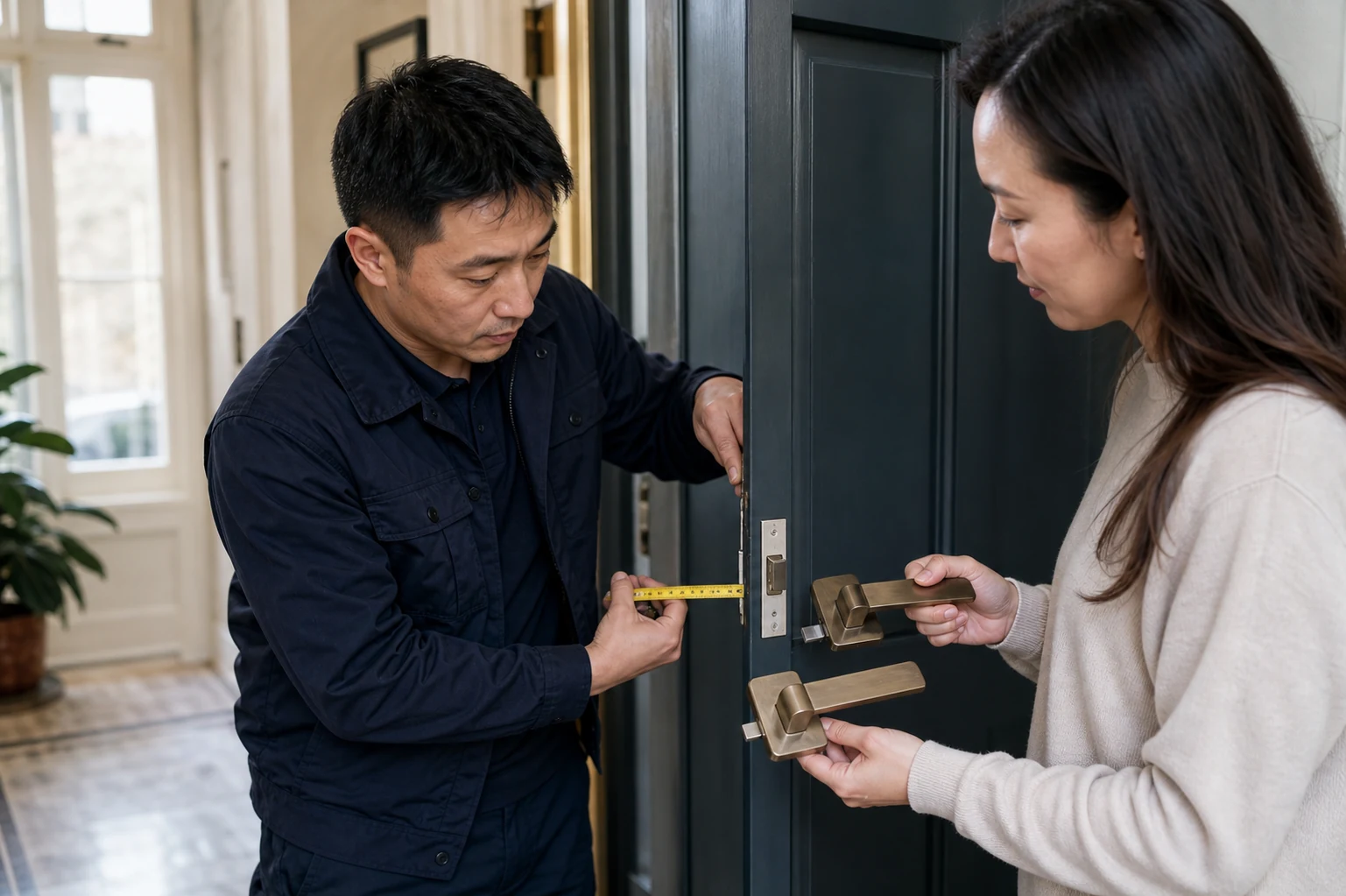
Outcome-led options
| Objective | What may remain | What needs evidence before changing |
|---|---|---|
| Restore known key control | Sound door, frame and compatible non-keyed hardware | Which component controls keys, its dimensions and new key quantity |
| Improve unreliable operation | Components shown to be serviceable after the fault is identified | Whether alignment, handle, lock case or mechanism is responsible |
| Meet a documented requirement | Existing elements that demonstrably support the accepted specification | Exact product evidence, compatibility and any building approval |
| Improve user convenience | Security and egress functions that must not be compromised | Inside and outside operation for all authorised users |
| Coordinate a refreshed finish | Original or sound furniture where dimensions remain compatible | Visible changes, holes, plates and separate making good |
| Plan for a more exposed entrance | Serviceable door construction suitable for continued use | Product documentation, fixing, finish and actual maintenance route |
Maintenance is part of the specification
A lock handover is incomplete if nobody knows what was fitted or who should respond when the door begins to bind. Keep the product reference, supplied keys and any manufacturer care information with the property record. The locksmith should explain normal operation and identify warning signs relevant to the installed system without inventing a universal maintenance interval.
Residents should report stiffness, incomplete latching, loose furniture or a changed closing action before adding force. Management should keep common-door reports tied to a stable door label. Use only care instructions appropriate to the actual product; a generic lubricant or cleaning method should not be assumed suitable for every lock or finish.
Describe closing, latching, locking, unlocking and handle return at completion.
Count supplied keys and name the person controlling later authorised copies.
Keep the actual reference and documented characteristics rather than a broad sales label.
Assign residents, owner or manager to receive warnings and arrange assessment.
Greenwich property context
Greenwich enquiries can involve period terraces, houses divided into flats and managed riverside developments. These contexts affect authority, access and maintenance responsibility. They do not prove actual exposure, lock type, fire-door status or condition at an individual property.
For a terrace, the owner may hold one record covering front, rear and garden entrances. A converted flat can place a private lock behind a communal door maintained by the freeholder. A managed development may use reception and electronic common access while the apartment door remains mechanical and private.
Measure the actual entrance setting rather than inferring it from proximity to the river or the age of nearby buildings. A sheltered internal corridor and an exposed external door require different facts. Where original-looking timber or completed finishes are important, state the access and making-good boundary before fitting.
| Setting | Upgrade preparation | Future care boundary |
|---|---|---|
| Period terrace | Door and frame condition, current cut-outs, finishes and all exterior users | Owner-held record plus separate joinery or decoration tasks |
| Converted flat | Private entrance, common front door, landlord and freeholder contacts | Resident care versus common-door management |
| Managed riverside development | Actual entrance exposure, reception route and current building requirement | Private hardware versus common electronic access |
| Finish-sensitive timber door | Existing furniture, visible changes, approved protection and making good | Lock installation versus specialist finish repair |
| Communal entrance | User volume, closer action, latch, mechanical and powered functions | Management maintenance record and appointed service routes |
Quotation and lifecycle handover
Cost depends on survey, access, labour, compatible hardware, door preparation and separate repair work. A Greenwich area label cannot supply a responsible figure. The quotation should connect the present condition to the proposed function and care plan.
State the door, measured system, condition, users and actual entrance setting.
Name retained and changed components, product evidence, keys and preparation.
Allocate holes, plates, joinery, protection and decorative reinstatement.
Return product, operation, key and unresolved maintenance information.
If inspection changes compatibility or reveals a door fault, the revised route should be explained before extra work. Do not accept an undefined upgrade that leaves the owner without product details or a tested security outcome.
Greenwich locksmith FAQ
It records users, normal door operation, actual entrance setting, existing condition, desired outcome and the person responsible for future reporting.
No. Assess the real door exposure, construction and product documentation. Do not infer requirements solely from the wider location.
First identify whether the resistance comes from the key, lock, handles, mechanism, alignment or frame. A planned replacement should not conceal an unresolved fault.
Possibly, when they are serviceable and compatible with the required operation. Dimensions, fixing, spindle and the proposed lock must be checked together.
The owner or tenant acts within their property authority, while a landlord, freeholder or manager may hold other requirements. Confirm the current boundary before ordering.
Keep guidance supplied for the actual fitted product and door. Avoid applying generic lubricants or intervals that have not been confirmed as suitable.
Record the existing finish before work and allocate protection, joinery, filling and decoration in writing. Making good is included only when stated.
Mechanical and powered functions should be separated under management authority. Access-control or electrical work may require another appointed provider.
Keep product references, keys, operation tests, approved visible changes, care information and any remaining door, frame or common-access recommendation.
Nearby coverage
Use service pages for the work and live nearby pages for related access and property guidance.
Plan beyond the day of fitting
Send the door audit, actual setting, users, authority, desired function and finish boundary for a documented long-term handover.
