
Cylinder work
A measured cylinder can address local damage or key-control change when the multipoint system operates correctly. Key quantities belong in the same record.
Door passport · component identity · private boundary · verified operation
A UPVC door fault becomes easier to manage when the complete system has a simple component passport. For a Lewisham house or flat, record the door position, cylinder, handles, edge strip and frame keeps before compatible parts are considered.
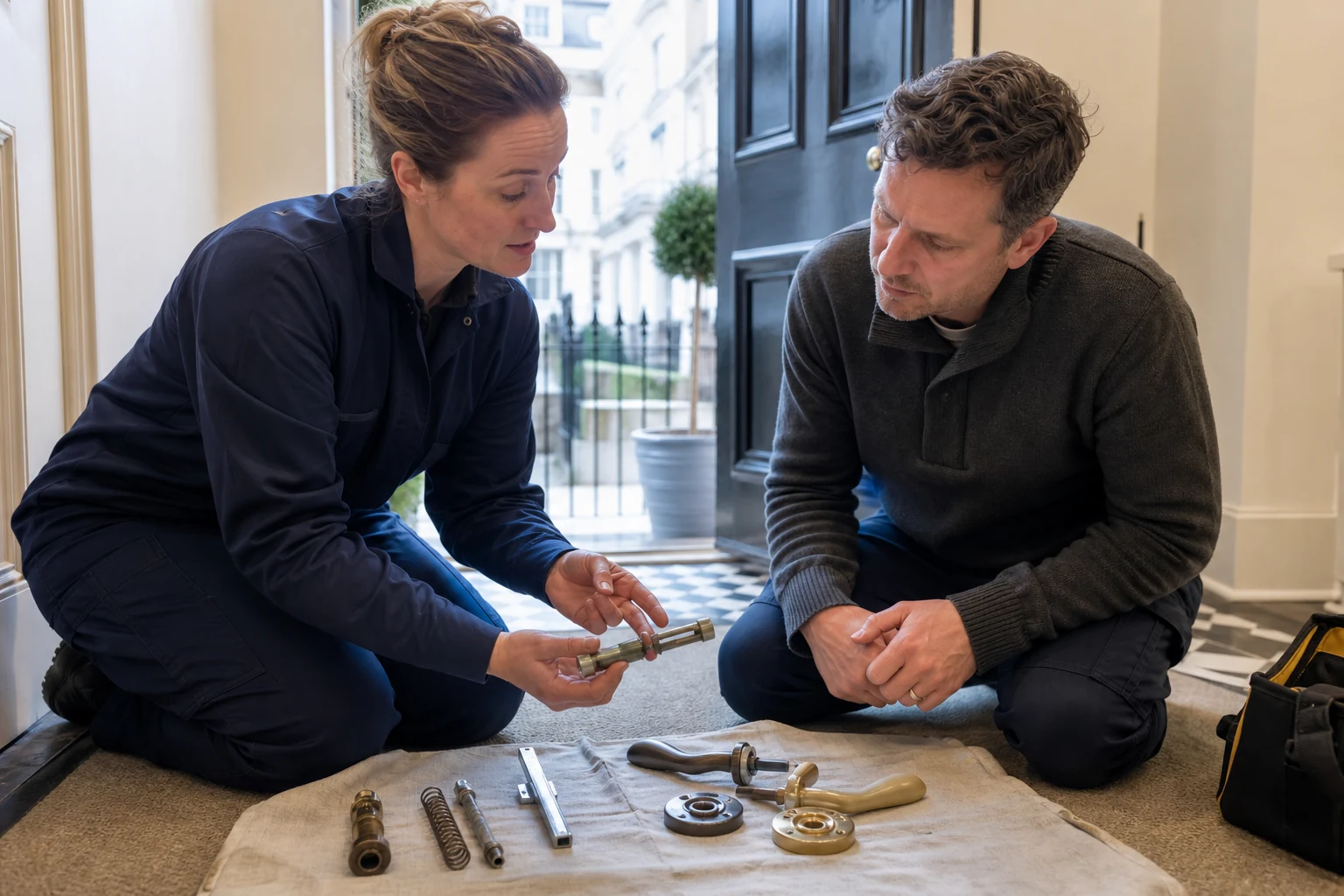
Create the component passport
A purpose-built flat can have a private UPVC balcony or entrance door while the building’s main entrance uses unrelated communal hardware. A family house may have UPVC at the front, rear or both. The first passport field is therefore the exact door and its owner, not the manufacturer guessed from appearance.
Photograph the full leaf, both handle faces, visible cylinder, edge strip and frame keeps from safe positions. Record any markings that can be read without removing screws or covers. Note whether the handle lifts, returns and changes resistance when the door is in the frame. This information supports the first assessment; final part identification may still require authorised access to the mechanism.
| Passport field | Record safely | Use during assessment |
|---|---|---|
| Door and authority | Flat, house, rear, balcony or communal location plus responsible owner | Keeps private work within the correct boundary |
| Handle set | Shape, fixing-centre context, movement and return | Links visible furniture to spindle and gearbox behaviour |
| Cylinder and key | Both visible faces, key entry and turn without force | Separates local keyway symptoms from mechanism faults |
| Edge strip | Visible faceplate, markings and locking-point layout | Supports gearbox or strip identification |
| Frame and keeps | Position, contact marks and door behaviour at closure | Shows where alignment may affect engagement |
Keep the passport factual
A euro cylinder can be easy to photograph, but replacing it will not restore a failed gearbox. A loose handle can be a local fixing issue or a symptom of resistance farther inside. A door that works open but not closed can involve frame engagement, yet the actual condition must be checked before adjustment.
Do not write a remote diagnosis into the passport. Use direct phrases such as “handle stops before fully raised” or “key turns only after the door is pulled”. If the door becomes insecure, keep the area supervised and seek prompt professional advice. Leave keeps, hinges and edge-strip screws as found.
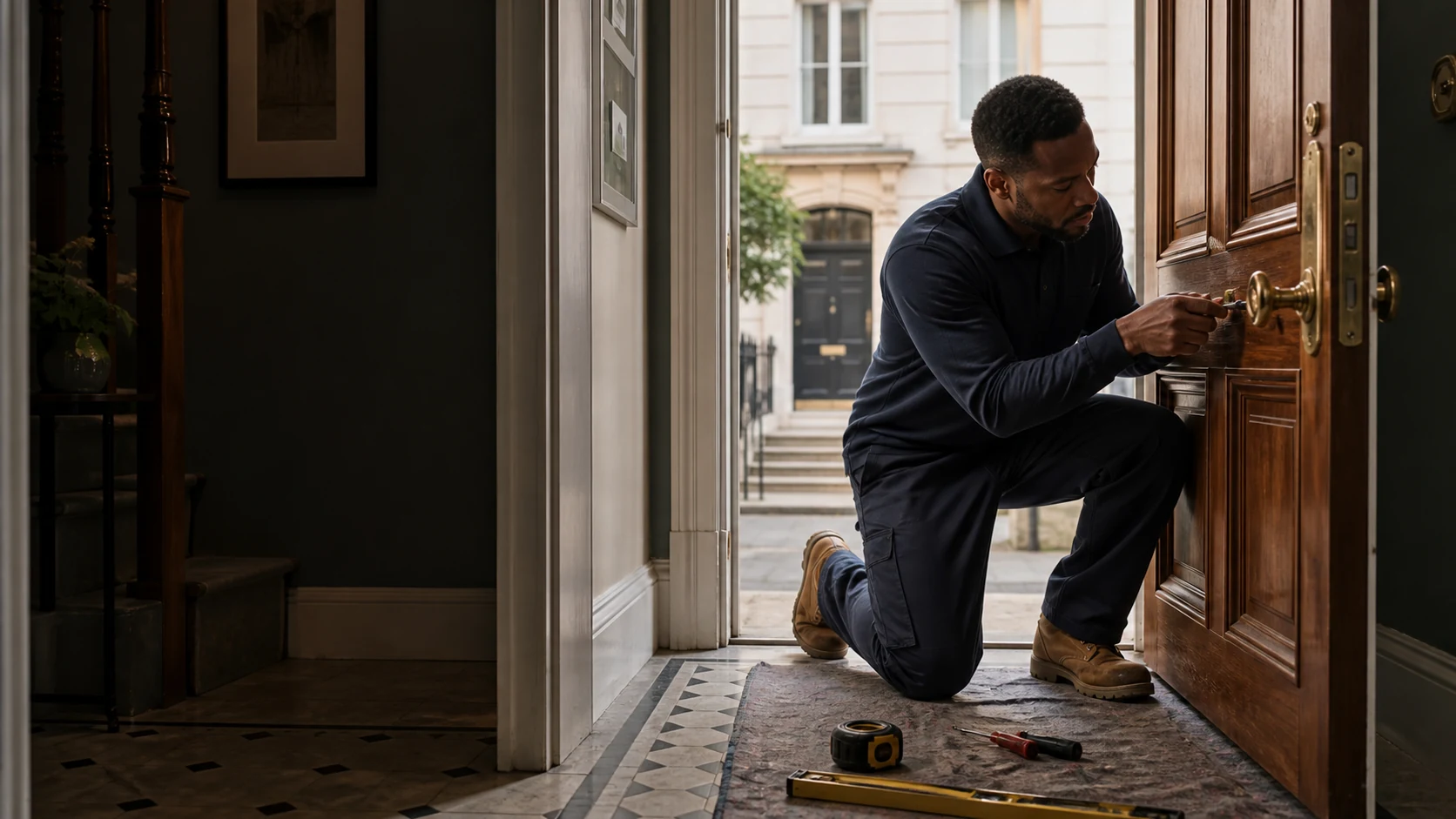
Symptom to passport field
| Reported symptom | Passport detail to check | Decision reserved for inspection |
|---|---|---|
| Key will not enter or withdraw normally | Key condition, visible cylinder face and door position | Cylinder, keyway or pressure from the connected system |
| Handle lifts with excessive resistance | Open and closed travel, return and visible locking-point contact | Alignment, handles, gearbox or strip condition |
| Handle feels loose but door still locks | Movement on each side and normal spindle response | Fixings, springs, spindle or developing internal fault |
| One hook or roller appears not to engage | Strip layout and corresponding frame keep | Local keep position, strip travel or door movement |
| Door locks only when lifted or pulled | Contact at threshold and frame plus hinge-side gaps | Alignment work and retained component condition |
| Mechanism no longer moves at all | Door state, last event and any sound or handle change | Safe opening route and compatible repair identification |
Passport-led services
A measured cylinder can address local damage or key-control change when the multipoint system operates correctly. Key quantities belong in the same record.
Fixings, spindle, springs and gearbox response are checked. Compatible centres and door thickness matter before new furniture is selected.
Measurements and strip details support a compatible case. A postcode, door colour or handle shape cannot identify it reliably.
Locking points, faceplate, keeps and door condition are considered together. Repair and replacement depend on findings and part suitability.
The locksmith compares normal operation open and closed. Hinge, frame and keep adjustments should follow measured contact, not trial movement by the resident.
Shared apartment entrances need managing-party authority and may include powered access or fire-door responsibilities beyond a private UPVC scope.
Quote and update the passport
There is no standard Lewisham price for a UPVC fault. The quote depends on access, investigation, labour and compatible hardware. Ask what will be changed, what remains in service and how the complete door will be tested.
| Quote area | Input required | Passport entry after work |
|---|---|---|
| Assessment | Door identity, symptom sequence and visible component record | Confirmed failed area and inspection limitations |
| Adjustment | Measured frame contact, hinge and keep relationship | Adjustment made and retained hardware condition |
| Component repair | Identified part, labour and compatibility | Part repaired and final operating result |
| Component replacement | Dimensions, markings, function and agreed alternative | Installed part details and connected components retained |
| Keys | Authorised users and required quantity | Copies issued and old-key effect |
| Door-system exclusions | Panel, glazing, frame, powered access or structural concern | Referral and responsible follow-on contact |
If removal shows that the expected gearbox or strip is different, update the diagnosis before proceeding. The authorised person should receive the evidence and revised quote. A component passport is useful only when it records what was actually found.
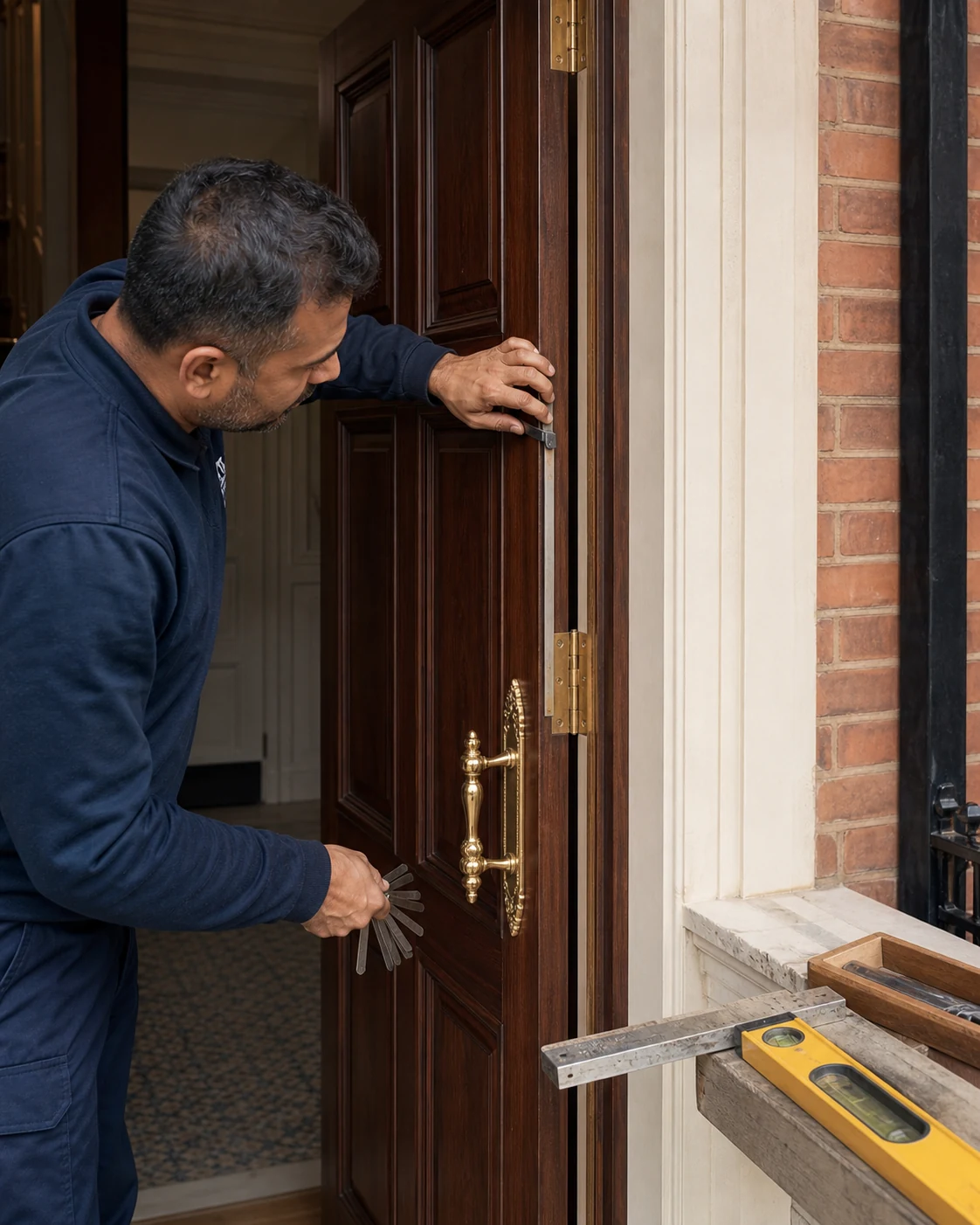
Lewisham property context
A UPVC door within a purpose-built flat may be private, while the street entrance is communal and managed. Name the exact leaf. One resident’s component passport should not be used as authority to change building hardware.
Terraces and family houses can place the system at a front or garden entrance. Record which side is safely accessible and whether the route is clear. A rear door may have different exposure and use, but those facts do not establish the failed part.
Where a flat door is subject to building requirements, obtain them before permanent change. Management permission and technical part identification are complementary, not interchangeable.
Verified operation
Close the door normally, raise the handle where designed, lock, check retention, unlock, release and confirm handle return. Test from authorised safe positions on both sides where available. Record any technique that remains necessary; an undocumented workaround is not a satisfactory completion.
Count keys and add confirmed part details to the property record. Note any door, frame, glazing or building-system issue left outside the work. The next locksmith can then begin with evidence instead of repeating the identification exercise.
Lewisham component-passport FAQ
No. Record safely visible markings, layout and operation. Authorised removal can follow only if the locksmith needs it for identification.
Yes. Appearance alone does not confirm internal dimensions or later repairs, so each affected door should be checked.
Photograph the visible area without dismantling. Measurements and controlled examination may still identify a compatible repair route.
Only as an excluded context note. The building owner or manager controls its own records and authorises shared work.
Yes. Confirm what remains installed, what changed and the final operating result rather than copying unverified historical information.
Record the cylinder change and confirm the retained system worked during testing. Do not claim the gearbox was renewed when it was not.
The owner or authorised property manager should retain it securely with relevant door records, without publishing key-cut or access details.
Record closing, handle lift, locking, retention, unlocking, release and any limitation found during the agreed test.
Nearby south-east pages
Give the door system a usable record
Send the Lewisham address, exact door, direct symptoms, safe photographs and person authorised to approve the work.
