
Furniture
Freestanding sofas, tables, wardrobes and other bulky household pieces.
Collection planning · Hounslow
Describe the material, show the full load and explain the route from item to vehicle. Those facts are checked before collection scope or timing is agreed.
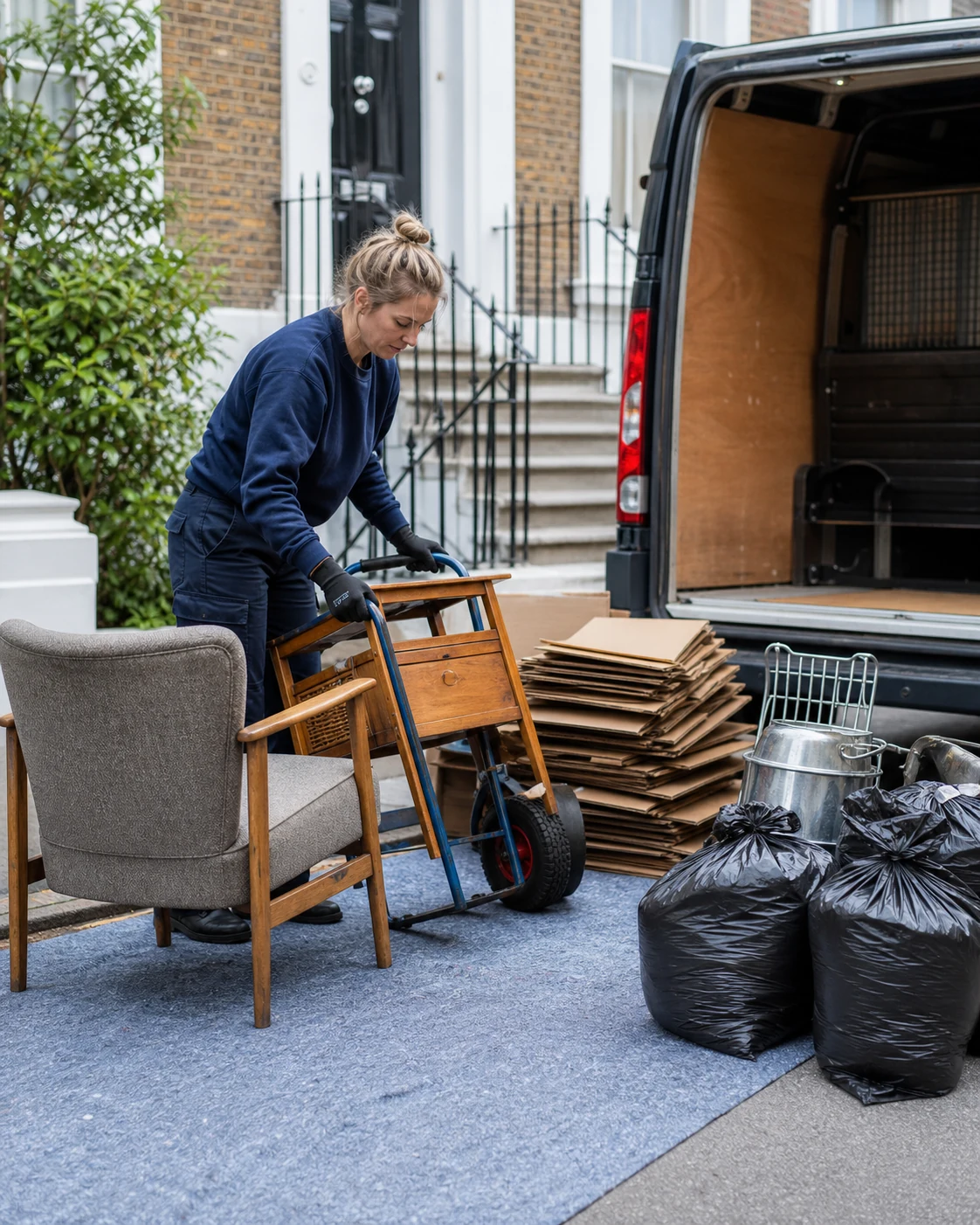
Collection sequence For the wider booking boundaries, review Alesta's waste removal service.
Send photographs and identify material.
Explain narrow halls and stair turns, floors and vehicle position.
Confirm the expected work and quotation basis.
The presented load is checked before loading.
Suitable material follows the appropriate disposal route.
Identify the material Bulky household pieces can be assessed separately through the furniture disposal service.
Describe every group that is present. Do not place uncertain liquids or unlabelled containers inside an ordinary mixed load.
Freestanding sofas, tables, wardrobes and other bulky household pieces.
Closed bags with their general contents described and unusual weight highlighted.
Cuttings and garden material kept visible and separate where accepted.
Compatible non-hazardous project debris, declared before the quotation.
Make the load visible Declared renovation material should follow the separate building waste disposal service rather than an ordinary mixed load.
Show depth as well as width: a single front photograph can conceal bags or objects behind the visible row. Separate household contents, furniture, green material and declared renovation debris, and identify dense matter independently. Explain whether items are loose, securely bagged or spread between collection points. Unknown containers, chemicals, fuel, paints, solvents, batteries and refrigerants must not be hidden in a general description. If the final inventory grows, vehicle capacity, weight distribution, labour and the onward route may all require another assessment. Give dimensions for pieces that dominate space and identify anything requiring prior dismantling discussion before the vehicle is allocated.
Access changes the work
Show steps, gates and the distance from door to vehicle.
State the floor, stair turns and shared areas.
Confirm the working size and any booking rule.
Photograph gates, alleys and surface changes.
Use current signs or authority information.
Supply dimensions before dismantling is considered.
Property context in Hounslow
For a Hounslow collection, begin with the point where loading could happen and verify that it is usable for the proposed date. Record current signs or property instructions, then follow the carrying path back to the waste. Include the distance, gates, front paths, shared entrances, steps and changes of floor. If another person controls access, name the arrangement needed rather than assuming the door or lift will be available.
The inventory should then show where each material group stands. Take wide photographs of every included room or outside area and add detailed views of labels, dense debris and furniture that may not pass intact. Count bags and provide approximate measurements for bulky pieces. Mention a garage, shed or cupboard only when its contents form part of the booking. This approach allows the team to compare vehicle access, manual handling and the declared load without relying on a postcode-based estimate.
Material route and limits
Reusable and recyclable material is separated where practical. The actual route depends on what is presented, so no fixed recycling percentage is promised.
Asbestos, chemicals, clinical waste, gas cylinders and unidentified containers are not ordinary mixed waste. Unknown liquids, paints, solvents, fuel and refrigerants must be declared before any collection is discussed.
Quotation basis
No standard Hounslow figure can replace an assessment of the actual work. The quotation considers type, volume and weight along with the number of collectors, carrying distance, stairs, lift use and the practical vehicle position. Agreed dismantling and disposal charges also contribute. Whole-load photographs and accurate access notes create the basis for the quote. Extra material, concealed heavy debris or a changed loading approach can alter the scope before collection begins. A complete brief is therefore more reliable than a room name or an assumption based on an earlier visit.
Before the team arrives
Separate the booked group from possessions staying at the address and empty furniture of personal contents. Close suitable bags, keep restricted material apart and leave doors or shared exits unobstructed. Confirm keys, gates, lift availability and the authorised contact. Do not expect fixed fittings, plumbing or electrical connections to be removed as ordinary collection work. Send any last change before the crew travels. Compare the waiting items with the submitted photographs, and keep children or pets away from the carrying line while the crew attends.
Questions for this collection
Show the proposed vehicle position in relation to the entrance, together with current signs or property restrictions. A second view should connect that point with the full walking route used to carry the items.
Photograph and list each room separately, then state that the groups belong to one collection. This keeps hidden cupboards or outside stores from being overlooked while preserving one complete inventory.
Split, leaking or overloaded bags may not be safe to lift and could require repacking. Show their condition and describe unusually heavy, sharp or uncertain contents before the collection is agreed.
A cylinder must be declared and kept outside ordinary mixed waste. Provide a clear photograph and label details where safe, allowing the need for a separate specialist route to be considered.
Explain the permitted window, who confirms it and whether lifts or doors are controlled during that period. A narrow window may influence the working plan even when the load itself remains unchanged.
Only agreed, safe dismantling forms part of the assessed labour. Send furniture and doorway measurements first. Fixed units, structural alteration and plumbing or electrical disconnection require separate work.
A basic sweep of the immediate cleared area may be possible where practical. Deep cleaning, repairs, stain treatment and making-good are separate tasks and should not be assumed within waste removal.
Send new photographs as soon as items are added. Greater volume or weight can affect vehicle capacity, crew time, disposal requirements, the quotation and whether an additional journey becomes necessary.
Collection area
Use the map to identify the collection address and describe the actual vehicle approach. Current access restrictions still need to be checked for the proposed date.
Return to the Waste Removal Services hub for the service scope.
