
Collection planning · Uxbridge

Arrange rubbish removal in Uxbridge without guessing the load

Describe the material, show the full load and explain the route from item to vehicle. Those facts are checked before collection scope or timing is agreed.

  • Photographic load assessment
  • Access and carrying route considered
  • Restricted material declared first
  • Quotation based on the assessed work
Call 020 3608 3976
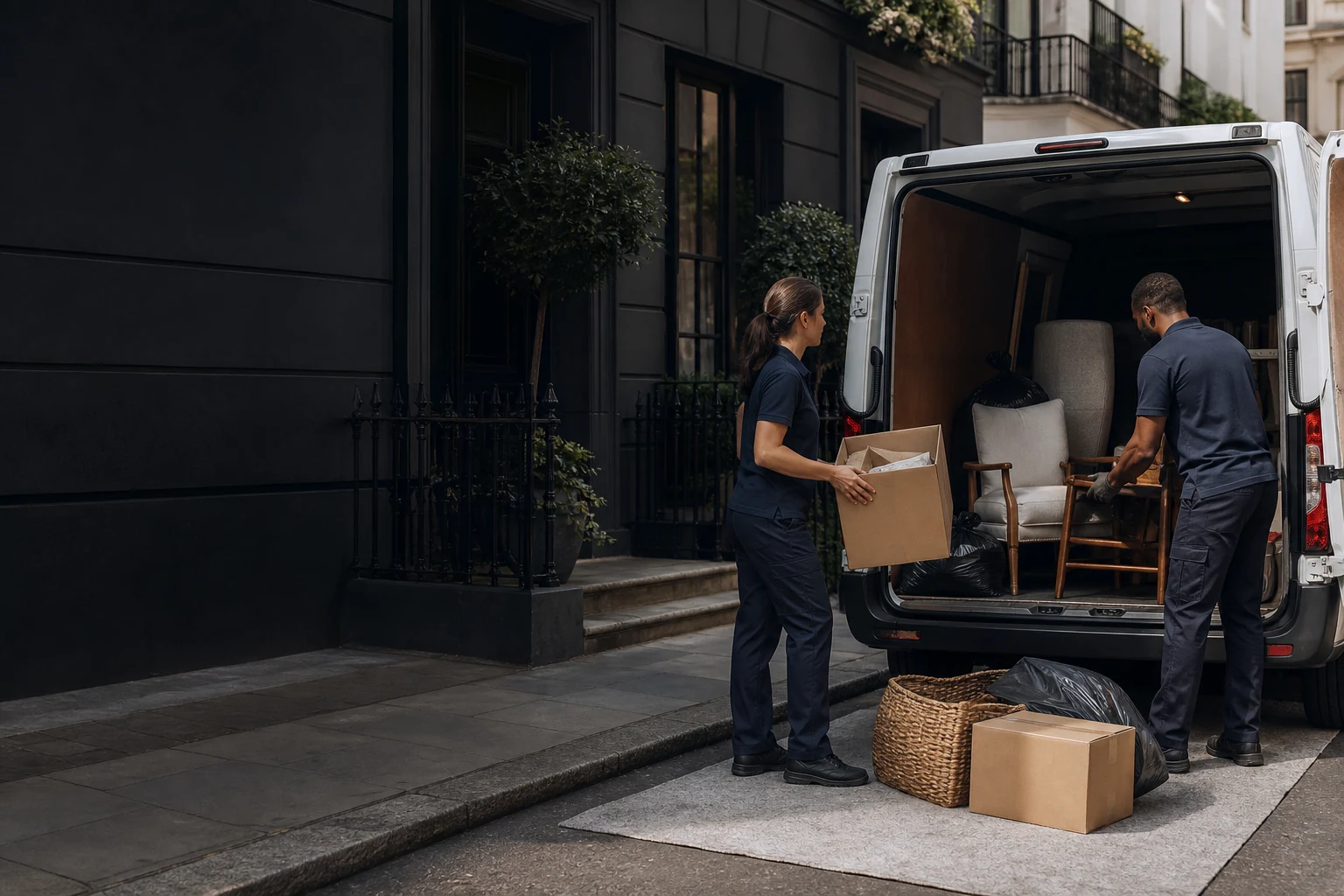
Waste removal team loading sorted household items outside a London home
stored items from internal and outdoor areas planned around controlled parking and residential access

Make the load visible For the wider booking boundaries, review Alesta's complete waste removal service.

Build the Uxbridge inventory one material group at a time

Start with a count of sealed household bags and name the larger loose pieces individually. Put sofas, wardrobes and mattresses in a furniture group; show cuttings or branches separately from renovation rubble. Dense bags deserve close photographs because their weight may be more important than their apparent size. Include contents from a loft, shed or side return only if they are part of the requested collection. Identify electrical equipment rather than burying it in a general list. Asbestos, chemicals, clinical waste, gas cylinders, fuel and unidentified liquids cannot be treated as ordinary mixed material. Honest grouping helps reveal the space, handling and appropriate onward route required for the whole load.

Quotation basis If several rooms or stored areas are involved, the property clearance service may be the more useful scope.

The practical details behind a Uxbridge waste quotation

What is the biggest cost factor?

Pricing follows the declared job, not a fixed neighbourhood tariff. Assessment covers material categories, estimated bulk and weight, crew needs and the usable loading approach. A fourth-floor carry without a lift differs from items beside an accessible entrance, while fragile access or unusually heavy debris may change handling. Parking arrangements, disposal charges and safe dismantling agreed in advance are also relevant. Clear photographs can reduce uncertainty, but omitted rooms or extra bags alter the comparison on arrival. Sending revised evidence early gives the team a chance to review vehicle space or an additional journey before collection day.

Volume and weightMaterial typeCrew and loading timeStairs, lift and carryVehicle positionAgreed dismantlingDisposal requirementsMultiple collection points

Access changes the work Declared renovation material should follow the separate separate construction-waste service rather than an ordinary mixed load.

Record the practical loading position

Ground floor

Show steps, gates and the distance from door to vehicle.

Flats and stairs

State the floor, stair turns and shared areas.

Lift access

Confirm the working size and any booking rule.

Rear access

Photograph gates, alleys and surface changes.

Restricted parking

Use current signs or authority information.

Bulky pieces

Supply dimensions before dismantling is considered.

Identify the material

What is being cleared from this Uxbridge address?

Describe every group that is present. Do not place uncertain liquids or unlabelled containers inside an ordinary mixed load.

01

Furniture

Freestanding sofas, tables, wardrobes and other bulky household pieces.

02

Bagged household material

Closed bags with their general contents described and unusual weight highlighted.

03

Green material

Cuttings and garden material kept visible and separate where accepted.

04

Renovation debris

Compatible non-hazardous project debris, declared before the quotation.

Before the team arrives

Set up the Uxbridge collection without last-minute ambiguity

Place only authorised items in the agreed group and remove documents, keys or other belongings from drawers. Tie suitable bags securely without making them too heavy to handle. Keep batteries, paint, solvents and every unknown container apart for discussion rather than mixing them into the load. Unlock the agreed route, protect access to shared exits and arrange any lift or gate permission. Furniture should be dismantled only when that work has been confirmed. Tell the team about additions, damaged packaging or changed parking before arrival, and keep pets and children clear while material is carried.

  • Send clear, recent photographs
  • Mention stairs, lifts and carrying distance
  • Confirm current parking restrictions
  • Separate material where requested
  • Highlight unusually heavy items
  • Declare restricted or hazardous material

Property context in Uxbridge

Plan a Uxbridge clearance around the real way out

Waste may be waiting in a Uxbridge flat, family house, garage or garden, yet the address alone says little about the collection. Describe the actual route from every storage point to a sensible loading position. Note upper floors, working lift dimensions, internal corners, porch steps, side passages and locked rear gates. Where an estate office, landlord or concierge controls entry, confirm who will release doors and when.

Photographs should establish context rather than merely prove that items exist. Begin with a wide view of each complete group, then add angles showing bulky shapes, bag condition and any dense project material. A street view taken on another day cannot confirm legal parking, so check current signs and any applicable property arrangements. Give the approximate carry from the entrance and flag school-time congestion or other timing concerns only when you know they affect that address. If furniture must negotiate a tight turn, supply its measurements and the narrowest opening. These details let the team judge the work itself instead of guessing from a Uxbridge postcode.

Collection sequence

From load photographs to the final sweep

  1. 01

    Describe

    Send photographs and identify material.

  2. 02

    Check access

    Explain controlled parking and residential access, floors and vehicle position.

  3. 03

    Agree scope

    Confirm the expected work and quotation basis.

  4. 04

    Compare and load

    The presented load is checked before loading.

  5. 05

    Route material

    Suitable material follows the appropriate disposal route.

Material route and limits

The disposal route starts with identification

Reusable and recyclable material is separated where practical. The actual route depends on what is presented, so no fixed recycling percentage is promised.

If the contents or material are uncertain, keep them separate and send a close photograph or label information before booking. Asbestos, chemicals, clinical waste, gas cylinders and unidentified containers are not ordinary mixed waste.

Questions for this collection

Before booking waste removal in Uxbridge

What photographs make a Uxbridge waste enquiry useful?

Take one wide image of every complete pile, followed by clear views of bulky pieces, bag condition and dense material. Add the entrance and carrying route so the collection is not assessed from close-ups alone.

Should garage contents be counted with items inside the house?

They may form one booking, but show and list the garage as its own collection point. Mention side access, door width and the distance to loading, especially when the route does not pass through the home.

Why must renovation material be identified separately?

Rubble and similar project debris can be dense despite occupying modest space. Separate images and an honest description allow weight, handling and the appropriate disposal route to be considered instead of treating every bag alike.

Can fitted cupboards be taken during an ordinary collection?

Removal of fixed fittings is not automatically included. Explain how the cupboard is attached before booking; structural work and electrical or plumbing disconnection need suitable separate trades, while any safe dismantling must be agreed beforehand.

May paint tins be placed among bagged household waste?

No. Paint, solvents, fuel, chemicals and unidentified liquids should remain separate and be declared. Provide label photographs where this is safe, so the team can explain whether an appropriate specialist route is needed.

Who can authorise removal from a communal Uxbridge area?

The customer must have authority over the material being presented. Mark the agreed items clearly and keep an authorised contact available, so belongings owned by neighbours or the building are not collected by mistake.

What happens if the booked lift becomes unavailable?

Tell the team before attendance. A stair carry can demand different labour and may be unsuitable for certain bulky pieces, so the access change needs review rather than being discovered once the crew arrives.

Will usable Uxbridge furniture definitely be reused?

No particular result can be promised. Reusable and recyclable items are separated where practical, but condition, construction and available onward routes determine the realistic outcome after the items have been assessed.

Collection area

Uxbridge collection map

Use the map to identify the collection address and describe the actual vehicle approach. Current access restrictions still need to be checked for the proposed date.

Nearby waste removal pages

Return to the Waste Removal Services hub for the service scope.

Chat