
Furniture
Freestanding sofas, tables, wardrobes and other bulky household pieces.
Collection planning · Ruislip
Describe the material, show the full load and explain the route from item to vehicle. Those facts are checked before collection scope or timing is agreed.
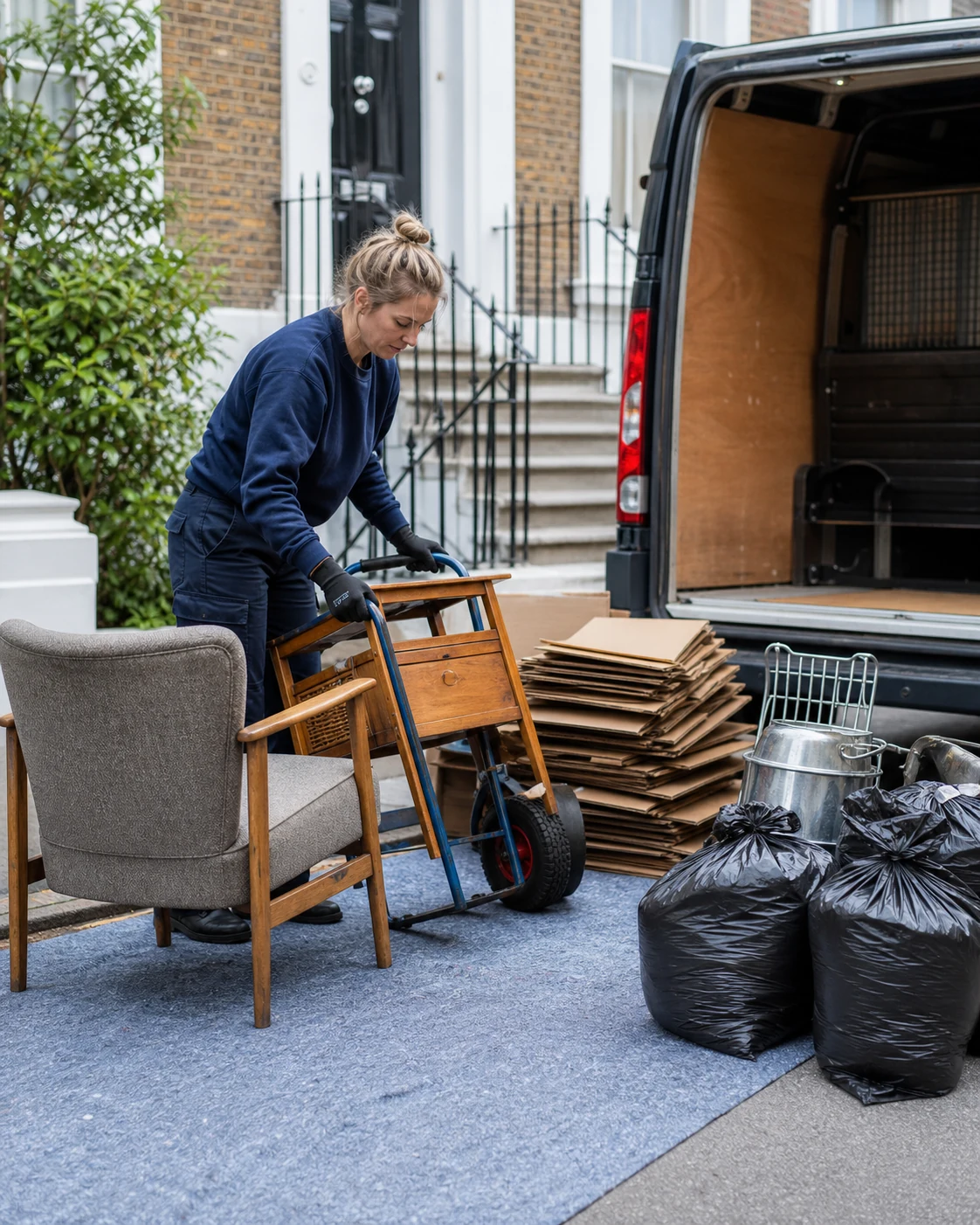
Identify the material For the wider booking boundaries, review Alesta's waste removal service.
Describe every group that is present. Do not place uncertain liquids or unlabelled containers inside an ordinary mixed load.
Freestanding sofas, tables, wardrobes and other bulky household pieces.
Closed bags with their general contents described and unusual weight highlighted.
Cuttings and garden material kept visible and separate where accepted.
Compatible non-hazardous project debris, declared before the quotation.
Material route and limits If several rooms or stored areas are involved, the house clearance service may be the more useful scope.
Reusable and recyclable material is separated where practical. The actual route depends on what is presented, so no fixed recycling percentage is promised.
Unknown liquids, paints, solvents, fuel and refrigerants must be declared before any collection is discussed. Batteries, specialist electrical items and hazardous substances need to be identified rather than hidden inside bags or boxes.
Property context in Ruislip Declared renovation material should follow the separate building waste disposal service rather than an ordinary mixed load.
Begin with the places where the unwanted material is actually kept: perhaps several rooms, an outdoor store or a garage. One wide photograph per location should establish the full quantity, while closer views can identify rigid furniture, filled bags, green material and any declared renovation debris. For Ruislip homes, also show the route linking those groups to the likely vehicle position, including doors, gates, steps, tight corners and changes of surface.
A useful brief records the approximate carry rather than assuming a vehicle can wait beside the entrance. Note any shared doorway, controlled parking condition or access arrangement that needs confirmation. Large items deserve measurements where clearance looks doubtful, and dense bags should have their contents described. These details allow volume, weight and manual handling to be considered together. If one room is excluded, mark that boundary clearly so possessions staying at the property cannot be confused with the booked clearance.
Make the load visible
Walk through the property in a fixed order and give each collection point its own line. Count furniture by item, record bag numbers and sizes, and keep garden material apart from household contents. Declared building debris should be photographed closely because a compact pile may carry considerable weight. Measurements for wardrobes, shelving or other awkward pieces help test the doorway route and indicate whether safe, agreed dismantling needs discussion. This method also exposes additions: a late cupboard or second shed group is easier to spot than it would be inside a single estimate such as “one load”.
Access changes the work
Show steps, gates and the distance from door to vehicle.
State the floor, stair turns and shared areas.
Confirm the working size and any booking rule.
Photograph gates, alleys and surface changes.
Use current signs or authority information.
Supply dimensions before dismantling is considered.
Quotation basis
The postcode does not set the figure. Assessment follows the submitted material, its occupied volume and likely weight, plus the labour needed to move it from its present position. Stairs, a lengthy carry, uncertain parking, extra collection points and an item requiring agreed dismantling can all alter the work. Disposal charges also depend on what the load contains. For that reason, dense renovation remnants should not be represented as ordinary household bags, and restricted or unidentified contents must remain outside a routine mixed collection description.
Before the team arrives
Before attendance, empty furniture that is due to leave and separate it from anything being retained. Secure suitable bags without concealing sharp, liquid or unknown contents. Confirm that keys, gates, shared-door arrangements and the expected vehicle position still match the photographs. Where items sit in a communal location, provide authority and label the approved group. Send an update if the quantity grows or the route becomes obstructed, since either change may require the original capacity and labour plan to be reviewed.
Collection sequence
Send photographs and identify material.
Explain controlled parking and residential access, floors and vehicle position.
Confirm the expected work and quotation basis.
The presented load is checked before loading.
Suitable material follows the appropriate disposal route.
Questions for this collection
Yes. Give the shed its own photographs and item list, then show the path from its door to the proposed loading point. This prevents an outdoor group from disappearing inside a broad household estimate.
Two bags of similar size can differ greatly in weight and handling risk. Describe whether they contain ordinary household material, green waste or declared project debris, and flag sharp, wet or uncertain contents.
Its length, gradient, steps and surface influence manual carrying. Photograph the complete route and mention narrow gates or turns, allowing the work to be considered from the items’ location rather than the frontage alone.
Send a new wide photograph and an item count before the visit. Extra material may change vehicle capacity, weight distribution, labour or disposal planning, so the earlier assessment may need revision.
Provide item and doorway measurements first. Dismantling may be included when it is agreed and can be done safely; fixed services, structural work and specialist disconnections are not automatically part of a waste collection.
The customer must establish ownership or permission and identify the exact items approved for removal. Clear labels and an available building contact reduce the risk of confusing a neighbour’s possessions with the booked group.
No. Batteries, paints, solvents, chemicals, fuel and unidentified liquids need explicit disclosure and separate consideration. Keep them apart, preserve labels where safe and do not place them inside an ordinary mixed load.
Compare the waiting material with the inventory and confirm that the described route is usable. If the quantity, contents or access conditions differ materially, the collection plan should be reviewed before loading starts.
Collection area
Use the map to identify the collection address and describe the actual vehicle approach. Current access restrictions still need to be checked for the proposed date.
Return to the Waste Removal Services hub for the service scope.
