
The home remains occupied
If other people still need the rooms and entrance, plan the order of packing around that reality. Keep essential belongings and access routes available instead of treating collection day as already underway.
Bethnal Green / Storage for a Clearer Collection Day
Packed belongings should not make the home impossible to use.
Preparing for storage can fill a room surprisingly quickly. Before moving cartons into a shared entrance, explain where the selected items are currently located and how collection can take place. The route needs to work for the people still using the property.

What changes at home?
If other people still need the rooms and entrance, plan the order of packing around that reality. Keep essential belongings and access routes available instead of treating collection day as already underway.
During room work, keep the selected storage load distinct from the occupied home’s essential possessions.
Set aside sale or disposal items before packing the retained group into collection positions.
Identify seasonal boxes before they become indistinguishable within the prepared load.
Collection is part of the storage plan
Shared corridors should not become an unplanned storage area. Describe the intended collection point and any building rules, while keeping the household’s normal access and escape routes unobstructed.
Check the intended collection point without assuming a shared corridor can hold waiting boxes.
Show narrow passages from the actual starting room, not only a cleared entrance photograph.
Confirm entry while preserving the access needed by other occupants.
Explain where prepared items can wait without obstructing the entrance route.
Flats and apartments: keep the shared exit usable while preparing the selected load. Mansion blocks: check whether management permits any proposed waiting position. Houses: show where furniture remains until collection. Rental or managed properties: name the person providing access to the agreed starting rooms.

Bethnal Green, before collection day
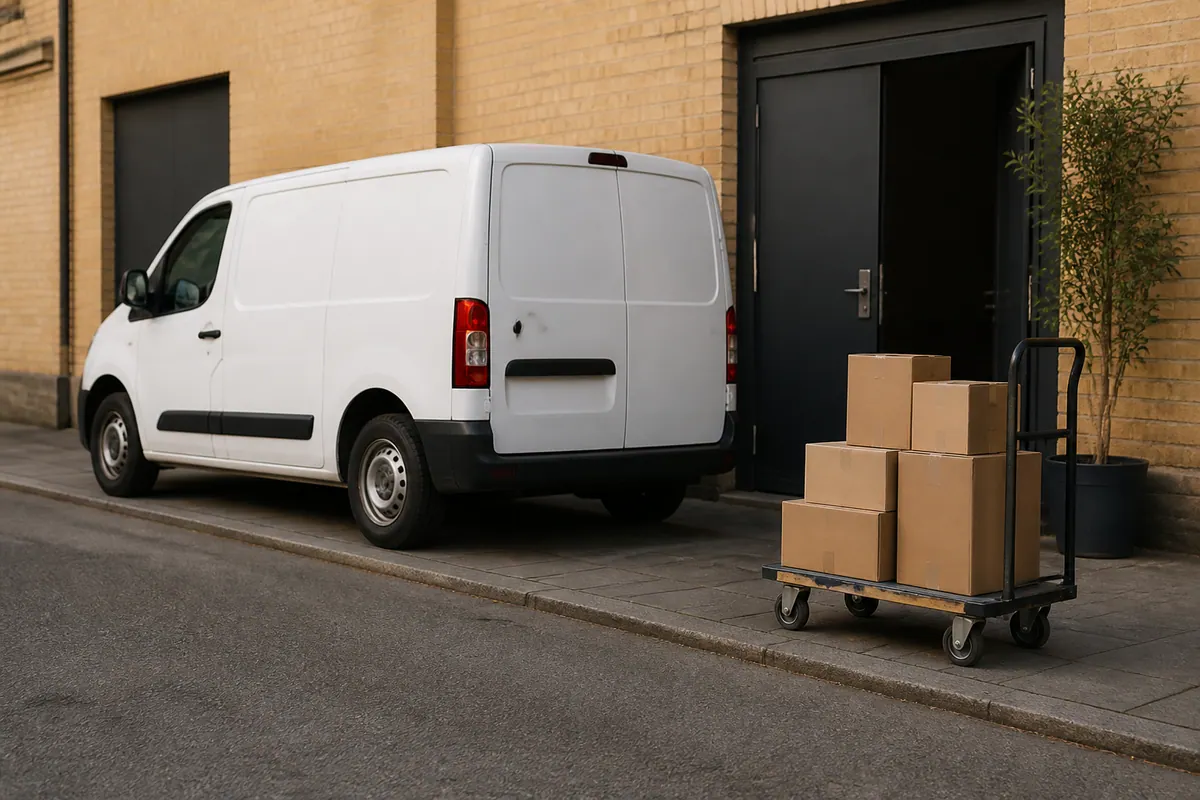
A tidy-looking stack beside the entrance is not necessarily a suitable collection arrangement. Keep shared circulation and escape routes clear while the household is occupied. In your Bethnal Green enquiry, describe the starting rooms and substantial furniture as they actually are. The team can then discuss the route without relying on you to create an obstructive waiting area before collection has been agreed.
Your item-list example: a small sofa, labelled household cartons and a bedroom cabinet. This is an illustration for the enquiry, not a description of a booked job. Record the actual pieces and quantities you want assessed.
Explain where prepared items can wait without obstructing the entrance route. Keep a clearly labelled group for belongings needed at the first return.
Plan the route out of your property ↓Choose your starting point
The category selector introduces what you want stored. Add the current item locations in your notes; furniture does not need to be moved into an unsuitable waiting area merely to make the list look organised.
Inventory focus
Count the selected cartons without moving them into an obstructive waiting area. Note sizes and fragile contents, and retain essentials and irreplaceable documents outside the proposed load.
Add this to your inventory ↓
A useful first conversation
Alongside quantities, say where a sofa, cabinet or heavy box group is located. That information helps the Bethnal Green collection discussion account for the real route rather than a hypothetical pile at the door.
Dimensions before estimates
A compact storage group may still obstruct an entrance if gathered in the wrong place. Describe the belongings and route separately, leaving protection and final arrangement to the agreed assessment.
Measure the selected furniture where it currently stands.
Identify rigid pieces before planning any waiting position.
Keep room groups clear without obstructing shared access.
Assess the complete load from its actual starting positions.
Gathering belongings for collection does not establish that all contents are suitable. Declare unusual items before preparation is finalised.
Plan the return before the departure
A clearly referenced carton group is easier to discuss later than ‘the boxes near the sofa’. Ask how priority retrieval would work before relying on it as part of your temporary living plan.
Need earlier
Need later
Keep daily necessities and irreplaceable records outside the stored group. A clear priority label helps identification, but release, notice and extra costs must be agreed; immediate access is not assumed.
Use references that do not depend on where cartons stood before collection.
Explain delicate contents and preparation without using them beneath other loads.
Separate likely next-use groups before the prepared cartons accumulate.
One connected arrangement
First agree the item list and route, then settle packing responsibilities and the collection window. Avoid rearranging large pieces solely on the assumption that the crew needs everything beside the street door.
Assess the route from items’ actual positions inside the home.
Agree preparation without obstructing shared circulation or escape routes.
Confirm the collection window before arranging the final handover.
Identify the accepted load and applicable storage conditions.
Request the marked group through the confirmed retrieval procedure.


The timetable can change
| Planning point | A shorter gap | A longer arrangement |
|---|---|---|
| Typical purpose | Prepared belongings awaiting a defined move | Retained household pieces with later return |
| Preparation | Pack while maintaining everyday access | Review protection for the intended waiting time |
| Retrieval | Identify the first useful receiving group | Confirm any earlier release before relying on it |
| Duration | Separate collection timing from storage obligations | Ask how a delayed return changes the arrangement |
| Quotation | Actual item positions, preparation and transport | Declared volume, conditions and retrieval plan |
A property may need to be cleared on a particular day even when the return is uncertain. Explain both points and confirm notice or extension terms rather than joining them into one assumed timetable.
Scope first. Quote second.
For Bethnal Green, the quotation needs to know whether substantial items remain upstairs or behind narrow doors. Moving them to a waiting area is not a substitute for describing the access and agreeing the work.
| Service scope | Price approach | Main factors |
|---|---|---|
| Volume & access assessment | Confirmed household load reviewed | Dimensions, contents and priority references |
| Collection & placement | Actual starting route assessed | Rooms, carrying path, protection and collection point |
| Ongoing storage | Agreed storage interval priced | Space, conditions and requested release stages |
| Final retrieval / delivery | Return scheduled under confirmed terms | Identified group, receiving access and notice |
The real starting positions, route, protection and period inform the scope. Ask about return transport, facility charges and insurance rather than moving furniture into an unsuitable place to simplify the description.
Direct answers before you book
Not if that obstructs access or escape routes. Describe where the boxes are and agree collection planning without assuming a shared hallway can be used as a waiting area.
Give their actual starting positions and discuss the route. Do not move heavy furniture solely because you assume that positioning is required.
Link each substantial piece or box group to its starting room and floor. This is more useful than saying the load is simply ‘ready’.
Plan packing so their access and essentials remain available. Any collection arrangements affecting shared spaces should be checked with the relevant people.
Identify suitable belongings you expect to need sooner, using clear references. Confirm whether separate retrieval is available rather than depending on it automatically.
The quotation depends on the actual work and access. Do not make an unsafe or obstructive arrangement in an attempt to simplify the stated scope.
Yes, describe the items and preparation needed. Materials, protection and responsibilities should be agreed explicitly before the collection stage.
Provide the confirmed restrictions and the person responsible for entry. A preferred time is not the same as an agreed collection window.
Identify them consistently in the inventory and discuss suitable protection. A label alone does not establish that the packing is appropriate.
Explain the uncertainty and ask about the agreed notice and extension process. Collection can be discussed without pretending the end date is fixed.
No. It provides service-area context for Bethnal Green. The proposed storage location, conditions and retrieval arrangements are discussed separately.
Keep the move connected
Preparation support may be useful when furniture and cartons compete for space. Discuss the required materials and timing with the packing service rather than discovering unfinished preparation at collection.
Explain a limited collection from the items’ current positions.
Discuss preparation timing before the occupied room becomes crowded.
Plan the substantial pieces’ return with receiving access confirmed.
Alesta customer feedback / Furniture removal & packing
“I used Alesta Services for furniture removal and packing when I moved houses. The team was incredibly careful with my belongings and made the whole process seamless.”
James W. · Existing Alesta review, not a storage testimonial for Bethnal Green.
Bethnal Green / Service area
Share your Bethnal Green postcode, floor, building entry arrangements and intended collection point. For the full household scope, visit Storage Services.
The postcode, contact and item locations belong in the private enquiry. The map is a neighbourhood reference; the chosen storage arrangement and later delivery address need separate confirmation.
A little space. A clear next step.
Send the selected belongings and a clear route description. Include any shared-space restrictions so the collection can be discussed without turning preparation into an obstruction.
