Activity inspection
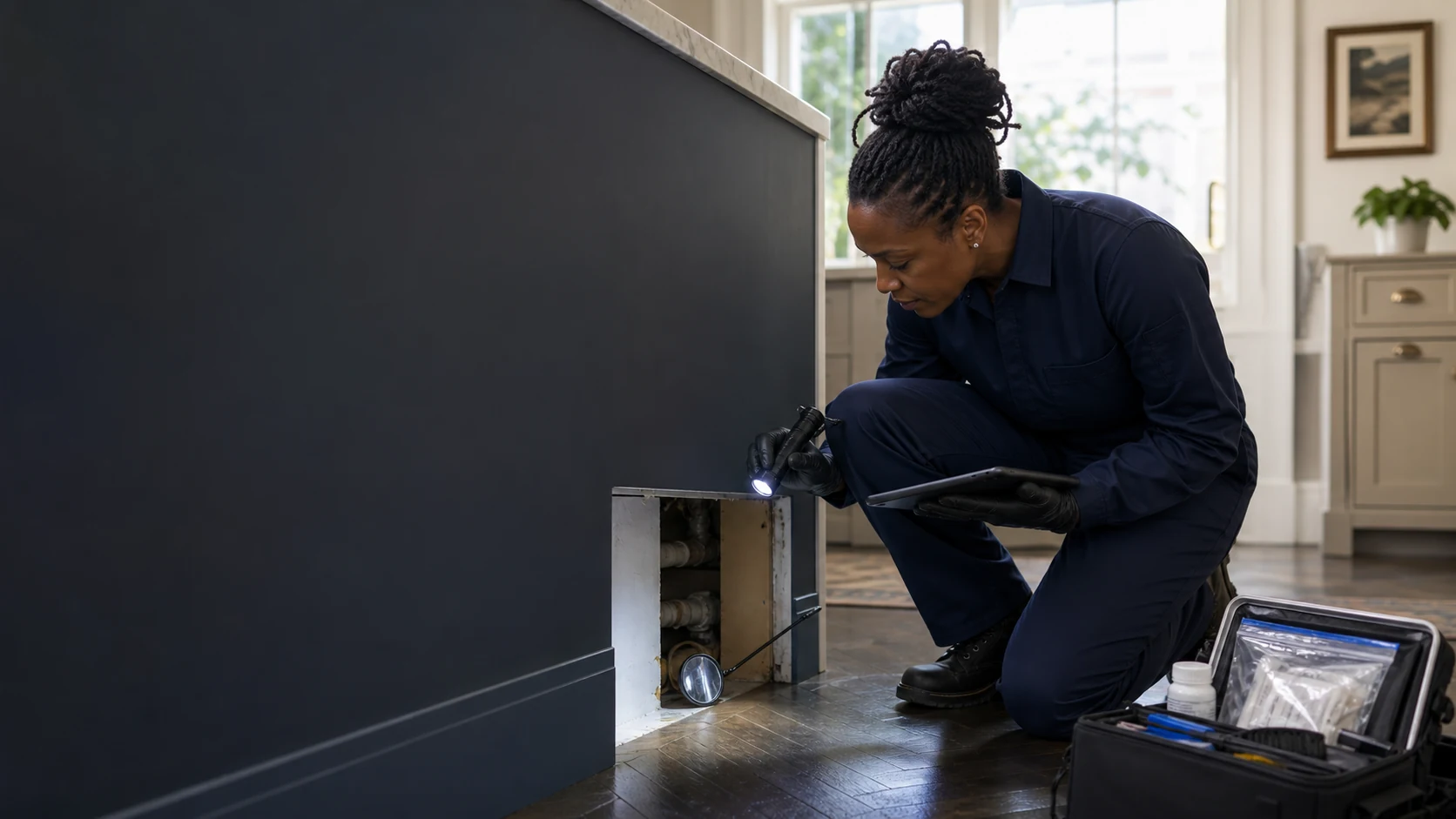
Droppings, gnawing, tracks, noise and reported sightings considered across likely routes.
Alesta · Mice control in London
A structured approach to mice based on evidence, harbourage, food access and entry routes, with treatment, monitoring and proofing responsibilities explained clearly.
☎ Call 020 3608 3976Evidence before treatment
Mice can travel through service gaps, wall voids, floor cavities and shared building routes, then feed from very small accessible sources. Droppings in one cupboard may be the visible end of activity that begins elsewhere in the property or block.
We ask where and when signs appear, review food and water access, and inspect likely harbourage and entry points. Treatment works best when monitoring, hygiene, building maintenance and carefully timed proofing support one another rather than relying on an isolated device.
Droppings, gnawing, tracks, noise and reported sightings considered across likely routes.
Suitable secured measures selected around occupants, pets, non-target species and site conditions.
Activity checked over the agreed programme rather than declared resolved after one quiet day.
Accessible gaps and maintenance issues identified for proofing at the correct stage.
Common reasons customers call
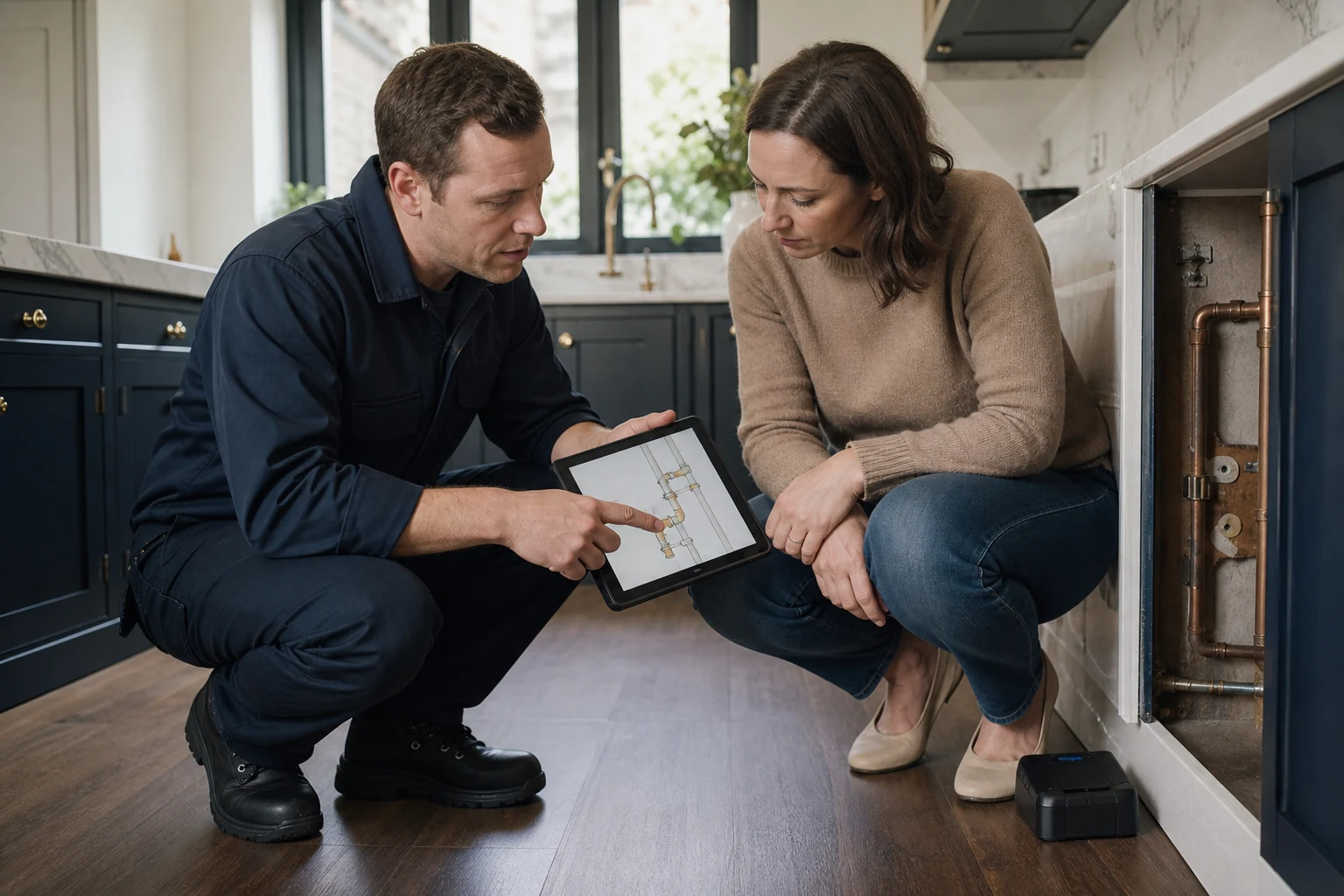
Fresh signs near stored food, appliances or units indicate active travel and feeding routes.
Noise in walls, ceilings or floor voids needs inspection rather than guesswork about location.
Accessible food and nesting material can sustain activity despite occasional trapping.
Untreated harbourage, neighbouring activity or open entry routes may be maintaining reinfestation.
Why Alesta for mice control
Times, rooms, evidence and previous treatments help map likely movement.
Children, pets and non-target access are considered before control measures are used.
Gaps are not sealed blindly while active mice may remain inside inaccessible voids.
Activity beyond the customer’s control is documented for landlords or managing agents.
An evidence-led pest programme
The assessment begins with the history of activity. We ask when signs started, where droppings, gnawing or sightings occur, whether noise is heard at night, and what treatment has already been attempted. Household composition, pets, children, food businesses nearby and shared-building management are relevant to risk. Photographs can help, but the pattern across kitchens, utility spaces, cupboards and service routes must be considered at the property.
During inspection, the technician looks for current evidence, likely harbourage and travel lines around pipe penetrations, appliance voids, skirting, doors and external interfaces that are safely accessible. Droppings are not handled casually; contaminated areas need appropriate hygiene precautions. Species identification matters because mouse and rat control differ. The technician also considers food storage, waste, water, clutter and neighbouring routes rather than assuming one visible hole is the sole cause.
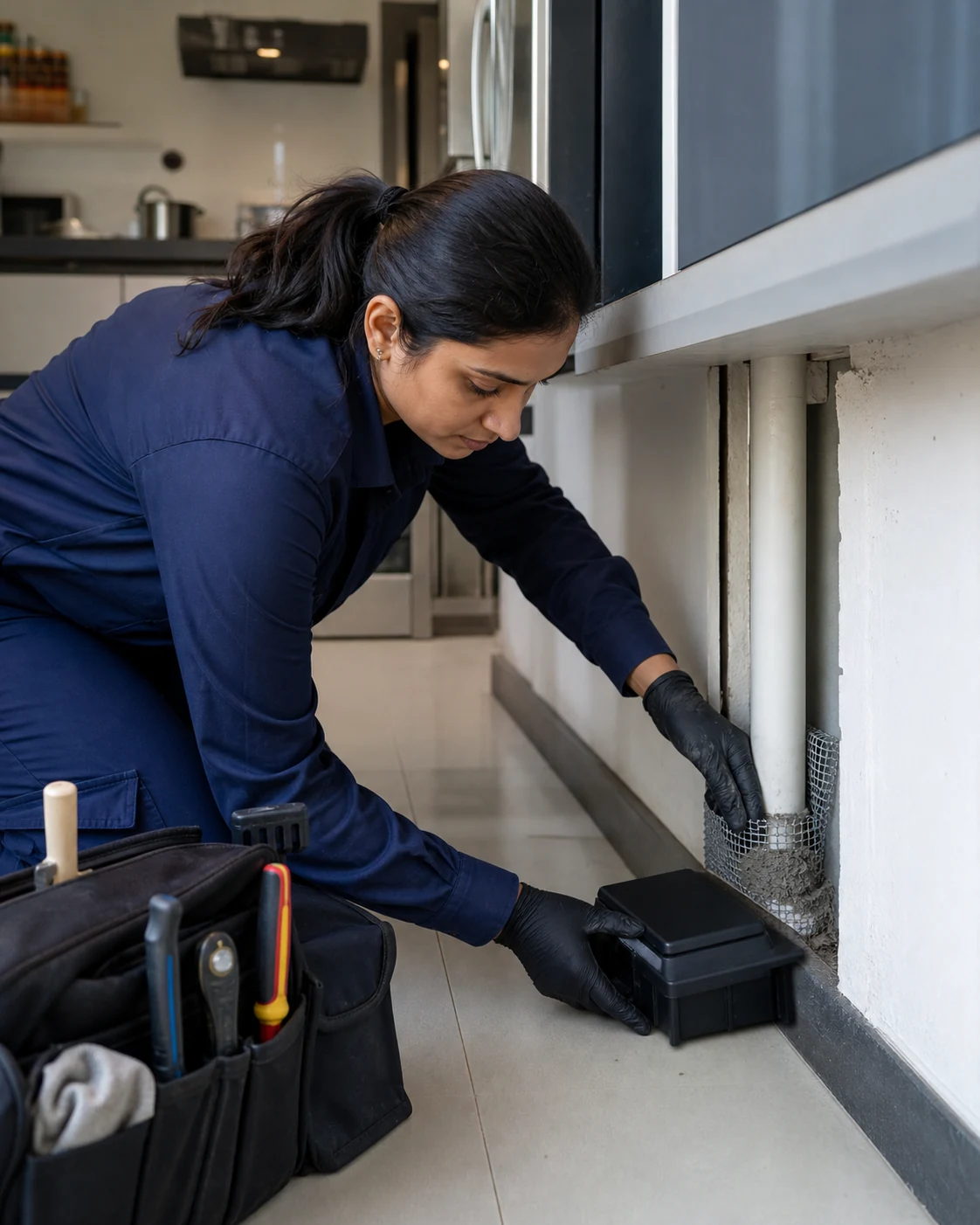
Control measures are selected for the property and placed securely in locations supported by evidence. The exact approach may include monitoring and approved traps or products used according to label and professional requirements. Occupants receive instructions not to move or interfere with devices and to keep food inaccessible. Follow-up timing allows activity to be reviewed, measures adjusted and progress judged from evidence rather than from an immediate but temporary reduction in sightings.
Proofing recommendations are coordinated with control. Suitable accessible gaps may be closed at the appropriate point, while structural defects, communal risers, drains, façades and neighbouring premises may require a landlord, managing agent or other trade. No responsible service can guarantee permanent absence where building-wide entry and food sources remain uncontrolled. The close-out explains activity found, work completed, hygiene actions, proofing priorities and signs that should trigger further review.
Clear pricing
Cost depends on property size, activity level, number of visits, access, treatment method, monitoring and whether proofing or building work is required.
| Service scope | Price | What affects the final price |
|---|---|---|
| Initial mice inspection | Quoted from property details | Rooms, evidence, access, history, occupants and shared routes |
| Treatment and monitoring programme | Quoted after assessment | Activity, visits, measures, devices and review requirements |
| Proofing or building remedials | Quoted separately | Gap locations, materials, access, trade work and communal responsibility |
Pricing context: Mice control is confirmed after property and activity assessment. Building repair, specialist cleaning and treatment beyond the customer’s premises are separate responsibilities unless expressly included.
How the service works
Share rooms, times, droppings, sounds, sightings and previous treatment.
The technician assesses activity, risks, food access, routes and suitable control.
Progress is checked and practical entry-point actions are coordinated.
Mice control FAQ
Useful answers about preparation, pets, proofing, cleaning, visits and shared properties.
☎ Call 020 3608 3976Keep evidence in place where safe, store food in sealed containers, provide access beneath sinks and around appliances, and share every room where signs have appeared.
Do not dry sweep or vacuum suspected rodent droppings casually. Ask for safe hygiene guidance and keep children and pets away from contaminated areas.
The technician must know all occupants and pets before selecting and positioning measures. Follow every access and safety instruction and never move devices.
Not always. Premature sealing can trap active mice in voids or redirect them. Proofing should be based on inspection and coordinated with monitoring and control.
That depends on activity, building routes, response to control and whether neighbouring areas remain affected. The programme is confirmed after assessment.
Communal risers, adjacent flats and shared waste areas may maintain activity. Findings may need action from the landlord, freeholder or managing agent.
Property size, infestation level, access, number of visits, control measures, monitoring, proofing and shared-building complexity affect the quote.