Evidence assessment
Droppings, runs, gnawing, burrows, sounds and sightings considered together.
Alesta · Rat control in London
A monitored control plan for suspected rats, built around evidence, food and water sources, accessible entry points, drains, neighbouring pressure and occupant safety.
☎ Call 020 3608 3976Routes and resources before treatment
Rats move through drains, gardens, voids and service gaps while responding to food, shelter and water. One sighting may be isolated or part of wider activity, so signs and routes must be assessed before control is selected.
We distinguish rats from mice and wildlife, then plan monitoring, control and suitable proofing. Drain defects, structural openings, waste management and neighbouring sources can require coordinated work beyond one treatment visit.
Droppings, runs, gnawing, burrows, sounds and sightings considered together.
Accessible drains, service gaps, gardens, voids and food sources inspected.
Suitable traps, monitoring or professional-use measures chosen for the conditions.
Proofing and sanitation priorities sequenced after active routes are understood.
Common reasons customers call
Scale, location and freshness help distinguish likely rat activity.
Timing and route need inspection without assuming every noise is a rat.
Food, drainage and neighbouring land can sustain external activity.
Unresolved access, drains or resources can defeat an isolated intervention.
Why Alesta for rat control
Rat and mouse signs are not treated as interchangeable.
Children, pets, wildlife and food areas influence every control position.
Active animals are not knowingly sealed into inaccessible building voids.
Drains, gardens and neighbouring activity are included in realistic expectations.
A monitored rodent-control process
We begin with evidence and site history. Customers share safe photographs of droppings, damage, holes or burrows with a size reference, together with sighting times, affected rooms, garden activity and any drainage issue. We ask about pets, children, bird feeding, refuse, compost, food storage, building work and neighbouring reports. Droppings should not be swept dry or handled without suitable precautions, and unlabelled bait should not be scattered before inspection.
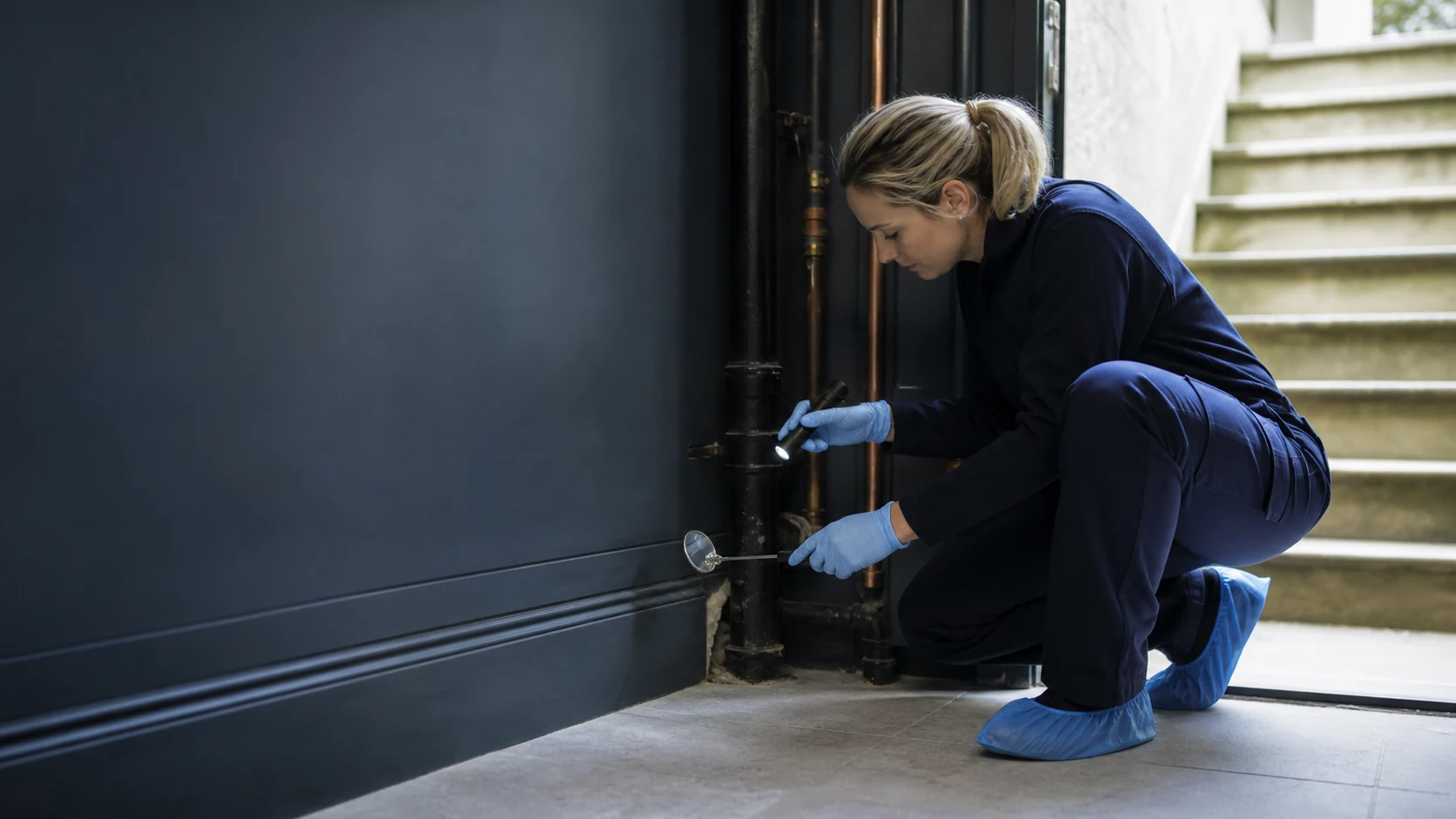
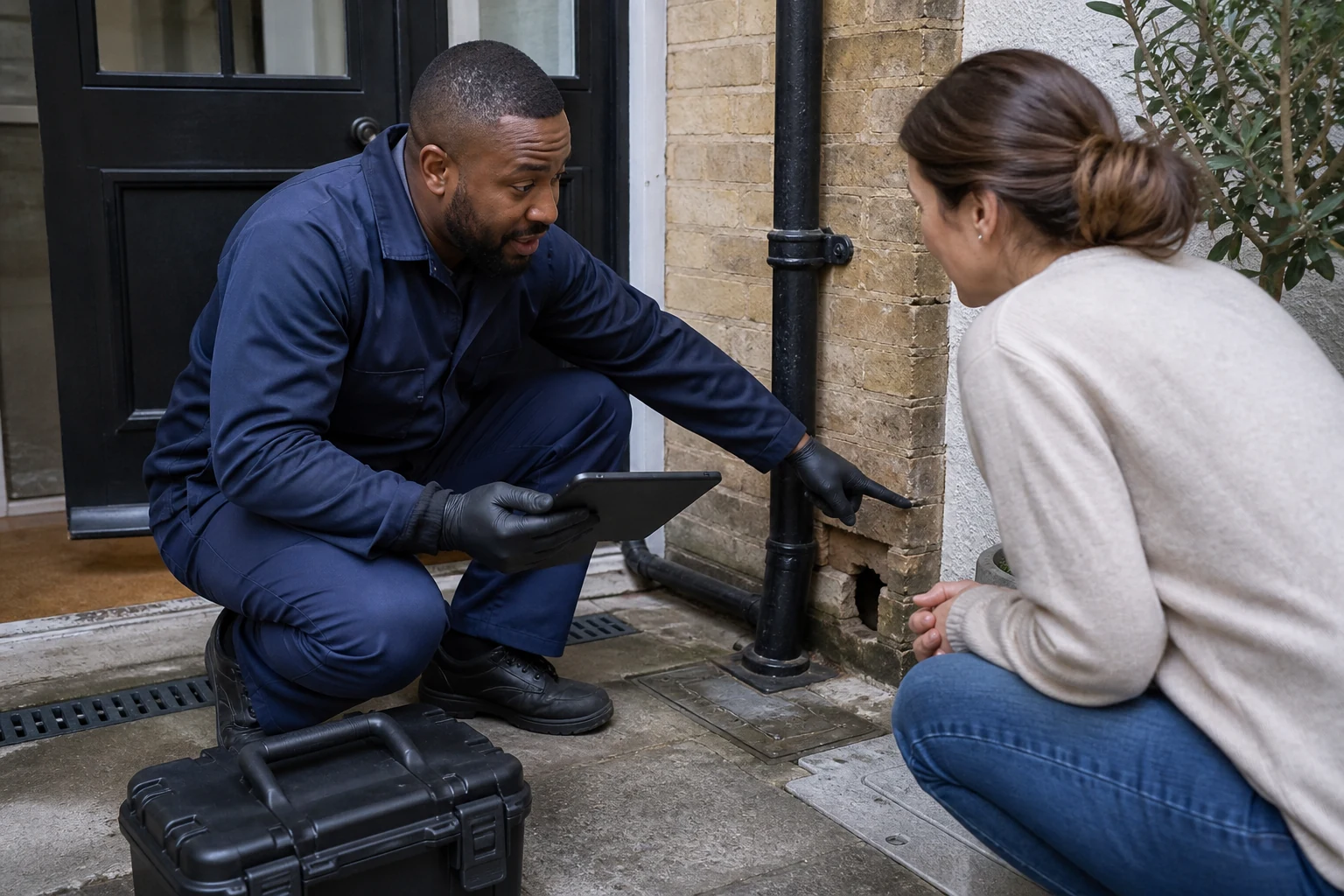
The technician inspects accessible internal and external areas relevant to the signs. Likely routes can include broken air bricks, service penetrations, subfloor voids, drains, vegetation and gaps beneath structures. Evidence is assessed for freshness and species. Unsafe voids, inaccessible drains and neighbouring land create limitations. If the pattern suggests a drainage defect or structural failure, a specialist survey or repair may be needed alongside pest control.
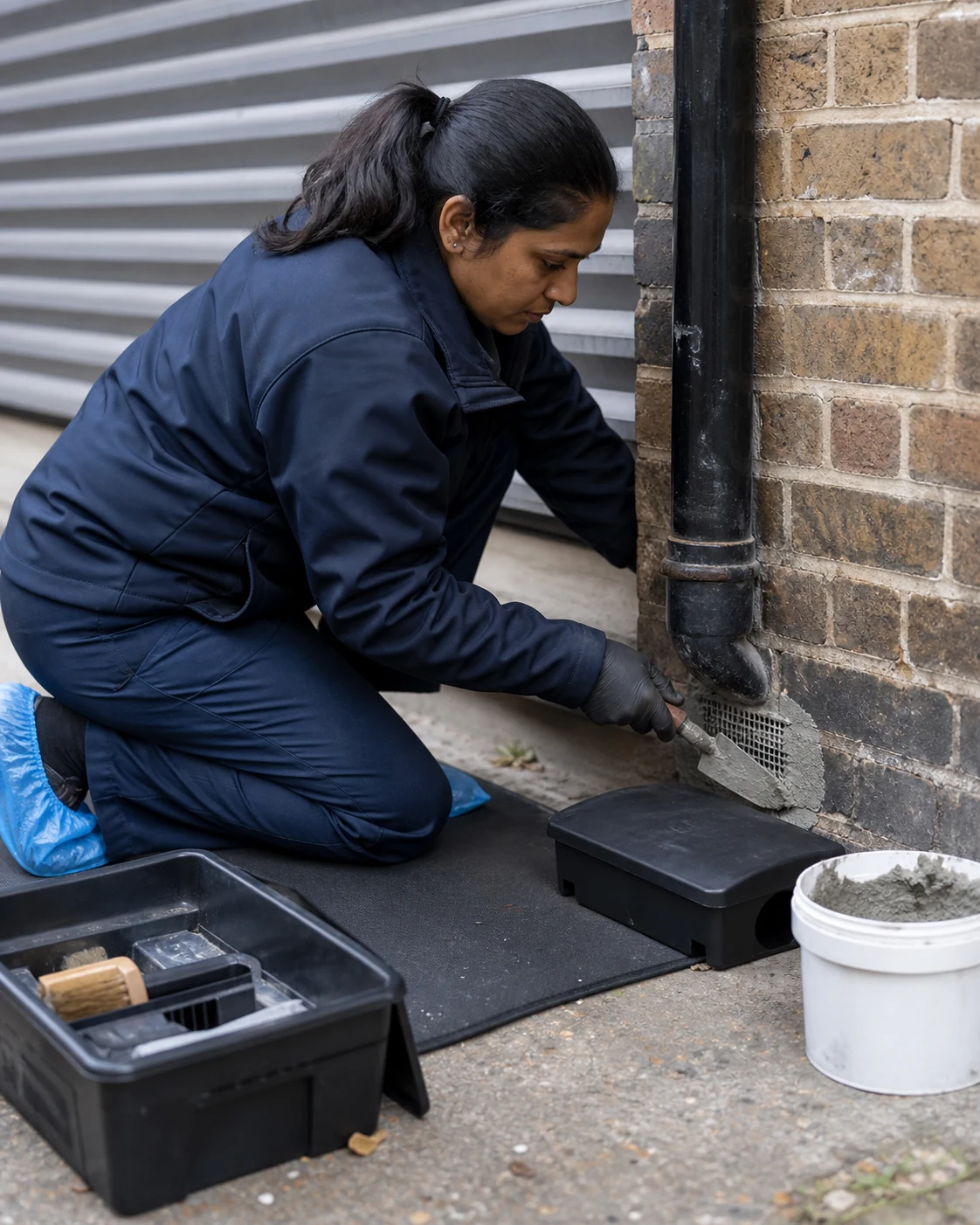
Control measures are chosen for the property and risk profile. This may involve protected traps, monitoring devices or professional-use rodenticide where justified and legally used. Positions are documented and protected from children, pets and non-target wildlife. Food and water sources are addressed. Openings are proofed only when timing is appropriate and materials are included; indiscriminate sealing can redirect activity or trap animals inside.
Follow-up reviews captures, bait take where used, fresh droppings, track marks and monitoring results. Carcasses are handled when found and accessible within the agreed scope, but animals can die in concealed voids that cannot be reached without building work. The technician closes out temporary control points as appropriate and sets priorities for proofing, waste, vegetation or drainage. Long-term reduction depends on removing access and resources as well as controlling current activity.
Clear pricing
Cost depends on property size, evidence, internal and external areas, drains, visit count, control method, monitoring and proofing.
| Service scope | Price | What affects the final price |
|---|---|---|
| Initial rat inspection | Quoted after assessment | Evidence, property layout, garden, access and inspection time |
| Rat control and monitoring programme | Quoted after assessment | Activity, method, safety controls, visits and site extent |
| Proofing or drainage follow-on | Quoted separately | Openings, materials, access, drain condition and specialist work |
Pricing context: Photos and activity history are required. Drain repair, structural work, extensive decontamination and neighbouring-property treatment are separate from the core control plan.
How the service works
Send safe photos, sighting times, affected areas and occupant considerations.
The technician assesses harbourage, drains, food sources and safe positions.
Results guide follow-up, proofing and practical site changes.
Rat control FAQ
Useful answers about evidence, cleaning, pets, drains, proofing, follow-up and pricing.
☎ Call 020 3608 3976Dropping size, gnawing, runs and sightings differ, but photographs and inspection are more reliable than one sign. Treatment should not begin from an unsupported guess.
Leave representative evidence where safe. Do not sweep or vacuum dry droppings; ask for suitable hygiene guidance and keep people and pets away from contaminated areas.
Pets and children must be disclosed. Devices and any professional-use product are positioned and managed to reduce non-target access, with specific instructions that must be followed.
Yes, drainage defects and connections can provide routes. Suspected drain entry may require a specialist drainage survey or repair beyond pest treatment.
No. Active routes need understanding so animals are not trapped in voids or pushed elsewhere. Proofing is timed with control and building conditions.
It depends on evidence, site extent, method, monitoring and external pressure. A responsible plan uses follow-up where the lifecycle and conditions require it.
Property size, gardens, drains, activity, affected zones, visit count, method, monitoring, proofing and access all influence the quote.