
Natural stone
A stone surface should come with whatever care information you already have.
Mayfair / Regular care for a home used on changing days
Base the routine on occupation, not an empty calendar slot.
A home used part of the week may have one busy bathroom and several untouched rooms. Describe what has actually been used since the last visit and agree how the cleaner will enter when you are away.
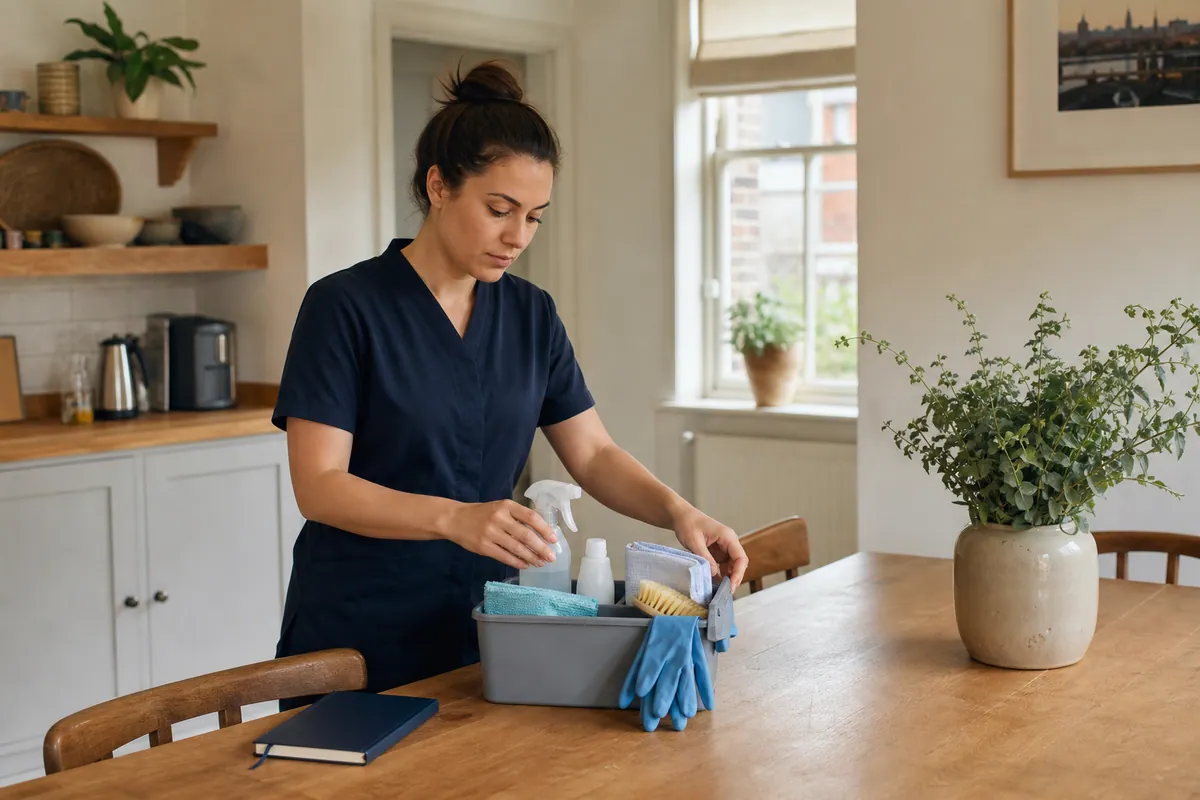
Kitchen · Bathroom
Living areas · Bedrooms
A planning aid for ordinary upkeep
Try the options to organise property, interval and priority information. The resulting brief is a starting point for contact, not an automatic booking or price calculation.
Methods follow materials
Do not rely on one product being suitable throughout the property. Tell the team about finishes, available instructions and damaged areas so routine care has a clear boundary.
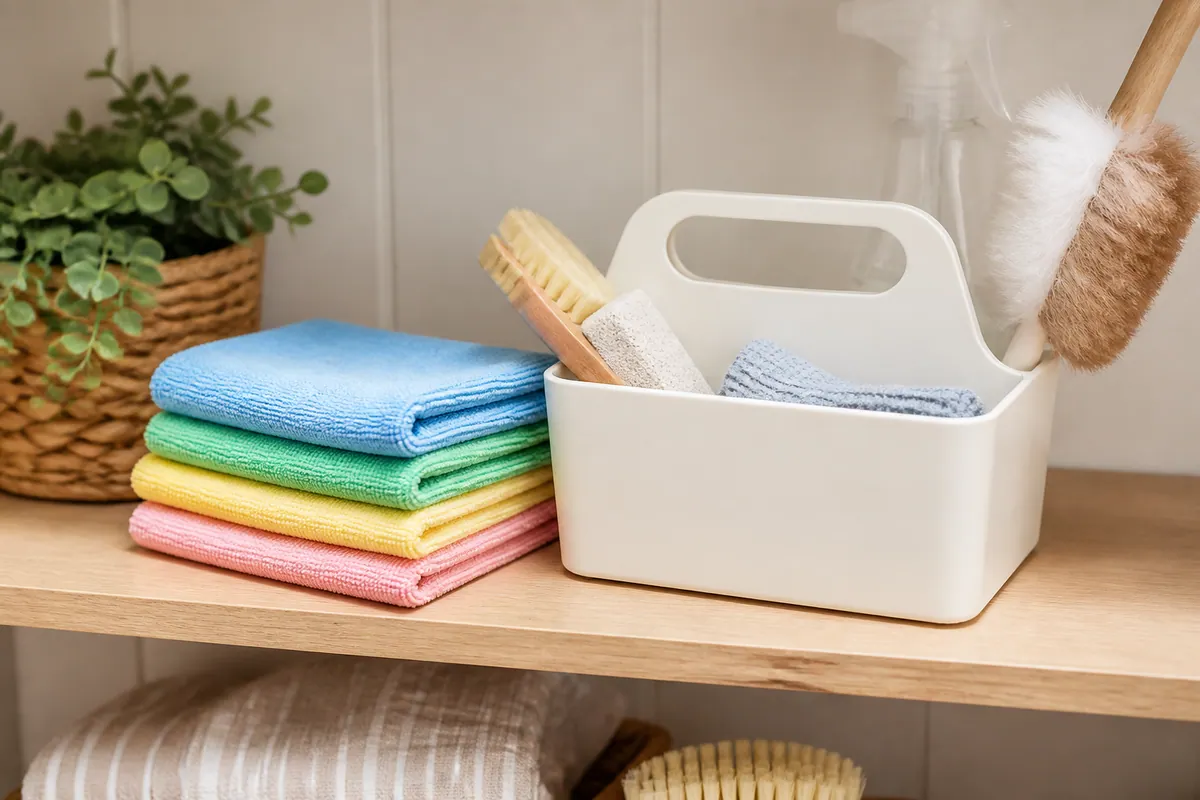
A stone surface should come with whatever care information you already have.
Describe whether you know the wood finish; do not assume all timber tolerates the same treatment.
Delicate lacquer needs to be identified, especially where furniture appears similar to other finishes.
Specify the exterior steel surface included rather than requesting an undefined appliance clean.
Existing paint damage is important information; ordinary upkeep cannot restore a coating.
Mayfair / a household scenario
Base the routine on occupation, not an empty calendar slot.
An unused room and a frequently used cooking area do not need identical attention merely because they share an address. Tell us where the household activity has been concentrated.
For a Mayfair home, the booking conversation should include the next expected occupation as well as the current condition. That helps explain priorities without promising a particular available slot.
If nobody is staying, keys and alarms need direct arrangements with the team. Do not rely on an assumed building handover or leave private instructions in public messages.
Regular upkeep can follow a stable core while its interval is reviewed. A long absence or a changed room list may call for a different brief, not simply a repeat of the previous visit.
The small instructions that matter
Agree key collection and return with the team rather than leaving sensitive details in a public message.
Confirm any concierge handover and who can permit access to the apartment.
Settle the alarm instructions for the beginning and end of the visit privately.
Tell the cleaner which spaces pets will occupy and which boundaries need care.
Explain calls or a private desk and discuss the sequence around the occupied area.
Share the parking or loading information you know before timing is agreed.
Make room exclusions and untouched belongings part of the actual brief.
Useful preparation combines ready rooms with suitable products and confirmed access. A broad request for everything to be cleaned cannot replace those practical decisions.
Agree the visit behind the rate
Use these published starting figures to begin the enquiry. The final domestic arrangement still needs a confirmed minimum visit, included supplies and realistic task list.
| Service | Price | Main factors |
|---|---|---|
| Regular domestic cleaning | From £20/hour | Property scale, frequency, minimum time and agreed supply/access arrangement |
| First / one-off domestic visit | From £90 | Initial workload, included rooms and selected starting tasks |
| Specialist / intensive scope | Quoted separately | Intensive condition or service-specific equipment and access needs |
A larger property or different starting condition can change the time required. Frequency, supplies, entry and parking also matter, while specialist requests need separate consideration rather than an implied inclusion.
The basis of a repeatable clean
Kitchen and bathroom upkeep, reachable dusting and the agreed floors provide the foundation. Other work should be identified explicitly rather than inferred from a room being included.
Review the optional list as the home changes. If its demands increase, agree a revised scope instead of letting the basic routine become progressively harder to complete.
Room choices, clear scope
The tabs show the household work to discuss, not a fixed package for every property. Explain condition and access so a room label translates into an achievable cleaning brief.
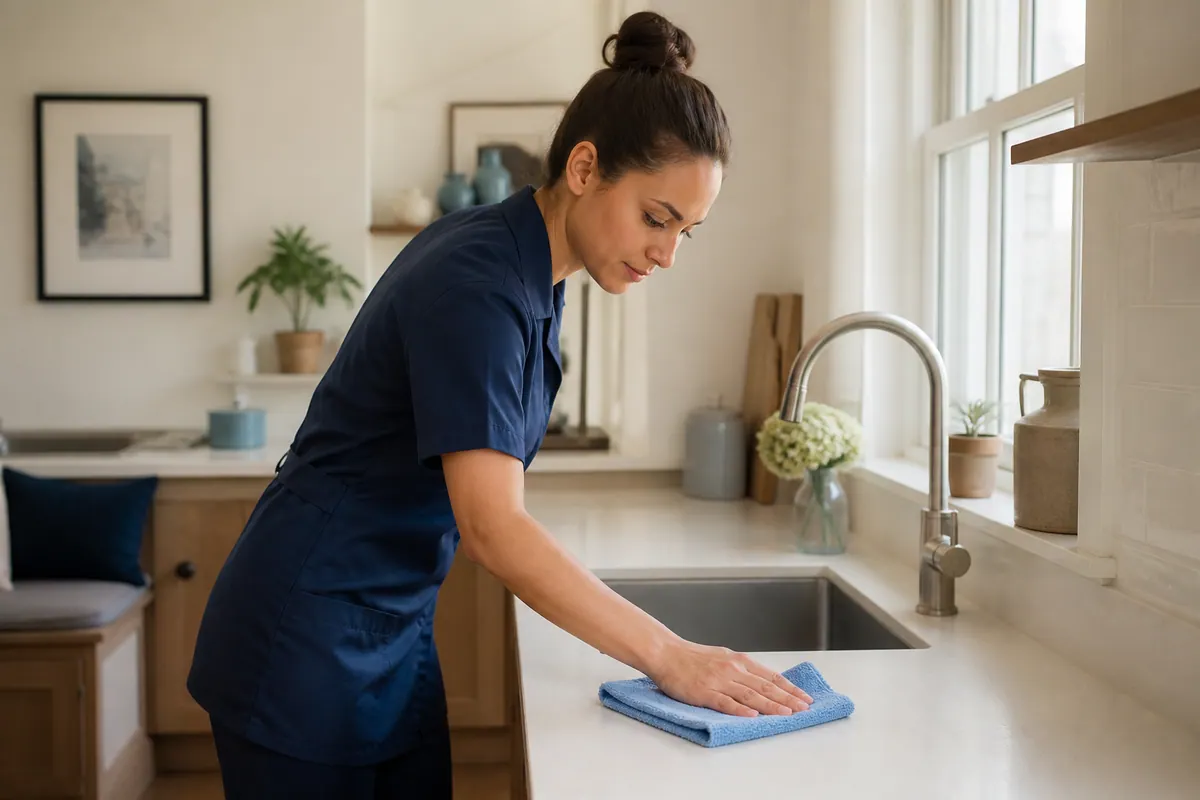
Kitchen
Accessible kitchen work may cover the sink, work surfaces, splashback and agreed exterior cupboard or appliance areas. Distinguish these everyday tasks from a deep appliance service.
Prepare the area by clearing food and belongings. Internal oven cleaning is separately scoped.
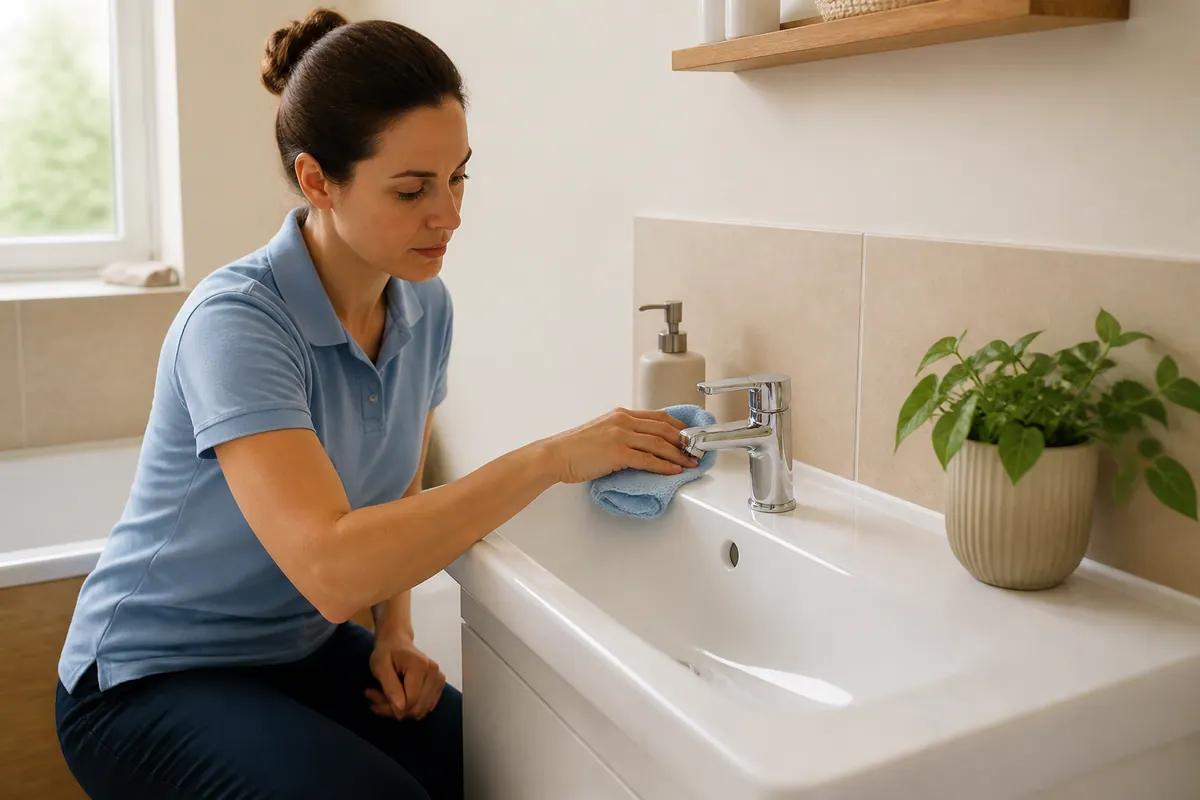
Bathroom
The bathroom list can cover sanitaryware, taps, shower areas, mirrors and reachable tiles. Products need to match those surfaces rather than being chosen for the room name alone.
Point out stone and any damaged seals or fittings before the work starts.
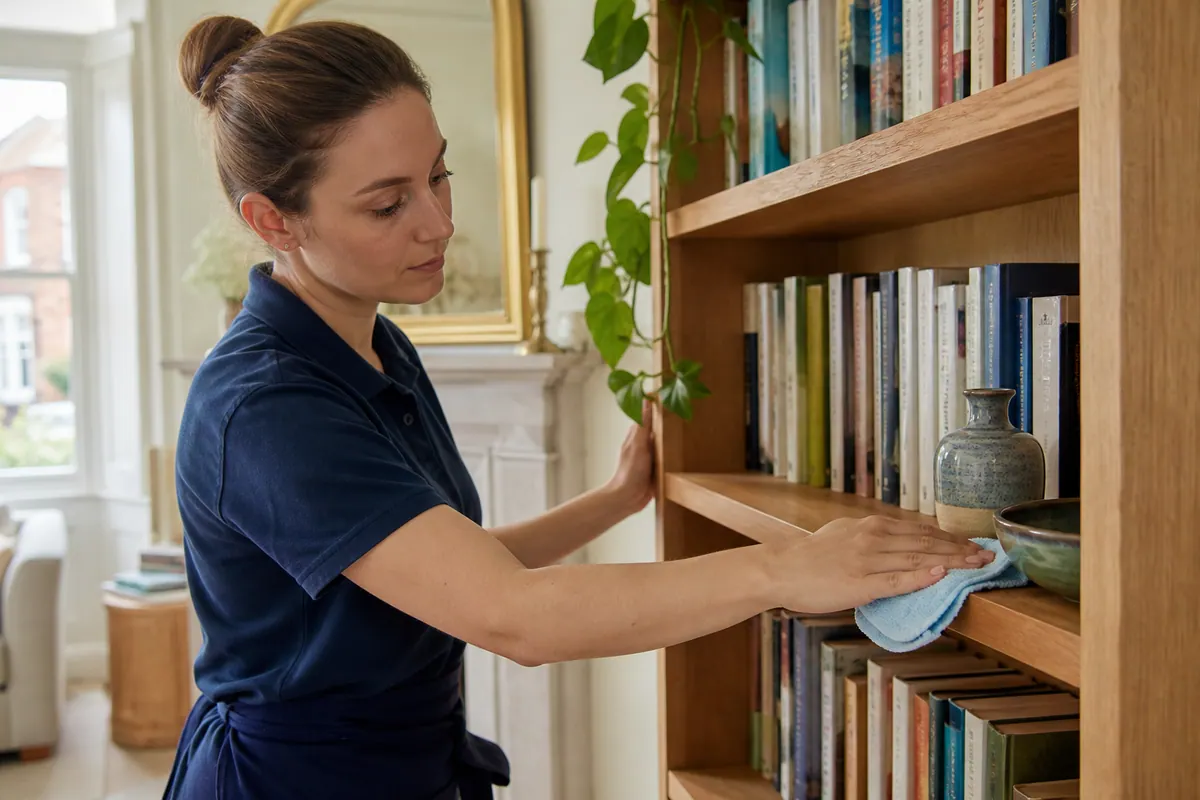
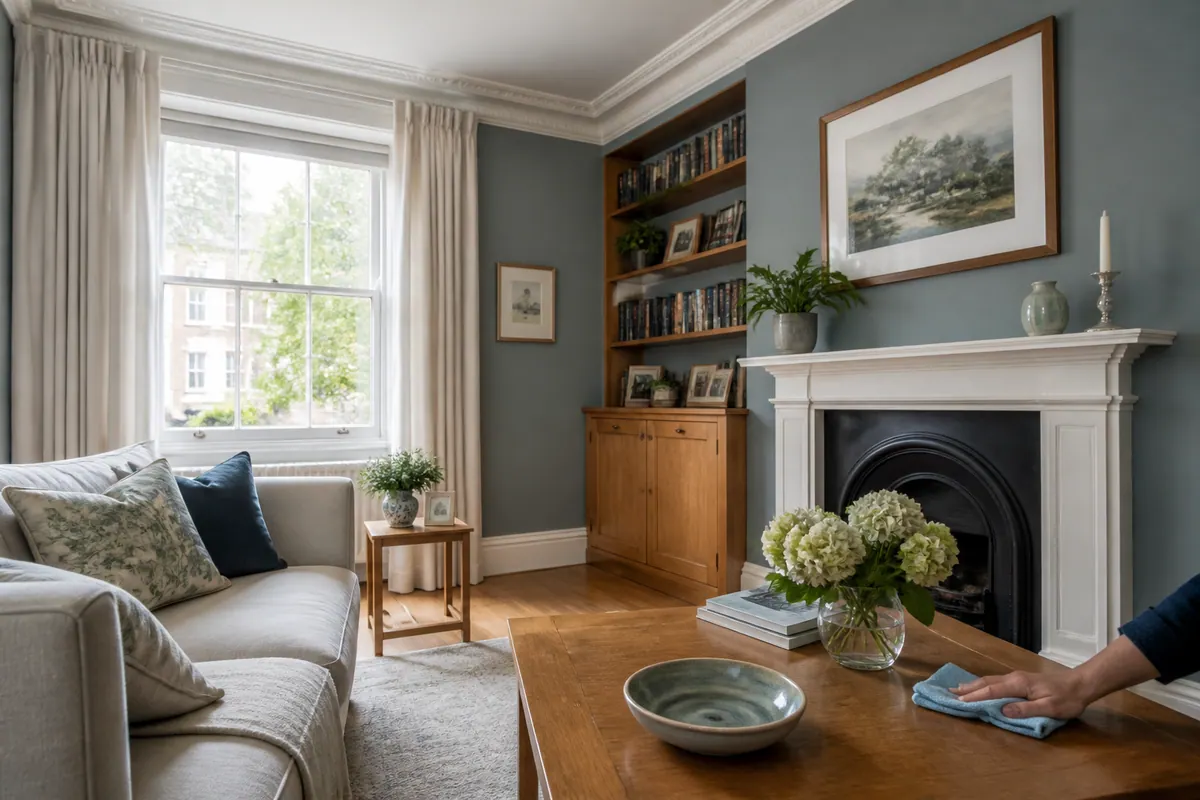
Living areas
Living areas need clear furniture surfaces and a usable floor route. The domestic scope combines dusting with vacuuming and compatible floor maintenance through the included area.
Personal collections should be prepared by the household, not rearranged to create access on arrival.
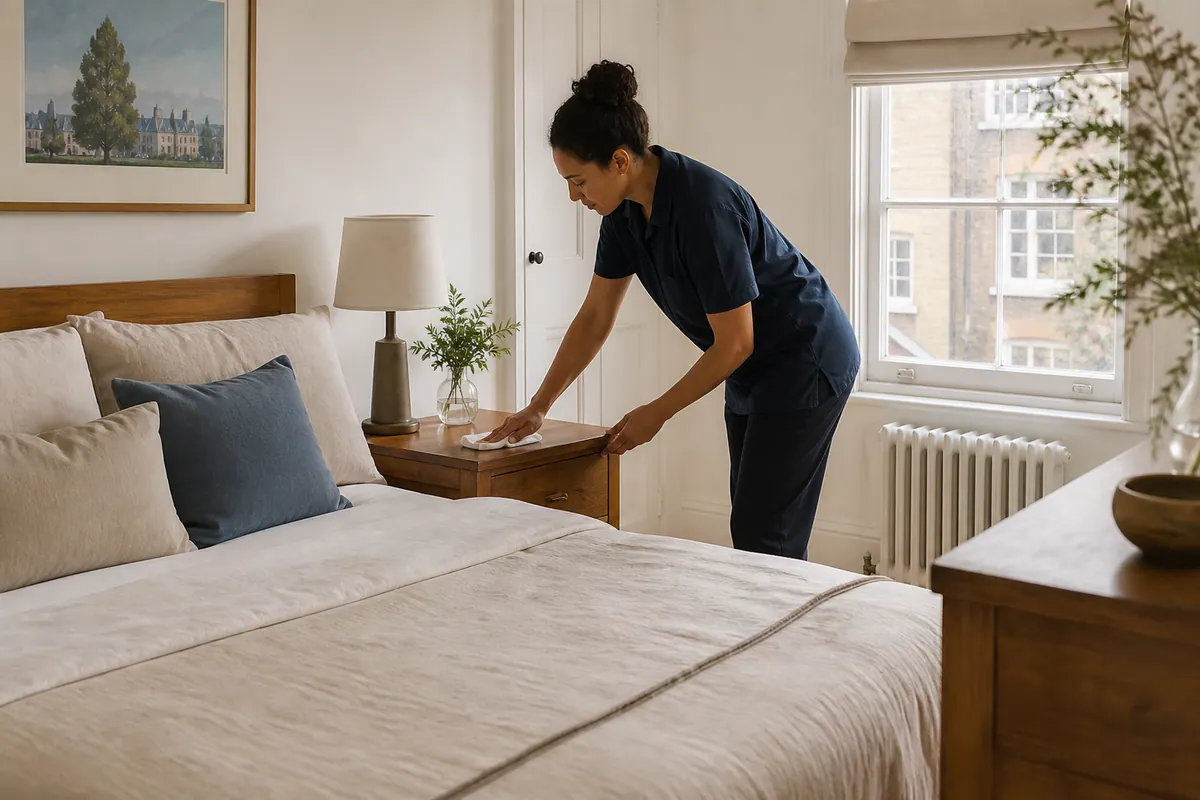
Bedrooms
Name the bedrooms that need maintenance. Within them, accessible dusting and floors can be planned without assuming the cleaner will sort drawers or personal possessions.
Keep private items stored safely and give explicit instructions about bedrooms not to enter.
Between one visit and the next
A longer gap can change the work waiting in the used rooms. Discuss that practical difference, together with available time, before deciding whether weekly or fortnightly visits make sense.
| Planning point | Weekly | Fortnightly |
|---|---|---|
| Best suited for | Households considering frequent upkeep support | Households considering an every-other-week routine |
| Core focus | Maintain a defined list through the used rooms | Review the same essentials after a wider gap |
| Priority planning | Small recurring priorities kept visible | More time between visits may change task priorities |
| Visit scope | Agree inclusions and duration directly | Agree inclusions and duration directly |
The starting visit may need to do more than preserve an existing baseline. Explain the current condition and agree which tasks lead, without expecting a regular maintenance duration to cover every backlog.
When the routine settles, use the agreed essentials as the reference. Changes in occupation, condition or room use still need to be raised rather than absorbed by default.
The household behind the rooms
These situations help explain access and priorities; they are not packages with a fixed room count or duration.
If work keeps you out, settle entry and identify the rooms used between working days. Do not assume an empty home means every room needs equal attention.
For family life, keep the used kitchen, bathrooms and floors prominent. Preparing small personal items makes the intended surfaces reachable.
Arrange where an animal will be during cleaning and which doors need to remain shut. The room sequence should reflect that plan.
Name the workspace and periods that cannot be interrupted. Another ready room may provide a starting point if the arrangement is agreed.
An occupied rental needs a maintenance brief, not an assumed end-of-tenancy service. Confirm who is giving the final instructions.
Where someone manages the booking, use a clear contact for changes and keys. The cleaner should receive one current set of priorities.
When another service is the better fit
A recurring clean should have clear limits. Restoration, heavy lifting and work at height are not routine additions; the linked services have their own requirements.
Extraction cleaning needs specialist equipment, while ordinary carpet upkeep may involve vacuuming.
Internal oven detailing remains separate from agreed appliance-outside care.
A mould issue should be assessed separately rather than added to general surface wiping.
External window cleaning needs an access plan beyond the normal indoor room route.
Post-building residue is not the same as dust from everyday occupation.
A focused intensive visit may be more appropriate than expanding every future maintenance appointment.
Everyday cleaning, explained
Keep the list understandable
Use the up and down controls to express a preference. The sample remains a planning aid, with the real workload and duration subject to the agreement made with the team.
The visit in context
Explain the areas needing care and the circumstances affecting their availability during the visit.
Set a realistic core list while discussing weekly, fortnightly or first-visit arrangements.
Check who supplies products and equipment, and confirm private entry instructions directly.
The cleaning route works through the agreed tasks with material-compatible methods.
Use the handover to flag limitations and decide what requires a separate conversation next time.
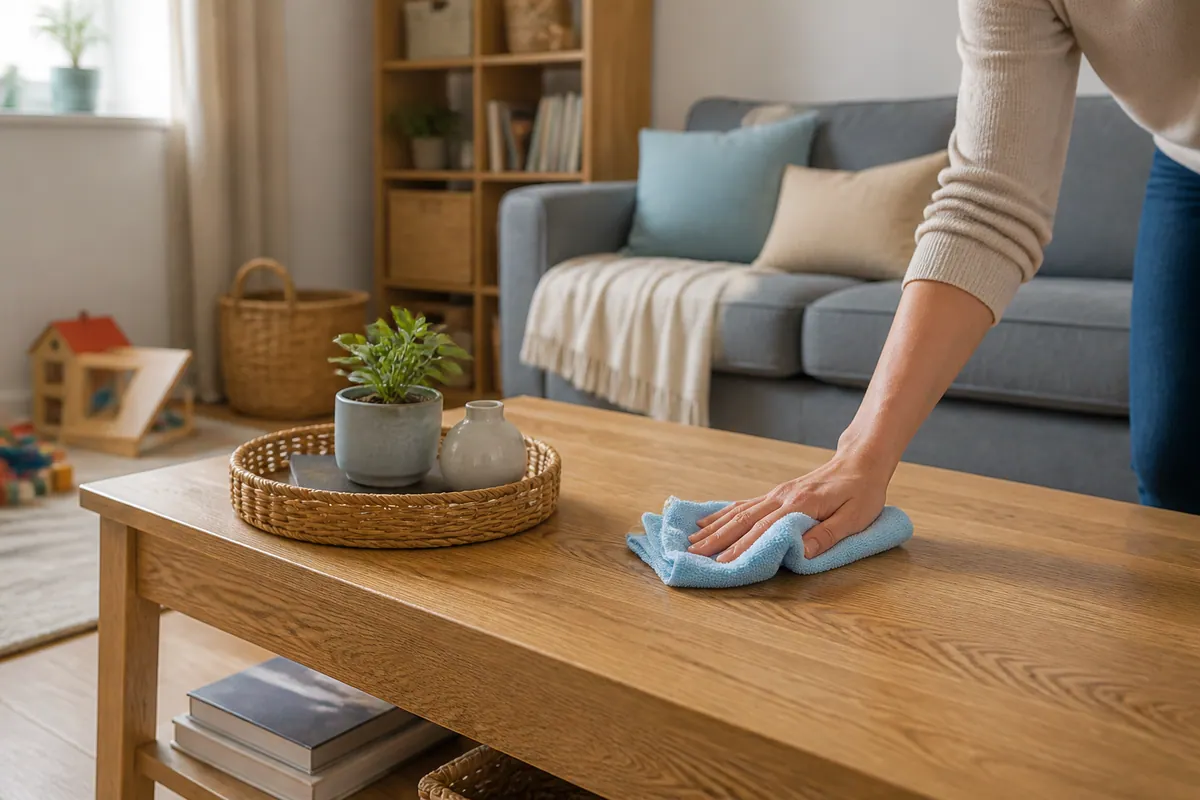
The household brief established.
The confirmed room work carried out methodically.
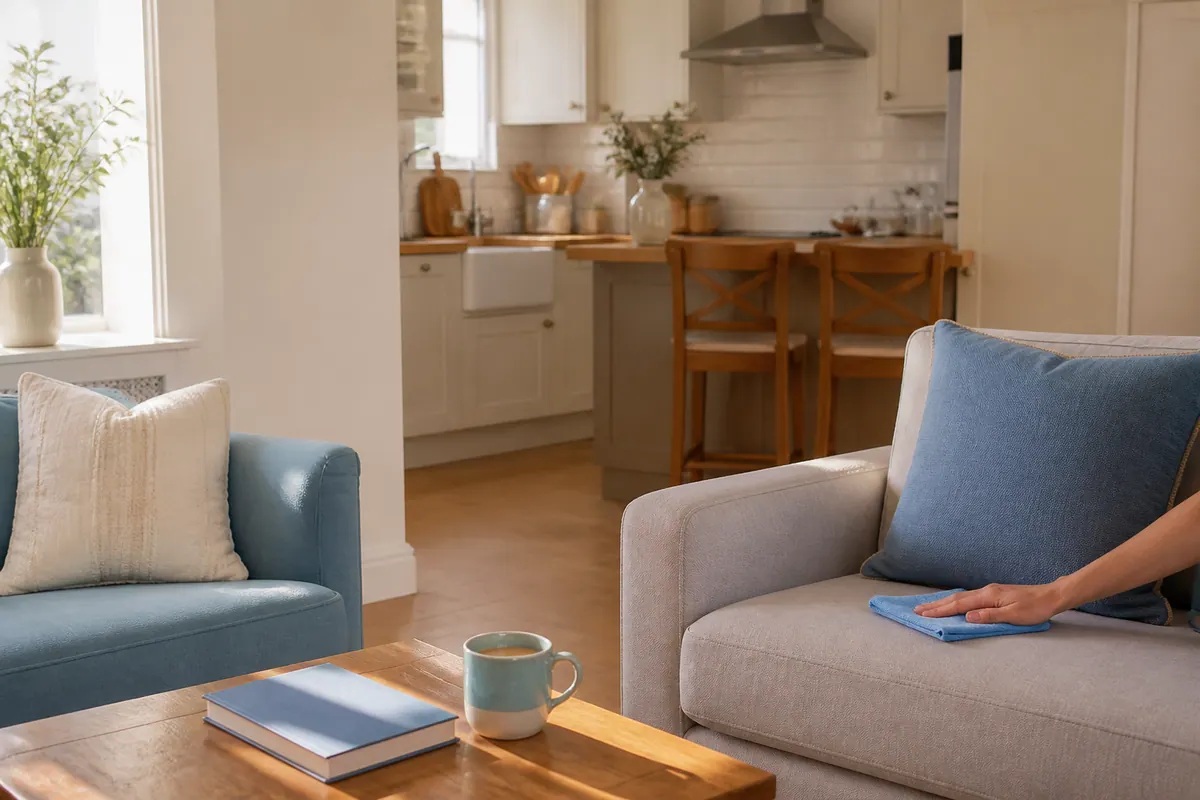
An informed plan for continued upkeep.
The scenes are illustrative, with no claim that they record an actual customer outcome.
Your questions about upkeep
Explain which rooms have been occupied and the next period of use you want to discuss. That information can inform the routine without assuming an empty property needs the same work or interval every time.
Arrange entry explicitly with the team and check any third-party handover beforehand. An intended visit needs a workable access plan; do not rely on someone being available merely because they helped on a previous occasion.
Homes and visits differ. A confirmed quotation needs the minimum visit, room scope, frequency, supplies and practical access details; the starting rate does not establish an all-inclusive household package.
Explain what happens in the rooms during the gap between visits. The useful interval depends on occupation and condition as well as the time available, with scheduling confirmed for the address.
Yes, but communicate the change early when possible. Keep essential maintenance visible and ask whether the revised work calls for more time or a different service rather than silently expanding the brief.
Initial condition may be different from a maintained baseline. The first or one-off starting figure is £90, with room count, priorities and time reviewed rather than copied from a later recurring visit.
The method should suit the material. Share known instructions and damage for timber, stone, lacquer, steel or painted areas, and confirm the supply arrangement before the appointment.
Name the space and the period when it is unavailable. Discuss another starting area or a clear handover, and put devices and personal items away before the room is released.
No. Carpet extraction and detailed oven internals have separate processes and scope. The domestic room list may instead include vacuuming and the exterior appliance surfaces expressly agreed.
Provide the postcode and practical household information when contacting the team. Weekly, fortnightly or first-visit availability is checked against the schedule; the area page does not promise a reserved slot.
Mayfair / enquiry area
When asking about Mayfair, include the postcode together with room use and access details. A suitable scope and schedule are discussed directly rather than assumed from a location page.
For the wider service scope, see Domestic Cleaning, or ask the team about your address.
The area map
The map can help orient the access conversation; it does not confirm coverage or timing.
Open map in a new tabMayfair / the next conversation
Tell us about the rooms in your Mayfair home, their condition and the routine you want to arrange. Plan care around occupation: share your preferred frequency and access details directly with the team.
