
Natural stone
Explain the stone surface and share any product restrictions you have been given.
Notting Hill / A stable routine through a changing household week
Keep the core steady when guests change the room list.
Visitors may alter the dining and living areas while leaving other rooms untouched. Tell us what has changed, preserve the recurring essentials, and agree any additional room before the next visit.
Kitchen · Bathroom
Living areas · Bedrooms
Choose what you want to discuss
The controls help make a domestic enquiry specific. They can describe your preference but cannot confirm duration, cost or a space in the schedule.
Consider the finish first
A room can contain several finishes with different needs. Bring existing instructions and known damage into the enquiry so the agreed maintenance does not imply a repair service.
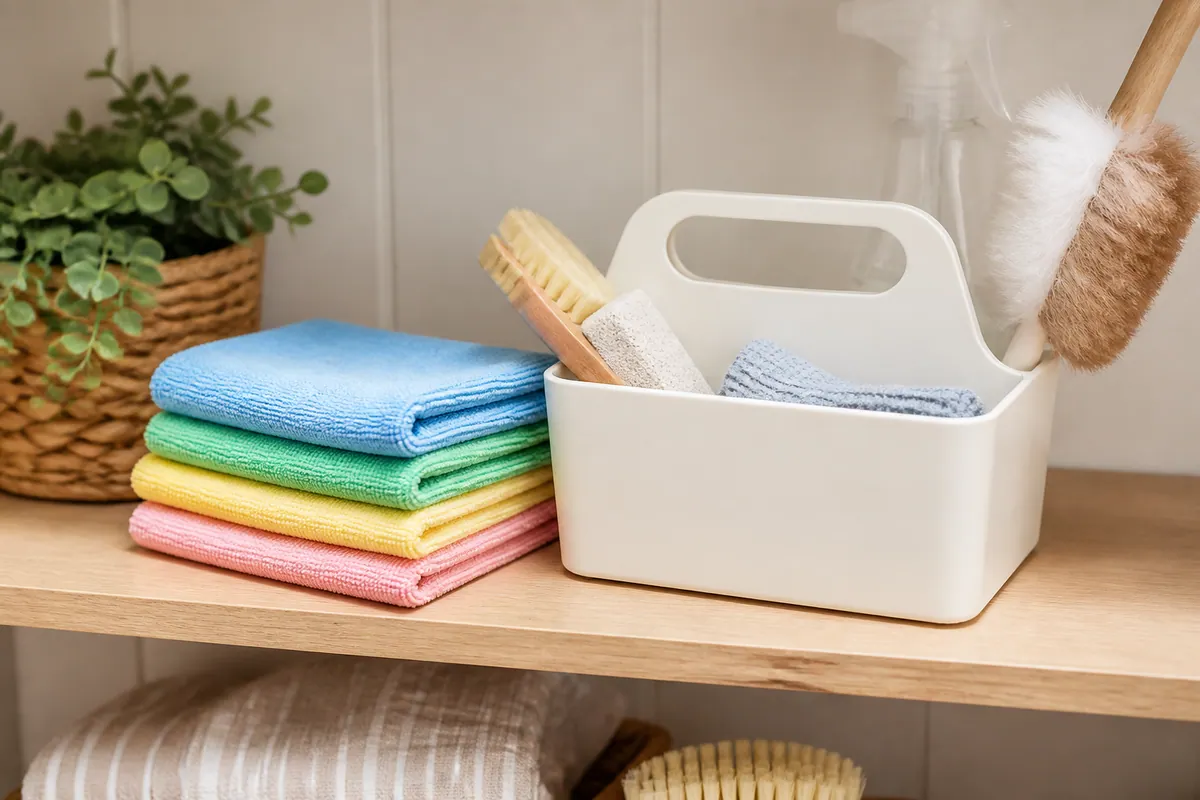
Explain the stone surface and share any product restrictions you have been given.
Identify timber coatings where possible before moisture or chemicals are selected.
Lacquered furniture warrants a specific note, not a general instruction to wipe everything.
The agreed steel exterior can be cleaned without implying a full internal appliance task.
Damaged painted surfaces need a clear boundary around what cleaning can do.
Notting Hill / a household scenario
Keep the core steady when guests change the room list.
A household week can look different without requiring a completely new cleaning service. The useful distinction is between the recurring tasks and the temporary change in use.
For Notting Hill, describe the rooms affected by visitors and the condition now. Do not assume the cleaner will know which dining or sleeping spaces have been used since the last booking.
Put away guest belongings and household valuables before the agreed areas are cleaned. An accessible room can be maintained without personal items becoming part of the task.
If extra work no longer fits the regular visit, discuss the alternatives. The ordinary kitchen, bathroom and floor priorities should not be lost to an unreviewed guest checklist.

The small instructions that matter
Agree key collection and return with the team rather than leaving sensitive details in a public message.
Confirm any concierge handover and who can permit access to the apartment.
Settle the alarm instructions for the beginning and end of the visit privately.
Tell the cleaner which spaces pets will occupy and which boundaries need care.
Explain calls or a private desk and discuss the sequence around the occupied area.
Share the parking or loading information you know before timing is agreed.
Make room exclusions and untouched belongings part of the actual brief.
Useful preparation combines ready rooms with suitable products and confirmed access. A broad request for everything to be cleaned cannot replace those practical decisions.
Agree the visit behind the rate
Use these published starting figures to begin the enquiry. The final domestic arrangement still needs a confirmed minimum visit, included supplies and realistic task list.
| Service | Price | Main factors |
|---|---|---|
| Regular domestic cleaning | From £20/hour | Property scale, frequency, minimum time and agreed supply/access arrangement |
| First / one-off domestic visit | From £90 | Initial workload, included rooms and selected starting tasks |
| Specialist / intensive scope | Quoted separately | Intensive condition or service-specific equipment and access needs |
A larger property or different starting condition can change the time required. Frequency, supplies, entry and parking also matter, while specialist requests need separate consideration rather than an implied inclusion.
The recurring essentials
Decide which everyday tasks the booking must serve before adding the interesting extras. The used kitchen, bathroom, accessible furniture and floors should retain their agreed place.
A detail belongs on the list only when it is named and there is room for it. If a selected task becomes substantial, discuss the effect on the rest of the work.
Room choices, clear scope
The tabs show the household work to discuss, not a fixed package for every property. Explain condition and access so a room label translates into an achievable cleaning brief.
Kitchen
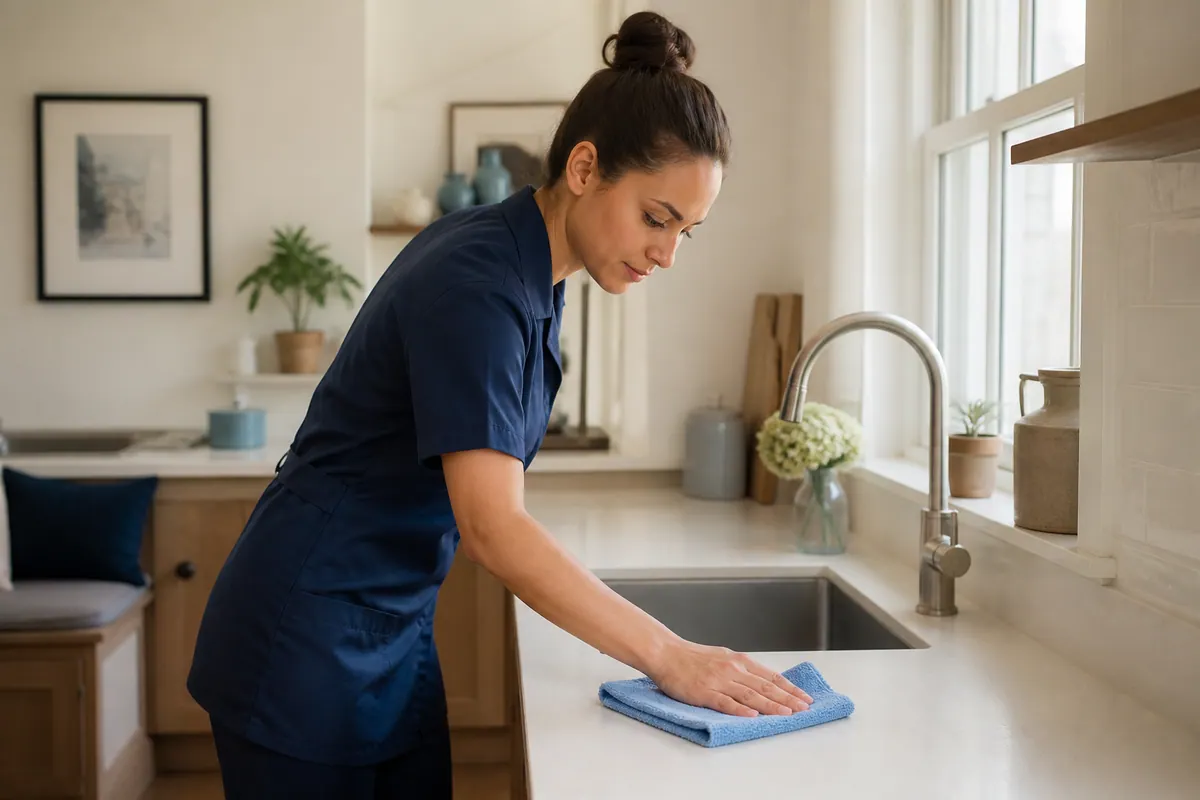
An agreed kitchen clean addresses accessible everyday surfaces: sink, worktop, splashback, cupboard faces and exterior appliance areas. It does not make concealed areas part of the same task.
Put food away and clear the surface you want cleaned. Detailed oven internals remain separate.
Bathroom
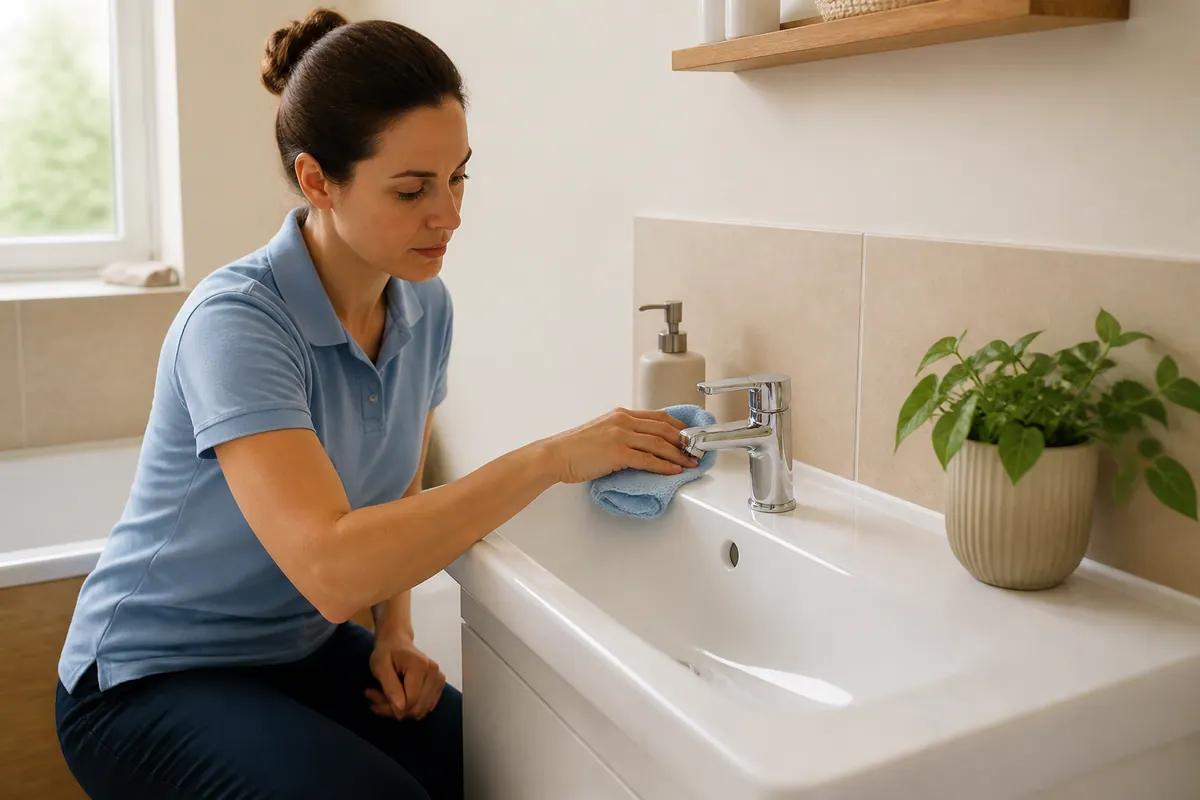
The bathroom brief can bring together mirrors, taps, showers, sanitaryware and reachable tiles. Share material instructions where ordinary assumptions would be unreliable.
Flag stone or damaged seals before the cleaner selects products for the area.
Living areas
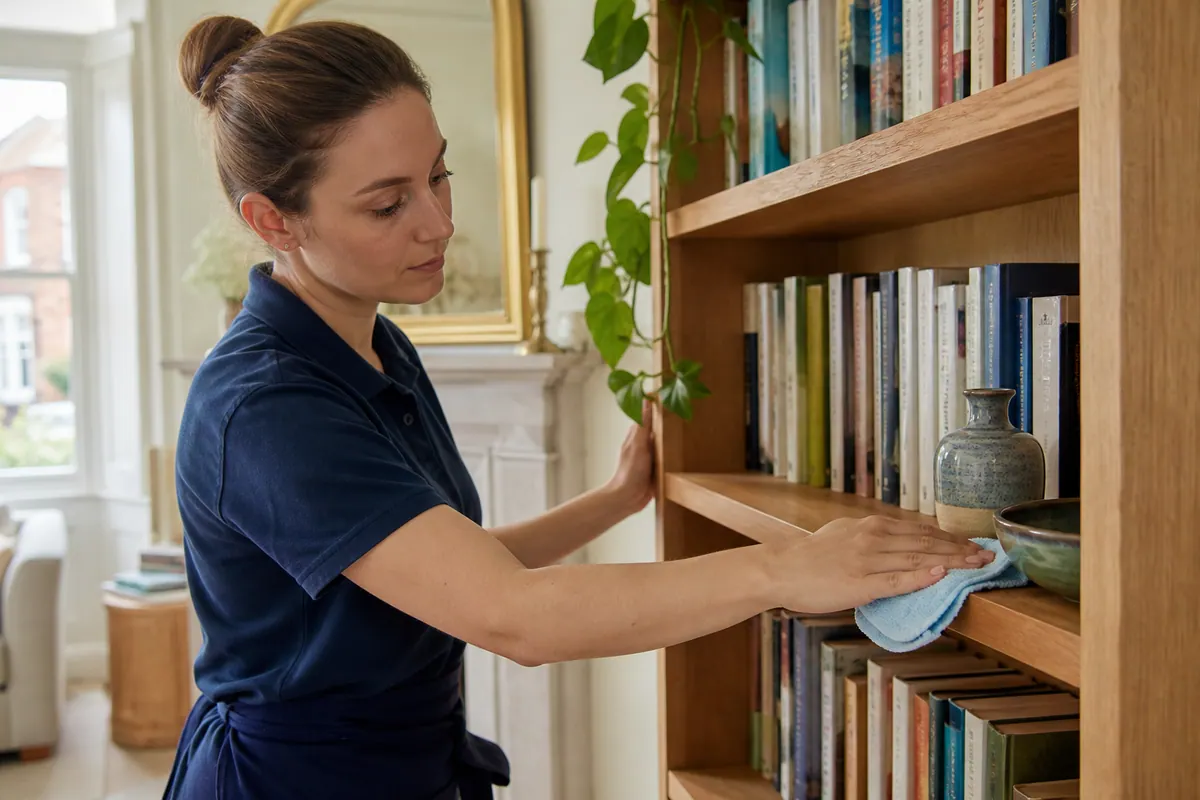
Living areas can receive dusting through accessible furniture, then vacuuming and compatible floor care. Keep the route practical and the household’s personal organisation separate.
Fragile items and important papers should be put away; anything not to be handled needs an explicit boundary.
Bedrooms
For bedrooms, identify the reachable surfaces and floors to be maintained. Closed storage and personal organisation are not implied by ordinary room cleaning.
Secure medication, valuables and belongings before the visit, and name any room that must stay private.
Weekly or every other week
The right gap depends on everyday activity and the agreed visit length. Neither weekly nor fortnightly care can be recommended for every home from its postcode or room count alone.
| Planning point | Weekly | Fortnightly |
|---|---|---|
| Best suited for | Frequently used rooms needing a recurring discussion | Homes considering less frequent maintenance support |
| Core focus | A consistent core reviewed at a weekly interval | A core list reviewed against the longer interval |
| Priority planning | Identify the essentials to repeat | Decide what should lead after the gap |
| Visit scope | Time and inclusions require agreement | Time and inclusions require agreement |
Describe the present state before discussing the first appointment. Earlier missed upkeep may call for more time, and specialist tasks must remain distinct from the initial domestic list.
Ongoing visits can then follow the core priorities you have agreed. If a room gains a new use or the list grows, communicate that change before expecting the same arrangement to cover it.
People, pets and room use
Describe the actual arrangements rather than selecting a label and assuming the rest. The team still confirms scope, time and availability for your home.
A working household can identify the rooms needing care and arrange an unattended handover if suitable. Availability must be checked rather than inferred from a preferred day.
Family routines often change during the week. Explain what will be cleared and which essential rooms should retain priority when extra requests arise.
Pets need an agreed place during the work. Share door instructions and excluded areas so access is not left uncertain.
A workstation may occupy part of another room. Identify its boundary, prepare the equipment and discuss when the area can be released.
Rental upkeep is about the household living there now. Keep any later tenancy handback task separate and confirm the contact authorised to change the list.
If a manager coordinates the booking, establish how current instructions are passed on. The room list and keys should not depend on conflicting messages.
A boundary around the regular clean
The domestic list concerns household maintenance. Anything needing high access, heavy lifting or restoration should be raised as another requirement, not assumed from the room name.
Carpet extraction is different from the vacuuming agreed in a routine floor list.
The kitchen being included does not authorise a detailed clean of oven internals.
Mould treatment requires a separate conversation about assessment and scope.
Window exteriors are not implied by indoor cleaning; access must be considered independently.
Building dust and residue call for the appropriate after-builders service discussion.
If the home needs intensive attention, explain that starting condition and consider a distinct one-off brief.
A quick scope check
The order for your conversation
Try a different arrangement using the arrows. It changes the example only, not the service booked, so take the proposed order into your conversation about the actual visit.
From enquiry to upkeep
Begin with occupied rooms, present condition and any pets or work-at-home constraints. This gives the enquiry a practical starting point.
Choose the preferred interval and identify the essential tasks, with appointment availability still to be confirmed.
Settle the supplies and entry plan, including keys, alarms, parking and material guidance.
The visit follows the agreed core rooms using methods compatible with the surfaces involved.
At handover, review the priorities completed and anything needing more time, specialist attention or repair.
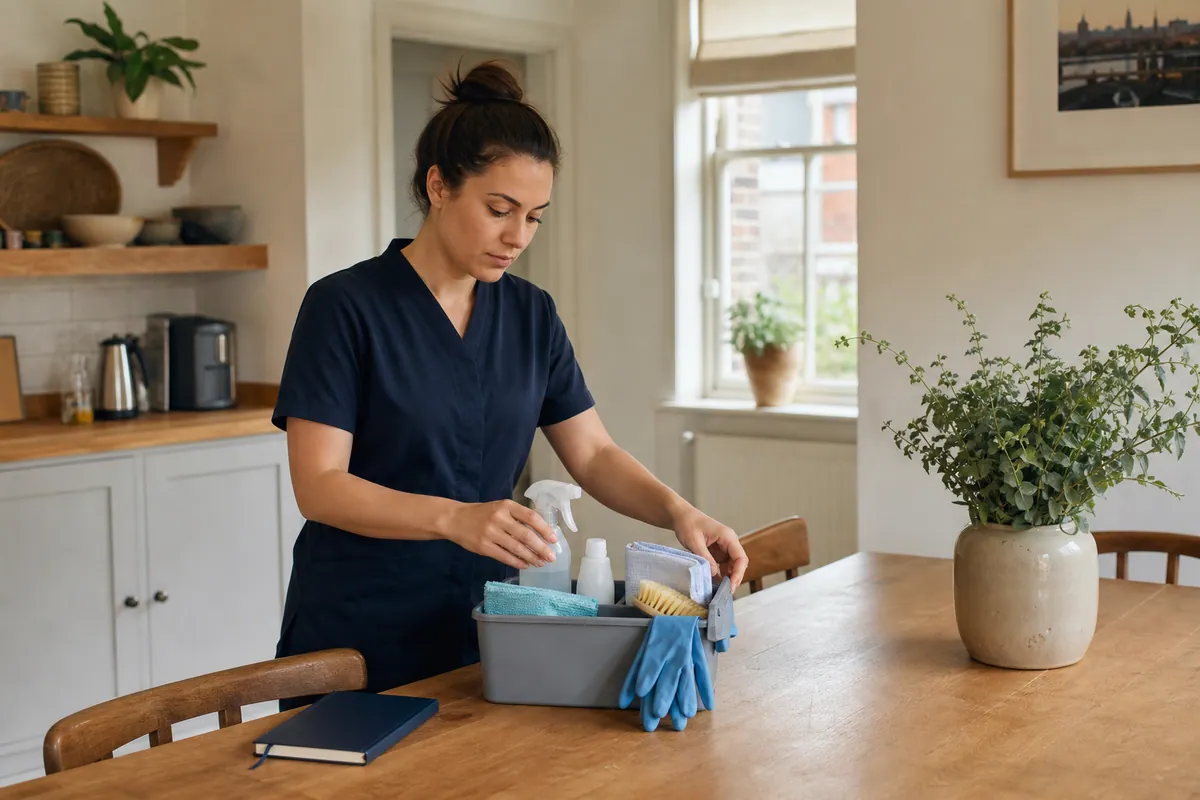
A prepared list of rooms and boundaries.
The agreed tasks addressed in a practical sequence.
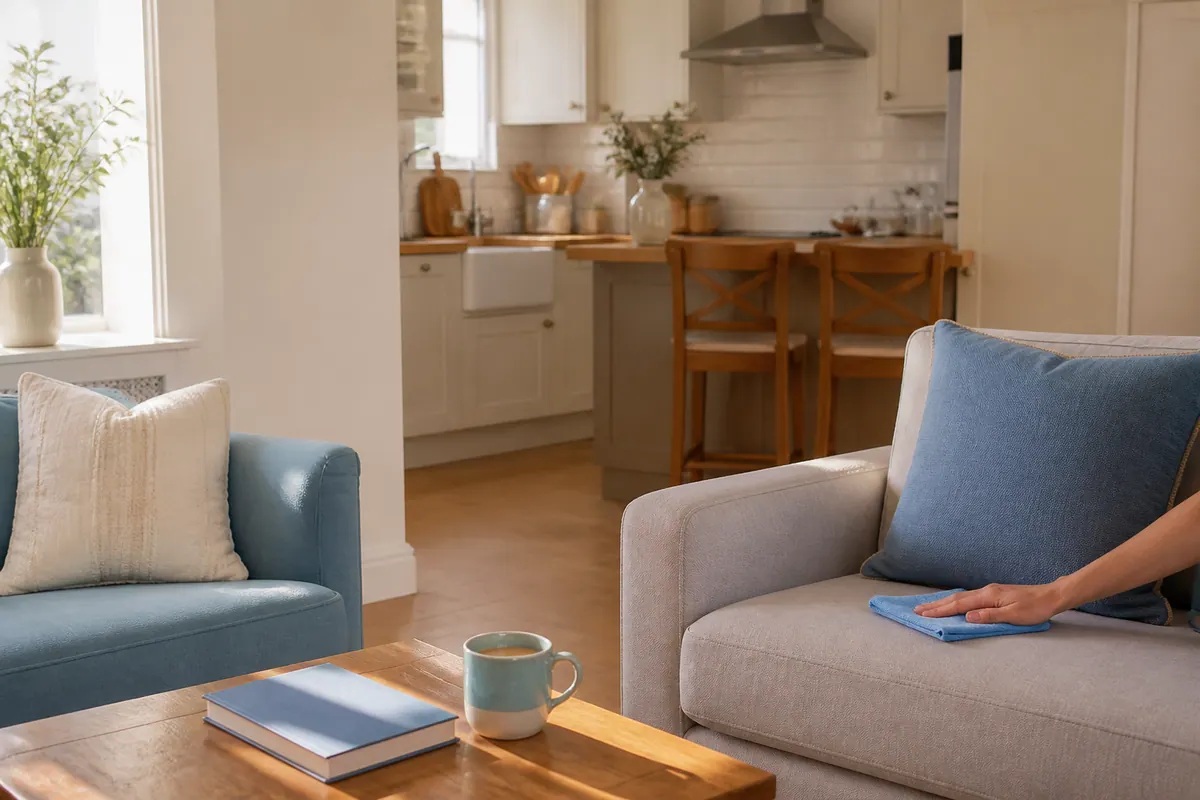
A clearer basis for the next maintenance visit.
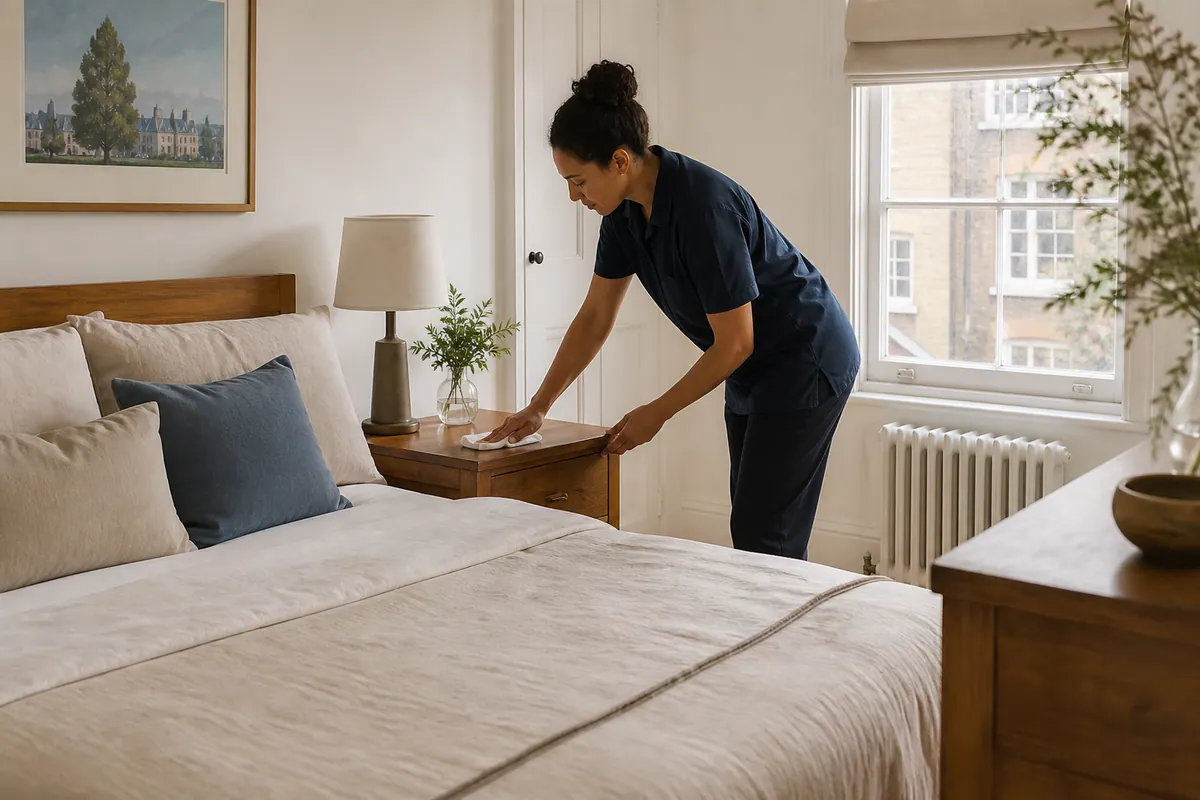
Illustrative scenes show a possible routine, not a recorded customer result.
Make the arrangement clear
Tell the team which dining, living or sleeping areas have had additional use and describe their condition. Keep the request specific to those spaces rather than automatically expanding the same level of attention to every room.
Review whether it still needs repeating after the household returns to normal use. Keeping every temporary addition indefinitely can change the workload, so discuss the recurring essentials separately from the short-term request.
Regular domestic cleaning starts from £20/hour, but a specific booking needs a confirmed list and minimum visit. Supplies, frequency, size and practical access help determine the final agreement.
Household use can change, so the frequency can be reviewed. Describe what is happening between visits and discuss a suitable weekly or fortnightly arrangement, with timing subject to availability.
Tell the team as early as practical and describe the actual work involved. A larger scope may require additional time, so the revised list should be agreed rather than simply added on the day.
Not necessarily: the starting condition can require a different list and more time. First or one-off domestic visits begin from £90, with scope and inclusions confirmed before booking.
The method should suit the material. Share known instructions and damage for timber, stone, lacquer, steel or painted areas, and confirm the supply arrangement before the appointment.
It can be discussed in advance. Give the exact room and quiet period involved, with an alternative available area or handover point; preferred timing remains subject to the agreed appointment.
They are separately scoped services, not implied additions to kitchen or floor upkeep. Exterior appliance care and vacuuming can be discussed within the domestic list instead.
Speak directly with Alesta, sharing the postcode, rooms, frequency and access details. The on-page controls only help organise those choices; they do not book or confirm a visit.
Notting Hill / enquiry area
Begin your Notting Hill request with the postcode, occupied rooms and proposed access method. Confirm the scope and timing directly; this location reference does not promise a cleaner at a particular hour.
For the wider service scope, see Domestic Cleaning, or ask the team about your address.
Location overview
Open the area view for orientation when discussing the home’s access.
Open map in a new tabNotting Hill / the next conversation
Tell us about the rooms in your Notting Hill home, their condition and the routine you want to arrange. Keep my changing week manageable: share your preferred frequency and access details directly with the team.
