Tooting / A cleaning list built around practical preparation

Domestic Cleaning in Tooting

Make reachable areas the starting point for useful upkeep.

The most detailed checklist cannot make a covered worktop or blocked floor accessible on its own.

  • Put personal items away from the agreed cleaning surfaces.
  • Choose a realistic first priority rather than labelling every task urgent.
  • Explain closed rooms, pets and entry arrangements before the day.
  • Keep material instructions with the room list so suitable care can be discussed.
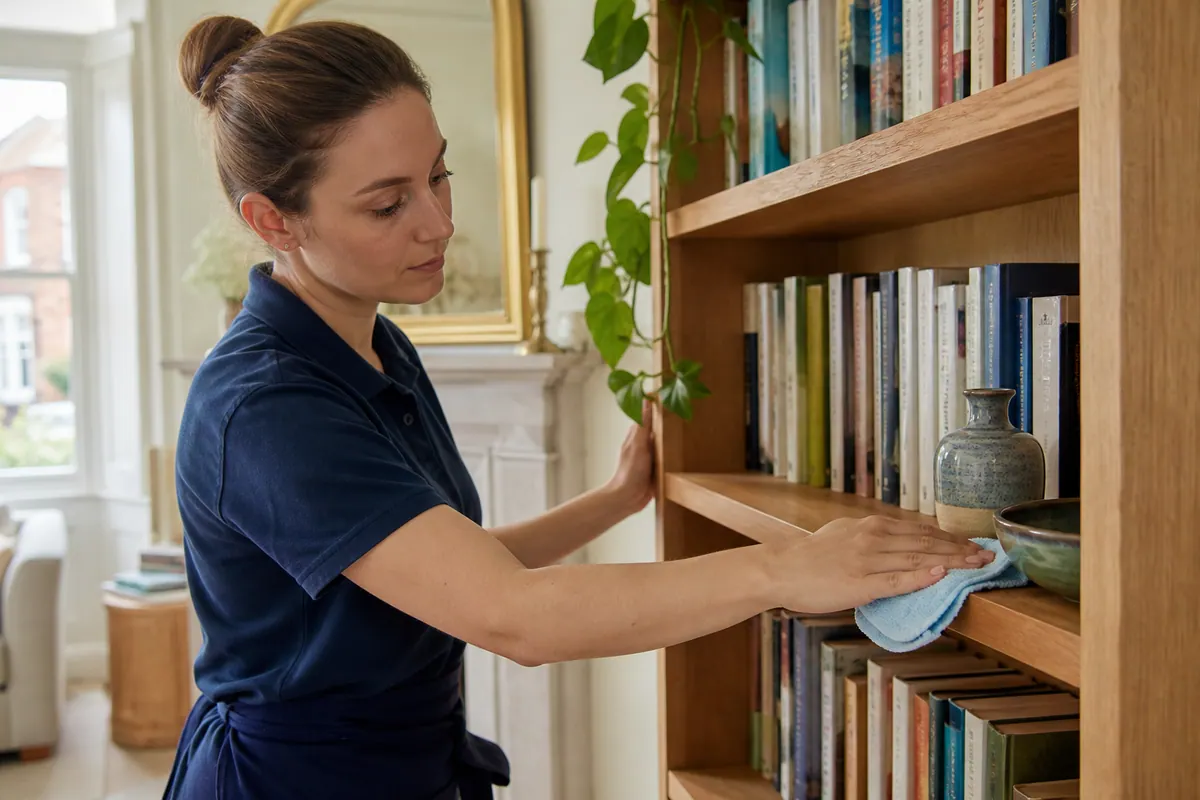
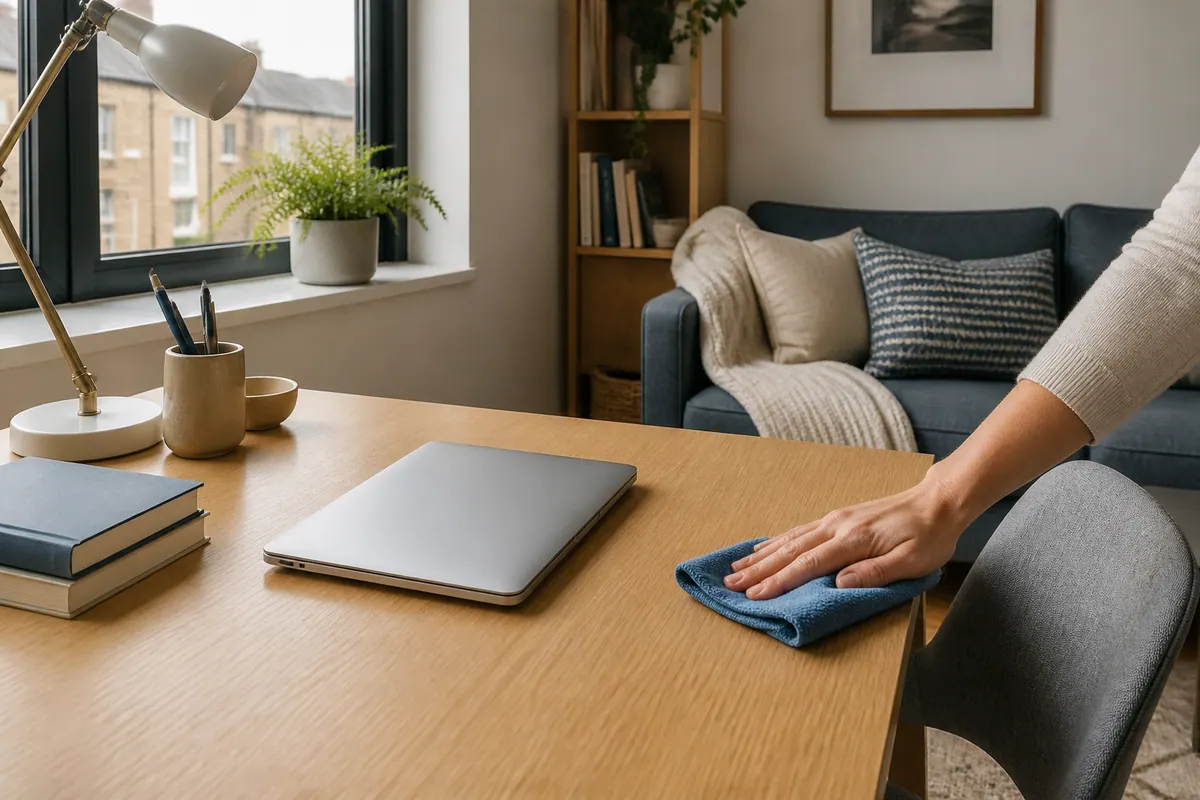
Illustrative living dusting scene for a household cleaning routine

Your routine

WeeklyFortnightlyFirst visit / reset

Your core areas

Kitchen · Bathroom
Living areas · Bedrooms

No appointment is allocated by this illustration.
Recurring carePlanned tasksSuitable products

A cleaning list built around practical preparation

Tooting: a cleaning list built around practical preparation

The most detailed checklist cannot make a covered worktop or blocked floor accessible on its own.

Put personal items away from the agreed cleaning surfaces. Explain closed rooms, pets and entry arrangements before the day.

Choose a realistic first priority rather than labelling every task urgent. Keep material instructions with the room list so suitable care can be discussed.

When preparation is not possible, agree what should move down the list.

The cleaner follows a confirmed maintenance scope; sorting the household’s possessions is a different task. What can be prepared now to make the agreed visit more straightforward?

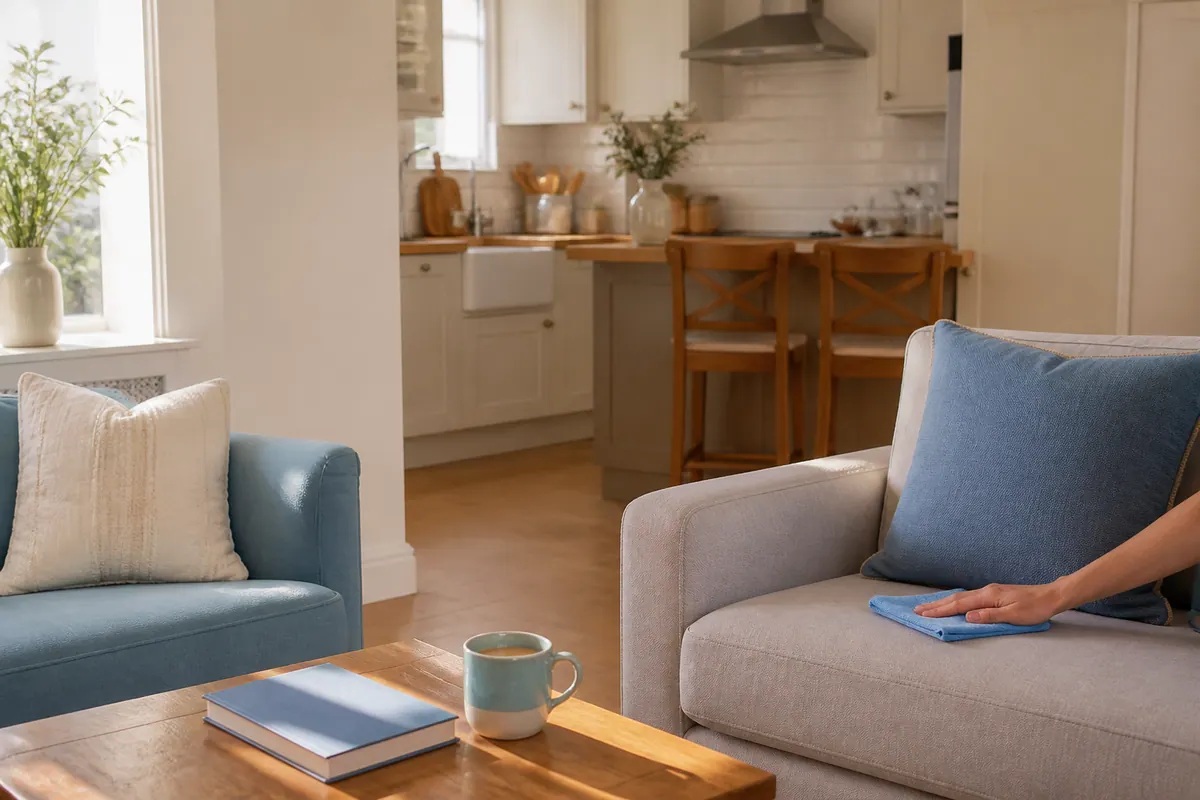
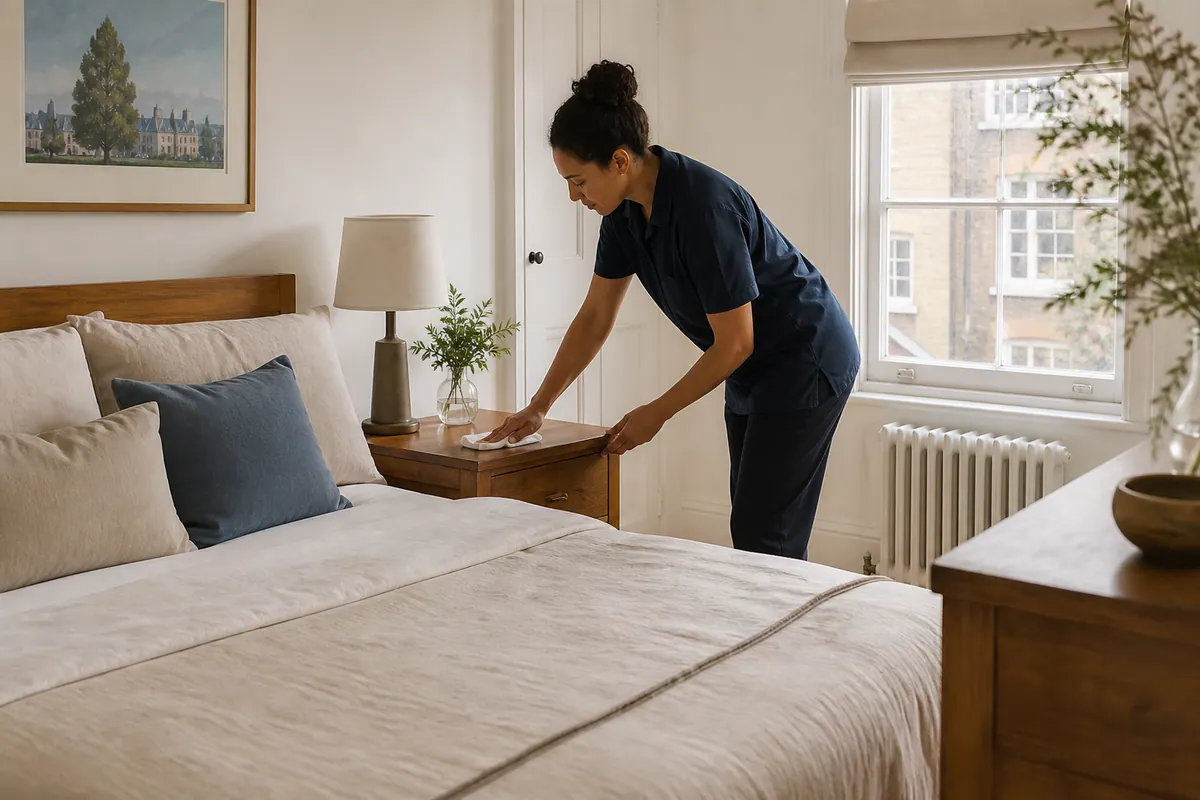
Illustrative residential interior; not a photograph of a customer property in Tooting
Shared kitchen care with clear boundaries starts with a prepared room list.

Your home routine

A room-by-room brief

What can be prepared now to make the agreed visit more straightforward? The room tabs separate the different tasks.

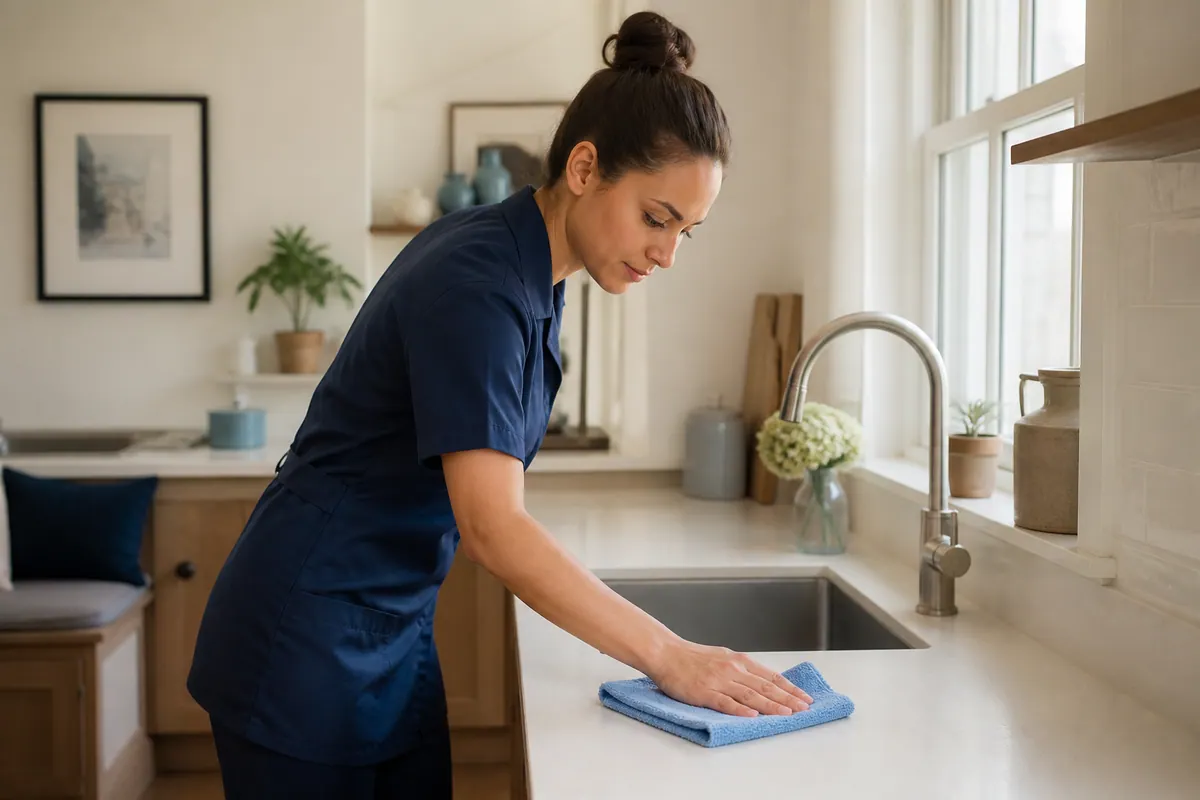
Illustrative kitchen domestic cleaning scene

Kitchen

A defined kitchen scope

List the sink and surrounding accessible surfaces together with cupboard fronts and external appliance panels. This explains the work more clearly than simply saying “kitchen”.

Personal items and food should be cleared before the agreed surfaces are addressed.

A clear scope

Choosing an interval

A weekly slot and a fortnightly slot describe timing, not identical task allowances. Discuss the condition expected at each visit.

Choosing the interval
Planning pointWeeklyFortnightly
Best suited forA household seeking closer-spaced maintenanceA less frequent visit with priorities agreed
Core focusRepeat the agreed room-maintenance tasksConsider the condition after two weeks
Priority planningEssential tasks in an agreed orderReview the rooms after the longer break
Visit scopeTime and scope confirmedDuration and tasks agreed

Starting condition

Starting work and repeat work are different lists. Tell the team whether the first appointment needs to catch up before a recurring routine can begin.

Keeping the list current

Keep the agreed core easy to identify on later visits. A changed room list or busier household is a reason to review time and priorities.

Before booking

Respect the finish

Tell the team about the finish before discussing products. A suitable approach in one room may not transfer to the next.

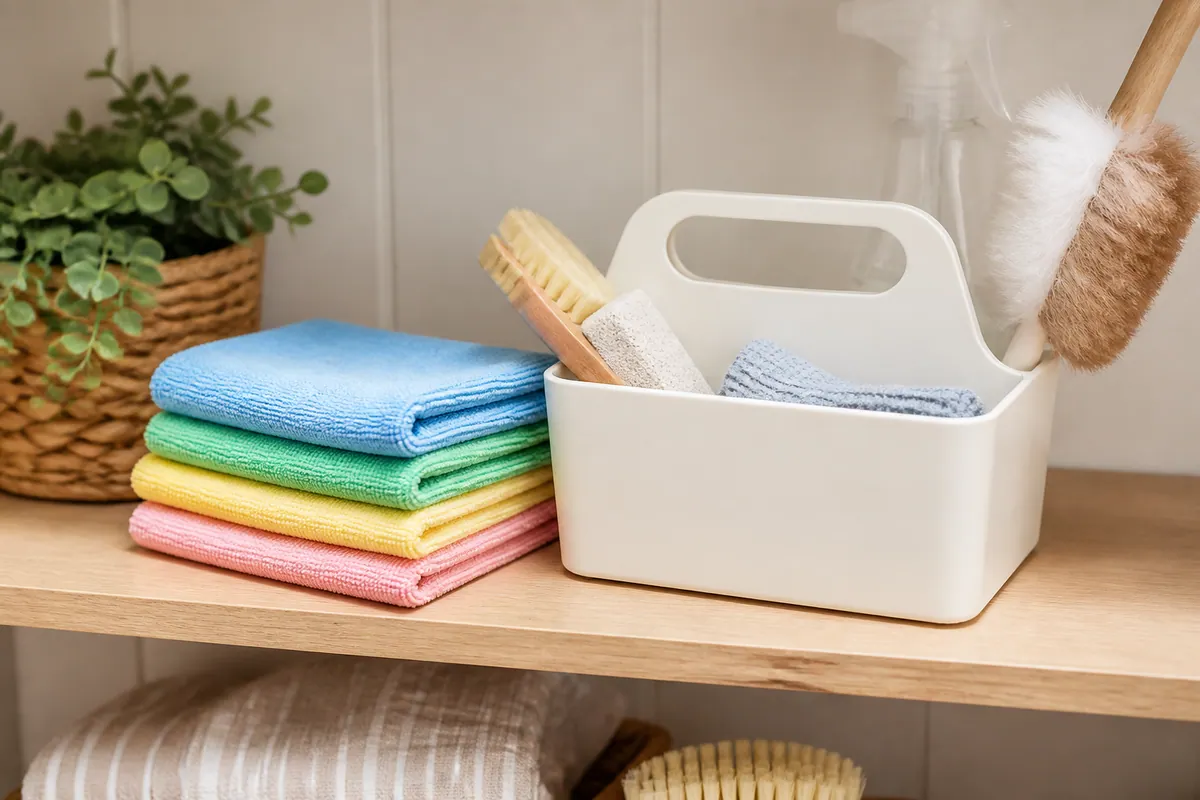
Separate folded microfibre cloths and an unbranded household cleaning caddy
The kitchen and bathroom do not share the general-room cloth and tool routine.

Natural stone

Natural stone needs its own product discussion.

Timber

Ask about compatible care for the particular wooden surface.

Lacquer

A lacquer finish is not permission for an arbitrary spray.

Stainless steel

Stainless-steel fittings or panels need appropriate surface care. Confirm the exteriors to include rather than assuming every appliance task.

Painted finishes

Share the care limits of painted furniture.

Worth discussing

Check the address

The Tooting enquiry should identify postcode, frequency and practical scope. The team confirms whether the appointment can be arranged.

Explore the wider scope in Domestic Cleaning, or confirm your enquiry.

Area reference

Tooting, London

This map does not confirm appointment availability.

Open map in a new tab

Worth discussing

Keep priorities visible

Give recurring rooms a defined place in the appointment. Selected details can rotate only when listed and accommodated.

Every visit’s agreed priorities

The main cleaning brief

  • A defined kitchen scope: sink and accessible surfaces
  • Bathroom care within reach: agreed sanitaryware
  • A usable living area: reachable dusting
  • The bedroom maintenance list: included-room vacuuming
  • Floor method suited to the finish
Selected, not assumed

A separate rotation

  • A listed stretch of skirting
  • Switches selected for this visit
  • Agreed reachable internal glass
  • Other accessible detail within time

Select an accessible detail and confirm that time allows. A request for skirting or internal glass should not quietly displace the recurring rooms.

For this visit

Room use and access

Different occupancy patterns call for different preparation.

Workday arrangements

When everyone leaves for work, the room list needs to be clear in advance. Confirm keys and products as well as the preferred day.

Family preparation

Agree which room can be used while others are addressed. Keep personal possessions out of the working areas instead of adding a sorting request.

Animals in the home

Explain the pet’s arrangement for the visit rather than expecting the team to decide. Its resting area can change the first available room.

An occupied workspace

An online meeting is a practical scheduling detail. Raise it with the room list so another starting point can be considered.

An occupied rental

A tenancy does not change ordinary maintenance into handover work. Discuss any separate move-out requirement as another scope.

A shared point of contact

A managed property still needs an unambiguous room list. Identify who can resolve a question about entry or scope.

Practical planning

Build a discussion brief

Choose the property, interval and first task to frame your enquiry. The options do not calculate a price.

1 Property
2 Frequency
3 Priority
4 Household considerations

Practical planning

Useful starting answers

What is the hourly starting point?
The starting hourly figure for regular upkeep is £20; confirm the actual booking.
What is the initial price guide?
First or one-off domestic work starts from £90; condition determines the scope.
What is accessible kitchen care?
Accessible worktops and sink areas, splashbacks, cupboard fronts and appliance exteriors within scope.
What should be explained in bathrooms?
List taps, mirrors, shower and reachable tiles with suitable product guidance.
Does the living room include storage?
Name the dusting and floor areas that can actually be reached.
Are private bedrooms excluded?
Selected bedrooms can receive dusting and appropriate floor care within scope.
Can the interval vary?
Ask about the available weekly or fortnightly pattern for your postcode.
When do selected details fit?
A rotating task needs a clear scope and enough time in the visit.
Are supplies confirmed beforehand?
Do not leave the supply question until arrival. Agree what is provided and identify materials needing compatible care.
Who confirms the actual appointment?
The controls only form an outline; the team must agree availability directly.

Practical planning

From guide to quotation

Confirm the scope behind the price rather than assuming a whole-home package from an hourly guide.

Regular domestic cleaning£20/ hourMinimum appointment needs confirmation
First / one-off domestic visit£90 fromDiscuss current condition and scope
Guides for the enquiry
ServicePriceMain factors
Regular domestic cleaningFrom £20/hourAgreed time and minimum visit, room coverage, recurring interval, supplies and postcode
First / one-off domestic visitFrom £90Current condition, number of spaces included and the tasks that should lead the visit
Specialist / intensive scopeQuoted separatelyIntensive requirements beyond upkeep, including specialist methods and access needs

The actual appointment

Prepared access helps describe the work, but it does not replace the quote details. Confirm room condition, duration, frequency, minimum visit, supplies and arrival arrangements; covered areas should not create an assumed sorting allowance.

Before booking

Rank the priorities

A preferred sequence helps the conversation; it does not replace one. Discuss changes in condition or access along with this order.

  1. Kitchen
  2. Bathrooms
  3. Floors
  4. Dusting
  5. Selected details

Practical planning

Planning, cleaning, reviewing

  1. Explain the starting home

    Explain the used rooms and starting condition, with any occupancy that affects access.

  2. Choose what comes first

    Keep an occasional detail separate from the dependable core. If it cannot fit, discuss another visit rather than assuming an extension.

  3. Settle the arrangements

    Agree the supply arrangement before the day. Tell the team about finishes or product preferences that affect the work.

  4. Follow the included scope

    Work proceeds through the defined room scope rather than an assumed unlimited checklist.

  5. Review what changed

    After the starting work, decide what genuinely repeats. Additions should be discussed rather than silently carried into the existing appointment.

Illustrative before stage of a regular home cleaning routine

The prepared brief

Preparation before the appointment.

Illustrative visit stage of a regular home cleaning routine

The agreed visit

Work matched to the surfaces.

Illustrative afterwards stage of a regular home cleaning routine

The maintenance pattern

Everyday maintenance carried forward.

Illustrative household scenes; no customer job is depicted.

Practical planning

Entry and private spaces

The key arrangement

Agree how the key reaches the team and how it returns. Keep the handover information in direct communication.

Building entry

If another person controls entry, confirm their role and instructions. A building entrance is not automatically permission to enter the home.

Alarm instructions

An agreed entry plan should account for the alarm where relevant. Confirm the required steps before the day.

Pet boundaries

Door rules and the animal’s location should be settled by the household. Then discuss how the included rooms can be approached.

Quiet work periods

If a desk remains in use, make the boundary explicit. Agree what can be cleaned elsewhere during that time.

Arrival constraints

Explain any parking or unloading constraint you know about. Do not leave an important arrival restriction until the day.

Private spaces

Name rooms that must not be entered and belongings that must not be handled. A general cleaning request does not override those boundaries.

A clear Tooting handover

A careful handover brings access and cleaning priorities together. Confirm any uncertain task before treating it as part of the routine.

The household brief

Your cleaning questions

What can be prepared now to make the agreed visit more straightforward?

The cleaner follows a confirmed maintenance scope; sorting the household’s possessions is a different task. When preparation is not possible, agree what should move down the list.

What should the household decide first?

Tell the team which areas are excluded, even if they seem obvious to the household. Personal boundaries are part of the agreed access plan. Family arrangements matter to room access. Explain them early and prepare the surfaces that are included, without assuming childcare or personal organisation.

How is the actual visit priced?

A clear quotation sets out the visit length and scope. Check frequency, property condition, product arrangements, arrival constraints and the minimum booking before confirming.

Does the starting rate guarantee a visit length?

The £20/hour regular starting guide is not a fixed property price. Ask about minimum time, room coverage and what is supplied.

Does the first visit use the later routine list?

The initial appointment needs a realistic view of what is reachable and what has accumulated. First/one-off domestic cleaning starts from £90, with personal organisation kept distinct from the agreed cleaning scope.

Does a longer gap change the priorities?

Consider what can be prepared and maintained between appointments before choosing weekly or fortnightly. A workable interval needs both household use and the confirmed schedule, not a checklist alone.

What happens when extras compete with core work?

If an area cannot be prepared, explain the limitation and discuss another priority. If the new request is bigger, confirm its scope rather than treating a changed order as extra booked time.

Should finish instructions affect product planning?

Confirm who supplies products and equipment. Include material instructions and preferences when the appointment is discussed.

Which appliance and carpet work needs another scope?

A vacuuming request is not an extraction booking. Professional carpet treatment needs its own scope, equipment and time. Agreed appliance exteriors can be wiped in the kitchen. Detailed work inside the oven has a separate scope.

Do my selections book a cleaner?

Contact Alesta with the full postcode, proposed frequency and room list. The on-page planner is only an outline, not a reservation.

A practical Tooting enquiry

Practical preparation for a useful domestic visit in Tooting

Make reachable areas the starting point for useful upkeep. Send the postcode and room priorities to begin the enquiry.

Chat