
Describe the first workload
An established maintenance list is not a reliable estimate for a home needing an initial catch-up; discuss the difference before booking.
Woodford / A practical home routine
Separate routine care from a heavier catch-up
For a Woodford home with unusually accumulated work, describe that condition before choosing a regular visit. The first brief may need a different scope from ongoing maintenance.
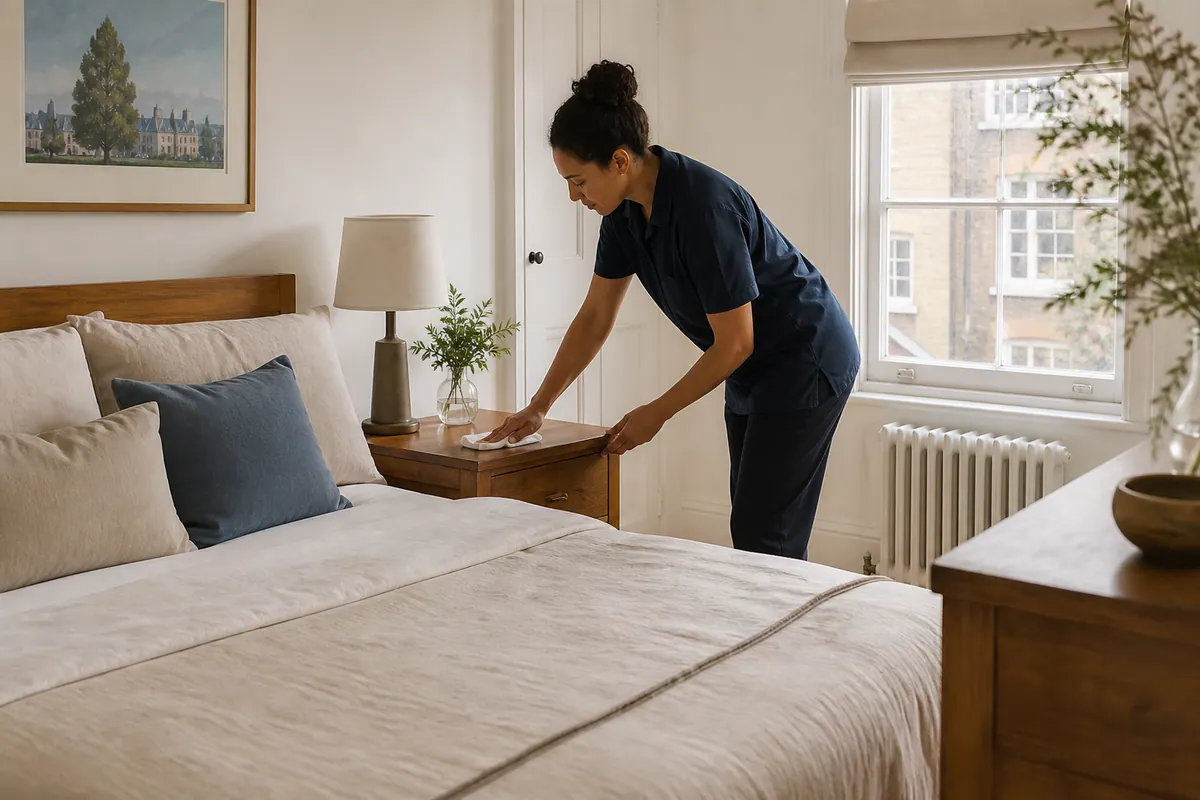
Kitchen · Bathroom
Living areas · Bedrooms
Woodford / household planning
For a Woodford home with unusually accumulated work, describe that condition before choosing a regular visit. The first brief may need a different scope from ongoing maintenance.
A recurring price guide is not a promise to absorb intensive work into an ordinary appointment.
List the rooms that can already be maintained and those needing catch-up. Discuss specialist residue or restoration independently instead of labelling it extra domestic cleaning.
Describe the kind of accumulated work instead of only calling the home overdue. The team can then distinguish ordinary care from a specialist or intensive request.
Keep the proposed recurring footprint separate from the larger starting brief. Once the initial condition is understood, the household can discuss a realistic maintenance list.
Visit frequency
Choose the recurring rhythm after looking at household activity and the upkeep needed, rather than room count alone.
| Planning point | Weekly | Fortnightly |
|---|---|---|
| Best suited for | More frequently used areas | A household maintaining areas between visits |
| Core focus | A maintained core room routine | Assess what the interval leaves to maintain |
| Priority planning | Use an agreed main-task sequence | Choose the leading tasks for this interval |
| Visit scope | Define the tasks before the visit | The chosen interval does not fix scope |
An established maintenance list is not a reliable estimate for a home needing an initial catch-up; discuss the difference before booking.
A repeated booking does not mean an unchanging household. Keep the team informed about additions to the room list.
Room coverage
Look through the room examples and select the spaces that matter for this visit. Condition and time still need checking.
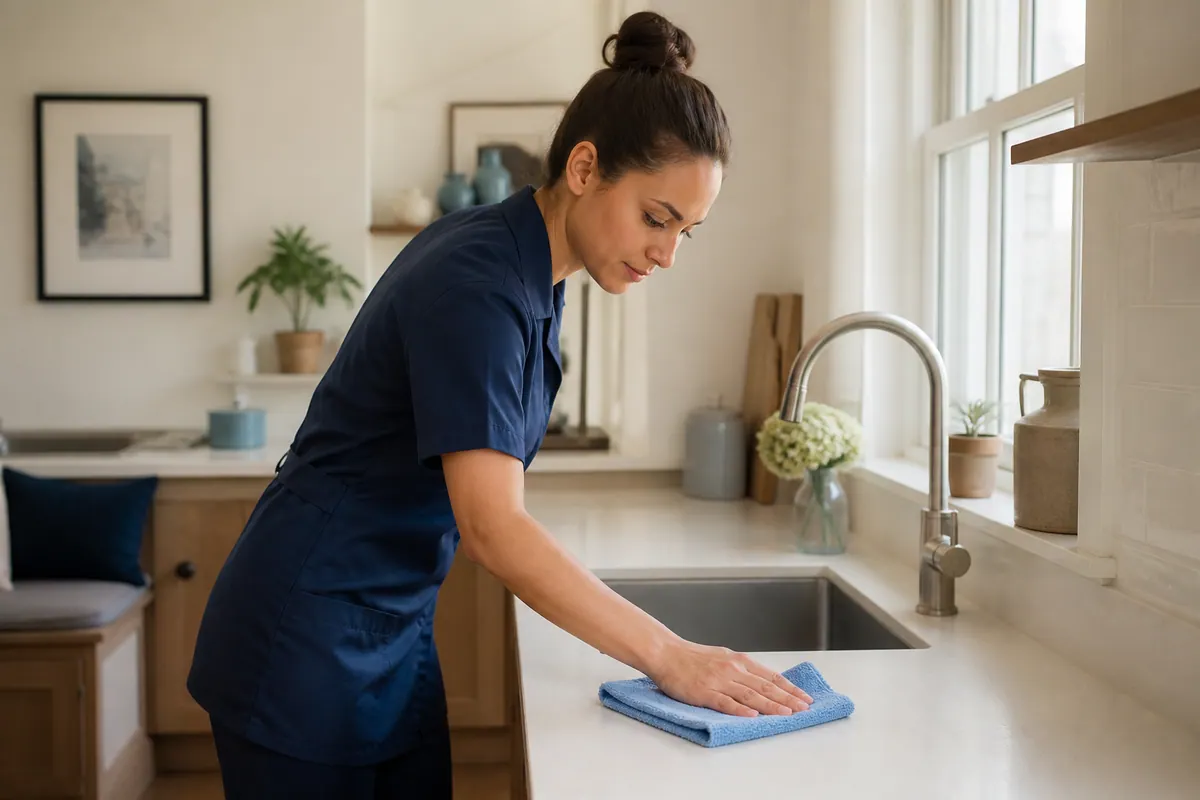
Kitchen
Kitchen upkeep concerns reachable working areas and listed exterior surfaces, including the sink, worktops, splashback and fronts.
Clear space around the sink and worktop before the appointment; internal oven cleaning requires its own scope.
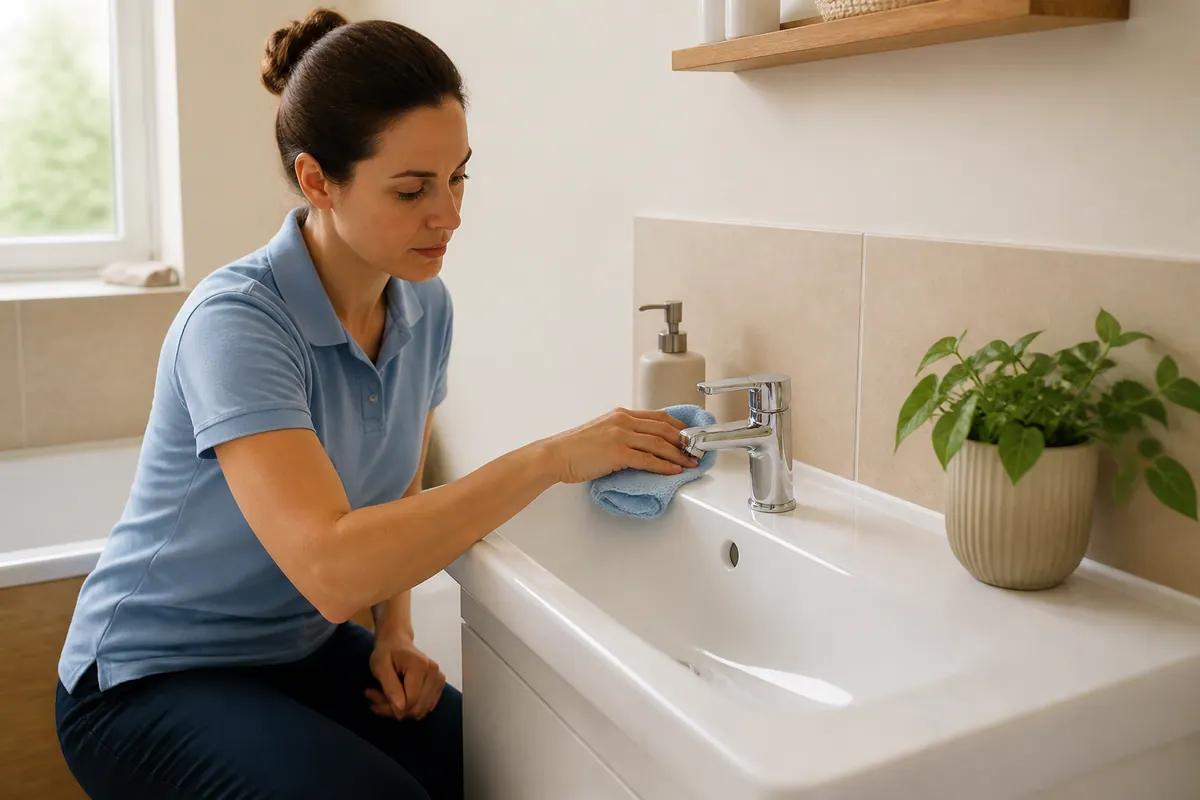
Bathroom
Include the used sanitary fittings and shower in your description, with mirror and accessible tile care confirmed as part of the room.
A bathroom can contain several finishes. Flag stone and damaged seals rather than assuming one treatment suits everything.
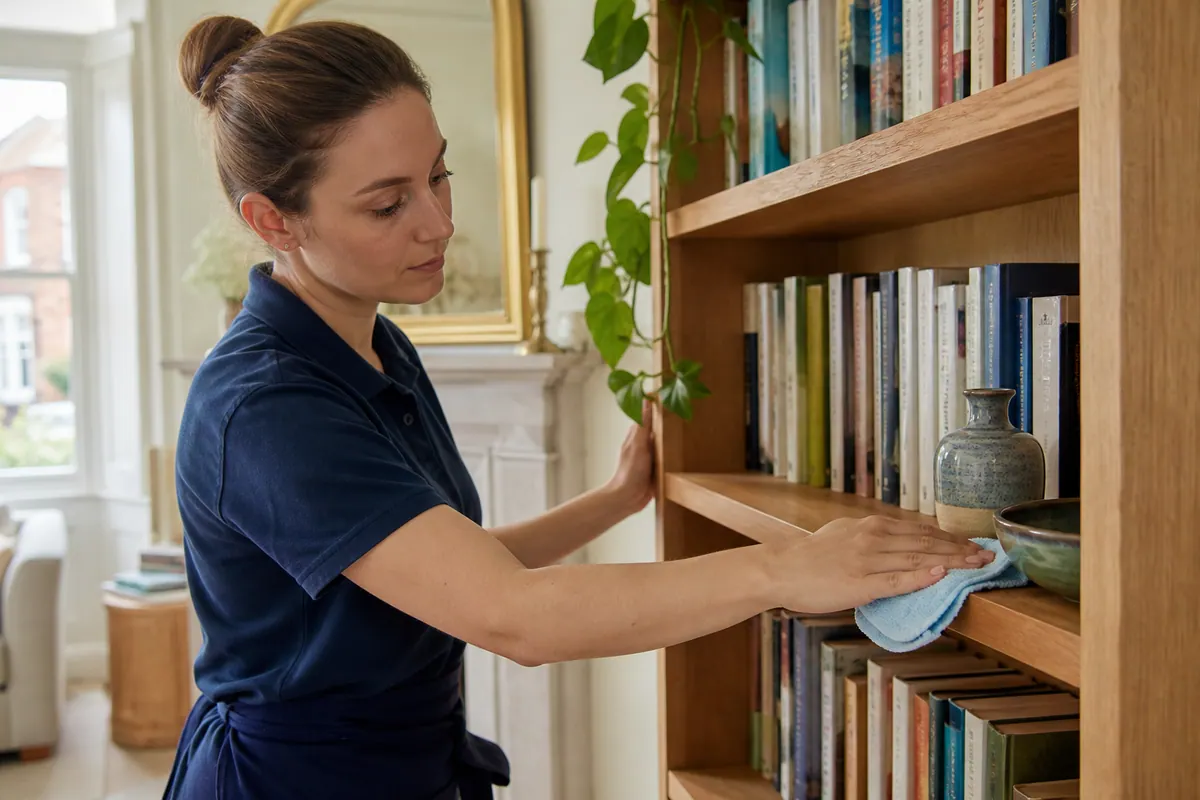
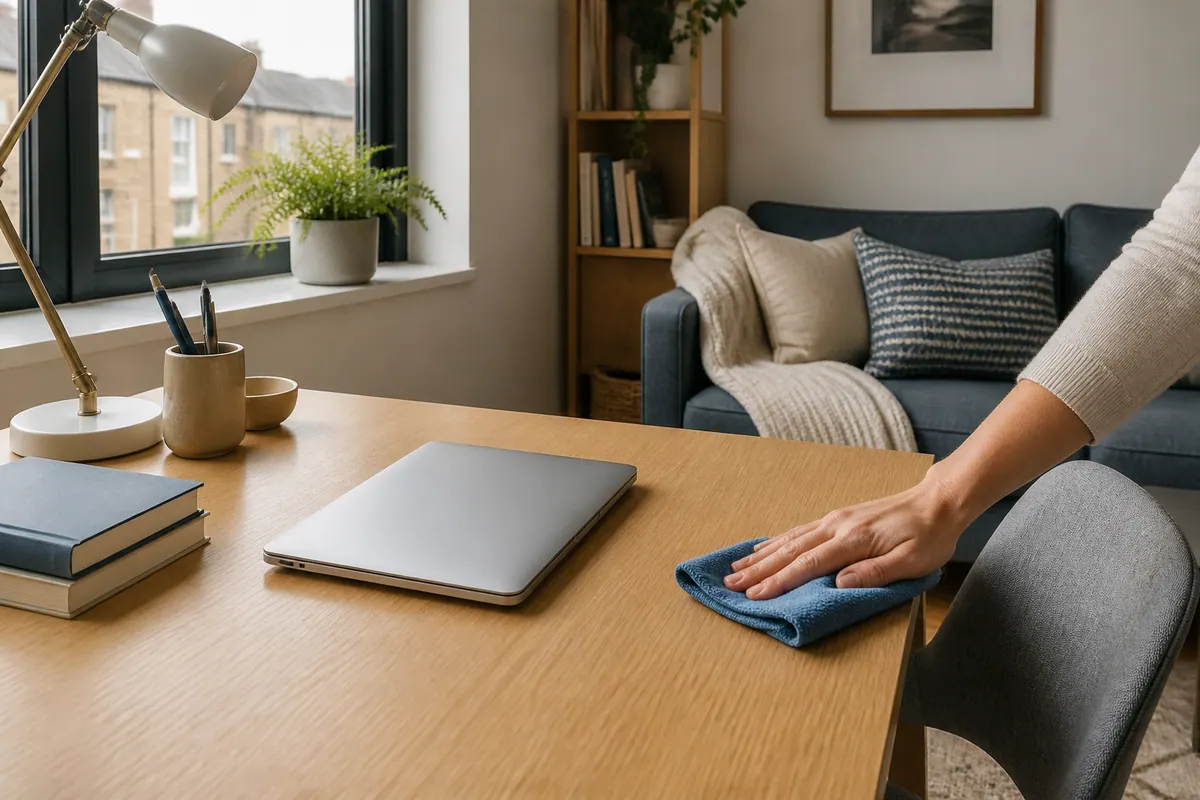
Living spaces
Describe the furniture surfaces that can be reached and the floor area to maintain; vacuuming and appropriate floor cleaning can be included.
Do not make the cleaner decide where documents belong. Clear them away and identify delicate objects in advance.
Sleeping rooms
For included bedrooms, plan reachable-surface maintenance with dusting and compatible floor care, including agreed vacuuming.
Check that the intended bedrooms are available, with medicines and private items stored by the household.
Booking process
Set out the rooms needing help and mention any occupants or pets present during the work.
Discuss a first appointment or recurring rhythm and establish the leading room priorities.
Explain surfaces, key arrangements and any parking limitation while confirming supply responsibility.
The visit works through the authorised room list with surface-compatible care.
Review the household brief after the visit if the workload or room priorities have changed.
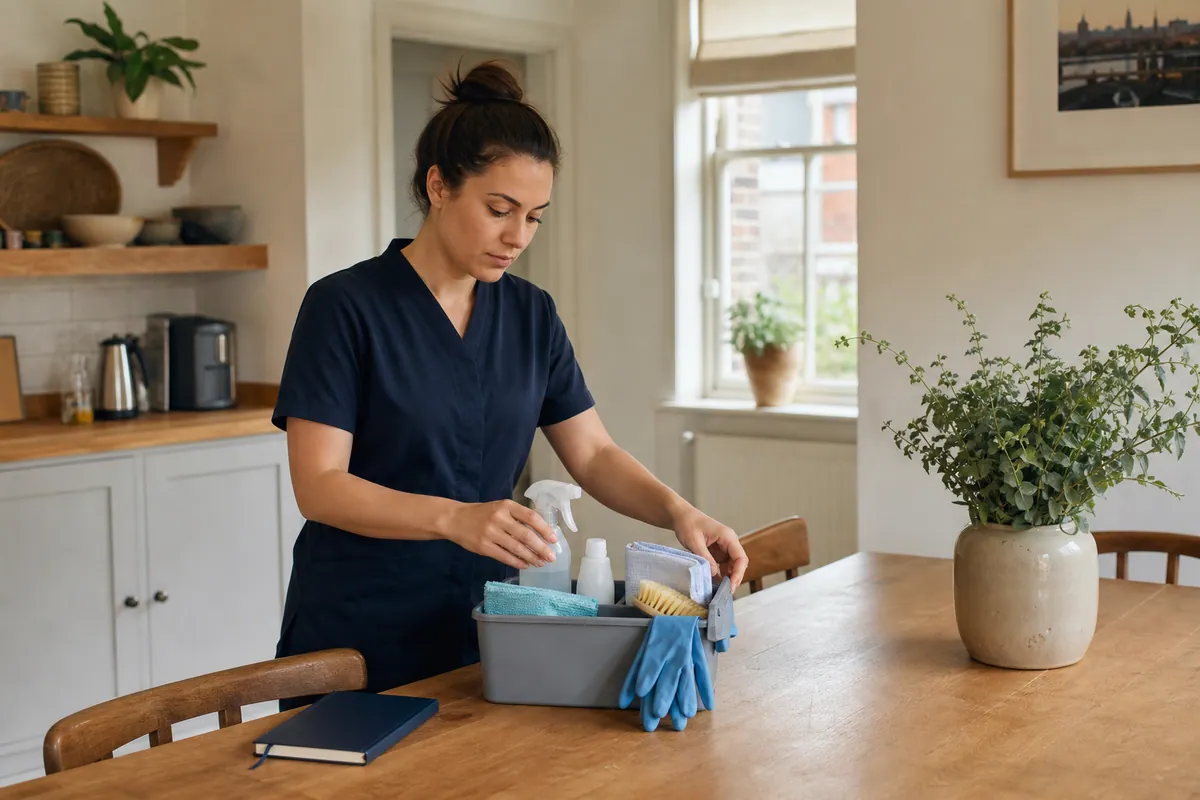
The household requirements explained.
Care follows the defined priorities.
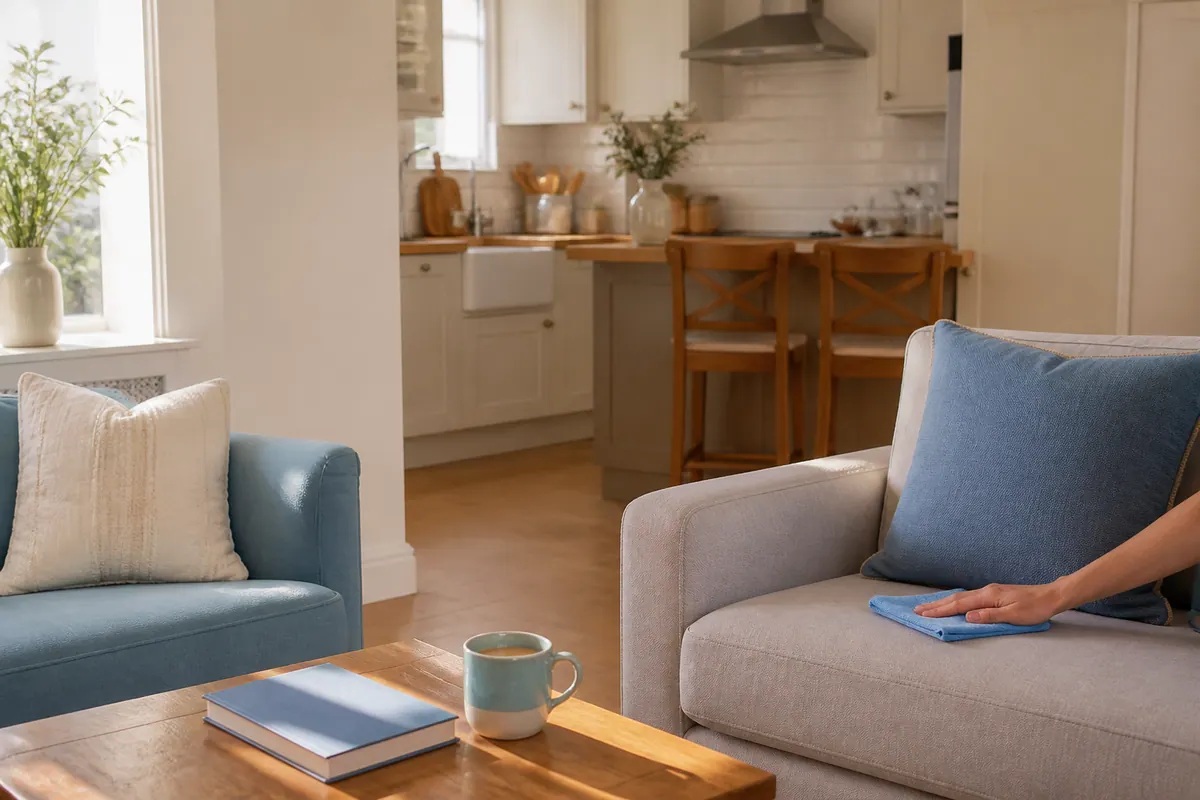
Everyday upkeep with a defined scope.
Illustrative interiors accompany the process; no customer before-and-after claim is being made.
Woodford / local enquiry
Woodford bookings need the full postcode and the intended rooms. Rooms, present condition and access all belong in the booking conversation. The planner cannot confirm a cleaner for a chosen day.
For the wider service scope, see Domestic Cleaning, or ask the team about your address.
Map reference
This is an area reference, not a marked Alesta branch or booking guarantee.
Open map in a new tabRoutine planner
Think of this as a way to prepare your enquiry; selecting a room or interval does not secure a visit.
Essential upkeep
Give the necessary upkeep a clear place in the list before considering a finishing detail; the confirmed time remains the limit.
A selected skirting or glass task belongs in the brief before arrival; it must not silently replace an agreed core task.
Household arrangements
The examples help describe access and room use.
Explain whether you will be at home and which everyday areas need attention while you are out.
Discuss which family rooms receive the most use; put loose possessions away so those surfaces are accessible.
A room list needs to account for the animal at home; explain its location and any access restriction.
Name the desk or room in use and a quiet period; arrange a different starting area if necessary.
Confirm the authorised instruction for the lived-in rental; move-out cleaning is not implied by its regular upkeep.
Choose one person to coordinate access and changes, so the cleaner is not given competing instructions.
Material guidance
Describe delicate coatings, stone and timber when briefing the visit, so the method can be matched to the actual surface.
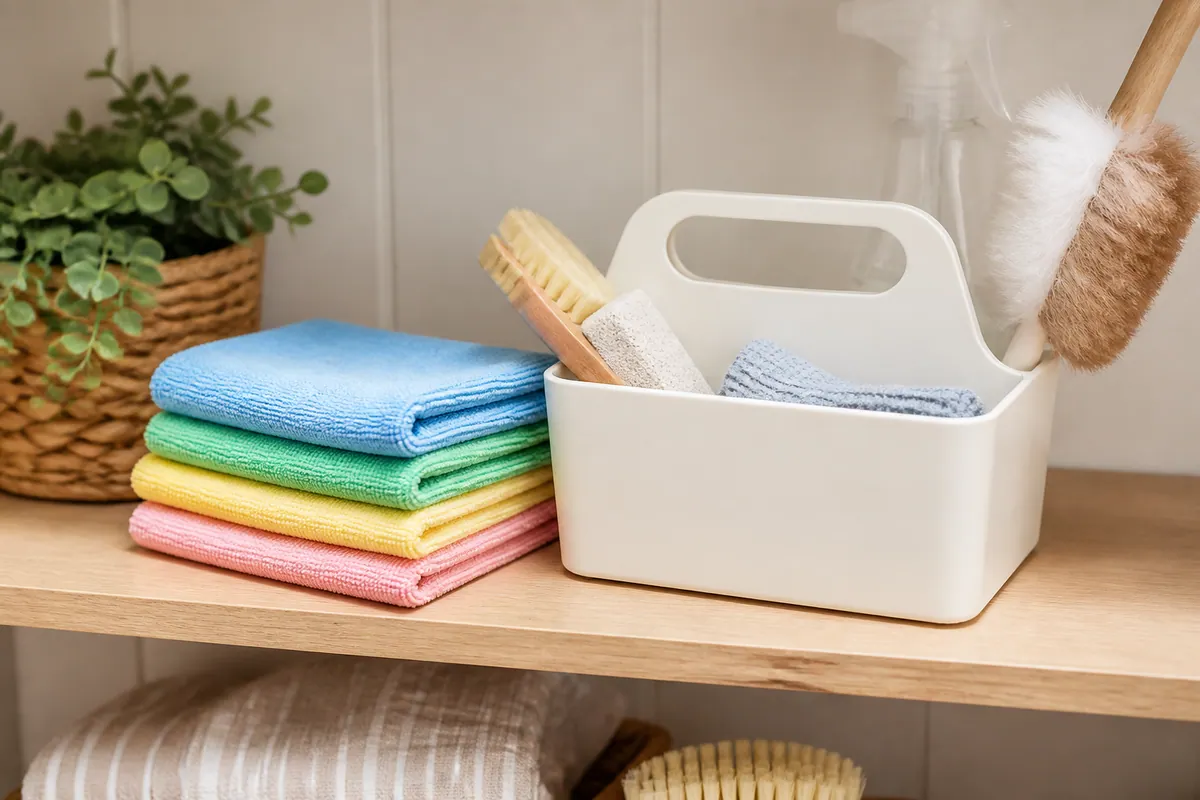
Share the stone’s care instructions and flag uncertainty about what the finish tolerates.
Explain the wooden surface’s coating and care notes when discussing the cleaning method.
Provide any guidance for the coated furniture rather than treating all hard furnishings alike.
Ask about care of the listed steel finish without turning an exterior request into appliance servicing.
A painted surface needs its condition explained, especially where the coating is damaged.
Separate services
Keep extraction, treatment and difficult-access work outside the routine unless separately agreed. Heavy lifting and restoration need their own planning.
The domestic list can include vacuuming, but carpet treatment by extraction has another scope.
The kitchen’s exterior surfaces and a detailed oven clean are different instructions with different requirements.
Request a separate mould assessment instead of presenting treatment as a standard maintenance task.
Outside glazing needs separate access planning and is not automatically part of domestic room care.
Building residue needs a post-construction brief rather than being described as ordinary household dust.
Raise concentrated catch-up work as a separate one-off discussion before planning the recurring maintenance.
Quick answers
Price guides
Check the proposed coverage before comparing rates. These guides do not fix a total for the address.
| Service | Price | Main factors |
|---|---|---|
| Regular domestic cleaning | From £20/hour | Property size, minimum appointment, access and agreed supplies |
| First / one-off domestic visit | From £90 | Initial condition alongside the room and time requirements |
| Specialist / intensive scope | Quote after the scope is checked | Work outside routine care, including difficult access |
Size, condition, timing and frequency shape the quote, with equipment, entry, parking and separate tasks considered too.
Task order
This priority board illustrates a conversation about task order. It does not send instructions to a booked cleaner.
Practical access
A key collection plan must be confirmed rather than assumed from an address.
A concierge can only form part of the plan if the building’s authorisation process is settled.
Give the relevant alarm instructions directly, keeping the details out of public messages.
A room list needs to account for the animal at home; explain its location and any access restriction.
Name the desk or room in use and a quiet period; arrange a different starting area if necessary.
Explain the parking situation in advance where restrictions are known.
Identify the areas that remain private even if other rooms on that floor are being cleaned.
An understood scope and a checked arrival plan make the booking clear; ask about any request outside that routine.
Booking questions
Describe unusual accumulated work honestly before relying on a regular guide rate. Some catch-up or specialist work needs its own scope rather than being added to ordinary maintenance.
Prepare the listed spaces so the cleaner can reach the surfaces and floor. Personal belongings should be put away by the household.
Use the regular £20/hour starting guide and first/one-off £90 guide to begin the discussion. Ask what the agreed quotation includes.
Describe what happens between appointments and the upkeep you can manage yourself. The team can then discuss the interval without assuming every household needs the same one.
A revised room priority can be discussed directly. Do not assume that adding a room or task leaves the original duration unchanged.
Describe the initial condition in detail. Once that starting work is understood, you can review what ordinary repeat visits should maintain.
Give the team your material-care information and ask which supplies form part of the appointment. There is no automatic all-products assumption.
Tell the team the room’s availability and arrange a different starting area if needed. The restriction belongs in the agreed brief.
No. A routine vacuuming task and an extraction service are different work; request the latter through the carpet-cleaning service.
Take the outline to Alesta and settle the work, supplies and access with an available schedule before considering the visit booked.
Your next step
Explain heavy starting conditions early. Ask whether a reset needs separate planning. Send the room priorities when you enquire.
