
DULWICH / FOLLOW THE BED THROUGH THE YEAR
Dulwich Garden Care for Established Beds
A border can look very different between visits. Notes about what emerges, flowers or should remain help turn a general tidy into informed attention around the planting you have chosen to keep.
- Record plants that are not always visible
- Mark the bed sections needing attention
- Share useful earlier seasonal photographs
- Keep current-condition views alongside your notes
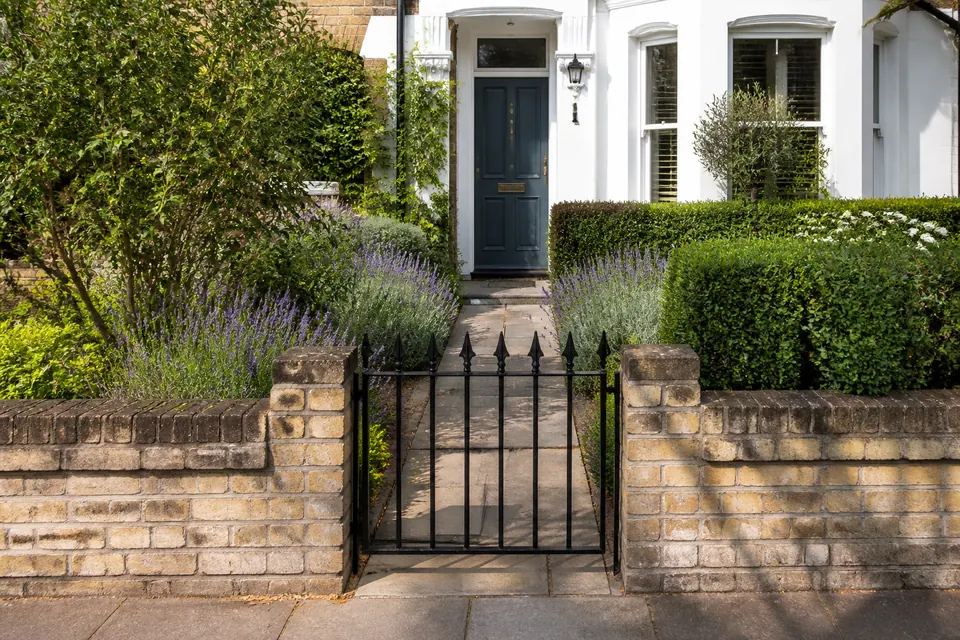 GARDEN CARE / Dulwich
DULWICH / NOTES THAT EXPLAIN THE BORDER
An earlier photograph can answer a different question
If an established Dulwich border contains plants that disappear from view for part of the year, label their known positions. Earlier seasonal photographs can explain what belongs there, while fresh views show the work now needed. Keep those purposes distinct: a summer picture is useful background, not evidence of today's condition. Mark uncertain growth for discussion instead of relying on a blanket instruction to clear the bed.
02 / Current task photographs
03 / Uncertain growth flagged
USE THE GARDEN'S HISTORY CAREFULLY
Combine current needs with retained-plant information
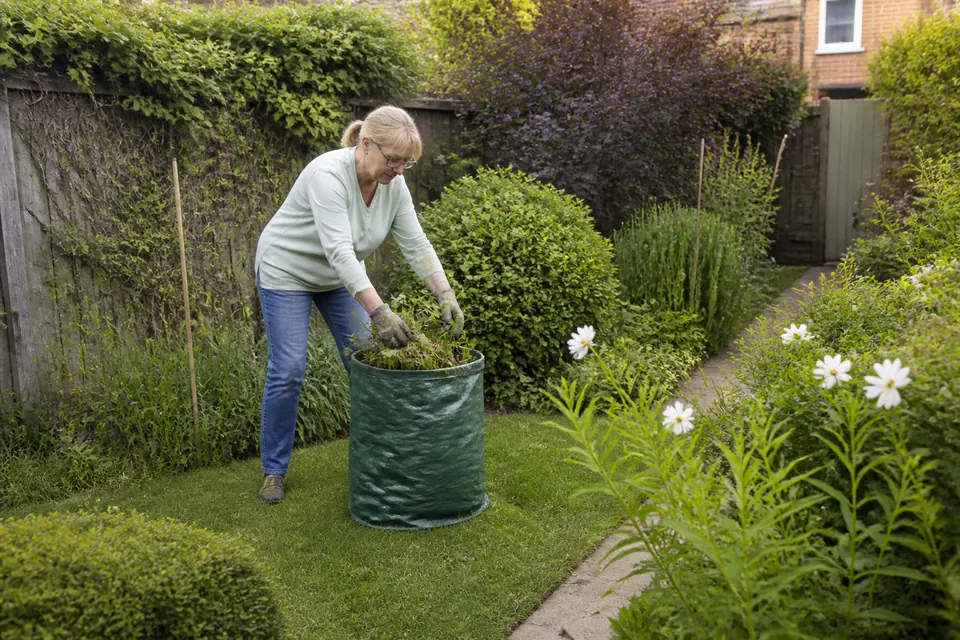
Garden clearance
Describe the lawn beside the beds separately, including edges that have become unclear.
Explore garden clearance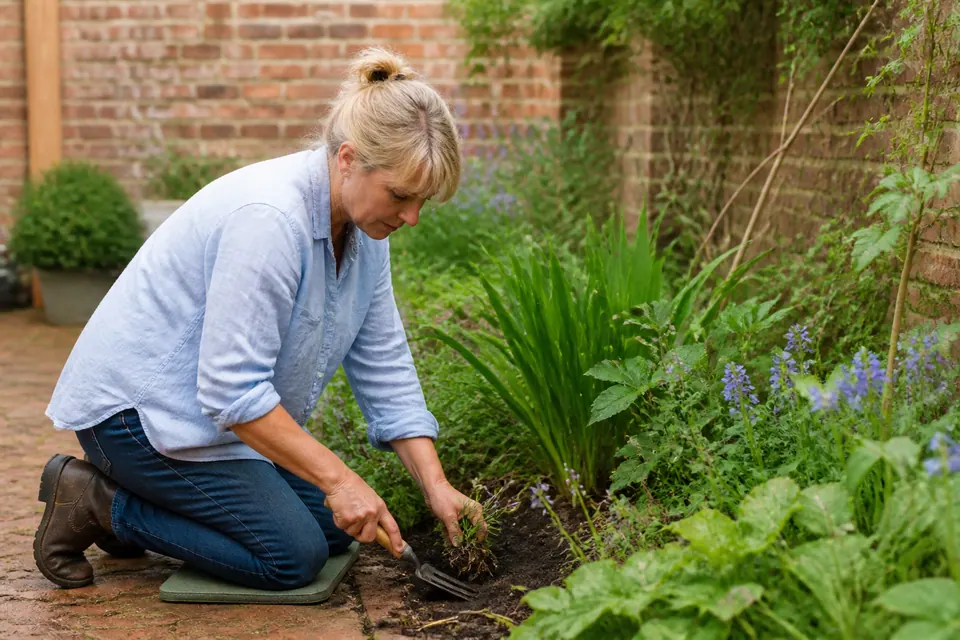
Garden maintenance
Identify established shrubs and any suitable shaping request without assuming every woody plant shares a pruning schedule.
Explore garden maintenance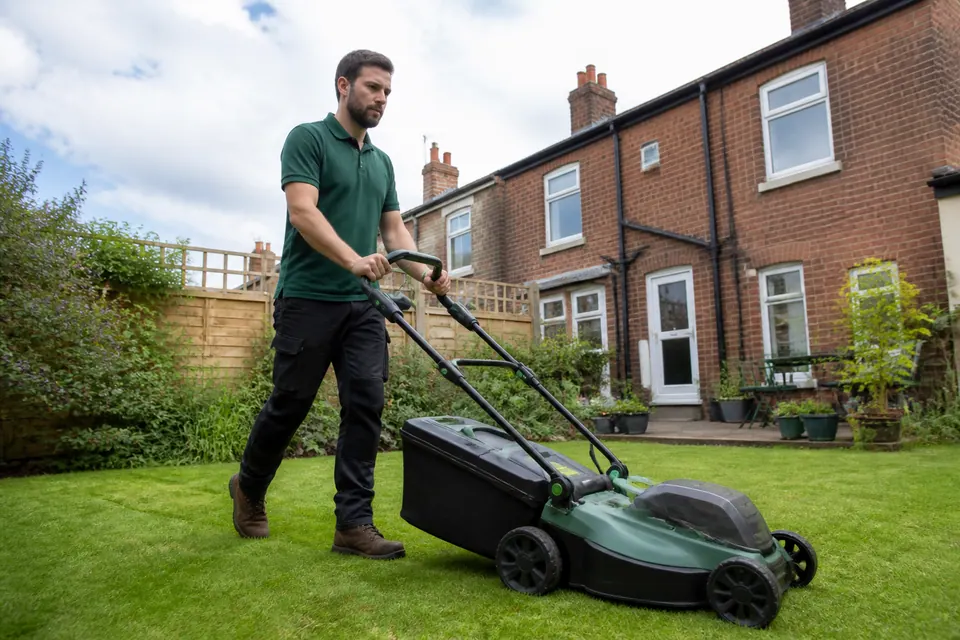
Lawn care
Use retained-plant notes to distinguish genuine unwanted growth from a bed that merely looks dormant or crowded.
Explore lawn care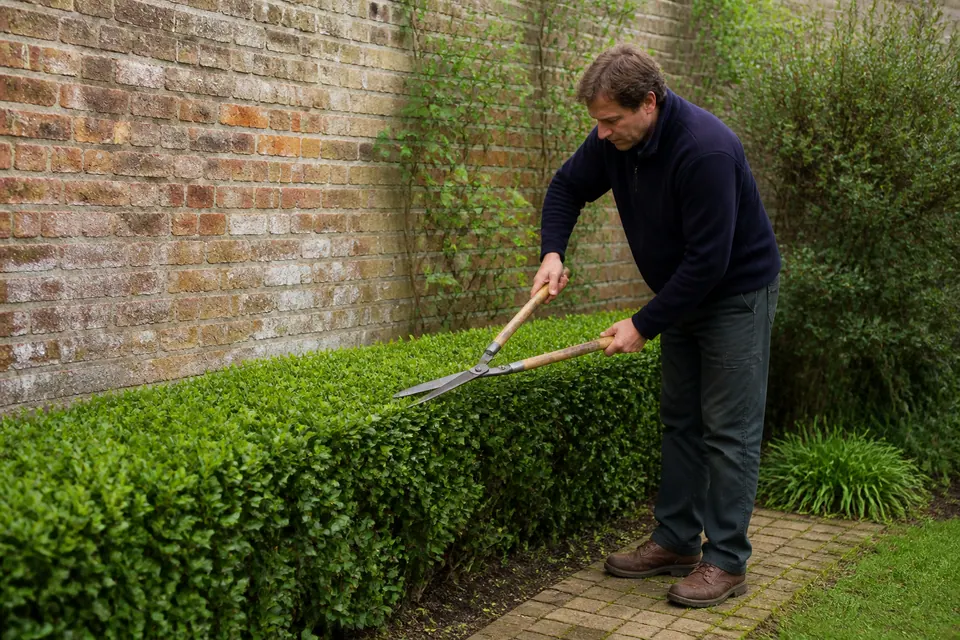
Hedges & shrubs
Selective weeding and seasonal tidying can follow the recorded planting while responding to what is actually visible now.
Explore hedges & shrubs- Work
- Border attention supported by clear retained-plant notes
- Spaces
- Private beds and authorised shared planting
- Visits
- A seasonal visit or reviewed ongoing care
- Area
- Dulwich attendance checked at the full address
- Price
- Assessment of present tasks and retained features
A SEASONAL VISIT OR CONTINUING OBSERVATION
Keep the planting record useful over time
| Visit choice | One-off gardening | Regular maintenance |
|---|---|---|
| Best for | Addressing present seasonal priorities | Following the retained planting through change |
| Frequency | One clearly defined bed-care appointment | A reviewed rhythm rather than automatic repeated cutting |
| Scope | Current tasks and known retained positions | Updated notes with changing responsibilities |
READ THE BORDER WITH ITS SURROUNDINGS
The bed is one part of the requested care
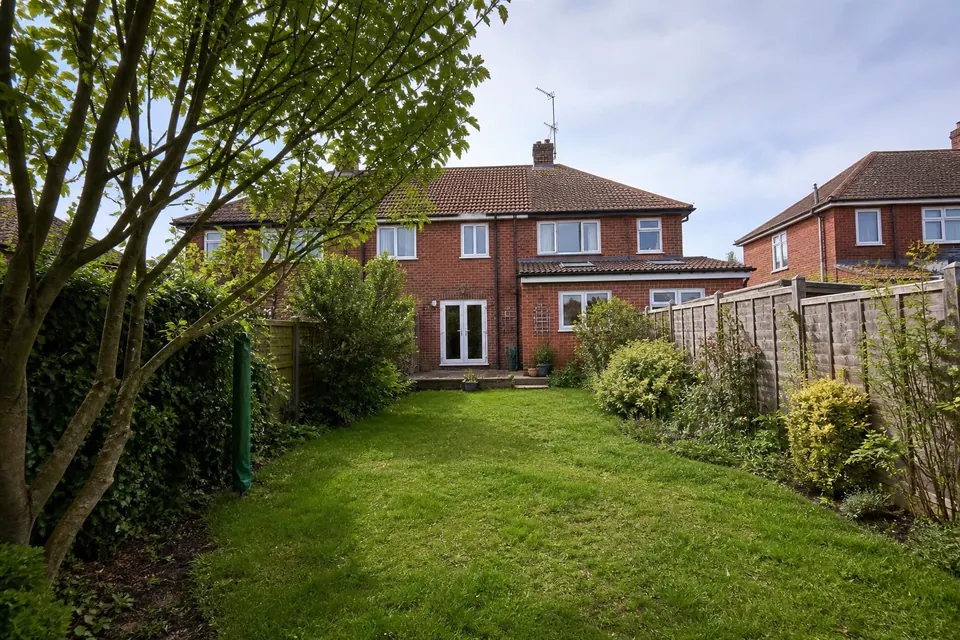
Adjacent grass edges
Identify the lawn perimeter separately from the planted bed.
Permanent shrubs
Name or number the structural plants to retain.
Seasonally changing planting
Mark known positions and wanted emerging growth.
Paths beside the border
Describe loose debris separately from any washing request.
Removed seasonal material
Agree its handling without assuming all standing growth is unwanted.
RECORD, SHOW, CHECK, REVIEW
Make the established bed understandable
Mark known planting
Record retained positions and useful seasonal context.
Show today's condition
Identify the actual weeding or tidying priorities.
Resolve uncertainty
Discuss unclear growth before affected removal.
Review the retained arrangement
Note completed tasks and later questions separately.
Border care is not an implied redesign
Alesta's routine gardening remains distinct from landscape redesign, major tree work and specialist treatments. A new planting scheme needs its own discussion.
Read how Alesta plans gardening workPRICE THE PRESENT ATTENTION
The retained-plant record helps explain the scope
ROUTINE GARDEN CAREQuoted for
Quoted for
the current border tasks.
Send current views with useful planting notes. Confirm materials and cuttings handling before assuming a seasonal package includes them.
LIGHT GARDEN CLEARANCE£100–£300
The light-clearance guide does not price every crowded-looking border; selective care is assessed separately from clearance.
See clearance pricing| Service | Details relevant to assessment | Guide |
|---|---|---|
| Routine garden maintenance | Selected bed sections and retained-plant complexity | Quote after assessment |
| Lawn mowing & edging | Adjacent grass extent and equipment requirements | Quote after assessment |
| Hedge & shrub trimming | Specific shrub dimensions and suitable attention | Quote from photographs / assessment |
| Small green-waste collection | Green material quantity and agreed collection point | From £40 |
| Light garden clearance | The marked unwanted patch and disposal needs | Typically £100–£300 |
| Large overgrown garden | Extent and density of any substantial overgrowth | From £500 |
Avoid treating every full bed as clearance
A densely planted border may need selective attention among wanted plants. Explain that intention so the quote reflects care rather than assumed wholesale removal.
RECORD THE RETAINED PLANTING
Choose the intervention without losing the bed's structure
| Service | Present concern | Attention to define |
|---|---|---|
| Garden maintenance | Seasonal upkeep among retained plants | Selective weeding and appropriate tidying |
| Lawn care | Grass beside the planted area | Suitable mowing and a defined perimeter |
| Hedges & shrubs | A particular structural shrub | Agreed shaping appropriate to that plant |
| Garden clearance | Genuinely unwanted growth in a marked patch | Bounded removal with retained positions recorded |
RECORDS HELP EXPLAIN CHANGE
Let each season raise the right questions
Suitable attention depends on the plants and current conditions, not a universal tidy date.
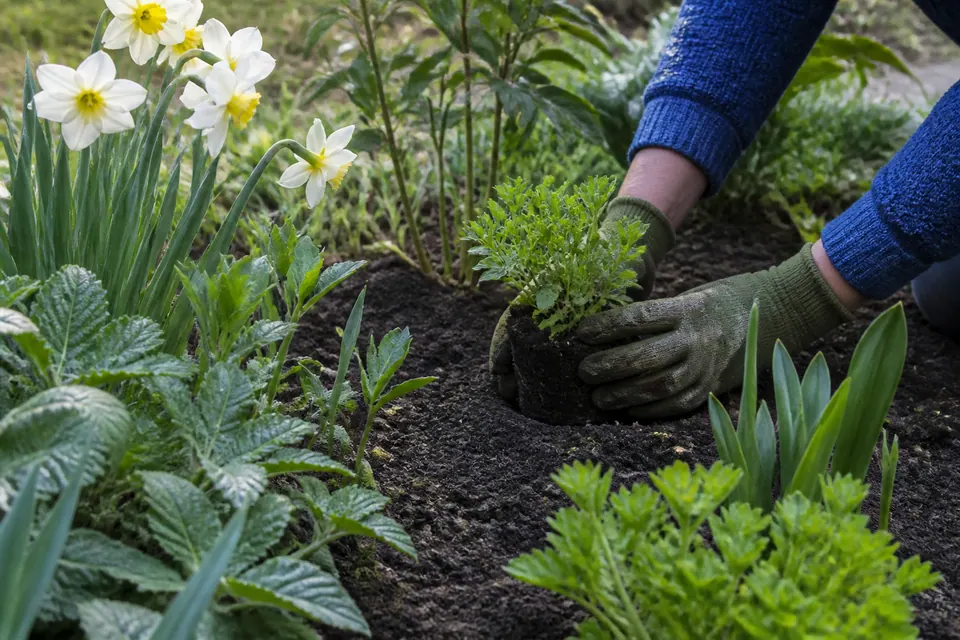
Spring
Use known plant positions to distinguish wanted emergence from uncertain growth.
Summer
Observe how the bed fills out before assuming a gap needs replacement planting.
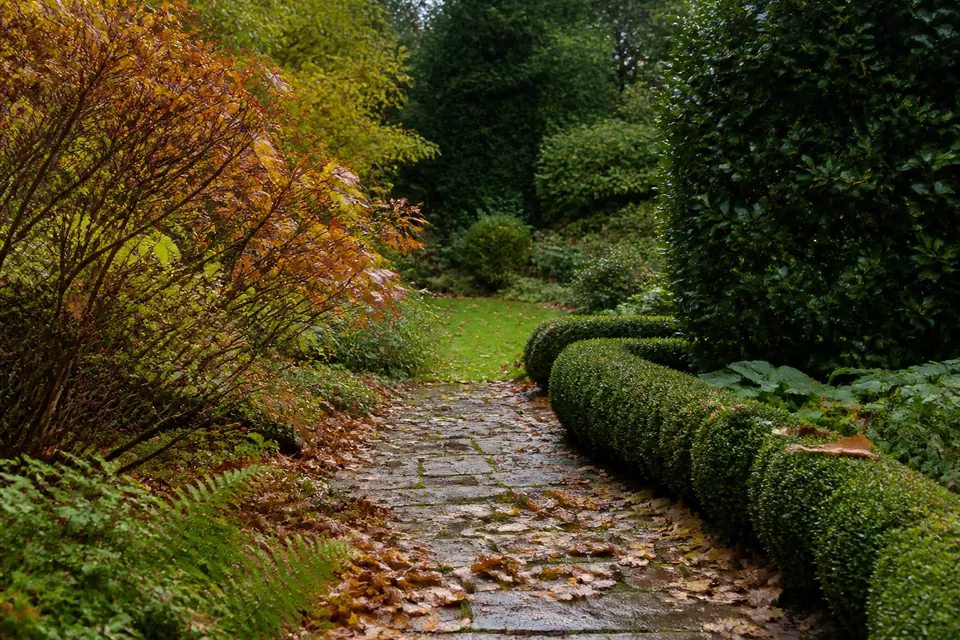
Autumn
Discuss which stems and leaves to gather rather than requesting an empty bed.
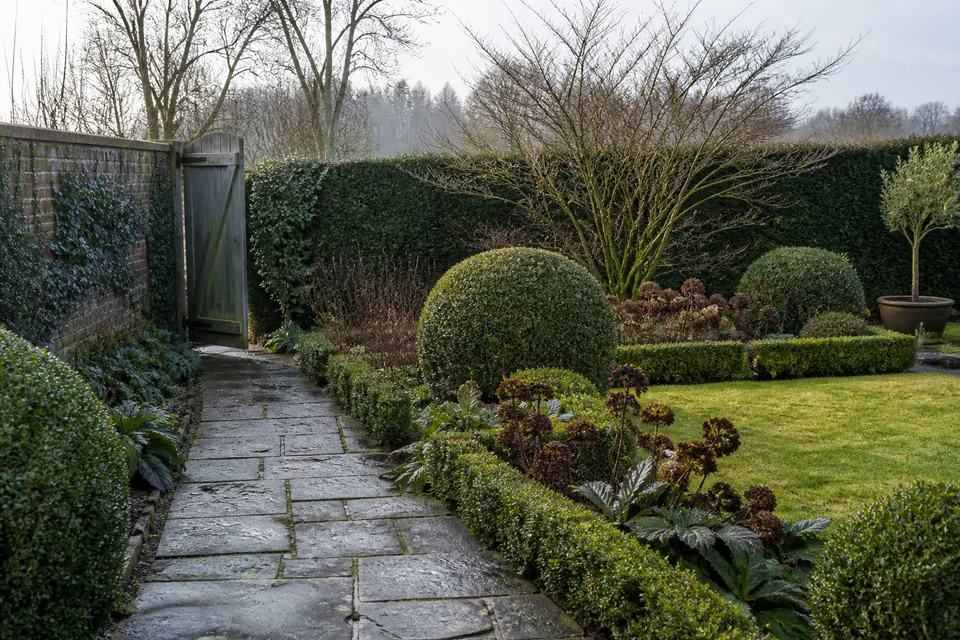
Winter
Review the framework and notes while unsuitable ground may limit immediate tasks.
WHAT DOES THE BORDER NEED NOW?
Choose the current task with the keep list beside it
CURRENT VIEW PLUS RETAINED-PLANT NOTES
Garden maintenance
Use both to describe the task. Neither a historical photograph nor a general tidy instruction explains the whole decision.
Explore appropriate maintenance ↗RETENTION CAN BE PART OF THE CHANGE
Tidying a bed need not erase its history
The sequence is illustrative and does not document a Dulwich customer border or guaranteed outcome.
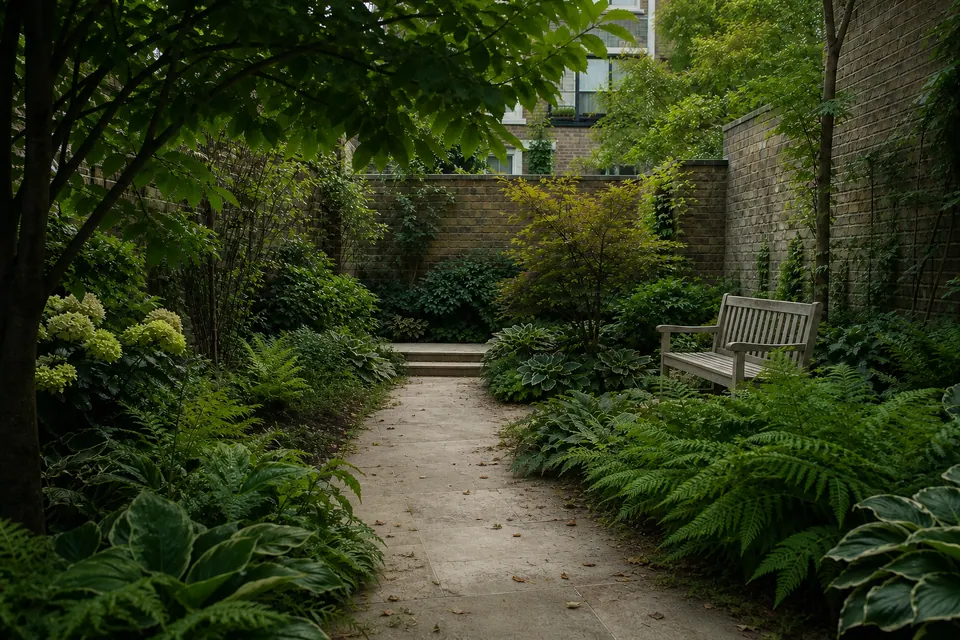
Observe the existing planting
The route and border provide a defined example area.
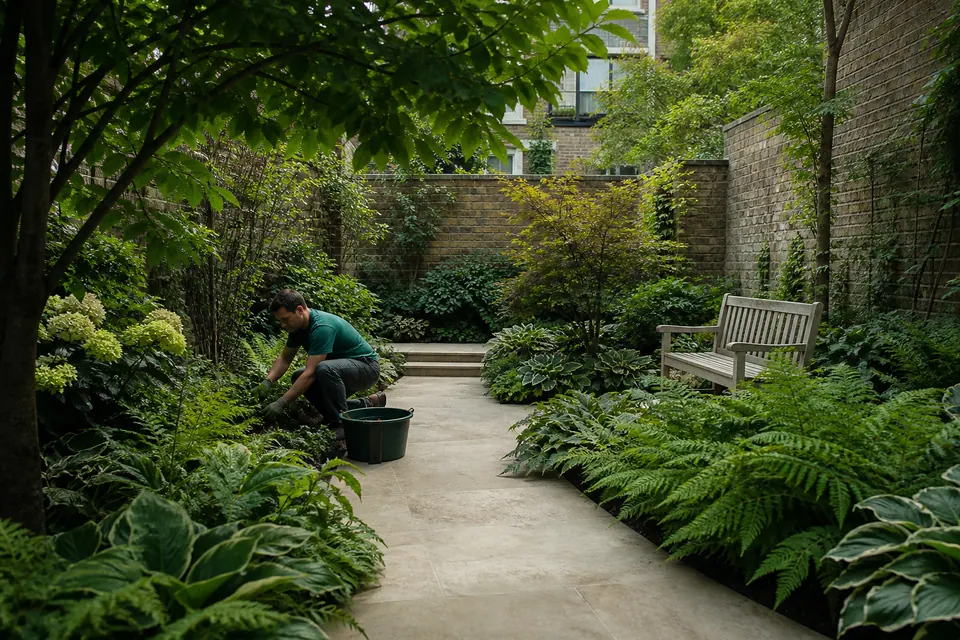
Attend selectively
Gathered material and chosen border tasks shape the tidy.
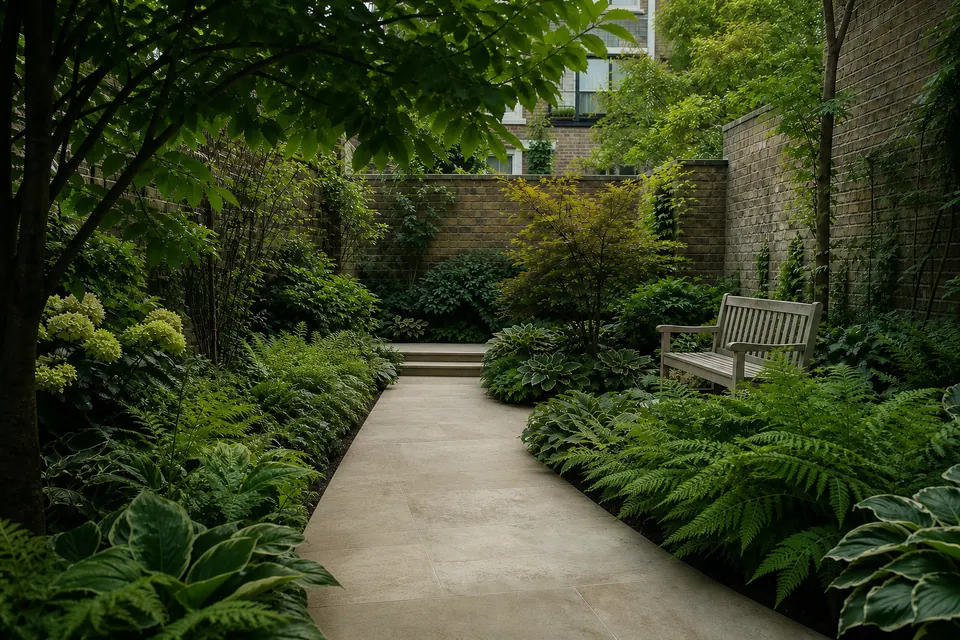
Keep the underlying arrangement
A clearer edge is shown without replacement of the whole bed.
BORDER-RECORD CHECK
Give each photograph a clear purpose
- Are earlier seasonal pictures useful?
- They can identify retained planting, alongside current condition views.
- Should known hidden plants be marked?
- Record their positions rather than assuming they will be obvious.
- Can one bed section be the whole visit?
- Define its boundaries and desired attention clearly.
- Could notes support continuing care?
- Keep them updated as planting and responsibilities change.
- Will every standing stem be removed?
- No. Appropriate seasonal attention should be agreed, not assumed.
- Do I need all the plant names?
- Numbered photographs can record retention decisions where names are uncertain.
- Are replacement plants included?
- Supply and planting require separate agreement within the scope.
DULWICH / ADDRESS AND BED LOCATION
Identify the border within the property
Confirm attendance for the full Dulwich address and explain the entrance. Label the requested bed so its location is clear beyond the map pin.
Open Dulwich in Google Maps ↗Gardening services near Dulwich
ESTABLISHED-BORDER QUESTIONS
Dulwich garden-care enquiries
Can a dormant-looking patch contain retained plants?
If you know plants occupy it seasonally, mark their positions and share useful earlier photographs.
Should old and new photographs be labelled differently?
Yes. Distinguish planting-history views from images showing the present work required.
Can uncertain seedlings be left for discussion?
Flag them clearly rather than authorising blanket removal across the bed.
Will every shrub be pruned in the same visit?
Not automatically. Suitable attention depends on the individual plants and current conditions.
Can the lawn edge be included beside the border?
List it explicitly so the assessment covers both tasks rather than only planted-bed care.
Does a seasonal tidy include new compost?
Materials need agreement; they should not be inferred from the word seasonal.
Can the notes be updated after planting changes?
Yes. Keep the latest retained-plant information consistent with the requested scope.
Are the photographs a plant list for my garden?
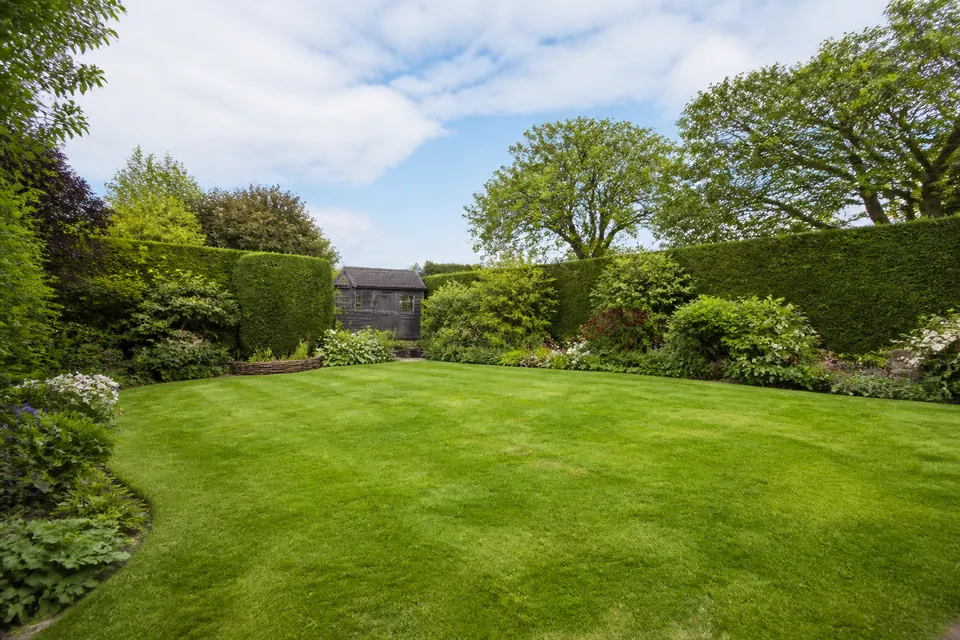
No. The scenes are illustrative, not a Dulwich site survey or planting recommendation.
DULWICH / BRING THE BORDER'S HISTORY INTO THE BRIEF
What should the tidy remember to keep?
Share current views and useful retained-plant notes to discuss selective attention around the established bed.
Call about seasonal border careIllustrative imagery does not document Dulwich customer planting records or completed projects.
