
Grass beside planting
Show where stems overhang the lawn so the mowing boundary is clear.
KENSINGTON / KEEP WHAT MATTERS
An established garden does not need to lose its character to become easier to enjoy. Start with the plants you want to keep, then describe where growth, weeds or fallen material are getting in the way.
DEFINE THE FIRST INTERVENTION
A SENSIBLE OPENING BRIEF
Begin with a marked photograph and two or three priorities. Include plants that must not be touched so maintenance can be assessed around them.
Check maintenance boundaries ↗LOOK BETWEEN THE PLANTS
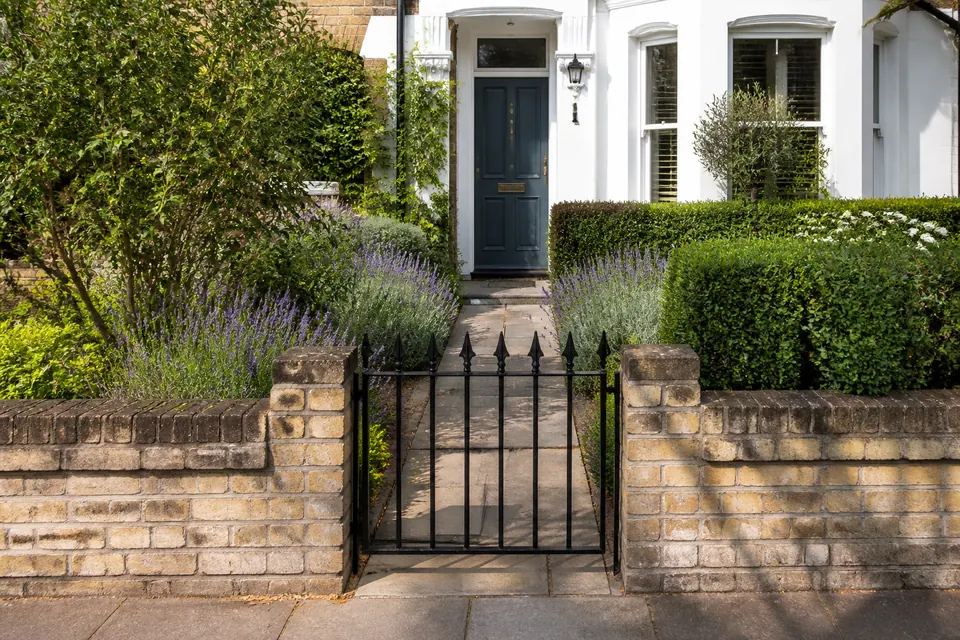
Show where stems overhang the lawn so the mowing boundary is clear.
Flag screening shrubs that should retain their role even after suitable shaping.
Distinguish established plants, self-seeded growth and areas you genuinely want emptied.
Specify removal of loose debris or encroaching growth; surface washing requires a separate discussion.
Allow for how cuttings will be gathered without covering the plants being protected.
KENSINGTON / PLANT-FIRST PLANNING
If your Kensington garden contains plants inherited with the property, you may not know all their names. That need not stop an enquiry: number them in photographs and say which you value. A broad instruction such as “clear the beds” can obscure the difference between weeds and wanted seedlings. Where the only route is through the home, include doorways, floor changes and the point where material would be gathered. These details help define a realistic visit without assuming every property has the same layout.
ASSESS THE DETAIL
Send an overview alongside close views of crowded beds. Agree what is being handled and how the resulting material is dealt with before accepting the total.
This published light-clearance range is a guide only. Selective maintenance around established plants is assessed separately, not priced from this band.
See clearance pricing| Service | Details affecting the assessment | Guide |
|---|---|---|
| Routine garden maintenance | Planted density, agreed priorities and proposed repeat visits | Quote after assessment |
| Lawn mowing & edging | Grass size, edges and the route for mowing equipment | Quote after assessment |
| Hedge & shrub trimming | Retained shape, plant dimensions and quantity of trimmings | Quote from photographs / assessment |
| Small green-waste collection | Prepared green material and distance to the loading point | From £40 |
| Light garden clearance | The nominated section and its removal requirements | Typically £100–£300 |
| Large overgrown garden | Extent of overgrowth and the practical clearance sequence | From £500 |
A densely planted bed may require more selective attention than an open patch of the same size. Access through a building, extra carrying and purchased materials also belong in the assessment. Do not read the clearance guides as a fixed hourly rate for a gardener.
CARE, NOT A BLANKET CUT
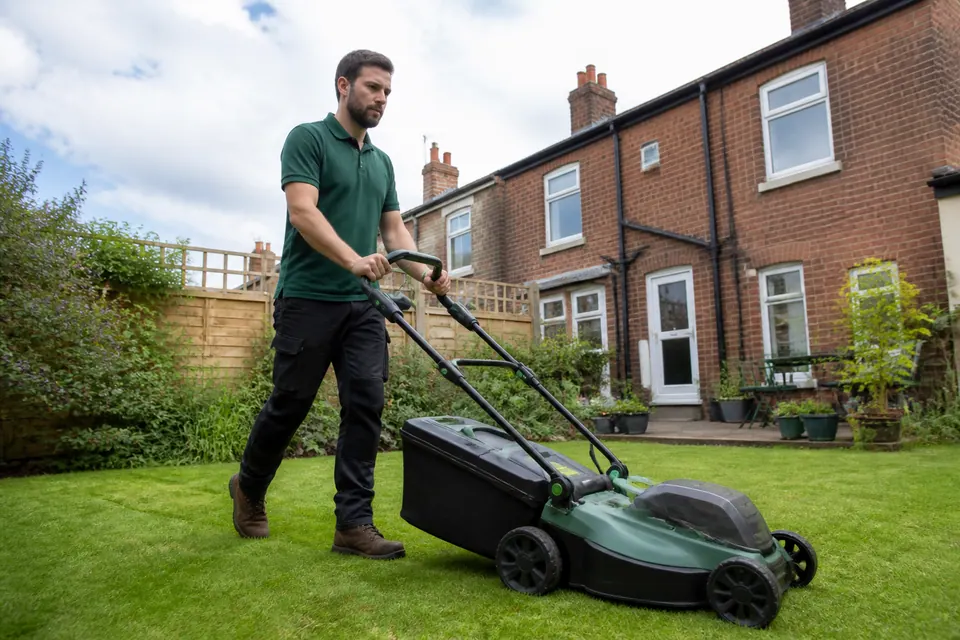
Keep the grass presentable without treating every thin patch as a mowing problem. Describe edges and awkward corners as well as the lawn itself.
Explore lawn care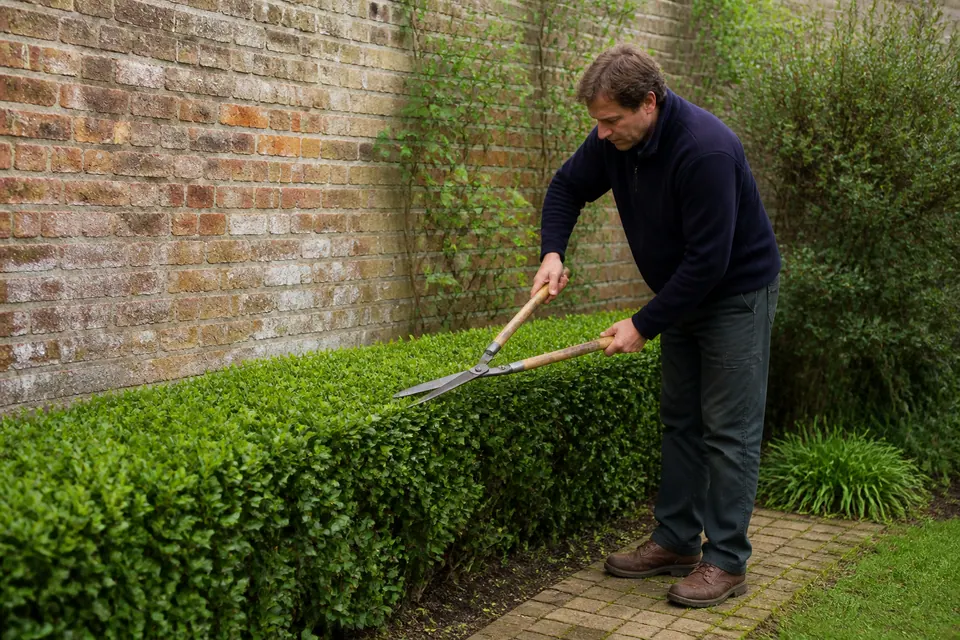
Identify the shrubs that provide the garden's structure. Suitable trimming depends on what they are, their condition and the extent of change requested.
Explore hedges & shrubs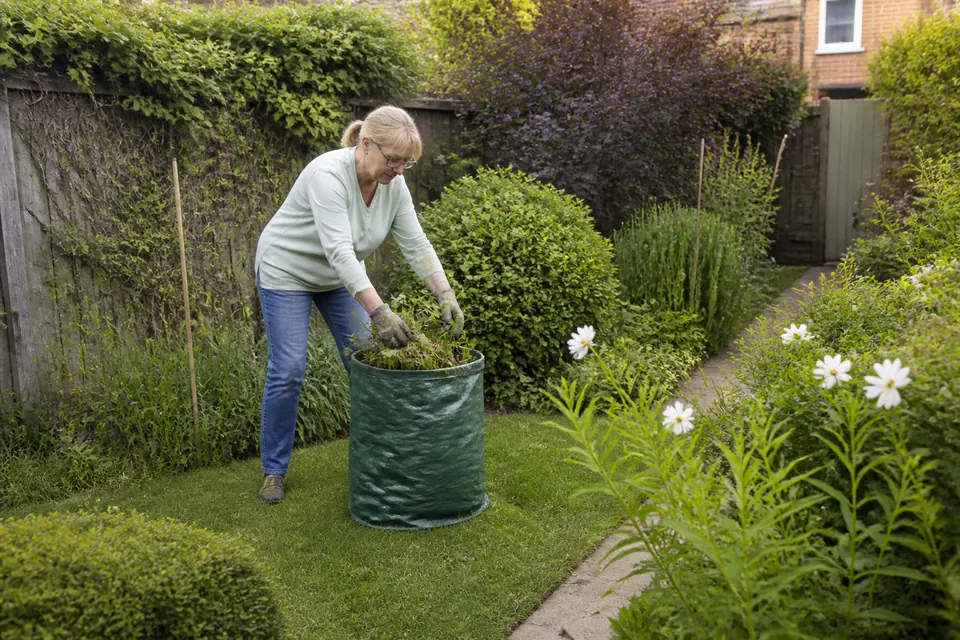
Where unwanted growth has overtaken a section, separate it from retained planting. Clearance can make room to assess what remains; it is not a redesign.
Explore garden clearance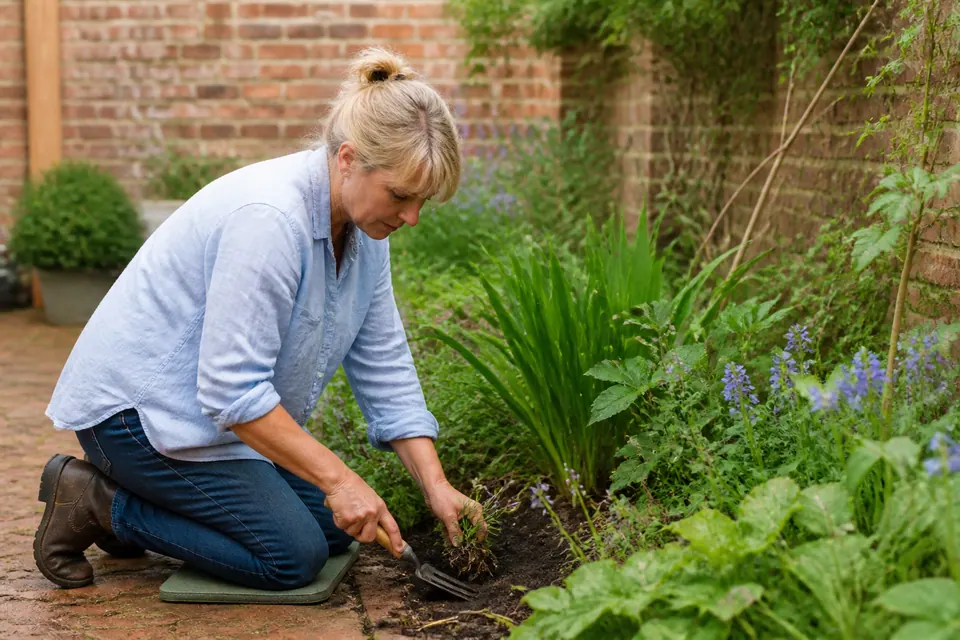
Combine selective weeding, seasonal attention and light pruning around a written keep list, rather than asking for all vegetation to be reduced.
Explore garden maintenanceLET THE PLANTS SET THE PACE
A neat appearance is not a reason to cut every species at once. Agree suitable work after considering the living garden.
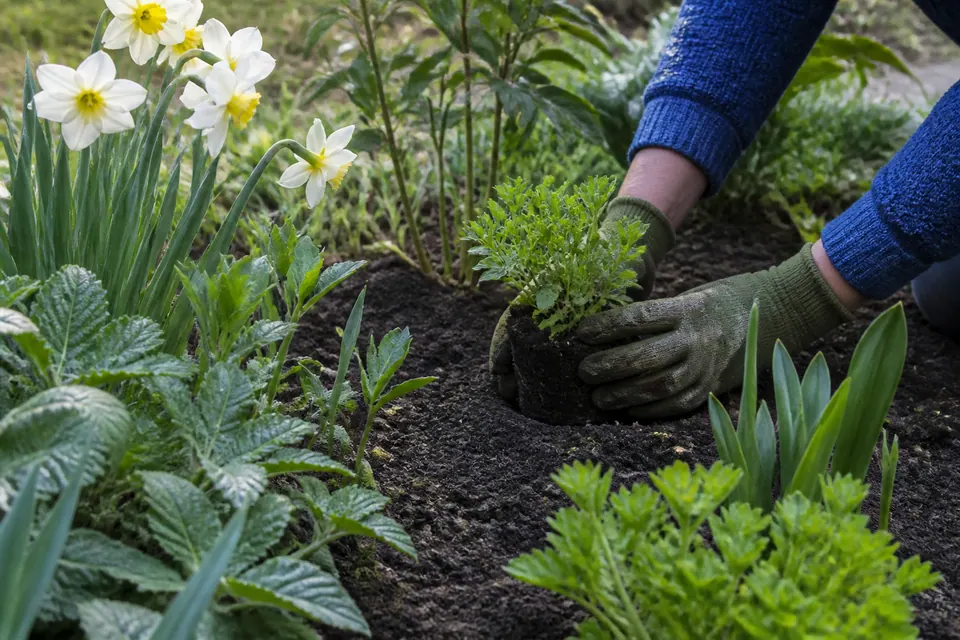
Emerging plants can be hard to distinguish from unwanted growth. Flag uncertain areas before border weeding begins.
Check how growth affects access and lawn edges, while allowing weather and plant condition to influence the task list.
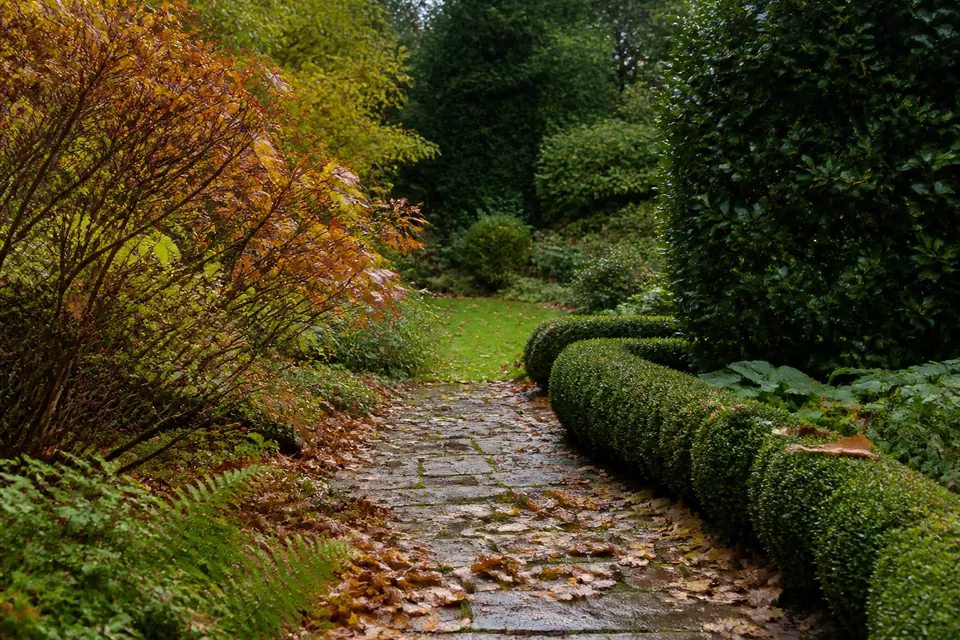
Discuss where leaf gathering is needed and which standing plants should remain, rather than requesting bare beds throughout.
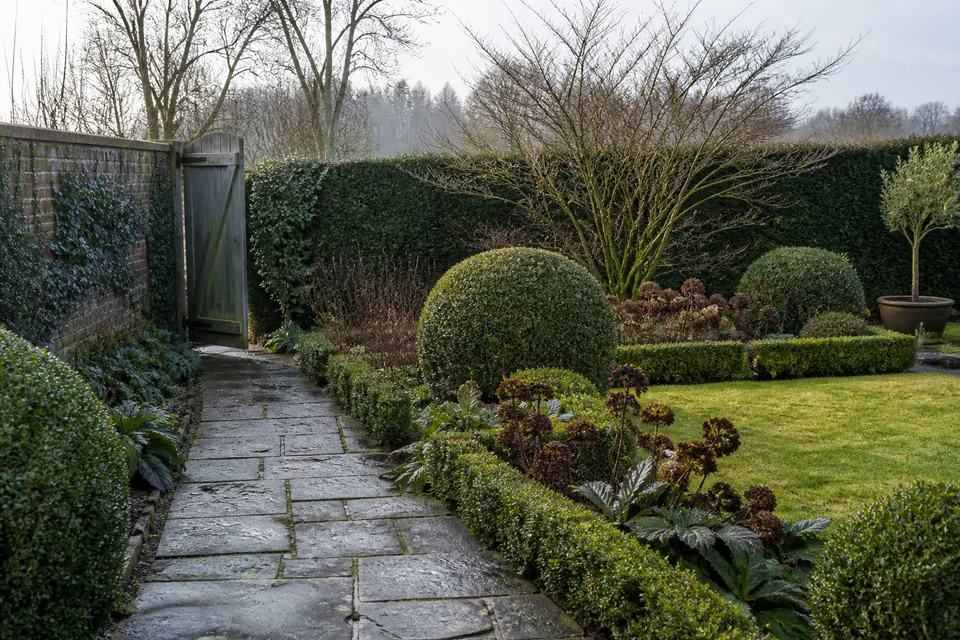
Use clearer views of the structure to plan future attention. Frozen or saturated ground may rule out work that seemed straightforward.
EXAMPLE OF A RESTRAINED TIDY
These illustrative views explain a possible sequence; they do not document a Kensington customer or guarantee an outcome.
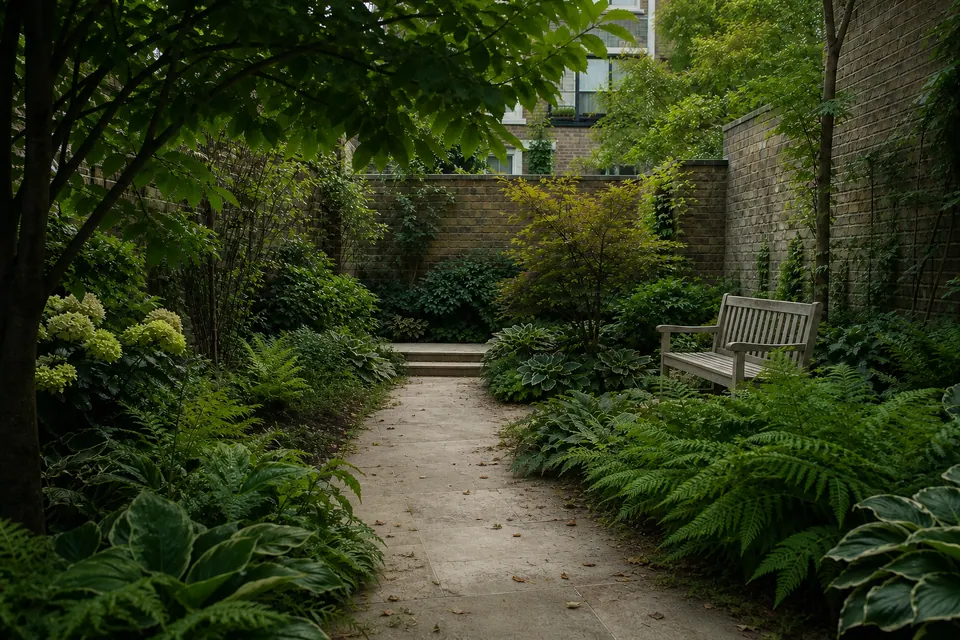
The path and planting need distinguishing before a useful tidy can be described.
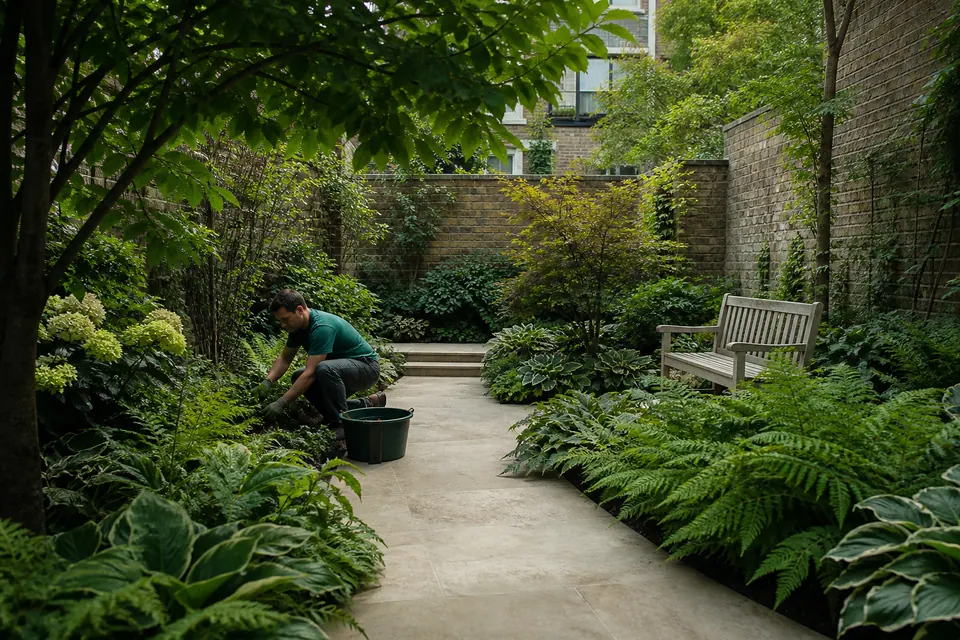
Gather loose material while retaining the garden elements chosen in the brief.
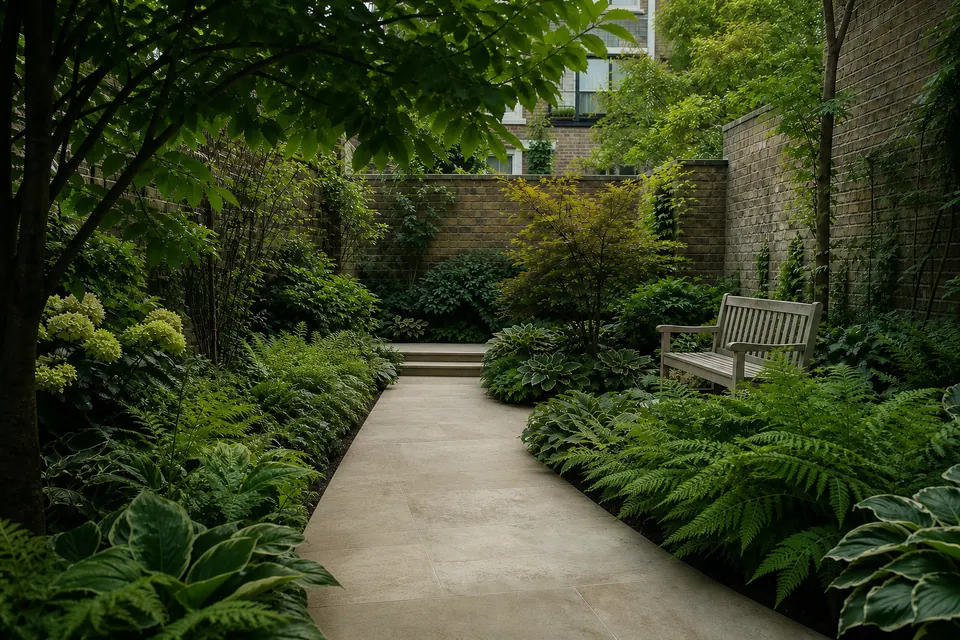
A more legible route can be the objective, without replacing the surrounding planting.
BRIEF CHECK
START SMALL OR KEEP UP
| Visit choice | One-off gardening | Regular maintenance |
|---|---|---|
| Best for | Assessing and tidying a chosen border | Following growth in the retained planting |
| Frequency | A separately agreed appointment | Intervals considered against actual plant needs |
| Scope | A defined keep list and first priorities | A record of boundaries and changing seasonal tasks |
CHOOSE THE DEGREE OF CHANGE
| Service | Your objective | What to describe |
|---|---|---|
| Garden maintenance | Retain the established arrangement | Weeding and suitable seasonal attention between named plants |
| Lawn care | Restore an orderly grass boundary | Mowing area, encroaching edges and ground condition |
| Hedges & shrubs | Keep useful screening in shape | Plants involved and limits to any proposed reduction |
| Garden clearance | Reclaim a nominated patch | Unwanted material to remove and retained features to protect |
PROTECT THE INTENT
Name or number valued plants and show the surrounding growth clearly.
Discuss access, material handling and where the agreed tidy should stop.
Review plant identity, active nests and unsuitable ground before proceeding with affected tasks.
Look at completed priorities and note anything better left for another occasion.
Alesta's gardening information describes routine care, not an automatic landscaping package. If your aim includes substantial removal or rebuilding, raise that explicitly rather than expecting it within a selective tidy.
Read how Alesta plans gardening workPLANTED-GARDEN QUESTIONS
Number it in a photograph and explain whether you want it retained. Uncertainty should be resolved before work that could remove or change it.
Yes, identify it as wanted growth in the brief. A general weeding request does not communicate which seedlings you have chosen to keep.
Not unless suitable trimming has been agreed. Explain the screening function and desired limits so the proposed work can be assessed.
Describe the route and provide doorway photographs. Suitability needs checking; a garden without external access should not be booked on assumptions.
Replacement plants, compost and planting tasks require agreement. Routine care does not automatically include new materials or a redesigned border.
Affected cutting must be reconsidered rather than proceeding through an active nest. Other suitable priorities may be discussed for the appointment.
Specify that bed and exclude the rear garden in the enquiry. A limited area still needs a clear access and waste arrangement.
No. They are illustrations of garden tasks and layouts, not evidence of work at a Kensington property or a forecast of your result.
KENSINGTON / ACCESS DETAILS
Ask whether attendance can be arranged for the complete Kensington address. Then explain any internal route, steps or shared door; the map alone cannot establish equipment access or permission to use a passage.
Open Kensington in Google Maps ↗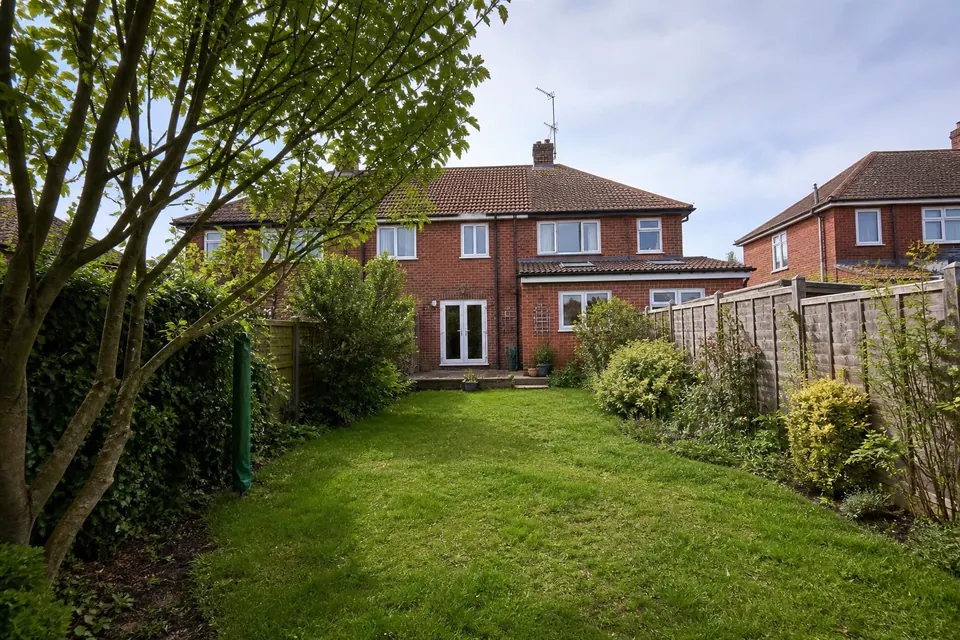
KENSINGTON / BEGIN WITH THE KEEP LIST
Share a few marked photographs, the address and the first area needing attention. Discuss a selective plan that respects the planting already there.
Call about selective garden careGarden imagery is illustrative and does not portray an Alesta customer commission.
