
Does overflow always mean the gutter is blocked?
No. Loose debris is one possibility, but a low section, limited capacity, leaking fitting or restriction inside the pipe may look similar. The affected position and channel condition both matter.
Rainwater routes · access · clear scope
Rainwater spilling from an eaves channel deserves a measured response rather than an assumed diagnosis. Gutter cleaning in Beckenham removes leaves, moss, silt and routine loose debris from accessible runs selected for the visit. A reachable outlet may be attended to when agreed, while broken components, obstructions inside a downpipe, underground drainage and unusual access call for separate assessment.
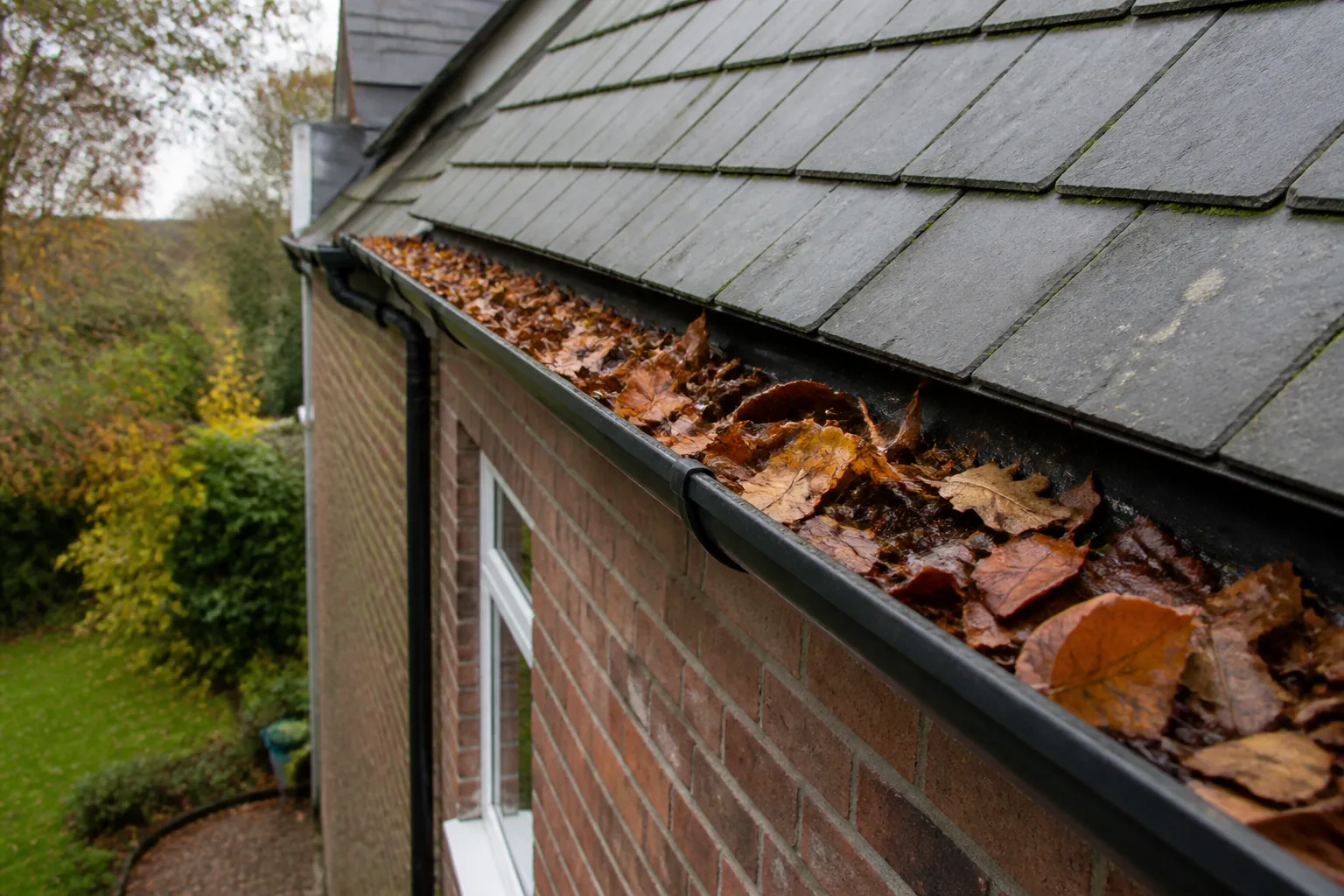
Visible clues
Look for overflow during rain, plants or debris visible above the edge, damp streaks beneath the channel, or water escaping near an outlet. A sag, split or persistent joint drip should also be mentioned because clearance alone cannot correct a damaged or poorly aligned component.

Local property context
At a Beckenham property, an enquiry is more useful when it explains where water appears and what happens during rain. Note whether the spill comes over a broad edge, gathers at a corner or drips beneath a connection. State the side and level of the channel, and mention a porch, garage or extension if it has a separate roofline. These observations help define the requested work without claiming to identify the cause. Loose material may be responsible, but channel shape, a fitting or a restriction lower in the system can create similar behaviour.
The surroundings of each elevation should be described independently. Some addresses may have a straightforward front approach but a rear channel above planting, a narrow passage or a lower roof. Others may involve a shared boundary or gated route. These are property-specific possibilities, not local assumptions. Explain what lies below the affected eaves and arrange any necessary permission before the appointment. The visit can then focus on the runs that are both agreed and accessible, leaving any different access arrangement or repair need for its own assessment.
Access is judged elevation by elevation at the actual address. Conservatories, lean-to roofs, planting, narrow gaps, sloping ground and neighbouring space may affect one run but not another. Share these details early, and do not assume that a visible channel is automatically reachable.
| Property situation | Access or gutter consideration |
|---|---|
| House with a rear extension | The addition can create a lower run and may alter the available approach to the original eaves. |
| Home with mature planting nearby | Falling leaves and small twigs may affect one elevation more often, so condition should guide attention. |
| Semi-detached property | The requested channel boundary and any access close to neighbouring space should be made clear. |
| House with a separate garage | Garage channels need to be named explicitly because they are not assumed within the main roof scope. |
Structured service guide
| Part of the system | Included when agreed | Handled separately |
|---|---|---|
| Accessible selected channel | Remove leaves, moss, silt and loose fragments | Work on an omitted or unreachable run |
| Reachable outlet mouth | Lift away loose material at the opening | Clear a hidden restriction inside the pipe |
| Joint, bracket or channel section | Clear nearby loose build-up | Seal, realign or replace components |
| Underground connection | No routine gutter-cleaning work | Drainage investigation |
Structured service guide
| Observation | Possible cleaning response | Possible separate concern |
|---|---|---|
| Leaves protrude above an edge | Clear the accessible channel contents | None apparent from that sign alone |
| Overflow concentrates beside an outlet | Remove loose material around a reachable mouth | Restriction farther down the pipe |
| Water drips through a union | Reduce any debris-related backup | Failed or displaced fitting |
| A visibly open run holds water | Remove settled silt if present | Fall, support or alignment issue |
Structured service guide
| Detail | Why it matters |
|---|---|
| Number and length of selected runs | Sets the extent of clearing |
| Upper, lower and separate rooflines | Distinguishes individual work areas |
| Structures or restricted ground below | Affects the access assessment |
| Amount and character of loose build-up | Indicates the clearing task |
| Reachable outlets requested | Confirms whether their mouths are included |
Structured service guide
| Property condition | Point to clarify | Likely planning effect |
|---|---|---|
| A conservatory lies below the run | Describe its size and position | Assess that upper elevation independently |
| A garage stands apart from the house | Name the garage sides required | Add a separate channel scope |
| A channel approaches a boundary | Confirm responsibility and permission | Limit work to authorised areas |
| Several roof levels collect debris | Identify which levels show symptoms | Avoid assuming every run is included |

Seasonal context
Autumn leaves are only one source of build-up. Moss fragments, grit and wind-carried material may settle throughout the year, while different sides of one roof can fill at different rates. Previous overflow and safely visible accumulation are better timing prompts than a universal calendar interval.
Nearby trees, roof moss, gutter shape and exposure can all affect how quickly material accumulates. A visible symptom is more useful than applying one fixed timetable to every address.
A clear service sequence
Quick answers
No. Loose debris is one possibility, but a low section, limited capacity, leaking fitting or restriction inside the pipe may look similar. The affected position and channel condition both matter.
Yes, provided the rear run is identified, agreed and accessible. Front, side, porch and garage channels remain outside the work unless they are also listed for consideration.
Ordinary loose leaves, moss, silt and small wind-blown fragments can be removed from the selected accessible channels. Fixed guards, unusual contents or roof material may require another discussion.
No. Loose debris at a reachable outlet mouth may be cleared where included, but the concealed length of the downpipe and its ground connection sit beyond routine channel cleaning.
A conservatory, lower roof, planting or restricted strip of ground may change how that particular run can be approached. Advance details support a realistic access decision and quotation.
Yes. Debris can make water back up near a joint, but a worn seal or displaced fitting needs repair. Reporting the drip helps keep clearance and repair enquiries distinct.
Beckenham service area
Nearby gutter-cleaning pages
Before booking
It covers routine loose leaves, moss, silt and comparable build-up within the accessible channels named for the visit. Reachable outlet mouths can be included by agreement. Component repairs, internal downpipe clearance, underground drainage and separately planned access are outside that service.
Give the elevation, roof level and nearest feature, such as a corner, joint or outlet. Say whether water crosses the front edge or escapes underneath, and whether it happens in light or heavier rain. That context is useful without diagnosing the cause.
Yes. A compact pocket in a narrow point or across an outlet can impede flow while much of the channel looks open. Equally, visible debris may not explain every symptom, so continuing overflow can warrant assessment of fittings or pipework.
Describe the extension's position, width and roof type when enquiring. It may affect the available approach to the upper run, while also having a separate lower channel. Each section should be assessed and included individually rather than treated as one task.
Not automatically. Covers and mesh vary in design, condition and ease of handling. Mention them before booking so their effect on the requested work can be considered. Removal, refitting or work beneath them must not be assumed.
A channel may have an incorrect fall, a sagging section or a support problem, and flow below the outlet may still be restricted. Those issues need an appropriate separate assessment; repeated surface cleaning is not a repair for them.
Staining identifies a place worth discussing, but it may result from an earlier overflow, a leaking union or another source of water. Current behaviour during rain and the state of the nearby channel provide better context, though neither guarantees a diagnosis.
The person booking should establish authority for the relevant gutter and obtain any permission needed to use controlled or neighbouring space. If suitable access cannot be confirmed, that elevation should remain outside the visit until another arrangement is assessed.
There is no single interval suitable for every home. Roof condition, surrounding growth, exposure and previous collection patterns can differ between addresses and elevations. Visible build-up or repeated rainwater escape offers a more relevant prompt for the affected run.
List the required roof edges, approximate levels, separate structures, known access constraints, visible contents and outlet concerns. This defines the likely clearance work. Damage, deeper pipe restrictions, drainage issues and any different access solution need their own assessment.
Discuss the actual roofline
The quotation depends on which runs are requested, their approximate extent and level, the working space around them, the likely debris and any reachable outlet attention agreed. A detached garage or lower addition can add a distinct section. Repairs and concealed flow problems are considered separately.
