
Can I mention a leak when booking a clean?
Yes. Describe its exact position and whether loose material is visible. This helps separate two possible needs; it does not turn debris removal into a promise to seal or replace the leaking part.
Rainwater routes · access · clear scope
An enquiry often begins with both visible debris and a suspected leak. They can be discussed together without becoming the same job. Redhill gutter cleaning removes routine loose matter from selected accessible runs and may cover an agreed exposed outlet. Seals, supports, pipe interiors and below-ground drainage remain separate, even when their symptoms appear beside the cleared area.

Quick answers
Yes. Describe its exact position and whether loose material is visible. This helps separate two possible needs; it does not turn debris removal into a promise to seal or replace the leaking part.
Accessible build-up can be cleared from the agreed run. The loose joint still requires independent attention because removing weight or backed-up water does not reconnect, reseal or test the fitting.
No. Sounds during discharge do not reliably identify a restriction or location. Report the observation, but keep the booking focused on visible channel deposits unless a separate pipe assessment is agreed.
Removing loose matter may make a visible component easier to consider, but cleaning is not a condition survey. A suspected split, failed seal, displaced support or alignment problem needs separate assessment.
Only when each has been assessed and expressly included. The ordinary clean needs defined runs, while fault work, internal pipe clearance or drainage investigation should not be assumed from one combined description.
That is useful property-specific information, but it does not guarantee every fitting or downstream section is fault-free. Continue monitoring any separate drip or displacement and arrange appropriate assessment if it persists.
Local property context
At some Redhill properties, a resident may see leaves above the rim and also notice a drip beneath a connector. The leaves create a straightforward maintenance request; the drip introduces a possible fitting issue. A useful booking names both observations but asks for each to be considered on its own terms. The chosen channel can still be cleared if suitable, while no outcome is promised for a seam, bracket or end piece that may need remedial attention.
A similar distinction applies near the outlet. Loose material at an exposed opening can belong to the cleaning scope when that point is reachable and included. Slow flow farther down cannot be assumed to share the same cause, and the visit does not extend automatically through enclosed pipework. If water continues to back up once ordinary build-up has gone, the next question changes from channel maintenance to a separate check of the rainwater route or component condition.
The maintenance portion is limited to selected channels that can be approached at the address. A fault may lie on an excluded section, and access to a lower run does not confirm access above. Extensions, boundaries and shared routes are considered before inclusion.
| Property situation | Access or gutter consideration |
|---|---|
| Home showing debris and a leaking union | Request channel clearance while keeping the union as a separate repair concern. |
| Building with an enclosed rainwater pipe | Limit ordinary cleaning to the chosen channel and any agreed exposed mouth. |
| House with an older rear addition | Do not infer that the upper fault and lower accumulation can be reached together. |
| Let or managed property | Clarify who can approve maintenance and who handles remedial exterior work. |
Common causes
Routine deposits can occupy the channel while an unrelated defect sits a few centimetres away. Clearing leaves, silt or loose moss restores space where those materials were present. It neither proves that a joint is sound nor establishes that the pipe connected below is unobstructed.
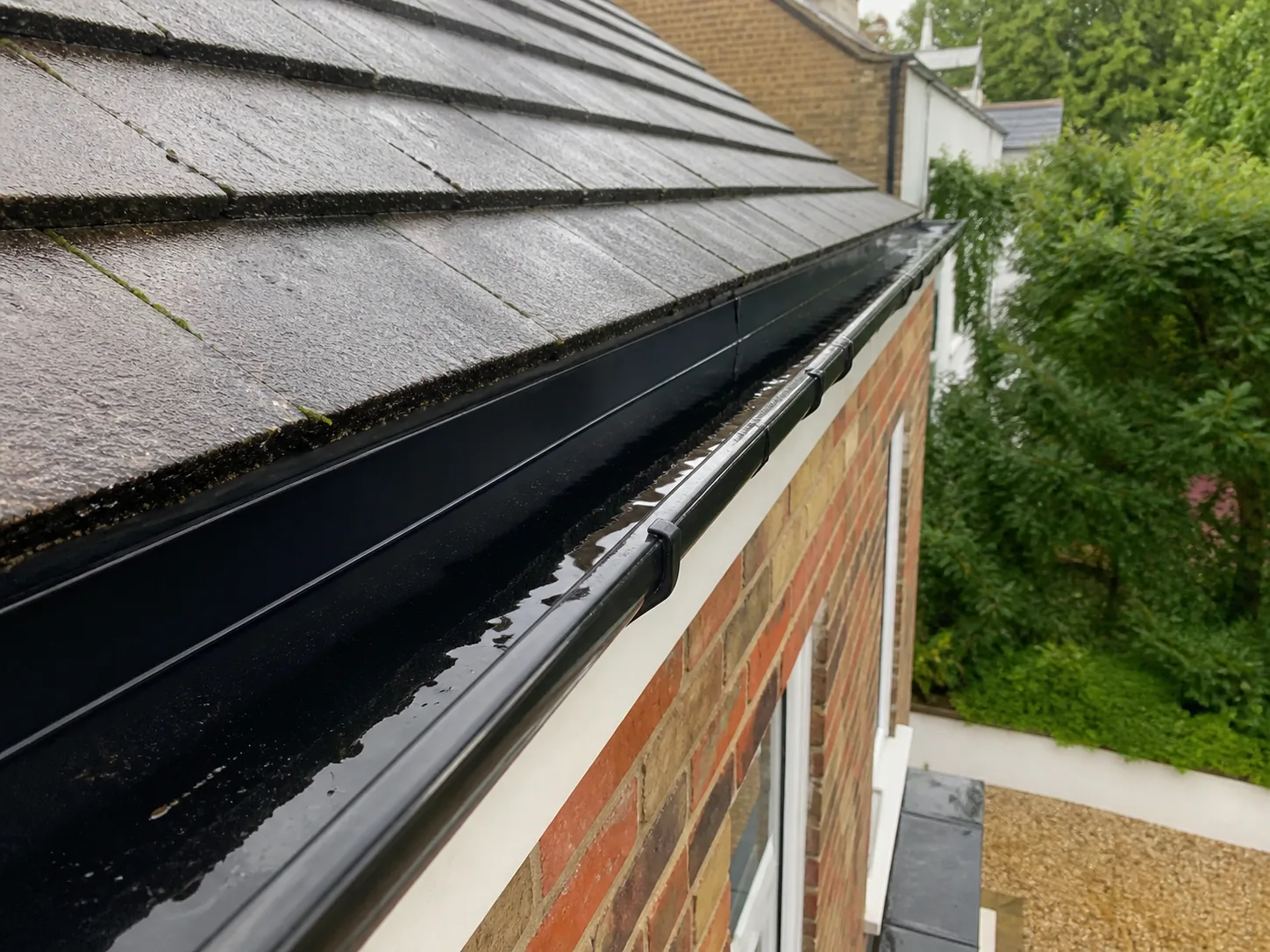
Wet leaves can settle into layers and slow water moving towards an outlet.
Loose roof moss can collect in the channel and hold other material in place.
Small twigs can bridge narrow points and trap lighter debris behind them.
Loose surface material may wash down from the roof during wet weather.
Older material can become dense and reduce the channel available for runoff.
Fine deposits can gather beneath larger debris and close to an outlet.
Structured service guide
| Observation | Routine request | Different workstream |
|---|---|---|
| Leaves beside a sound outlet | Clear selected channel and agreed mouth | None indicated by that fact alone |
| Drip beneath a union | Remove nearby build-up if requested | Assess seal or connection |
| Pipe remains slow below opening | Keep reachable entry clear | Consider enclosed route |
| Section dropped from supports | Do not describe this as debris work | Seek remedial assessment |
Structured service guide
| Action | Direct result | No implied result |
|---|---|---|
| Lift loose leaves | Creates space in named run | Confirms every joint is watertight |
| Remove settled silt | Clears material from channel base | Corrects channel fall |
| Free an agreed exposed mouth | Opens that reachable point | Proves full pipe is clear |
| Leave damaged parts untouched | Maintains the service boundary | Completes a repair |
Structured service guide
| Cleaning input | Why it belongs |
|---|---|
| Chosen run lengths | Defines how much channel is requested |
| Separate roof levels | Shows where access changes |
| Quantity of ordinary matter | Indicates clearance involved |
| Routes around the building | May limit included sections |
Structured service guide
| If the property shows | Keep this distinction |
|---|---|
| Growth plus a split end | Clear growth; assess end piece separately |
| Silt plus little pipe discharge | Attend to mouth; do not assume interior |
| Clean trough plus seam drip | Move from maintenance to component question |
| Debris below plus displacement above | Scope each position by its own need |
A clear service sequence

Seasonal context
Leaves and seeds can create a temporary maintenance need, whereas a failed fitting does not become seasonal because it first leaks during autumn rain. Use the issue found after clearing to guide the next action. Future cleaning timing should follow recurring accumulation, not persistence of a component fault.
Nearby trees, roof moss, gutter shape and exposure can all affect how quickly material accumulates. A visible symptom is more useful than applying one fixed timetable to every address.
Redhill service area
Nearby gutter-cleaning pages
Before booking
Describe two observations separately: which channel contains loose matter, and where the possible defect appears. Then identify the cleaning runs wanted. This prevents an uncertain leak or pipe symptom from being presented as something routine clearance will necessarily resolve.
Not always. Accumulated debris can reduce capacity, but poor alignment, a damaged edge or restriction beyond the channel may create similar behaviour. Clearing is appropriate for loose deposits; any remaining issue must be considered without assuming the original cause.
Ordinary leaves, seeds, grit, loose moss, small twigs and silt inside an agreed accessible run fit the cleaning request. Attached roof growth, unusual contents, broken pieces and matter deep inside pipework require another service decision.
A connection is a physical component. Nearby accumulation can be removed, but a failed seal, movement or damage cannot be corrected by lifting debris. A drip that remains after the area is clear belongs with remedial work.
No. The exposed opening may be cleared of reachable loose material when agreed. Once the route enters the enclosed pipe, its bends and lower connection are outside ordinary gutter cleaning. Persistent poor discharge needs downstream assessment.
The two conditions remain distinct. Accessible deposits may be removed within accepted scope and suitable conditions, while the damaged channel or supports need another response. The cleaning agreement should never imply restoration of the defective part.
No. Moisture indoors can have many causes, and routine gutter work is not damp diagnosis. Mention exterior overflow actually observed, but do not rely on cleaning as a guaranteed remedy for interior marks or moisture.
Responsibility for routine exterior maintenance and authority for repairs may sit with different people. Establish who can approve the selected channel clean, provide communal access and make decisions if a defective shared component is reported.
Identify chosen elevations, roof levels, approximate channel extent, obstacles and visible build-up. These define cleaning. Describing a suspected fault also helps, but its investigation or repair should not be silently included in that maintenance price.
Note where and when it returns, then avoid assuming more debris removal is required. Channel fall, component condition, outlet arrangement or concealed restriction may need attention. The next step depends on assessment of that continuing symptom.
Discuss the actual roofline
For Redhill, the quoted clean reflects the number and extent of chosen runs, their positions, access conditions and accumulated material. Examining leaks, opening enclosed downpipes or investigating drainage changes the nature of the work and needs separate consideration rather than an assumed allowance.
