
Leaves
Wet leaves can settle into layers and slow water moving towards an outlet.
Rainwater routes · access · clear scope
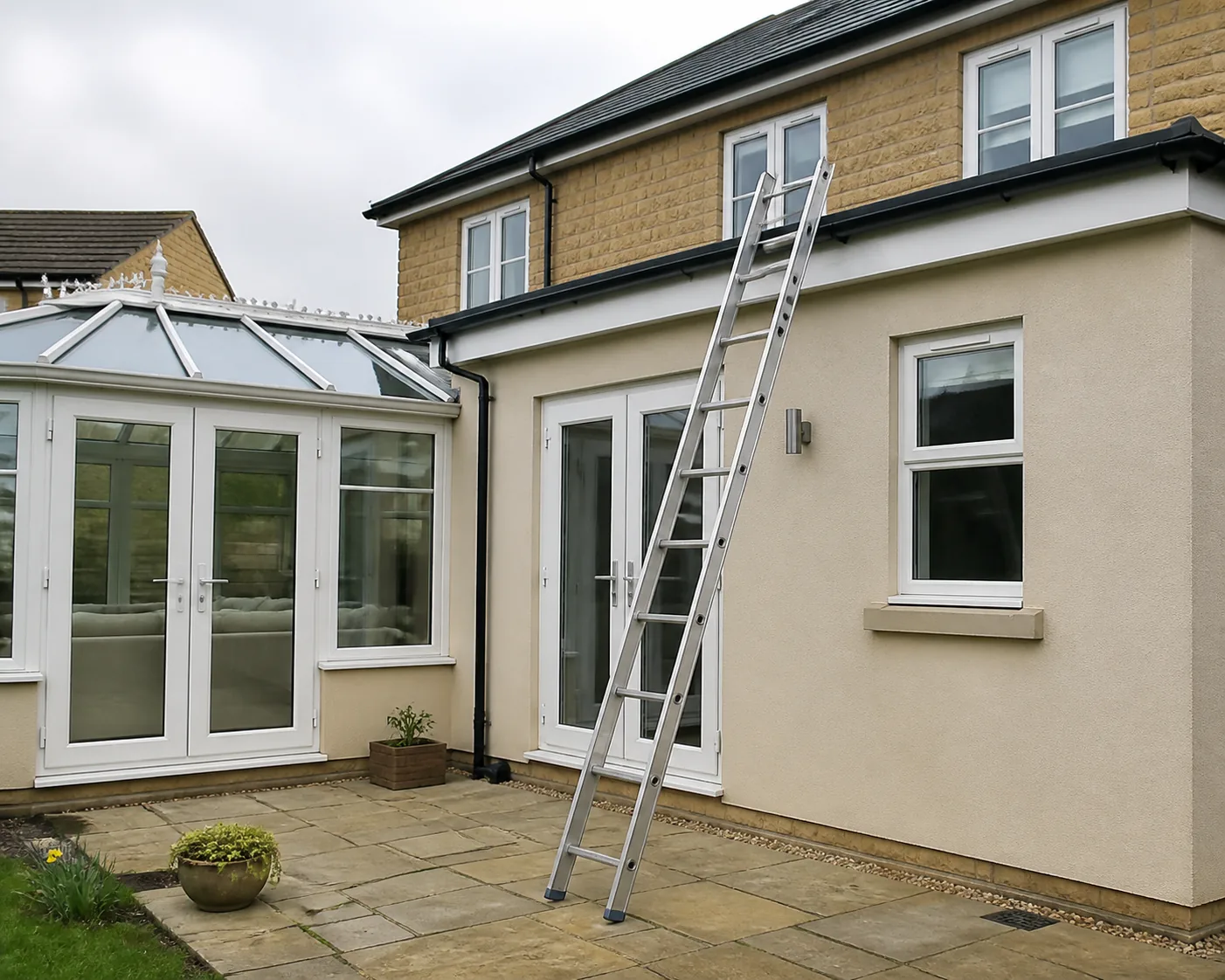
The same building can offer an open approach at the front and a restricted route at the side or rear. Banstead gutter cleaning covers the accessible channels agreed, removing leaves, loose moss, silt and everyday debris. Reachable outlet openings may be included when specified. Neighbouring land, specialist access, repairs, concealed downpipes and underground drainage all need separate consideration.
Structured service guide
| Item | Within scope when agreed | Outside the boundary |
|---|---|---|
| Accessible named channel | Remove leaves, loose moss and silt | Unreachable or unlisted sections |
| Reachable outlet mouth | Lift loose matter when specified | Internal pipe obstruction |
| Gutter fitting | Clear debris around it | Resealing, realignment or replacement |
| Underground drain | No routine gutter action | Separate drainage work |
Structured service guide
| Finding | Role of cleaning | Separate consideration |
|---|---|---|
| Leaves clustered at an outlet | Clear the accessible deposit | Deeper assessment if flow stays poor |
| Cracked union | Remove nearby loose material | Repair the damaged component |
| Channel pulling from the fascia | No structural correction | Support and fixing review |
| Clear run with standing water | Confirm routine debris is absent | Alignment assessment |
Structured service guide
| Detail | Practical effect |
|---|---|
| Number and length of accepted runs | Defines the cleaning extent |
| Separate roof heights | Changes access review by section |
| Gates, boundaries and obstacles | May exclude or complicate an elevation |
| Volume of loose deposits | Affects the clearing work required |
Structured service guide
| If the address has | What needs confirming |
|---|---|
| A narrow gated passage | Whether the relevant side can be approached |
| A close boundary | Whether permission and a usable route are available |
| Ground that rises or falls | Which lengths remain accessible |
| Communal exterior space | Who authorises entry and the selected work |
Common causes
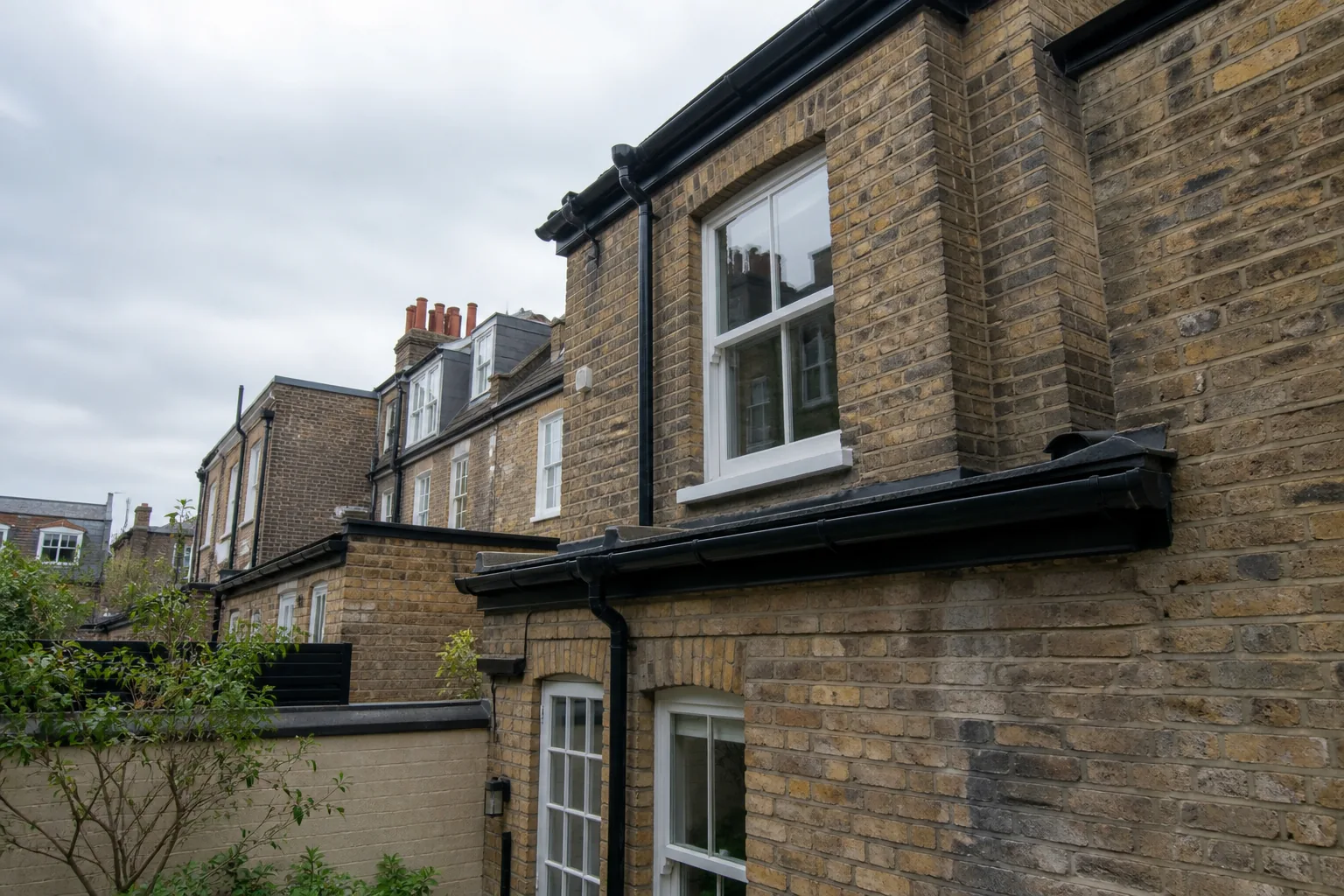
Routine material may gather near an outlet, sit behind a corner or spread as fine sediment along the channel base. Clearing is limited to deposits within the selected accessible run. Material beyond that boundary cannot be assumed removed because water connects the sections.
Wet leaves can settle into layers and slow water moving towards an outlet.
Loose roof moss can collect in the channel and hold other material in place.
Small twigs can bridge narrow points and trap lighter debris behind them.
Loose surface material may wash down from the roof during wet weather.
Older material can become dense and reduce the channel available for runoff.
Fine deposits can gather beneath larger debris and close to an outlet.
Local property context
Some Banstead properties may have a narrow passage, a rear addition, changing ground height or a boundary close to one side elevation. Others may have clear space around every requested run. These conditions belong to the actual address and should not be assumed from the area or building frontage. Explain how each side is reached, where gates sit and whether any channel appears to rely on access from neighbouring or communal space. This allows sections with different constraints to be considered separately before work is promised.
Clear boundaries also help when only part of the roofline is suitable for routine cleaning. Accessible agreed channels can be cleared of leaves, loose moss, silt and similar deposits, with reachable outlet mouths attended to where specified. A section beyond an unavailable route remains outside the completed work. Permission does not by itself make a run accessible, and access does not expand the task into repairs or concealed pipe clearance. Each of those questions needs its own answer, particularly where overflow is visible from one place but its source is uncertain.
Useful details include gate widths, enclosed side routes, structures below the eaves, changes in ground level and any need to cross shared or neighbouring space. Conditions are checked for each elevation, and no particular equipment or specialist arrangement is promised.
| Property situation | Access or gutter consideration |
|---|---|
| House with a gated side passage | The gate, route width and space beneath the eaves can affect the side run independently. |
| Home beside a close boundary | Any need for neighbouring access and permission should be identified before that elevation is accepted. |
| Property with changing ground level | A continuous channel may have different access conditions from one end to the other. |
| Building with communal exterior areas | Authority, entry arrangements and the relevant shared sections need confirmation in advance. |
Seasonal context
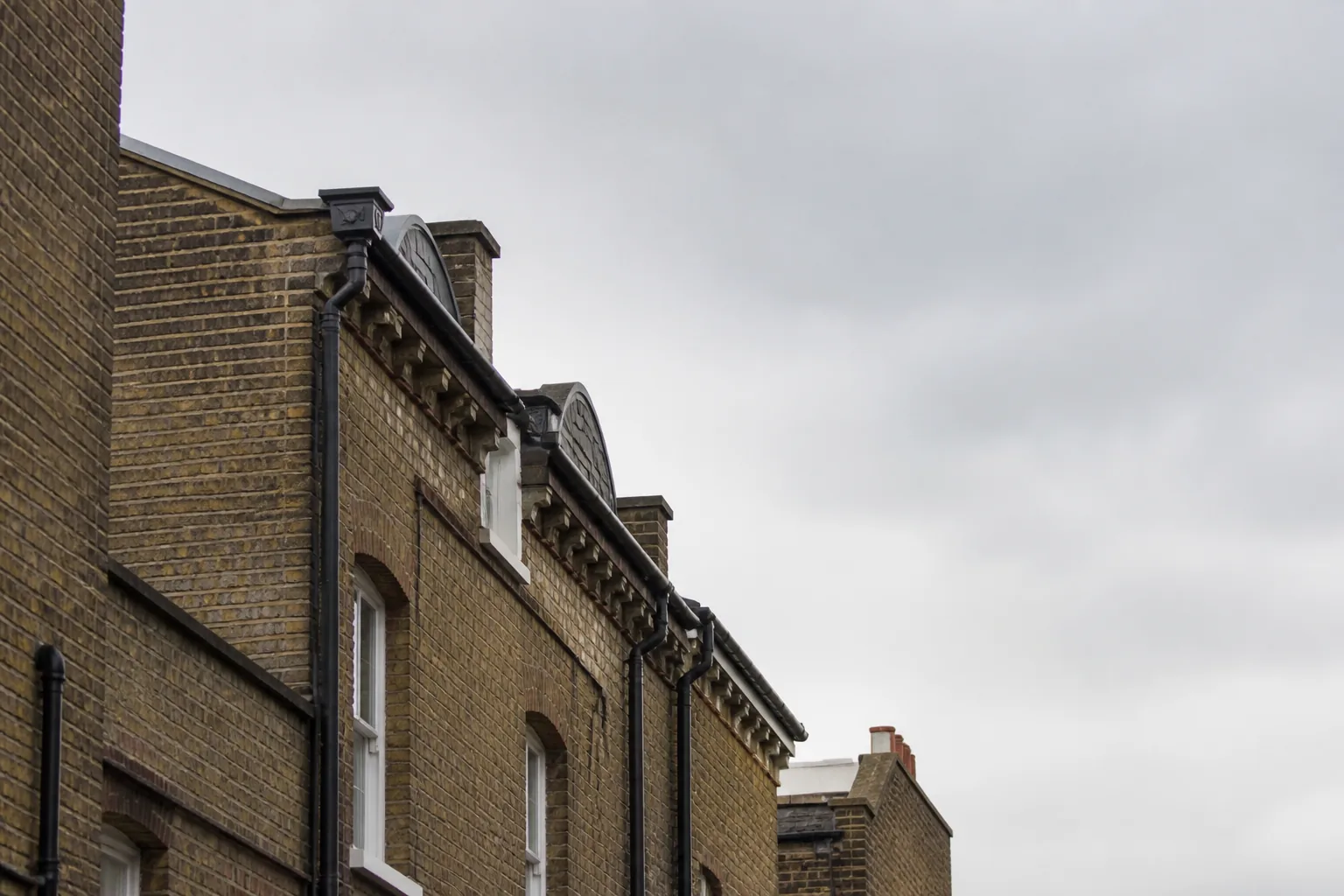
A channel near planting may collect leaves quickly, while another receives mostly wind-blown grit or loose roof moss. Shelter and exposure can also vary around a building. The sensible time for another clean follows observed accumulation rather than a single seasonal rule.
Nearby trees, roof moss, gutter shape and exposure can all affect how quickly material accumulates. A visible symptom is more useful than applying one fixed timetable to every address.
Quick answers
Front, rear and side elevations can have different gates, obstacles and space beneath them. Describing the routes helps establish which requested channels can be considered rather than assuming access from street visibility.
Only where the necessary permission and a suitable route have been arranged. Mention this before booking; a gutter’s position does not itself authorise entry or confirm that the section is accessible.
It remains outside the routine cleaning completed. Other agreed runs may still be cleared, and any different access requirement for the excluded section can be considered separately.
They should be specified in the agreement. Loose deposits at an accessible outlet mouth may be removed, but the connected pipe interior and ground drainage are not included by implication.
No. It clears ordinary material from selected channels. Split fittings, failed seals, detached brackets and poor alignment require repair assessment even when debris is also present nearby.
Yes. Confirm who controls the area, when entry is available and which roof edge requires it. This reduces uncertainty without promising that permission alone will resolve every practical access issue.
A clear service sequence
Banstead service area
Nearby gutter-cleaning pages
Before booking
Name the required elevations, levels and separate structures, then describe gates, narrow routes, additions, boundaries and changes in ground height. Add the visible symptom or deposit so both the task and its access can be considered.
No. Each elevation can have a different route and different obstacles beneath the roof edge. The rear and sides should be described individually, even if the front channel appears straightforward to approach from the property entrance.
It can be assessed when lawful permission and a usable approach are available. The arrangement should be made before the visit. If either condition is missing, that run may need to remain outside the agreed routine work.
Ground levels, additions, boundaries or obstacles can change along the same elevation. The agreement may therefore be limited to the accessible length. That boundary should be clear because deposits beyond it may still influence water movement.
Not necessarily. Loose debris can contribute to overflow, but water behind the channel may involve alignment, a fitting, fascia condition or another detail. Cleaning removes accessible deposits and does not repair or diagnose every physical cause.
A restriction may lie farther down the pipe or within drainage below, though assessment is needed. Routine cleaning does not cover those concealed areas, so continued poor discharge should be treated as a separate concern.
Not on their own. Authority to enter is necessary, but the available space, route, roof level and structures beneath the channel also matter. Both permission and practical conditions must be considered for the requested section.
Describe anything that restricts the route when booking and follow the agreed preparation for the address. Clear information helps assess access, but do not make assumptions about what must be moved or how work will be carried out.
Yes. The scope can be limited to named runs that can be accepted for routine cleaning. Any excluded side, separate building, repair or concealed drainage concern should remain clearly outside the quoted work and agreed visit.
The interval depends on the property’s earlier build-up, nearby planting, roof condition, exposure and known problem points. Review accessible runs according to what they collect; no reliable timetable applies equally to every address or roof edge.
Discuss the actual roofline
The quotation reflects the accessible runs requested, their heights and lengths, the route to each elevation and the quantity of deposits. Permission or access constraints may change what can be included. Repairs, deeper pipes and underground drains remain separate costs.
