
Leaves
Wet leaves can settle into layers and slow water moving towards an outlet.
Rainwater routes · access · clear scope
Leaves on the surface may hide moss fragments and silt packed beneath them, leaving less room for rainwater. Gutter cleaning in Sevenoaks removes routine debris from the accessible channels selected for the visit. An agreed reachable outlet mouth can also be cleared, while repairs, hidden downpipe restrictions, underground drainage and rooflines needing a different access arrangement remain separate.
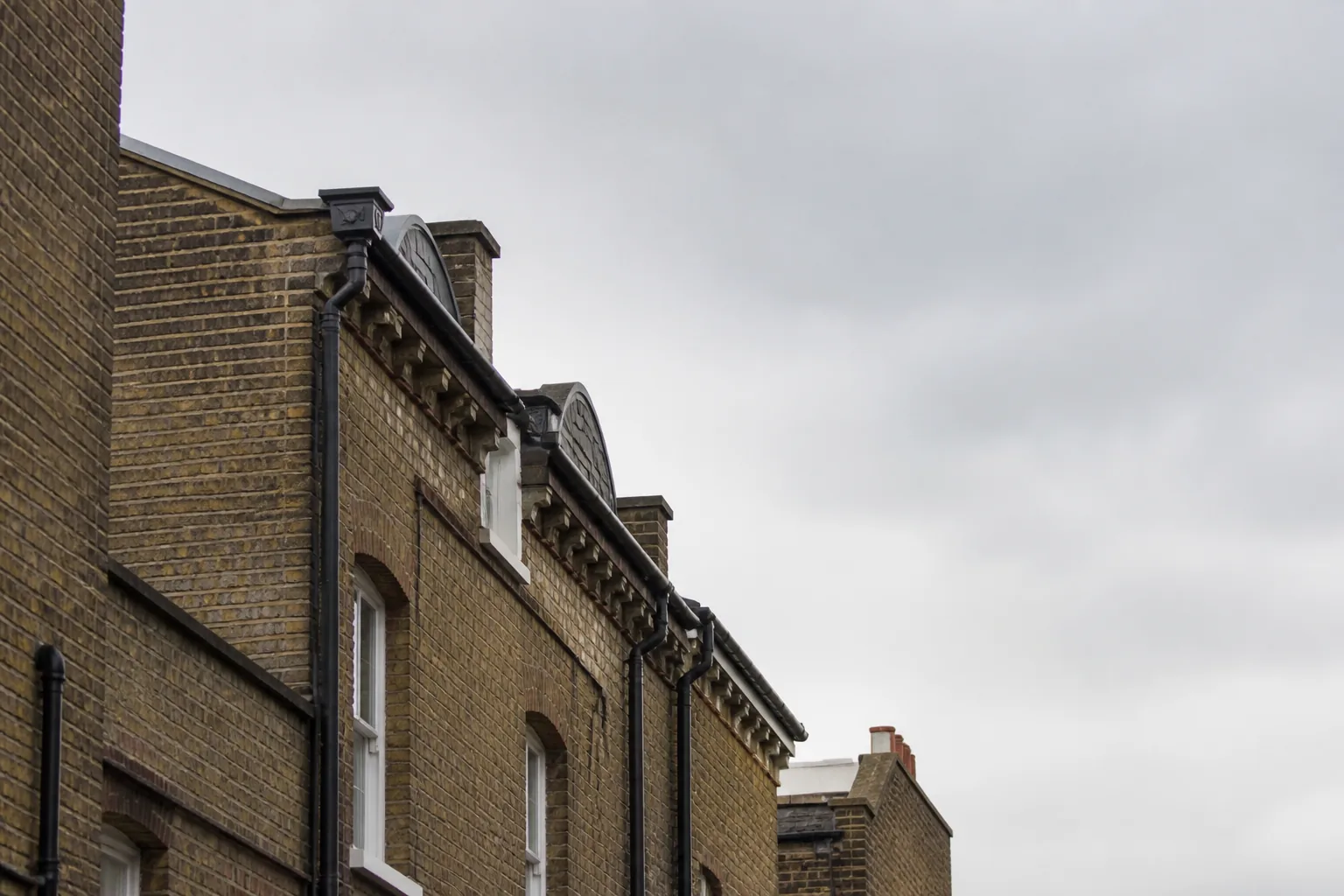
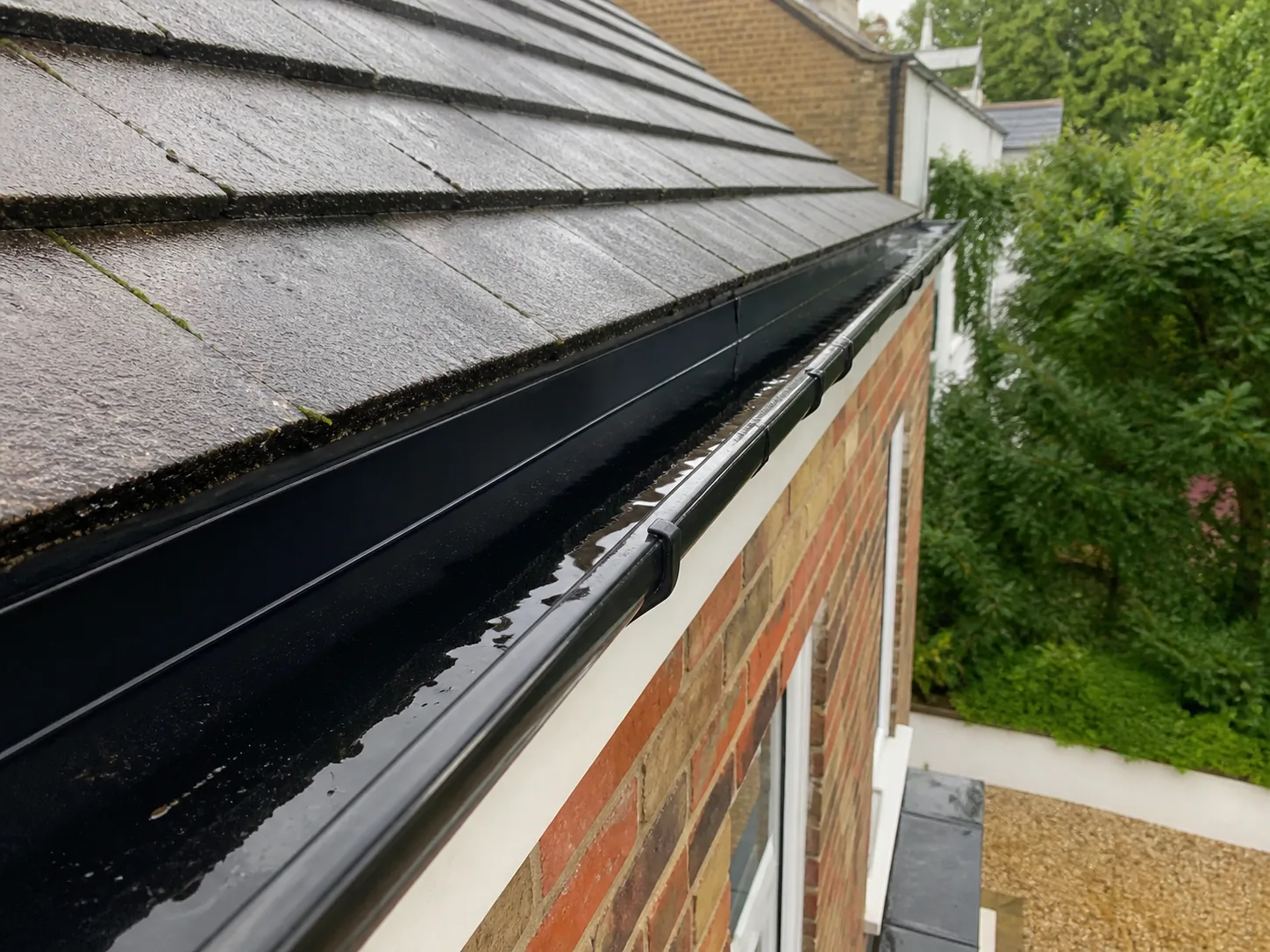
Seasonal context
Autumn leaves are only one source of gutter contents. Seeds, grit and dislodged moss may arrive through other months, while sheltered corners can stay damp and retain material. Use previous overflow and visible accumulation to decide when a particular run deserves attention.
Nearby trees, roof moss, gutter shape and exposure can all affect how quickly material accumulates. A visible symptom is more useful than applying one fixed timetable to every address.
Common causes
Leaves can bridge a narrow point and catch loose moss, seeds and roof grit. Once rain dampens the mixture, finer material settles into the bottom of the channel and reduces its working depth. Removal applies to the agreed accessible area, not the unseen pipe below.
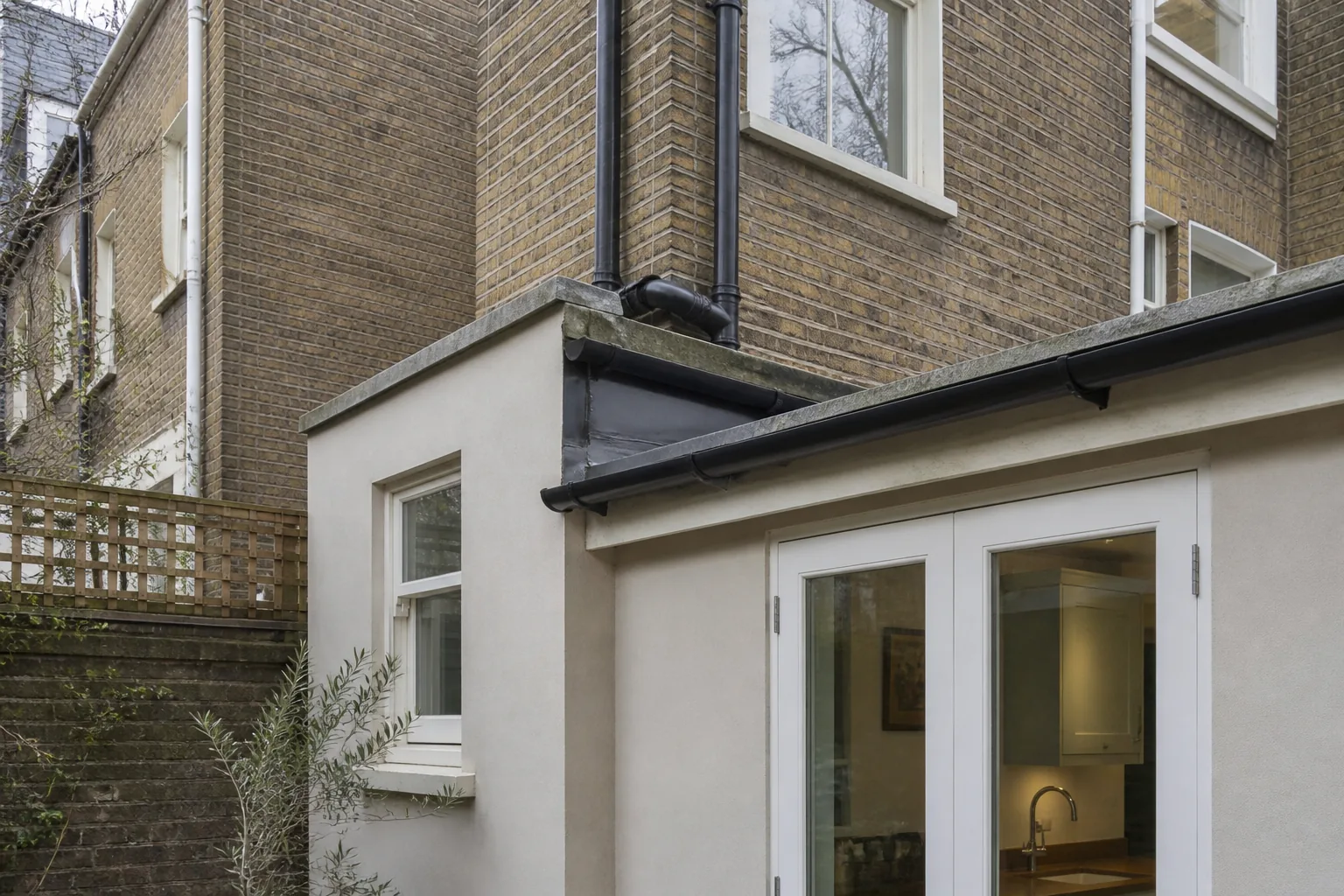
Wet leaves can settle into layers and slow water moving towards an outlet.
Loose roof moss can collect in the channel and hold other material in place.
Small twigs can bridge narrow points and trap lighter debris behind them.
Loose surface material may wash down from the roof during wet weather.
Older material can become dense and reduce the channel available for runoff.
Fine deposits can gather beneath larger debris and close to an outlet.
Local property context
A Sevenoaks address may have one continuous channel or several independent runs around bays, additions, garages and changes in roof level. Those possibilities must be checked at the actual property. A gutter visible from the garden is not automatically reachable, particularly where a lower roof, wall, narrow side route or planted border changes the approach. Name the front, rear and side elevations required, along with any smaller structure. Treating each run separately produces a clearer agreement and avoids assuming that access on one side applies everywhere.
Where the water appears gives useful context without proving the cause. A spill across a long edge could accompany widespread silt, whereas a concentrated overflow near a corner may point to a local pocket of leaves. Water escaping from a union can instead involve a worn seal, and slow discharge may continue if a restriction sits deeper in the pipe. Cleaning deals with loose build-up in included channels. It does not alter the fall, mend fittings or diagnose the concealed route, so persistent symptoms require another assessment.
Access is considered elevation by elevation. Sloping ground, enclosed side passages, conservatories, extensions, walls and separate buildings may affect what can be reached. Explain locked gates, shared routes or any need for permission before booking; inclusion cannot be based on visibility alone.
| Property situation | Access or gutter consideration |
|---|---|
| Homes with staggered roof levels | Each level may have a different approach and should be identified as its own requested run. |
| Properties with long rear additions | The addition may carry another channel while changing access to the original rear roofline. |
| Houses with planted boundaries | Dense planting may restrict the working space even when the gutter itself is easy to see. |
| Homes with detached garages | Garage gutters are separate from the house request unless they are named and agreed. |
A clear service sequence
Structured service guide
| Area | Routine cleaning can | Routine cleaning cannot |
|---|---|---|
| Named accessible channel | Remove leaves, moss and silt | Realign or replace guttering |
| Reachable outlet mouth | Lift loose debris when agreed | Clear the hidden pipe length |
| Underground connection | Provide no routine action | Investigate or repair drainage |
Structured service guide
| Observation | Clearance role | Separate concern |
|---|---|---|
| Packed leaves at a corner | Remove accessible build-up | Check for damage only if indicated |
| Drip through a union | Relieve any backed-up water | Renew a failed seal |
| Pooling in an empty run | No debris remains to lift | Review fall or supports |
Structured service guide
| Detail | Why it changes the assessment |
|---|---|
| Number of selected elevations | Sets the intended clearing area |
| Separate roof heights | Creates distinct access decisions |
| Walls, planting and lower roofs | May limit the approach |
| Depth and density of contents | Affects the work within each run |
Structured service guide
| If the address has | Clarify before agreement |
|---|---|
| A detached garage | Whether its roofline is requested |
| A long rear addition | Whether the higher channel is reachable |
| A shared side route | Whether access permission is in place |
| Several short bay gutters | Which individual runs need clearing |
Quick answers
Routine cleaning covers leaves, loose moss, silt, seeds and similar material inside accessible agreed channels. Fixed objects, damaged components and anything concealed within the rainwater system call for separate consideration.
Yes, a rear-only visit may be considered when the exact run and its approach are described. No front, side, upper or outbuilding channel is included simply because it connects nearby.
Loose material at an outlet mouth can be removed if that opening is reachable and included in the agreement. This does not extend to the concealed downpipe or underground connection.
No. Clearance helps when ordinary debris is reducing the open channel, but damaged joints, poor fall, limited capacity or a deeper restriction may continue to cause water to escape.
Porches, bays, garages and additions can have independent channels and outlets. Naming them makes the intended scope unambiguous and allows access to be considered for each one.
Describe the requested sides, building levels, lower roofs, gates, walls, ground changes and separate structures. Ground-level photographs can add context, although the actual address determines final access.
Sevenoaks service area
Nearby gutter-cleaning pages
Before booking
Routine work does not include broken or misaligned guttering, leaking fittings, internal downpipe restrictions, underground drains or unnamed rooflines. Any section that cannot be reached under the agreed arrangement also remains outside the visit and must be reconsidered separately.
Growth suggests that damp material has been retained, but it does not reveal the condition of the channel beneath or the pipe beyond. Accessible plants and loose growing matter can be removed; damage found nearby is still a repair issue.
A thin layer of silt can reduce capacity without forming an obvious heap. The channel may also have poor fall, an undersized outlet, a defective fitting or a restriction lower down. The cause should be assessed rather than assumed from ground level.
Cleaning can relieve water that has backed up around a sound connection, but it cannot renew a failed seal or secure a loose part. If dripping continues when the channel is open, the union needs separate repair consideration.
They may change both the accumulation and access to the channel. Fine sediment can pass through while leaves rest above openings. Mention the type and affected runs beforehand so inclusion can be assessed instead of assuming an unchanged cleaning task.
Its position, depth and surrounding space may affect whether the upper channel is reachable. The extension surface should not be assumed to provide an access route. Describe both its own gutter and the higher run when making the enquiry.
Loose debris covering an agreed reachable outlet mouth may be removed. If water still moves slowly, material could remain deeper inside the downpipe or underground connection. Those concealed areas require a different investigation and are not routine channel cleaning.
Yes. Confirm permission and make the intended route available before the appointment. State which elevation depends on neighbouring or communal space. If that approach is unavailable, the affected roofline may have to be excluded from the agreed work.
There is no fixed interval for every address. Nearby planting, exposure, roof condition and the way individual corners retain debris all influence build-up. Watch visible contents and rainwater behaviour, then plan checks around the property's own pattern.
Yes. Persistent pooling in an open channel may relate to its fall, supports or outlet position rather than further dirt. Cleaning cannot reposition those components, so water that repeatedly sits in one place warrants a separate repair assessment.
Discuss the actual roofline
A likely charge reflects the combined length of the requested channels, their separate levels, the space around them and the quantity of material present. Several isolated roof sections can change the work involved. Repairs, pipe investigations and special access requirements need their own scope.
