
Leaves
Wet leaves can settle into layers and slow water moving towards an outlet.
Rainwater routes · access · clear scope
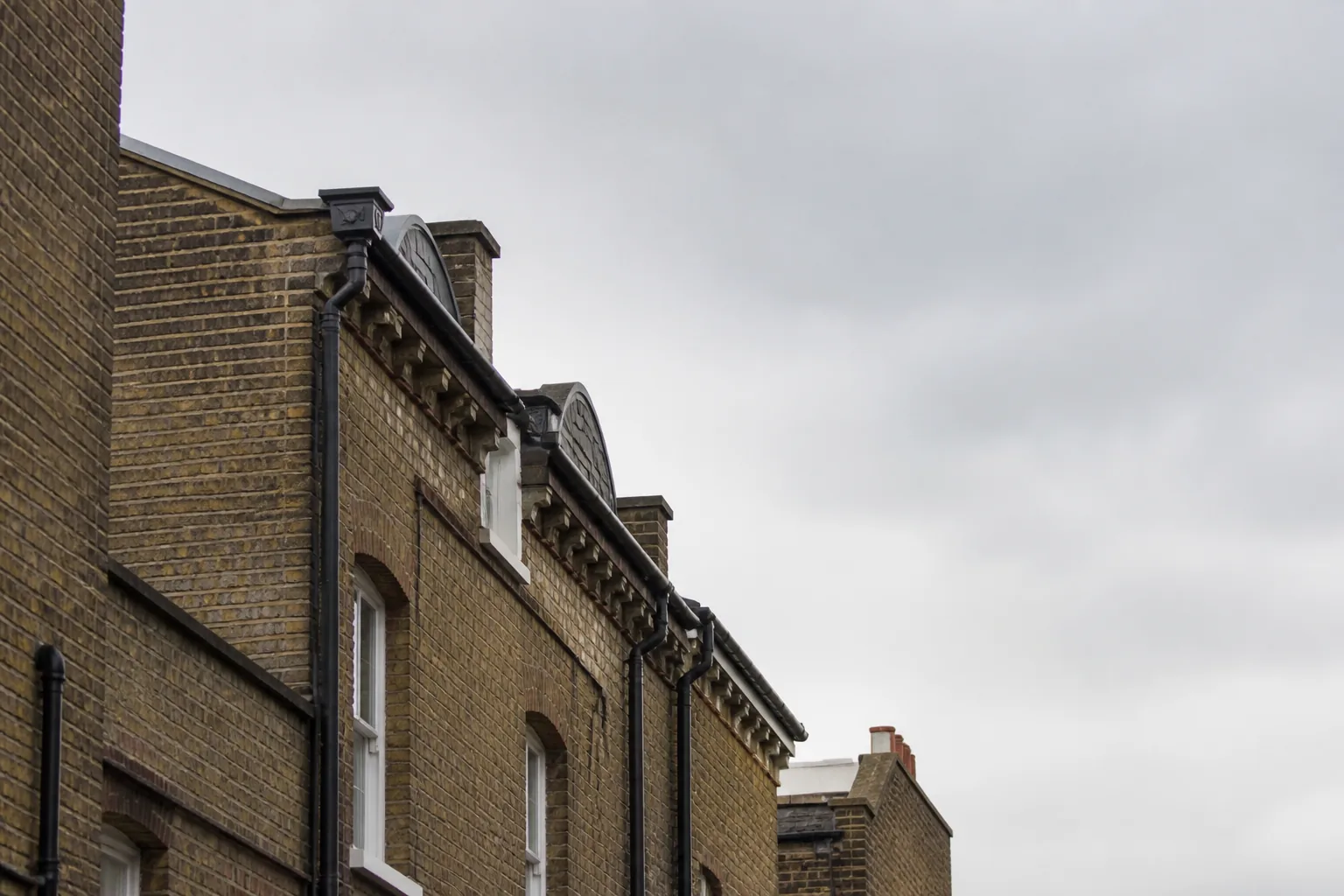
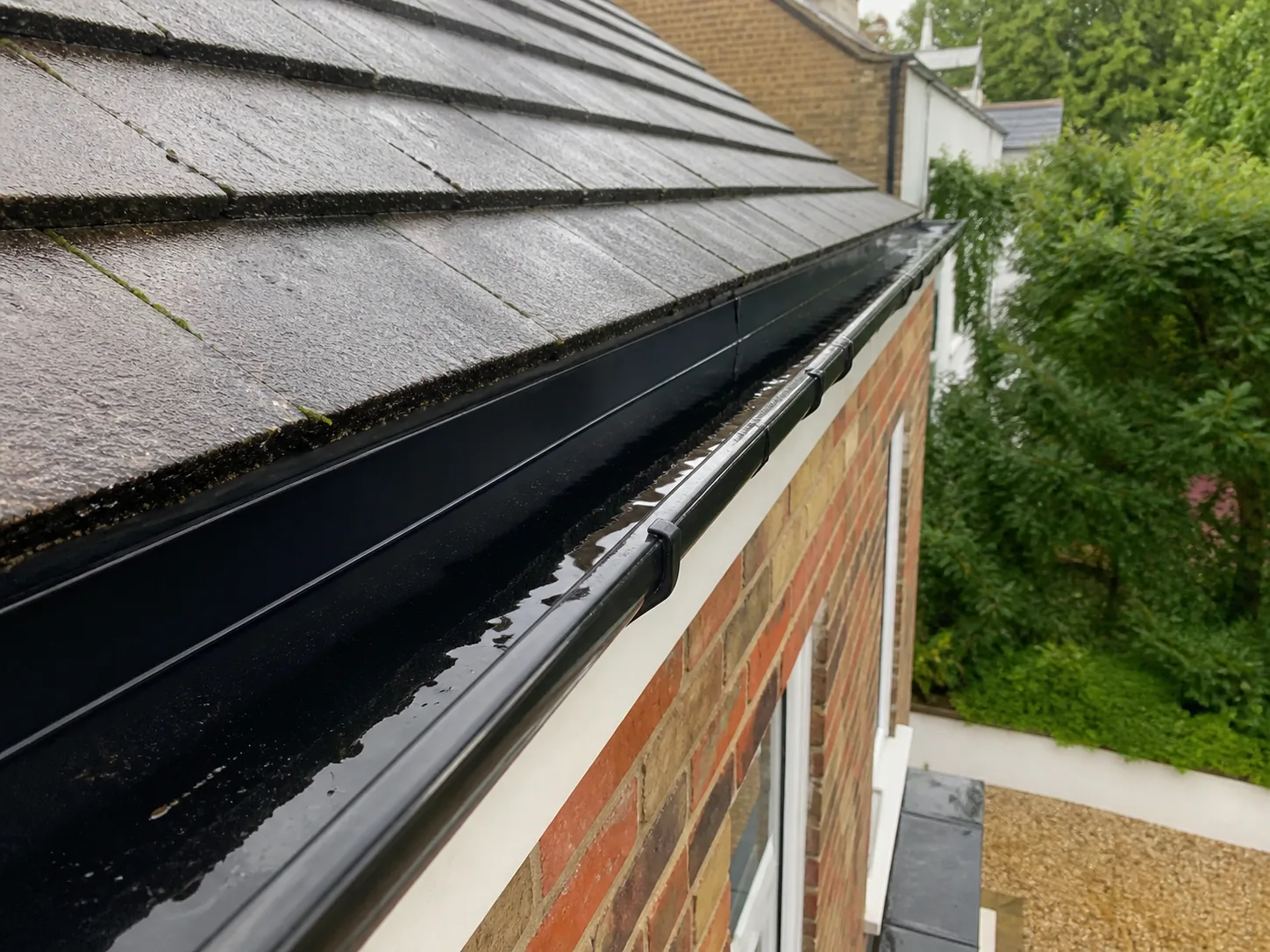
Small transition points often provide the clearest description of a gutter concern. A Staines enquiry might locate build-up at an internal corner, before an outlet, or against a stop end rather than labelling the whole roofline blocked. Routine loose matter can be cleared from the selected accessible channel, while failed junctions, enclosed pipes and drainage below the property remain separate forms of work.
Seasonal context
Light leaves and seeds can catch at corners during one period, while fine grit accumulates gradually on an outlet approach. The pattern may change after each clearance. Future timing should respond to repeated findings at actual junctions instead of assuming every bend and endpoint fills together.
Nearby trees, roof moss, gutter shape and exposure can all affect how quickly material accumulates. A visible symptom is more useful than applying one fixed timetable to every address.
Common causes
Twigs can bridge at an angle, leaves may press against an end and sediment can settle on the approach to an outlet. These are local deposit patterns rather than proof of a deeper obstruction. Clearance follows the chosen run and stops at the agreed boundary.

Wet leaves can settle into layers and slow water moving towards an outlet.
Loose roof moss can collect in the channel and hold other material in place.
Small twigs can bridge narrow points and trap lighter debris behind them.
Loose surface material may wash down from the roof during wet weather.
Older material can become dense and reduce the channel available for runoff.
Fine deposits can gather beneath larger debris and close to an outlet.
Local property context
A roofline at a Staines property may turn around a corner, end beside a wall, meet a short return or feed an outlet partway along the run. These features make useful landmarks, although none proves the underlying cause of overflow. Saying that loose leaves sit before the rear outlet is more precise than reporting a blocked gutter. It identifies the section to consider while leaving room for access, channel condition and the downstream route to be assessed independently.
Junctions also show why cleaning and repair boundaries matter. Silt gathered around an intact exposed mouth can be removed when that opening is reachable and included. Water escaping through a split stop end, separated angle or failed union involves a component even if debris is nearby. The visit can still address ordinary accumulation in the connected accessible run, but it cannot restore the fitting or guarantee flow inside pipework hidden below the opening.
A corner can join elevations with very different approach conditions. One length may sit over open ground while its return passes above an addition or boundary. Both sides are assessed separately, and inclusion of the junction does not automatically include every connected run.
| Property situation | Access or gutter consideration |
|---|---|
| L-shaped roof edge | Describe both arms and whether the angle connects requested runs. |
| Channel ending beside a wall | Differentiate loose matter at the end from leakage through its fitting. |
| Outlet positioned mid-run | Identify which side accumulates without assuming the pipe interior is restricted. |
| Short return above an addition | Confirm access to the return independently from the longer elevation. |
A clear service sequence
Structured service guide
| Landmark | Cleaning description | Boundary |
|---|---|---|
| Internal angle | Clear selected arms meeting there | Only arms named |
| Stop end | Remove loose matter against it | No sealing or replacement |
| Exposed outlet | Free reachable opening when agreed | No enclosed pipe clearance |
| Union between lengths | Lift deposits from adjoining channel | No joint repair |
Structured service guide
| What appears | Routine action | Possible separate need |
|---|---|---|
| Twigs across angle | Remove accessible loose matter | None shown alone |
| Water through split end | Clear adjacent deposits | Repair fitting |
| Silt over outlet mouth | Open reachable entry | Assess restriction below |
| Empty return off bracket | No cleaning remedy | Restore support |
Structured service guide
| Useful input | Assessment purpose |
|---|---|
| Type and position of transition | Locates concern accurately |
| Adjoining lengths requested | Defines how far work extends |
| Conditions below each arm | Highlights separate access decisions |
| Deposits versus damaged parts | Keeps service types distinct |
Structured service guide
| Conditional feature | Question before agreement |
|---|---|
| Corner across two elevations | Are both runs required? |
| Outlet shared by upper and lower routes | Which exposed opening is reachable? |
| End beside neighbouring boundary | Where does authorised access stop? |
| Return above glazed projection | Can that short section be included? |
Quick answers
It identifies where two channel lengths meet and loose material may gather. The description helps locate the request, but does not prove the angle is damaged or explain downstream condition.
Loose debris resting against it can be removed from an agreed accessible run. The stop end is a fitting; sealing, reconnecting or replacing it belongs to repair work.
Yes, when the required channel length is stated and accepted. The exposed opening may be included by agreement, but neither choice establishes condition of the enclosed pipe below.
No. A turn does not automatically bring all adjoining elevations into scope. List each arm wanted, along with its level and any different approach conditions beneath it.
Nearby deposits can be removed if the channel is included, but a leaking angle may need repair. Cleaning cannot reseal the junction or correct movement between connected lengths.
Only reachable exposed openings expressly included with selected runs are covered. Other outlets, internal bends and lower connections should not be assumed from a request concerning one transition point.
Staines service area
Nearby gutter-cleaning pages
Before booking
Name building side and roof level, then describe the feature: inner angle, outer corner, stop end, union or outlet approach. Add which adjoining length is affected. This gives a location without asserting whether debris, fitting or pipe caused the symptom.
Leaves, loose moss, seeds, grit, silt and small twigs can settle on the approach. Where access and scope permit, these ordinary materials can be removed with matter covering the exposed mouth. Pipe interior remains outside that action.
It may extend around the angle, but actual distribution needs consideration. Identify both lengths if both are wanted. A deposit at their meeting point does not automatically authorise or require the complete adjoining elevations for cleaning.
The end fitting or seal may have failed, or water may be retained by another condition. A clear appearance rules out neither possibility. Because debris removal cannot mend the component, continued dripping needs repair assessment.
No. It confirms only that loose material has been removed from accessible channel and agreed exposed opening. A restriction could remain inside the vertical pipe, at a lower bend or beneath ground beyond the cleaning scope.
Treat each level as a separate section even if rainwater goods appear related. Their access, deposits and outlets may differ. Describe the connection from a safe position and let the actual arrangement determine inclusion in the final scope.
Yes. Scope can end at an agreed landmark when the return is not required or cannot be approached. The exclusion should be explicit so the longer run is not mistaken for the entire corner and return.
They remain visible channel parts, but repair, adjustment or replacement is not routine debris removal. Loose matter can be cleared nearby. Any separation, cracking or displacement should be handled as a separate physical-condition concern by the appropriate service.
They identify channel lengths, connected elevations, outlet positions and differences in approach. Cost follows agreed work and access, not a fixed charge per corner. Repairs and hidden pipework remain separate from the quoted maintenance task.
Use the amount and type of material repeatedly found there, together with returning overflow. If the corner stays clear but leakage continues, maintenance frequency is not the answer; the fitting or rainwater route needs separate assessment instead.
Discuss the actual roofline
For Staines, explain which transition point is involved, how much adjoining channel is wanted, the roof level and obstacles beneath the return. This gives a better quotation basis than the number of corners alone. Replacement fittings and restrictions beyond exposed outlets stay outside routine cleaning.
