
Must every elevation be cleaned together?
No. Booking can cover only clearly identified runs that are wanted, accessible and accepted. A deposit on one side does not demonstrate condition of roof edges elsewhere around the building.
Rainwater routes · access · clear scope
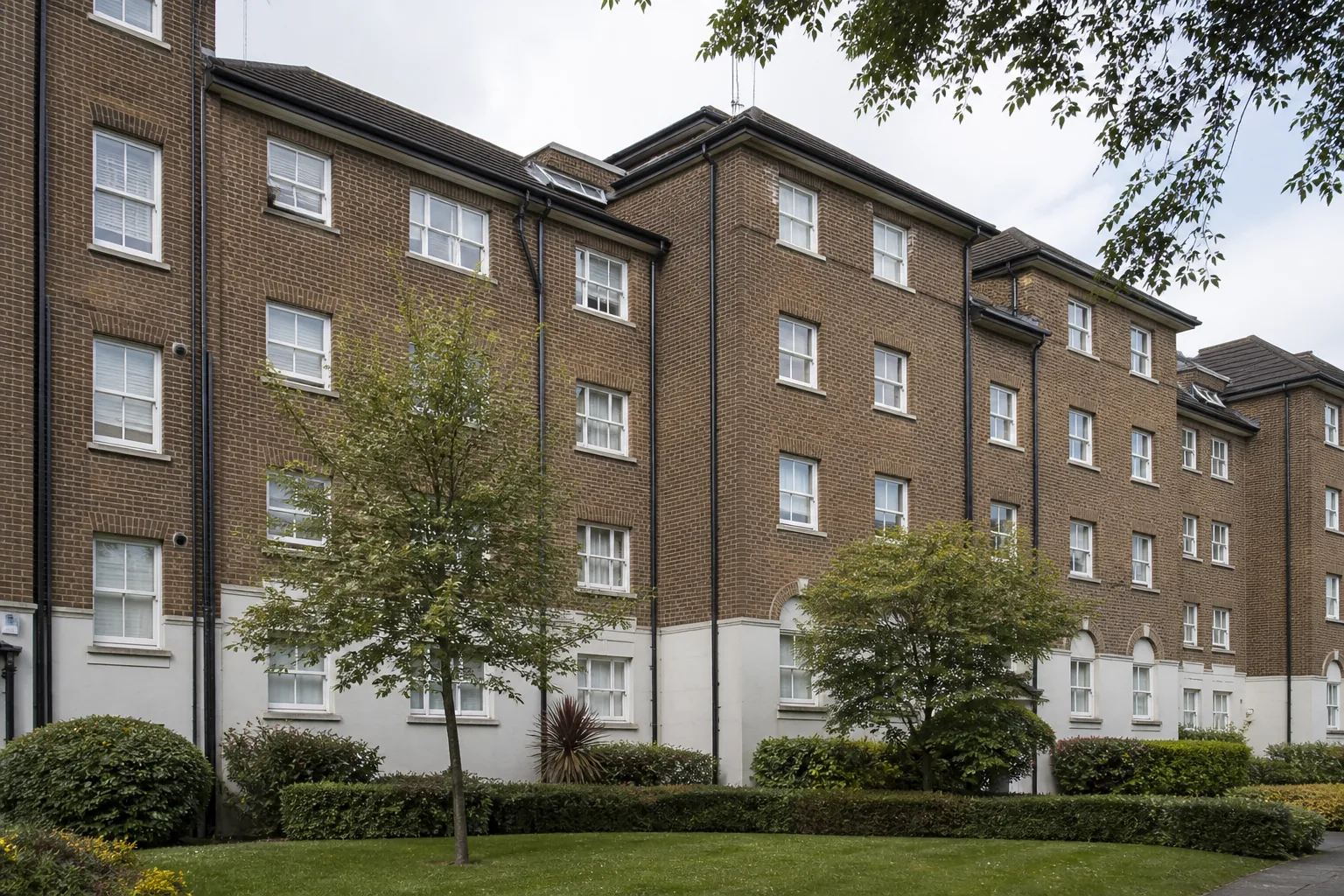
Debris rarely settles in identical amounts around an entire building. One Woking roof edge may hold damp leaf layers, another a ribbon of silt, and another very little. A selective cleaning request can follow those differences, provided each chosen channel is accessible and agreed. Reachable outlet openings are optional parts of that scope; repairs and concealed restrictions remain independent concerns.
Visible clues
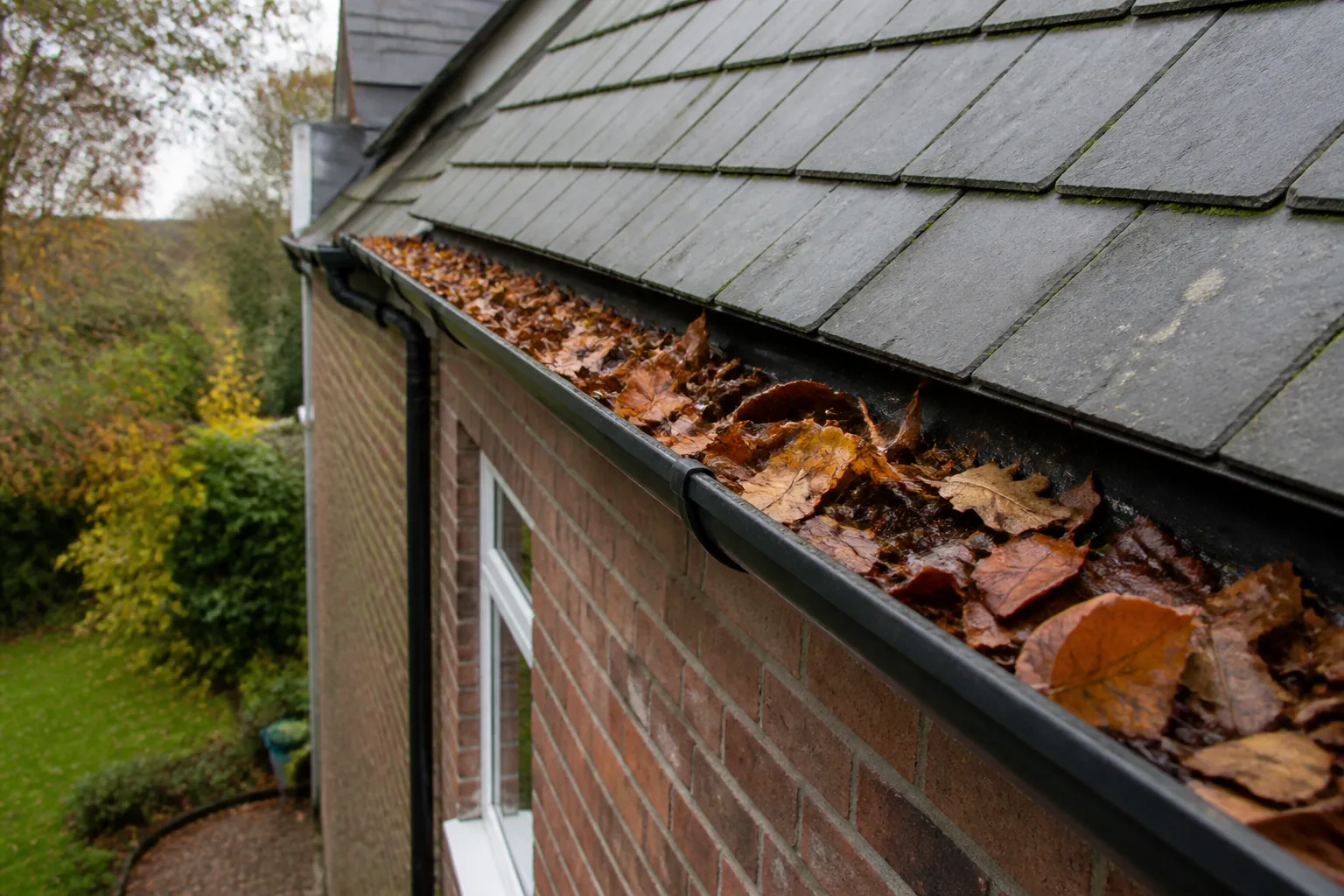
Visible layers, sprouting seeds and material peeping above the lip suggest accumulation. By contrast, a bare channel holding a consistent pool or dripping from a clean join may indicate another issue. Observations from one run should not be copied automatically to remaining elevations.
Local property context
Properties in Woking may have roof edges facing different surroundings, sitting beneath varied roof materials or receiving different shelter. These conditions can produce contrasting deposits at one address without supporting a general claim about the area. An enquiry can say that the upper rear contains leaves, the garage run shows fine sediment and the front appears clear from ground level. Required work can then be discussed section by section instead of turning one visible patch into a whole-building assumption.
Distribution also matters within a single run. Loose moss may collect near a bend, while silt forms a thin layer towards an outlet and small twigs bridge at a corner. Routine clearance can remove such accessible matter throughout the selected channel. If an empty section still holds water, or a clear outlet does not discharge, the concern shifts away from debris quantity. Alignment, damaged parts and restrictions inside the downstream route need their own assessment.
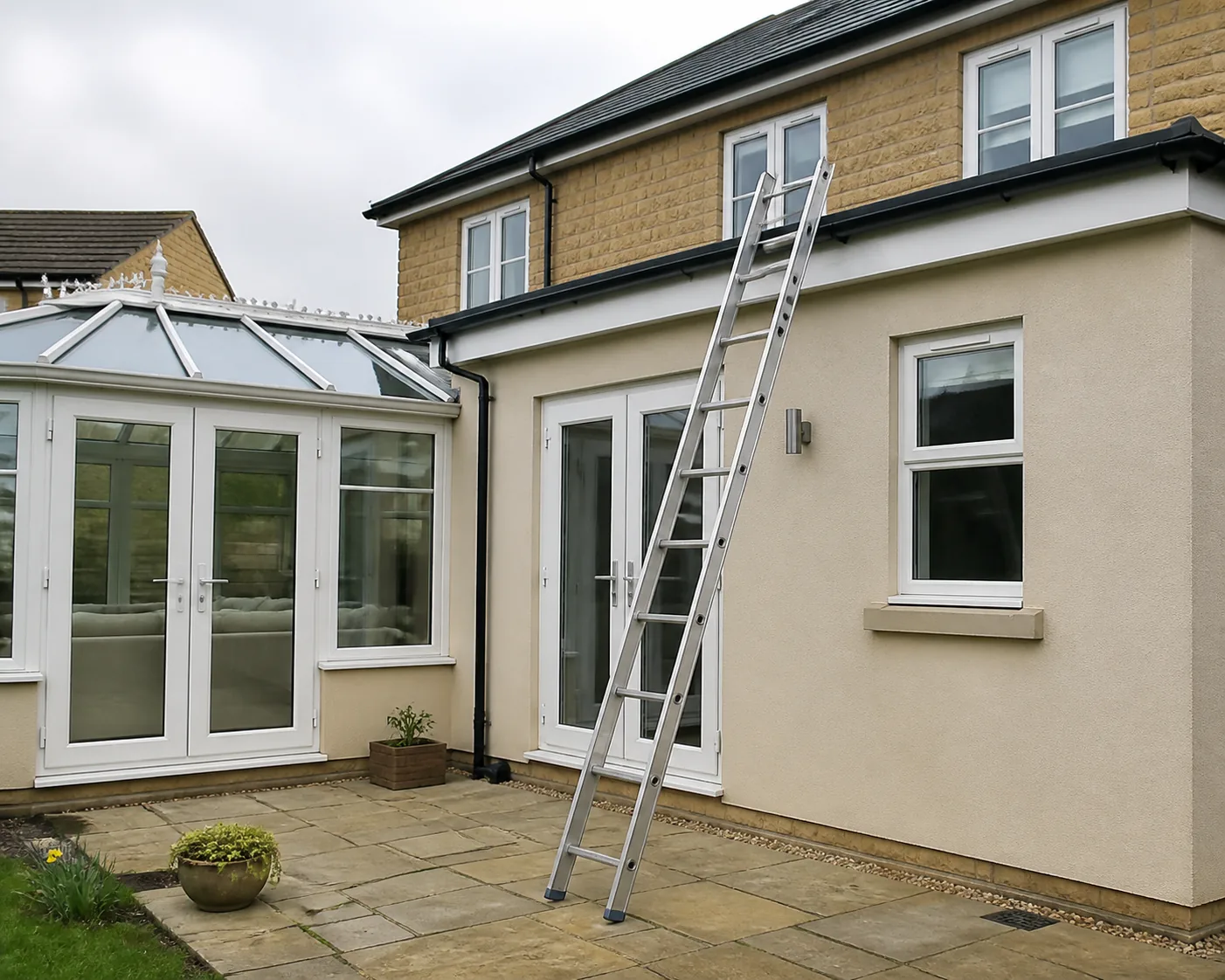
The section with the heaviest deposit may not be easiest to approach. Ground level, projections, side widths, gates and adjoining land can differ around the building. Suitability is decided for each selected run, and observed need does not override access constraints.
| Property situation | Access or gutter consideration |
|---|---|
| Detached home with four elevations | Compare observed build-up rather than presuming equal accumulation around the perimeter. |
| Garage beneath a different roof finish | Treat its deposit type and need independently from the main house. |
| Sheltered inner corner | A local cluster may need attention when adjoining lengths look relatively open. |
| Exposed upper and protected lower runs | Use separate observations and access decisions for both levels. |
Structured service guide
| Observed pattern | Possible scope | Caution |
|---|---|---|
| Leaves at one end | Selected run containing cluster | Position proves no cause |
| Silt along base | Full agreed channel length | Fine deposits can be hard to see |
| Loose moss on lower level | Named lower roof edge | Roof-surface growth excluded |
| Little visible elsewhere | Leave unrequested sides outside | Appearance is not a guarantee |
Structured service guide
| Finding | Maintenance response | Other question |
|---|---|---|
| Thick loose layer | Remove from agreed guttering | Observe whether symptoms continue |
| Bare channel holding pool | No build-up to lift | Consider fall or supports |
| Clear mouth with upstream rise | Keep entry unobstructed | Consider pipe interior |
| Deposit beside crack | Clear if within scope | Assess damaged component |
Structured service guide
| Requested detail | Assessment role |
|---|---|
| Runs showing accumulation | Defines starting scope |
| Extent of deposit areas | Indicates clearing required |
| Levels and intervening roofs | Separates access conditions |
| Additional quieter channels | Prevents selective work misunderstanding |
Structured service guide
| Conditional situation | Proportionate approach |
|---|---|
| Rear repeatedly receives leaves | Track that elevation's history |
| Garage mainly gathers grit | List it as distinct channel |
| Inner corner holds damp matter | Locate without diagnosing cause |
| Upper eaves appear quiet | Include only when requested |
Seasonal context
A leaf-heavy run may change quickly after nearby foliage has fallen, while silt or moss fragments build gradually elsewhere. The mix found during clearance offers a better guide to future checks than the town name or season alone. Each roof edge can develop its own maintenance history.
Nearby trees, roof moss, gutter shape and exposure can all affect how quickly material accumulates. A visible symptom is more useful than applying one fixed timetable to every address.
A clear service sequence
Quick answers
No. Booking can cover only clearly identified runs that are wanted, accessible and accepted. A deposit on one side does not demonstrate condition of roof edges elsewhere around the building.
Wind, shelter, roof wash and the outlet route can concentrate loose matter, but the exact reason should not be guessed. The cluster can be removed without claiming every corner behaves alike.
Yes. Fine sediment may occupy channel depth even when nothing projects above the rim. State where it is visible so that section can be considered alongside larger leaves or moss fragments.
It can remain outside a selective scope if not requested. Ground-level appearance is limited, so leaving it out should not be described as confirmation that the entire run is clean.
Describe each level separately. Ordinary loose materials can fit routine clearance, but their different distribution may affect selected extent and help build a more useful future maintenance history.
Not for every channel. The fullest section may justify earlier attention for itself, while quieter roof edges follow their own observations. Repeated findings are better than one interval across the property.
Woking service area
Nearby gutter-cleaning pages
Before booking
List the affected elevation and level, then describe visible material plainly. Mention other roof edges only when also wanted. This creates a selective request without pretending a view from below provides a complete condition check.
Leaves, grit, seeds, silt, small twigs and detached moss can occur in different proportions along one run. Where accessible and agreed, routine cleaning removes these loose contents together. Material fixed to a roof stays beyond the task.
Not by itself. Matter can gather near an opening, corner or seam without proving what happens inside the connected pipe. Clear the selected channel and agreed reachable mouth, then treat continuing poor flow as downstream concern.
Yes, if that run is defined clearly and can be included. Selective maintenance does not imply an inspection or guarantee for excluded elevations. Any other channel can be listed separately when wanted for the same visit.
It may receive runoff from another roof area or sit in different shelter, although the actual arrangement must be considered. Describe what is observed there rather than transferring assumptions from upper eaves at that address.
Standing water without loose accumulation can point towards channel fall, support positions or outlet arrangement. Further debris removal cannot correct these physical conditions. The section needs a different assessment rather than a recurring-clean label for future bookings.
A quotation considers overall ordinary build-up, selected lengths, levels and access rather than assigning a public rate to each material. Unusual contents or conditions outside routine maintenance need separate discussion before inclusion in the agreed task.
They can show visible differences from legitimate ground positions, but angle and distance may conceal fine deposits. Images support the enquiry; they do not establish access or certify that a less visible channel is empty.
It suggests tracking roof edges separately. Note which runs repeatedly hold material, the mixture removed and overflow history. Those observations can support proportionate checks without making every elevation follow the busiest section's timetable through the year.
A split part, displaced support, persistent joint leak, poor fall or continued backup beyond a clear opening points elsewhere. Cleaning can remove adjacent deposits, but repairs and concealed drainage work require their own assessment route after that.
Discuss the actual roofline
A Woking estimate can reflect where deposits occur, how much channel is selected, separate levels and the approach beneath each run. Clearing two isolated sections differs from assuming an entire perimeter. Repair work and investigation inside rainwater pipes or drains are not ordinary price components.
