
Opening a damaged lock
Authority and door condition are checked before a method is agreed. Existing damage can affect both the approach and the repair required afterwards.
Safety · evidence · temporary security · permanent repair
After attempted entry or visible door damage, first decide whether there is immediate danger, then preserve useful evidence and identify which parts prevent the entrance being secured. Locksmith work, frame repair and building-management responsibility may be separate.
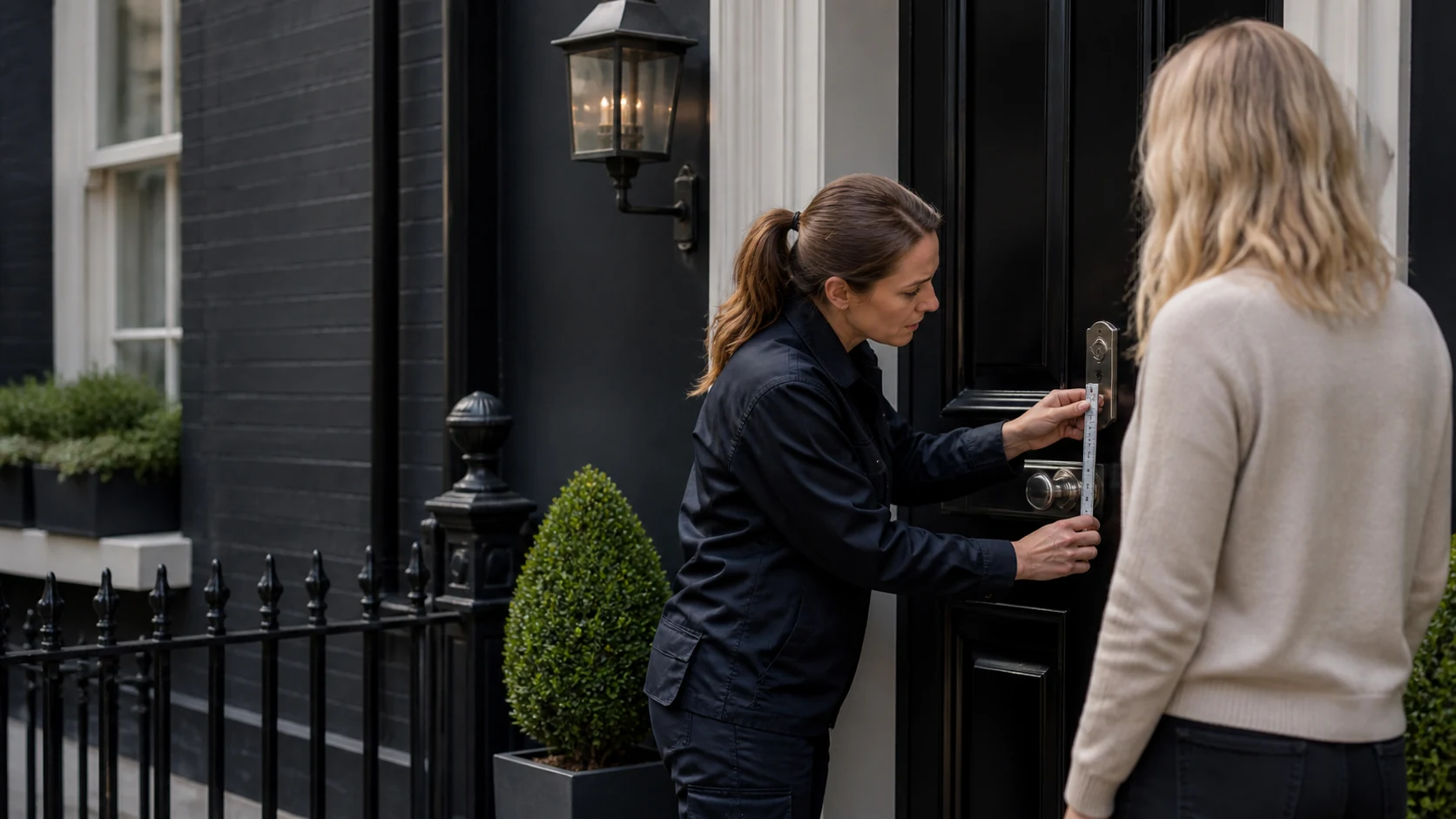
Damage triage
If a break-in may be in progress, someone is at risk or the property is unsafe to approach, contact the emergency services. Once it is safe, avoid unnecessary handling where police or insurer evidence may matter. Photograph the whole entrance and individual damaged areas from a safe position. Note whether the door is open, closed, jammed or capable of being locked without forcing it.
Brixton properties include converted houses, estate flats and homes within mixed-use streets. A flat occupier may control the private entrance while a council, housing provider, freeholder or managing agent controls the common door. A shopfront-adjacent frame can involve another owner. Report the exact door and contact the responsible party rather than commissioning unauthorised alterations.
| Area affected | What to record | Possible work boundary |
|---|---|---|
| Lock or cylinder | Key operation, visible marks, looseness and whether it secures | Locksmith opening, repair or compatible replacement. |
| Door leaf | Splits, holes, distortion and material | Door or joinery repair beyond the lock fitting. |
| Frame and keeps | Cracks, displaced metalwork and ability to hold the latch or bolt | Structural repair before reliable locking can be restored. |
| Glazing or panel | Broken or displaced sections and current exposure | Glazing or door-panel specialist plus temporary security. |
| Closer or hinges | Door position, closing movement and loose fixings | Door hardware work distinct from the key-operated lock. |
| Electronic entry | Reader, release, intercom and credential behaviour | Managed access-control provider or electrician. |
Evidence without investigation
Take wide photographs showing the door in its frame, followed by closer images of the lock area, keeps and damaged edges. If keys or fragments are present, keep them without cleaning or forcing them into the lock. Do not unscrew hardware, remove splintered timber or reset an electronic device simply to see what happens. Record when the damage was first found and who has handled the entrance.
Ask a police officer or insurer whether they need any further evidence before repair where that applies. The locksmith cannot promise what another organisation will accept. The practical aim is to avoid destroying information while preventing additional exposure. Share only necessary security images with the authorised provider rather than posting them publicly.

Immediate and later outcomes
| Stage | Purpose | Question to settle |
|---|---|---|
| Safety and emergency contact | Protect people and avoid entering an active dangerous situation | Are police, fire or medical services required before a locksmith? |
| Evidence record | Capture visible condition relevant to management, police or insurer | What can be photographed without touching or entering danger? |
| Authorised access | Allow the responsible contractor to reach the exact door | Who controls private, estate, communal and commercial routes? |
| Temporary securing | Create an agreed short-term barrier when permanent repair is unavailable | What limitation remains and how will authorised users enter? |
| Locksmith repair | Restore suitable mechanical locking where the door and frame permit | Which lock components are damaged or reusable? |
| Permanent reinstatement | Repair leaf, frame, glazing, controls and finishes as necessary | Which trades and responsible parties complete each element? |
Locksmith contribution
Authority and door condition are checked before a method is agreed. Existing damage can affect both the approach and the repair required afterwards.
Measurements, door material, remaining structure and key-control needs guide compatible hardware. Replacement cannot strengthen a failed frame by itself.
A serviceable case, cylinder or latch may be restored where damage has not made continued use unreliable. Findings should justify the choice.
A defined short-term measure may reduce exposure. Its operating limitations and later replacement should be explained at handover.
If keys were taken or lost, identify every door they serve and the authorised users who need replacements. Common locks require coordinated approval.
Split timber, distorted metal, glazing and decoration can require door repair or another specialist before a permanent lock outcome is possible.
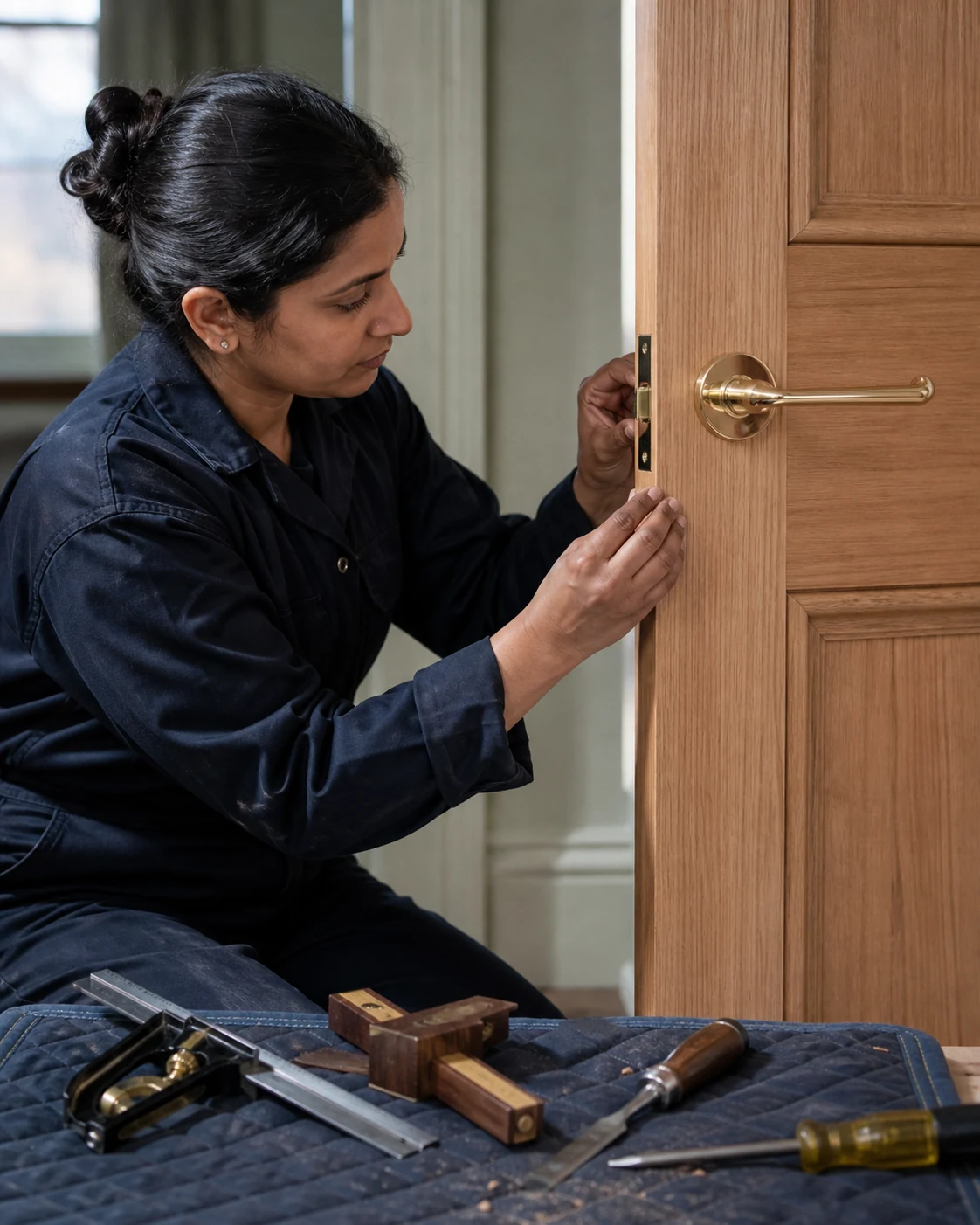
Estates, conversions and mixed-use streets
An estate entrance may be used by many households and connected to controlled access. One resident should not authorise a private solution that prevents others entering or changes a fire-door arrangement. Contact the housing provider or manager and report whether the door closes, latches and responds to authorised credentials.
In a converted house, distinguish the shared street door from the damaged flat entrance. On a mixed-use frontage, establish whether the frame belongs to the residential common parts or the commercial unit. These questions can delay work if left until arrival, so include names and telephone contacts in the booking note.
Test the door only within the agreed safe scope. Count new keys, explain how any temporary measure operates and record parts of the leaf or frame that still need repair. Give management a concise note without circulating detailed security information among unrelated occupants.
Damage quotation
Brixton does not determine a fixed price. The scope depends on the current security, access, damage, method, parts and other trades. A quotation should make clear whether it restores normal use or only provides temporary protection.
| Item | Evidence needed | Boundary to request |
|---|---|---|
| Attendance and safe access | Door location, controller, current danger and authorised route | Assumptions about police release, estate keys and waiting. |
| Opening | Door state, lock damage and proof of authority | Method, expected additional damage and post-entry security. |
| Lock hardware | Measurements, remaining structure, security aim and keys | Named repair or replacement with normal tests. |
| Temporary materials | Opening size, exposure and required authorised access | Duration, limitations and later removal or replacement. |
| Door and frame | Splits, distortion, keeps, hinges and closer | Locksmith work versus joinery, metal or door repair. |
| Evidence and finish | Insurer instructions, retained items and decorative damage | Documentation, disposal and making good. |
If new damage becomes visible after opening, pause for a revised explanation. Additional parts, destructive work and permanent door repair should not be treated as automatically authorised by an urgent call.
Brixton locksmith FAQ
If a crime may be in progress, someone is at risk or police attendance is required, contact the emergency services first. Arrange locksmith work when the situation is safe.
From a safe position, show the whole door, lock area, edge, frame, keeps and other damage. Avoid moving parts merely to improve the image.
Some limited work may be agreed, but structural frame or joinery repair can require another specialist. A new lock alone cannot restore damaged supporting material.
It is an agreed short-term measure intended to reduce exposure until permanent parts or repairs are available. Its limitations and authorised access method should be explained.
The housing provider, freeholder, managing agent or nominated building contact should coordinate communal work and access for all residents.
Identify the doors served, whether keys can be linked to the address and who requires access. The authorised party can then make a proportionate key-control decision.
Only if explicitly stated. Lock, frame, glazing, door leaf, alarm and access-control work can be separate scopes.
Ask whether police, insurer or building management needs it retained. Agree disposal rather than destroying potential evidence without checking.
Keep the scope, invoice, hardware and key count, temporary limitations and any referral for frame, glazing or electronic work.
Map and nearby live pages
Choose the page for the actual damaged property. These nearby pages exist or are part of the same batch.
Record damage before defining repair
Send the exact entrance, current security, visible damage, building controller and the person authorised to approve each stage.
