
Alignment check
Hinges, keeps and leaf position are compared with free mechanism operation. Adjustment is considered only where it addresses the identified condition.
Door system · symptom log · private boundary · measured part
A large house can have a timber street door, a shared flat entrance and a UPVC garden door, each with unrelated hardware. Name the exact door and record how its key, handle and locking points behave before a component is selected.
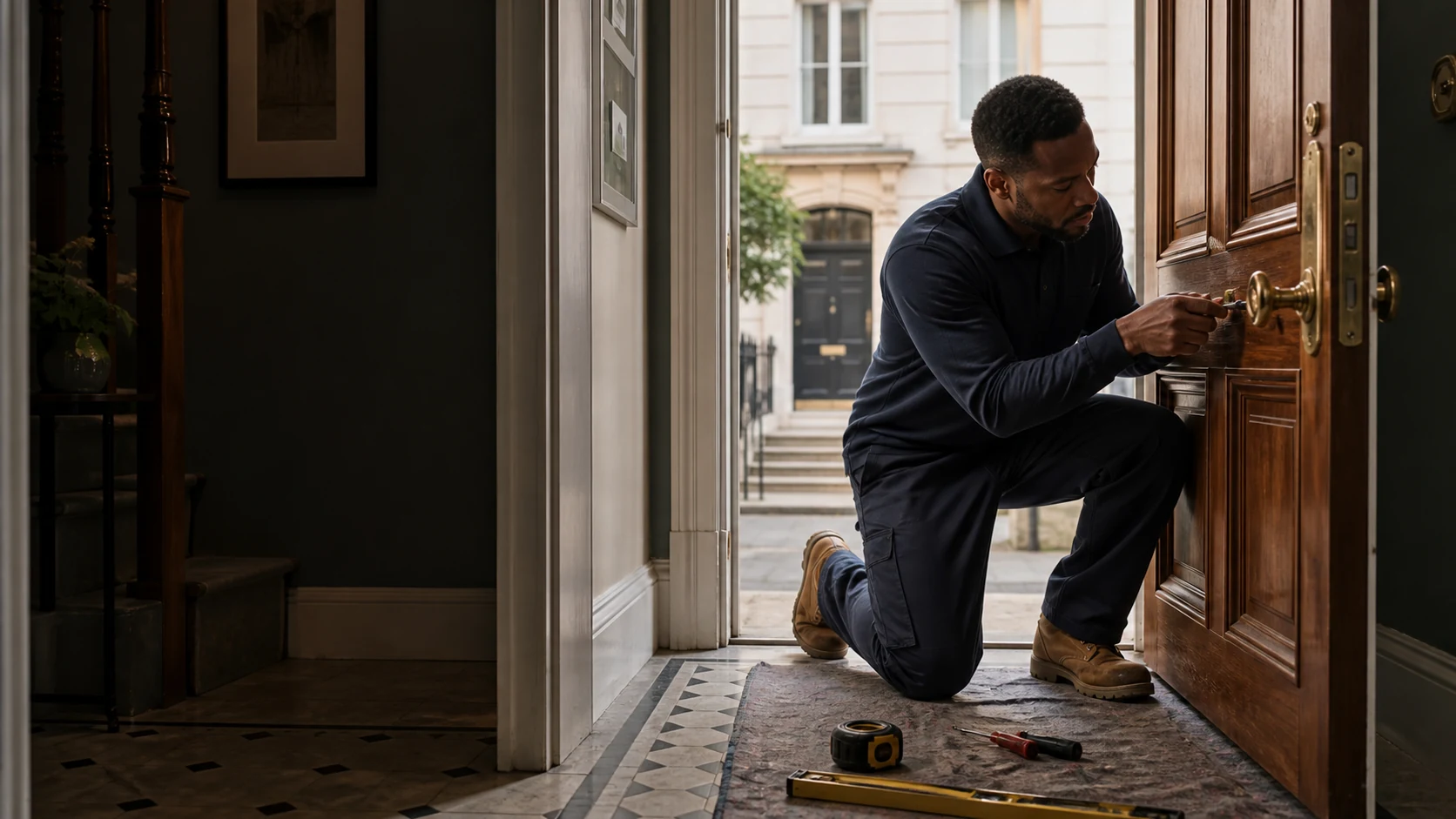
One property, several mechanisms
Streatham includes family homes, large houses divided into flats and purpose-built blocks. An original timber entrance may use a mortice lock or night latch, while a rear addition uses a UPVC multipoint mechanism. A common front door can also include a closer or electronic release controlled by management. Similar words such as “stiff” or “jammed” do not mean these systems need the same repair.
Create a separate note for the affected door. State whether it is private or shared, what the key and handle do, and whether the symptom changes when the leaf is safely open. If the door may not reopen, do not close it merely to test. Keep all covers fitted, avoid excessive force and photograph the complete door, edge hardware and frame.
| Door setting | Hardware to distinguish | Planning detail |
|---|---|---|
| Timber street entrance | Mortice case, rim latch, cylinder, keeps and door alignment | Record both current lock functions and frame condition. |
| UPVC rear or garden door | Euro cylinder, handles, gearbox, multipoint strip and keeps | Compare operation open and closed without forcing it. |
| Private flat door | Lock case, latch, closer and any approved building standard | Confirm tenant or owner authority for alterations. |
| Communal front door | Mechanical lock, closer, electric release and common keys | Arrange freeholder or managing-agent instruction. |
| Apartment balcony-side door | Multipoint system, hinges, restrictor and seals | Check whether building management controls the door specification. |
UPVC operating sequence
On many multipoint doors, lifting the handle moves hooks, rollers or bolts along the edge. The key then secures the mechanism through the cylinder and gearbox. If the door has dropped or its keeps are tight, the handle may resist when closed even though the strip moves when open. A loose handle can involve its fixings or spindle, but it can also be a sign of resistance elsewhere.
Record the sequence rather than naming a gearbox from a photograph. Say whether the key enters fully, whether the handle returns, which locking points visibly move when the door is safely open and whether the leaf needs lifting. Stop if the key bends or the handle reaches hard resistance.
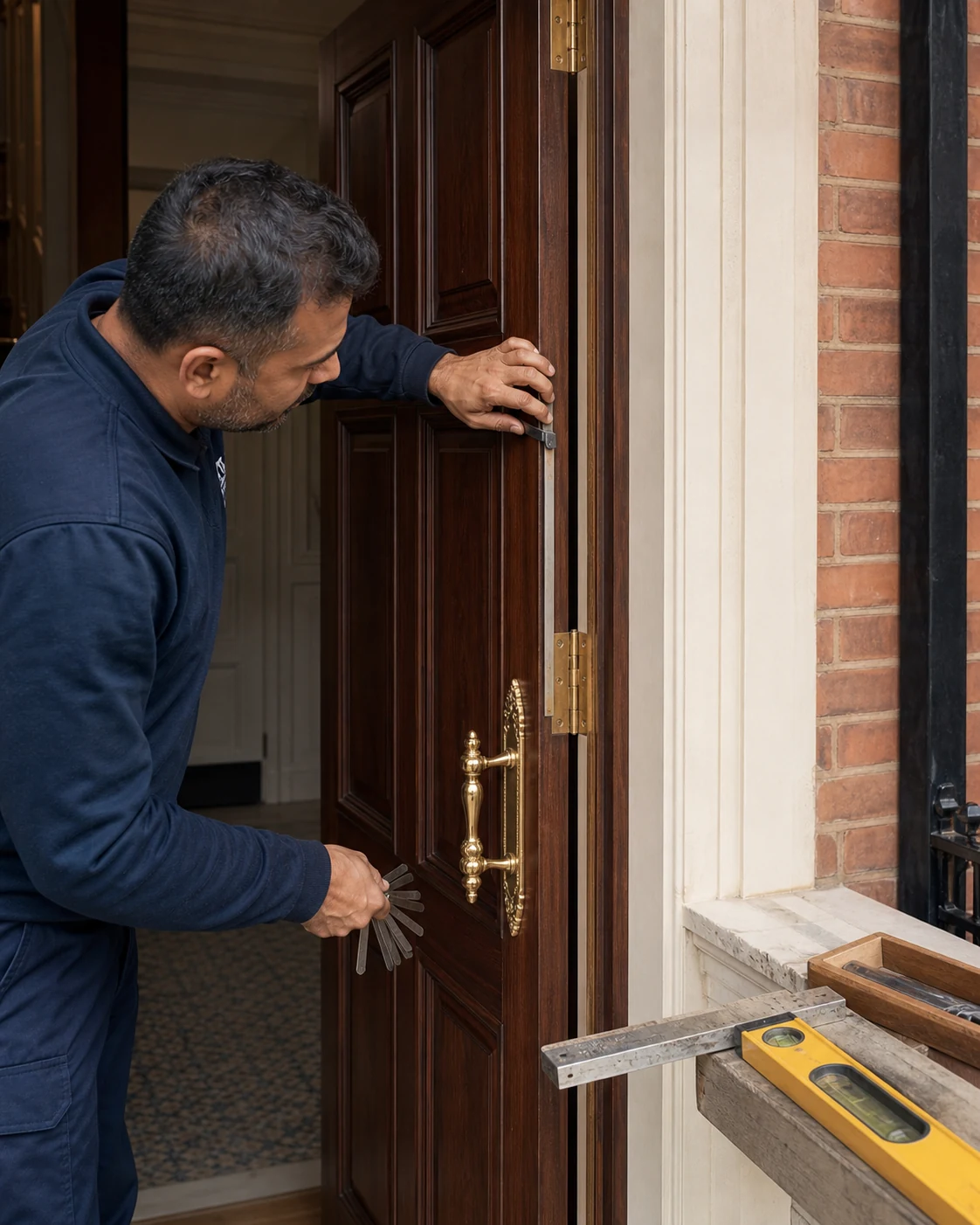
Symptom matrix
| Observed behaviour | Areas to assess | Safe response |
|---|---|---|
| Handle lifts when open but not when closed | Hinges, alignment, frame keeps and strip movement | Leave it secure without repeated force and report the comparison. |
| Handle lifts but the key will not turn | Key, cylinder, gearbox position and complete engagement | Keep a sound authorised spare for inspection; do not use tools in the keyway. |
| Handle drops or feels disconnected | Fixings, handle spring, spindle and gearbox | Reduce use and photograph both sides of the furniture. |
| One hook does not meet its keep | Door position, strip condition and individual keep | Do not file or enlarge the frame opening yourself. |
| Key snapped after increasing stiffness | Fragment, cylinder and the original resistance | Keep the other piece and avoid glue or improvised extraction. |
| Garden door cannot be reached from outside | Internal route, current security and opening method | Explain side access and who can admit the locksmith through the home. |
Component-led services
Hinges, keeps and leaf position are compared with free mechanism operation. Adjustment is considered only where it addresses the identified condition.
Dimensions, cam, door thickness, key quantity and desired security result guide a compatible cylinder without assuming other components have failed.
Fixing centres, backplate, spindle and mechanism condition are checked together. A handle set is not selected from colour alone.
Direct identification and measurements support compatible parts. Similar locking points do not guarantee that two mechanisms interchange.
The locksmith confirms authority and assesses a suitable method. Opening and the repair needed afterwards remain explicit decisions.
Mortice, rim and frame symptoms at another entrance are handled as their own task rather than folded into the UPVC diagnosis.
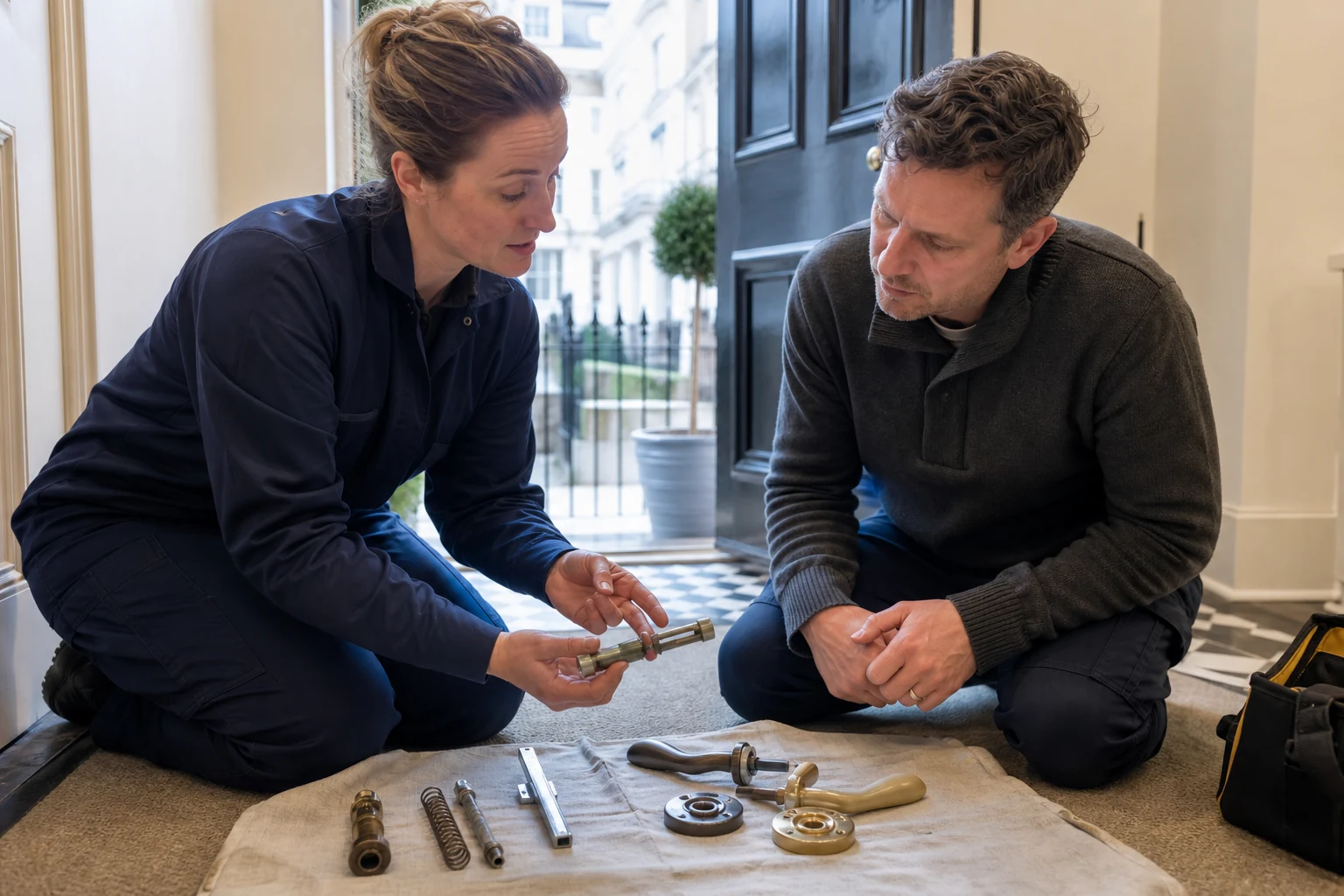
Converted houses and blocks
In a converted house, the garden door may belong to one flat while the street entrance serves several households. A tenant can report either problem but should establish who may authorise replacement. A purpose-built block can also restrict work to balcony-side or common doors. Ask the managing agent which elements fall inside the dwelling and whether a contractor procedure applies.
Do not use a private rear-door concern as permission to change the communal lock. If common keys are missing, management needs a plan for every authorised resident. If the shared door fails to close, closer, hinges, frame and electronic release may need coordination beyond a simple lock change.
Operate the repaired door normally: close it, lift the handle if designed to do so, lock, unlock and reopen. Confirm that hooks or rollers meet keeps without excessive force. Count keys and record any remaining hinge, seal, frame or access-control issue.
Quotation by component
A Streatham address does not establish a price. The useful quote names the assessed work, identified part, access assumptions and excluded door repair. A generic line for “UPVC lock” hides too many separate possibilities.
| Scope item | Evidence needed | Boundary to confirm |
|---|---|---|
| Fault assessment | Door position, key and handle behaviour, photographs and authority | Diagnostic labour before remedial work. |
| Cylinder | Measurements, cam, key quantity and intended control | Specified part, fitting, tests and keys. |
| Handles | Centres, spindle, backplate and connected resistance | Whether handle replacement resolves the actual fault. |
| Gearbox or strip | Markings, dimensions and locking-point layout | Compatible component and any separate alignment. |
| Door adjustment | Hinges, frame keeps, movement and construction | Adjustment versus structural door repair. |
| Communal entrance | Manager authority, common keys, closer and access control | Private locksmith work versus managed-building action. |
If examination reveals another failed component, ask for the evidence, new part and revised total before proceeding. Destructive opening and follow-on repair should be authorised separately where relevant.
Streatham locksmith FAQ
No. Door alignment, keeps, handles, strip and gearbox can produce similar resistance. The open-and-closed comparison helps guide direct checks.
Yes when the cylinder is the identified issue and the remaining mechanism works correctly. Accurate dimensions and cam compatibility are still required.
Some systems use a normal handle lift before key locking. Unusual force or lifting the whole leaf indicates a condition that should be assessed.
Not if it may trap you or leave the property insecure. Report its present state and observations already available without creating another lockout.
No. They are separate doors and responsibilities. Common hardware requires the authority and key-control plan of the building controller.
Visible markings, dimensions, spindle and cylinder positions, strip layout and direct examination can all matter. The handle appearance alone is insufficient.
Stop pushing the fragment, retain the other piece and avoid glue or drilling. Say whether the door is open or locked shut.
Only if stated in the agreed scope. Mechanism work, alignment, hinges, seals and structural repair can be priced separately.
Send the full door, both handle faces, cylinder, complete edge strip and frame keeps without removing components.
Map and nearby live pages
Use the location page for the actual property. These nearby pages exist or are included in the present batch.
Name the door, movement and controller
Send the exact entrance, operating sequence, safe edge photographs and the person who can approve the identified repair.
