
Alignment row
Record rubbing, threshold contact, altered gaps and whether gentle door pressure changes operation.
Front · rear · flat · communal
One property can contain several door systems and several responsible people. List each entrance separately before combining a UPVC fault, timber-door key change or managed common-door question into one visit.
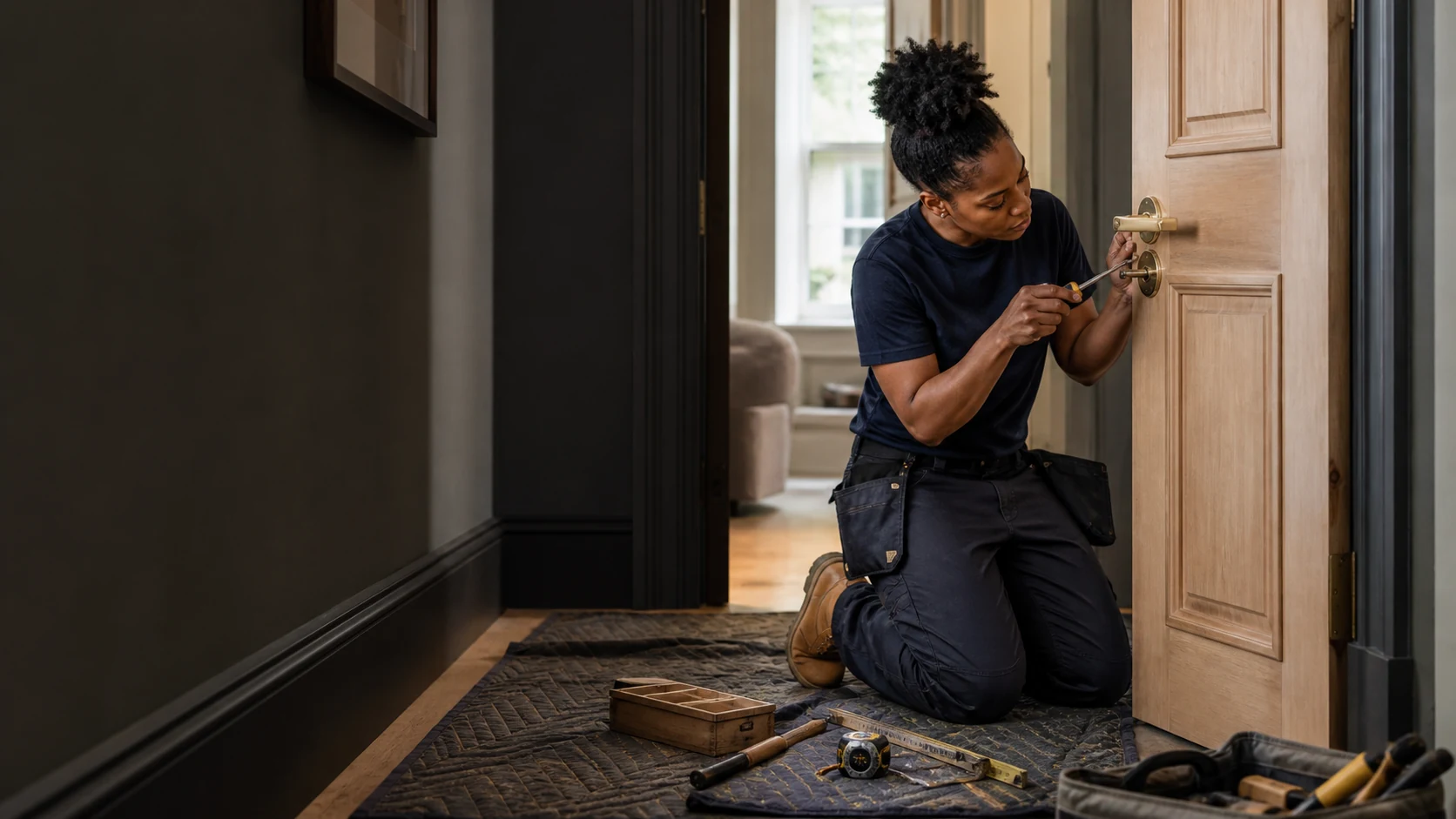
A whole-property register
A family home might have a timber front door, a UPVC rear door, a garage entrance and a side gate. A converted house can add a communal street door and several private flat doors. A managed development may combine mechanical apartment locks with electronic common access. These openings should not inherit the same recommendation simply because they share an address.
Create a short register using names that will still make sense during the visit: Main front door, Kitchen garden door, Lower-flat entrance, Common lobby door. Add the person who can authorise work, what the key or handle does and the outcome wanted. The locksmith can group access efficiently while retaining a separate assessment and scope for each line.
| Register field | What to record | Decision it supports |
|---|---|---|
| Door identity | Position, material, both-side access and a whole-door photograph | Prevents notes and parts being assigned to the wrong opening |
| Current operation | Key, handle, latch, closing and locking sequence | Separates a fault from a requested upgrade |
| Responsible party | Owner, tenant, landlord, freeholder or managing agent | Shows who may approve the proposed change |
| Users and keys | Authorised users, existing copies and new quantities needed | Defines the key-control handover |
| Desired result | Restore operation, recover key control, improve a documented feature or secure damage | Keeps the quotation tied to an outcome rather than a generic product |
| Access limitation | Locked rooms, gates, parking, management hours and protected finishes | Explains what can be assessed in the booked period |
Sort the register
Begin with any entrance that cannot be secured, has visible damage or creates a serious access problem. Keep it supervised and prevent unnecessary use. If somebody is in immediate danger, contact the emergency services. Next list doors that remain usable but are unreliable, such as a garden handle that is becoming stiffer. Planned key or appearance changes belong after those immediate operating issues.
This order does not invent a response time or promise that every item will be completed in one attendance. It lets the locksmith prepare for the highest-priority door and identify which later lines need measurements or property approval. A repair visit can also reveal that one symptom belongs to the leaf or frame rather than the lock alone.
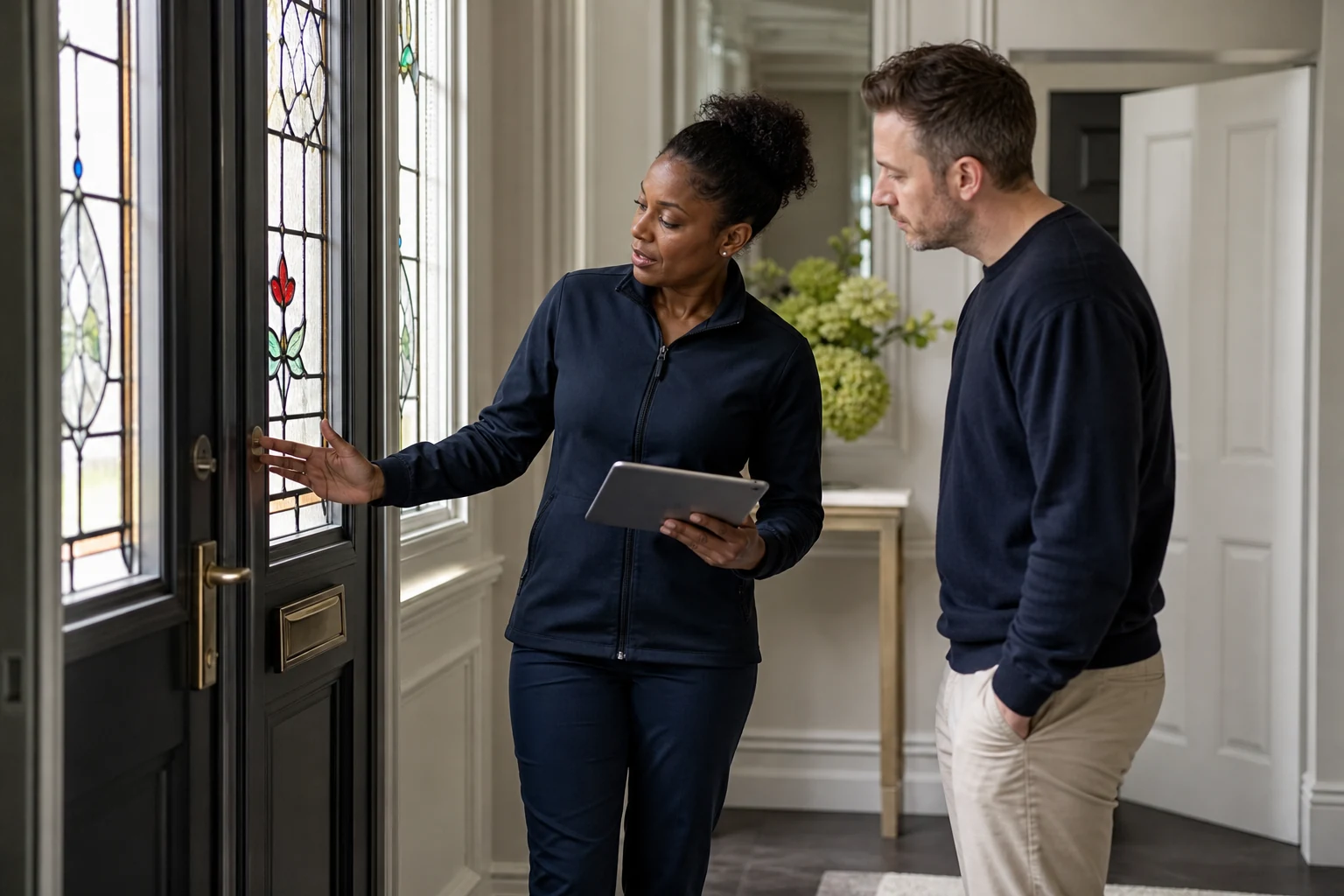
Different systems, different checks
| Reported issue | Assessment should distinguish | Safe information to prepare |
|---|---|---|
| UPVC rear door handle will not lift | Leaf position, keeps, handles, spindle, gearbox and multipoint strip | Open or closed behaviour, edge photograph and frame contact |
| Timber front-door key is difficult | Key condition, lock case, keep position and door movement | Spare-key result, whole door and operation without force |
| Flat entrance keys are unaccounted for | Key-control objective, compatible component and tenancy authority | Known copies, authorised users and landlord instruction |
| Common lobby release does not work | Mechanical locking, closer, intercom and powered access boundary | Who is affected and the building manager’s contact |
| Garage or side door has visible damage | Lock hardware, leaf, frame and temporary-security requirements | Safe context images and whether another secure route exists |
UPVC system notes
On many UPVC and composite doors, the key cylinder does not act alone. Handles move through a spindle into a gearbox, which operates a strip and several locking points. Those points meet keeps around the frame. Door alignment can change how much force reaches the mechanism. This connected sequence means the visible cylinder should not be treated as the automatic answer to every stiff handle or failed lock.
If the door is safely open, note whether the handle and key operate differently away from the frame. Do not touch projecting hooks or rollers, and do not shut an unreliable door just for comparison. Send the whole door, both handle faces, cylinder, complete edge and keeps. Identification may require on-site measurements and markings before a compatible part is offered.
Record rubbing, threshold contact, altered gaps and whether gentle door pressure changes operation.
State lift range, return, looseness and whether both sides behave alike.
Note insertion, turning point, spare-key condition and any bending or damage.
Give markings and measurements only where visible without dismantling the door.
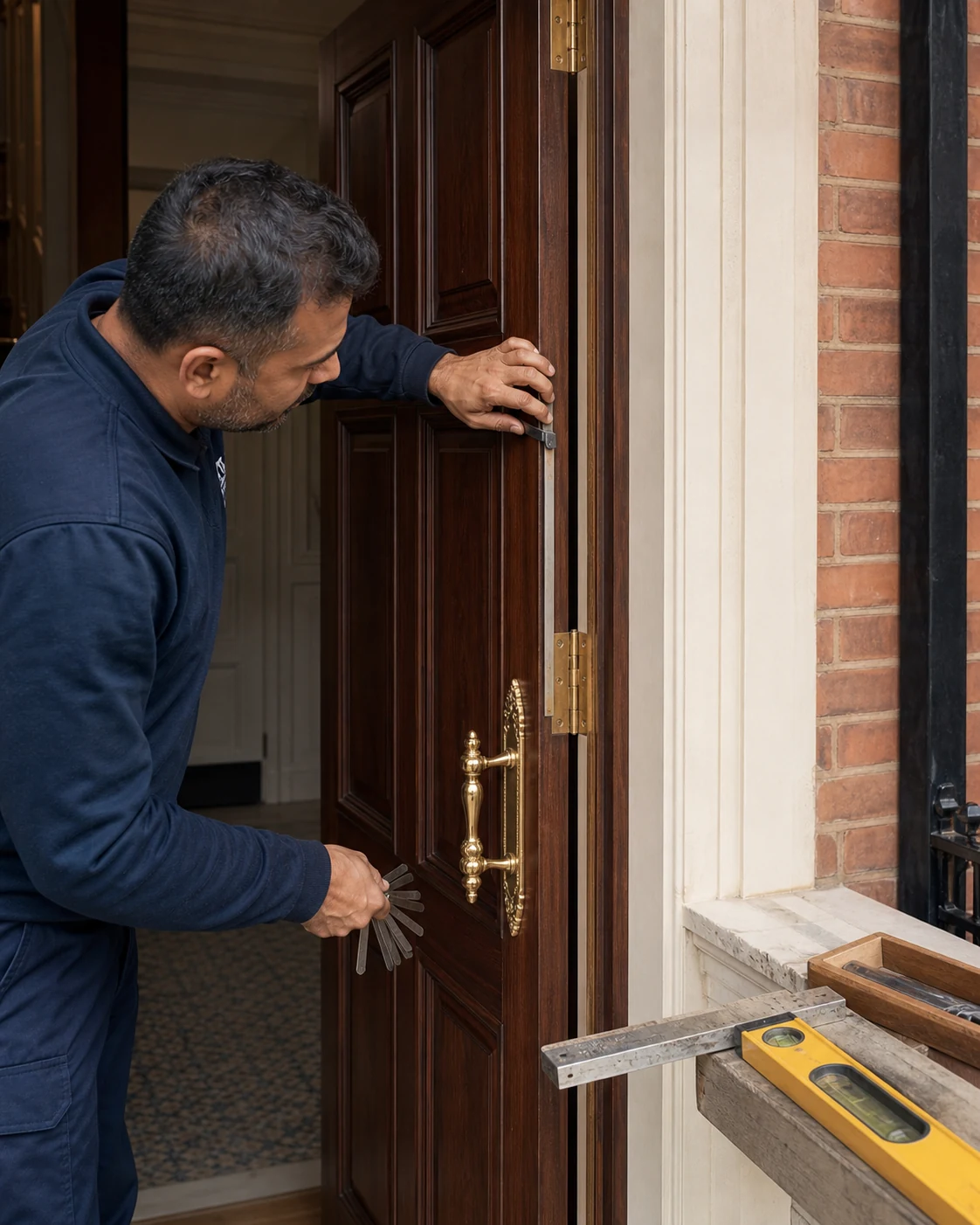
Ealing property context
Ealing work can involve large houses divided into flats, suburban family homes, purpose-built accommodation and managed developments. This range makes the door register valuable. A common street door in a conversion can serve several residents, while a garden multipoint door belongs to one flat or house. A managed block may reserve common access work for an appointed contractor.
For a conversion, mark every threshold between the pavement and the requested door. Identify the freeholder or agent for shared areas. For a family house, make front, rear, garage and gate access available together if they are included. For an apartment, check visitor procedure, lift or stair route and whether the private door has any records or restrictions supplied by management.
The building context does not prove the lock type, security rating or condition. Use it to establish authority, access and scope. Any fire-door, conservation or insurer requirement should come from current documentation and the responsible party rather than inference from the address.
| Property situation | Add to the register | Scope distinction |
|---|---|---|
| Large converted house | Common entrance, each relevant flat door and freeholder contact | Shared-door approval versus private occupier work |
| Family home with several exterior doors | Front, rear, side and garage users plus alternative access | One visit route without assuming one hardware solution |
| Purpose-built flat | Floor, private consumer of the lock, common route and building contact | Apartment lock versus lobby and electronic access |
| Managed development | Reception hours, contractor procedure and approved decision-maker | Attendance access versus permission to alter a door |
| Home with a garden multipoint door | Side passage, furniture clearance, threshold and door sequence | Lock repair versus hinge, frame or wider door work |
Quote from the schedule
An area name cannot establish a locksmith price. The quote depends on access, assessment, labour, compatible parts, key quantities and the repair boundary for each door. Ask for the register identifiers to appear in the proposal so work is not bundled ambiguously.
The quotation repeats the stable name and the current symptom or desired change.
Opening, adjustment, repair, replacement and parts are described rather than implied.
Hidden damage, unavailable parts and door repair are given an approval route.
Operation, fitted product, keys and remaining limitations are returned to the register.
Where several doors are inspected but only one is repaired, the written outcome should say so. A recommendation for later work is not the same as completed work, and making good is included only when expressly stated.
Ealing locksmith FAQ
It prevents symptoms, authority and parts from being mixed. Doors at one address may use different systems and belong to different decision-makers.
They can be included in one access plan, but each keeps its own assessment and scope. Provide clear photographs and priorities for both.
Not necessarily. Handles, spindle, alignment, keeps, gearbox and strip can influence the same operation. The connected system needs checking.
The freeholder, managing agent or other authorised building party should confirm the instruction. One flat owner should not decide for all users without authority.
Only after dimensions, door systems, security objective and authority are assessed. Visual similarity does not establish compatible or appropriate keying.
Make that state clear when booking, limit access to the area and identify any safe alternative entrance. Do not force the handle or leave the opening unattended.
The quote should distinguish hardware work from hinges, frame, leaf, glazing and decoration. Some visits may need another suitable trade after the lock assessment.
Give the building entry procedure, floor, exact private door, manager contact and any documented restriction on hardware or contractor access.
Update the door register with installed parts, key counts, operation checks and unresolved recommendations. Retain invoices and relevant product documentation.
Nearby coverage
These links connect the door-register approach to the relevant services and currently available nearby pages.
One address, accountable door-by-door choices
Send the stable door names, symptoms, authority, users, safe photographs and priorities for a quotation that keeps every opening clear.
