
Private lockout
The locksmith verifies reasonable authority, examines the secured door and discusses a suitable opening method. The failure may require repair after entry.
Entrance stack · credential · mechanical door · system owner
A dense mixed-use building can place a shop-side entrance, intercom, fob-controlled lobby and private flat lock in one access chain. Report which stage fails and who controls it before asking for mechanical locksmith work.
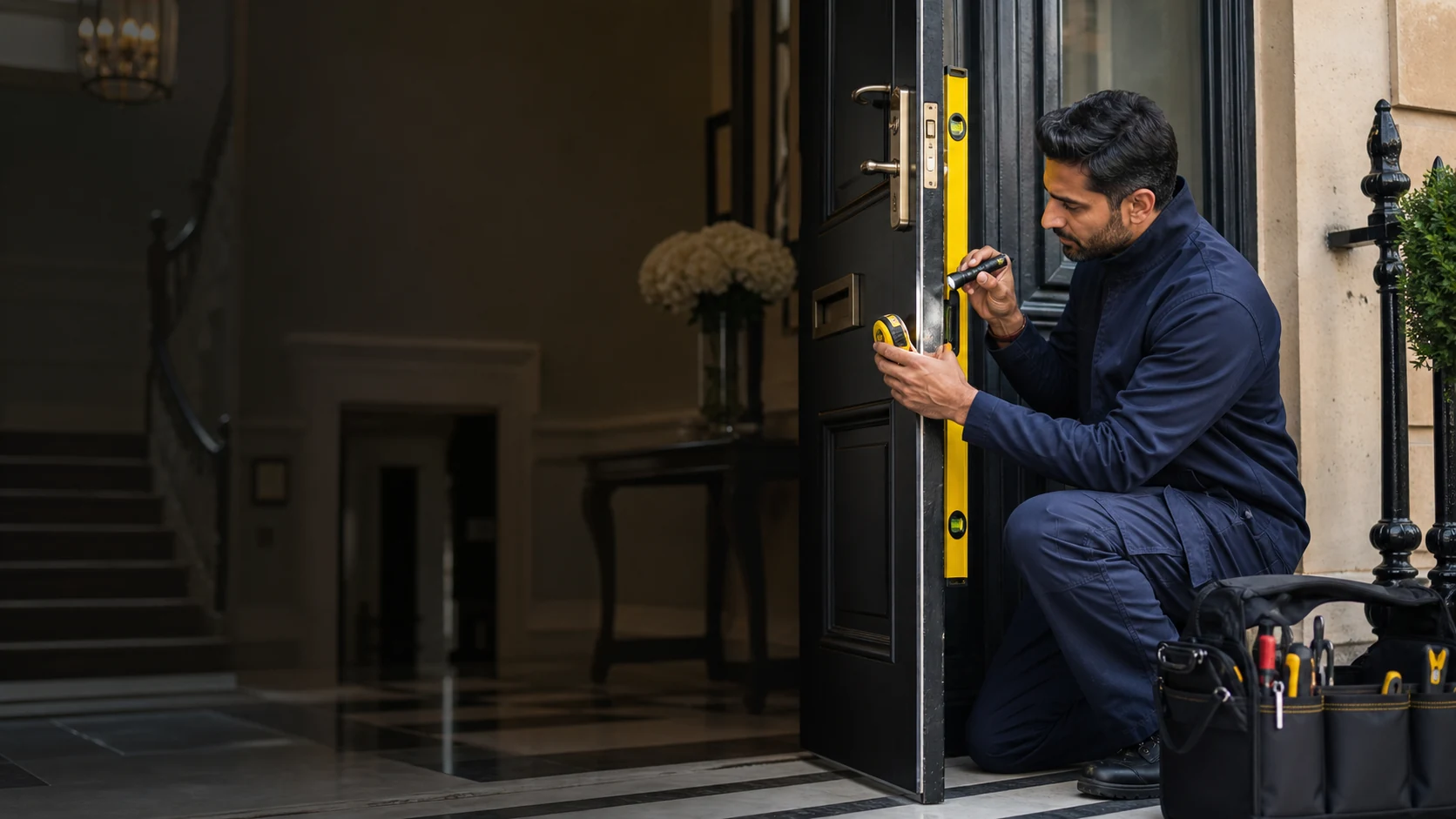
Access-system stack
Whitechapel has flats above shops, managed blocks and mixed-use buildings where several access methods operate in sequence. A metal key may open the street door, an intercom may release the lobby, a fob may call a controlled lift and a different key may secure the flat. A failure at one stage should not be treated as evidence that every later door needs attention.
Write the route from the pavement. Include the residential entrance position, business or building name as a landmark, lobby method, floor and apartment. State what still works. If the intercom sounds but the door stays shut, describe the release and latch. If the lobby opens but the private key snaps, the locksmith instruction belongs to the flat. This stage-by-stage account sends the issue to the right controller.
| Stage | Operating elements | Likely controller |
|---|---|---|
| Shop-adjacent street entrance | Mechanical key, latch, closer and possible electric release | Freeholder, manager or commercial/residential building owner. |
| Managed lobby | Fob reader, intercom release, doors and reception procedure | Building management or its access-control provider. |
| Residential lift or gate | Credential, override key and timed permissions | Facilities or concierge team. |
| Common floor door | Closer, latch, fire-door hardware and shared key | Managing agent or housing provider. |
| Private apartment door | Cylinder, mortice or multipoint lock and handles | Resident or owner within tenancy and building rules. |
| Service or rear route | Gate, shutter, staff access and restricted hours | Business or site operator for physical entry only. |
Mechanical or electronic?
For a credential problem, say whether the reader lights or sounds, whether other authorised users are affected and whether the door physically closes afterwards. Do not remove a reader, strike plate or intercom cover. System status and credential administration belong with management. A locksmith can assess authorised mechanical parts but should not be asked to bypass the building’s control.
For a key-operated door, state whether the key enters, turns and withdraws, and whether the handle or latch moves. If safe and already open, note whether operation changes when the door is closed. Stop forcing a resistant key. Safe photographs can show the complete door, edge and frame without exposing credential details or key cuts.

System-to-service routing
| Observed result | Question to answer | Next route |
|---|---|---|
| Fob is rejected but others enter | Is the credential active and assigned correctly? | Building access administrator before mechanical changes. |
| Intercom releases but lobby stays closed | Does the electric strike move and does the latch meet it? | Management coordinates access-control and door checks. |
| Common mechanical key fails for several residents | Does the door close normally and who controls common keys? | Manager-authorised locksmith assessment. |
| Private flat key turns but bolt remains engaged | What do handle and lock do on the apartment door? | Resident-authorised opening and fault diagnosis. |
| Closer prevents a common door latching | Is the lock functional when the leaf is positioned correctly? | Door and closer work separated from lock repair. |
| Commercial shutter blocks residential route | Is that route lawful and available at the agreed time? | Business controller arranges entry before locksmith attendance. |
Services for the authorised mechanical door
The locksmith verifies reasonable authority, examines the secured door and discusses a suitable opening method. The failure may require repair after entry.
Key, handle, latch and bolt behaviour are checked with the door open and closed. Frame pressure and closer action are considered separately.
Door type, dimensions, existing preparation, security aim and key quantity guide a compatible part for the approved entrance.
Leave fragments undisturbed. Removal, opening and replacement are distinct outcomes based on keyway and lock condition.
Cylinder, handles, gearbox, strip, keeps and alignment are assessed as a system on relevant private doors.
A defined temporary or lock repair scope may restore security. Door leaf, frame, glazing and electronic work can require other providers.
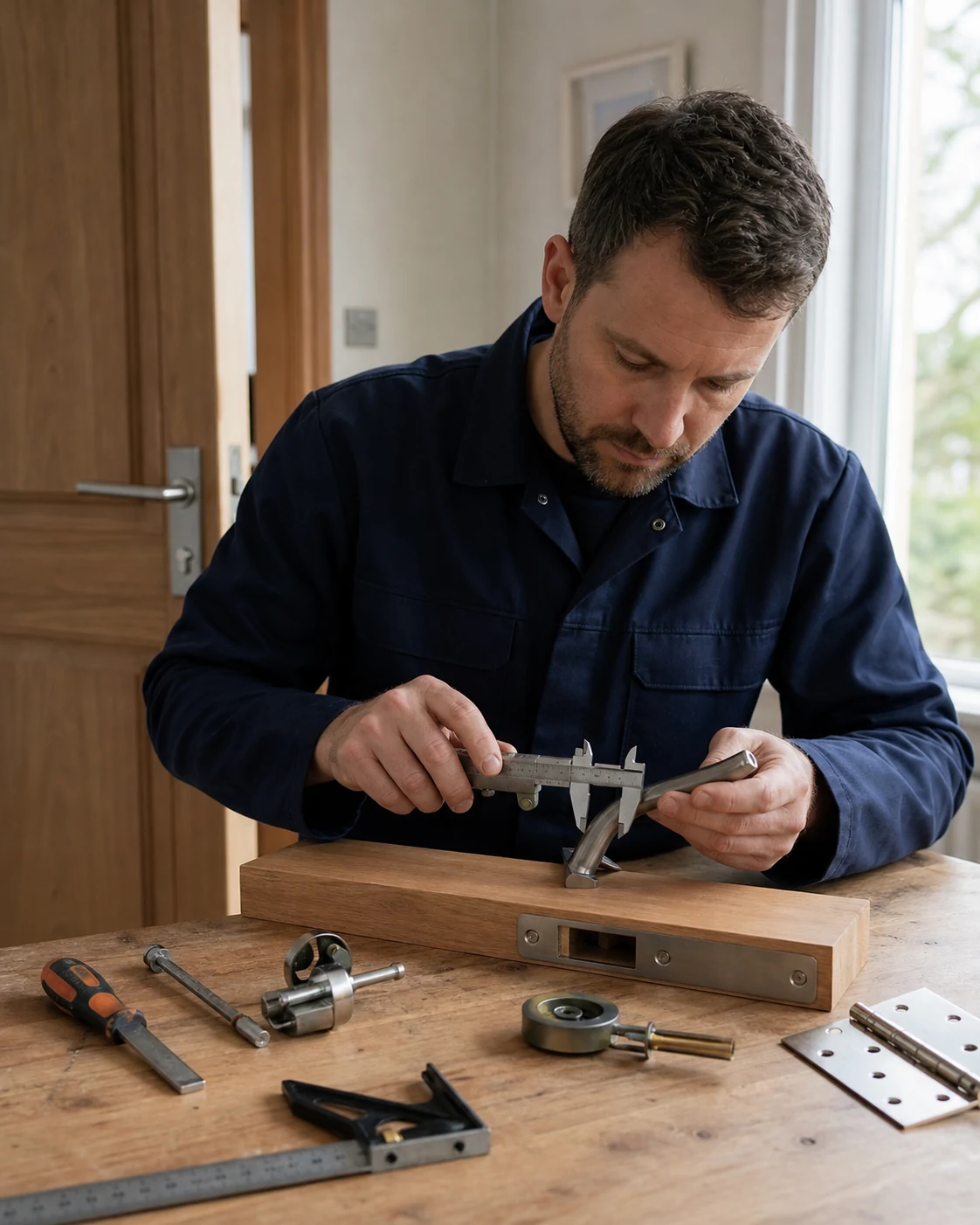
Dense mixed-use access
Confirm whether a locksmith reports to reception, a residential lobby or a separate side entrance. A nearby shop may be a useful landmark without being responsible for access. If tools must pass through commercial or staff space, obtain permission and a suitable window. Do not expect the locksmith to tailgate through a fob door.
Shared corridors and fire-resisting doors must remain usable. Agree where equipment can be placed and who holds override keys. For private work, keep the occupier available. For a common-door issue, a manager should attend or provide a direct authorisation route.
Test only the system included in the work. For a private lock, check normal closing, locking and key operation, then count keys. For a communal result, management should verify common keys, closer action and electronic release. Record unresolved stages instead of treating entry to the flat as proof that the whole chain works.
Quote by stage
A Whitechapel address does not define a price. Attendance, building access, authority, method and compatible parts shape the quote. Each controlled stage should be named so a private instruction is not mistaken for common-system work.
| Scope line | Input | Boundary |
|---|---|---|
| Building arrival | Entrance, reception, parking, lift and access window | Assumed route and any separately arranged return. |
| Private opening | Authority, door state, lock and known damage | Attendance, opening, repair and final securing. |
| Lock repair | Key, handle, latch and open-versus-closed behaviour | Diagnosis, parts and excluded frame or closer work. |
| Replacement | Measurements, door construction, key quantity and desired result | Specified hardware, fitting, tests and handover. |
| Common entrance | Manager instruction, users, closer and electric release | Mechanical scope versus access-control referral. |
| Damage | Current security, leaf, frame, glazing and evidence needs | Temporary action compared with permanent reinstatement. |
If the failed stage changes after inspection, obtain authority from its controller before continuing. Destructive opening, extra hardware and work on another door need a revised explanation and acceptance.
Whitechapel locksmith FAQ
Credential administration and reader faults normally belong to the building access system. Management should check them before mechanical hardware is changed.
Report the electric release, latch, closer and frame behaviour. Management may need coordinated electronic and mechanical assessment.
Give the residential number, doorway position, nearby business as a landmark, stair route, floor and exact flat.
Not alone. The freeholder or manager should control common hardware, keys and any fire-door or access-system implications.
The locksmith needs reasonable evidence of occupancy, ownership or authorised management. Mention if documents are inside.
No. Suitable methods are considered from the lock and door condition, and any destructive approach should be explained before approval.
Avoid sharing sensitive credential details. Show the door and hardware while describing the devices by function.
Only if written into the scope. Lock, closer, hinges, frame and electronic release can require separate work.
A clear work record, hardware and key handover, operational checks and any unresolved access-control or door issue.
Map and nearby live pages
Use the page matching the actual entrance. These nearby pages exist or are included in this batch.
Name the failed stage and its controller
Send the entrance stack, device response, building route and the person authorised to approve mechanical work.
