
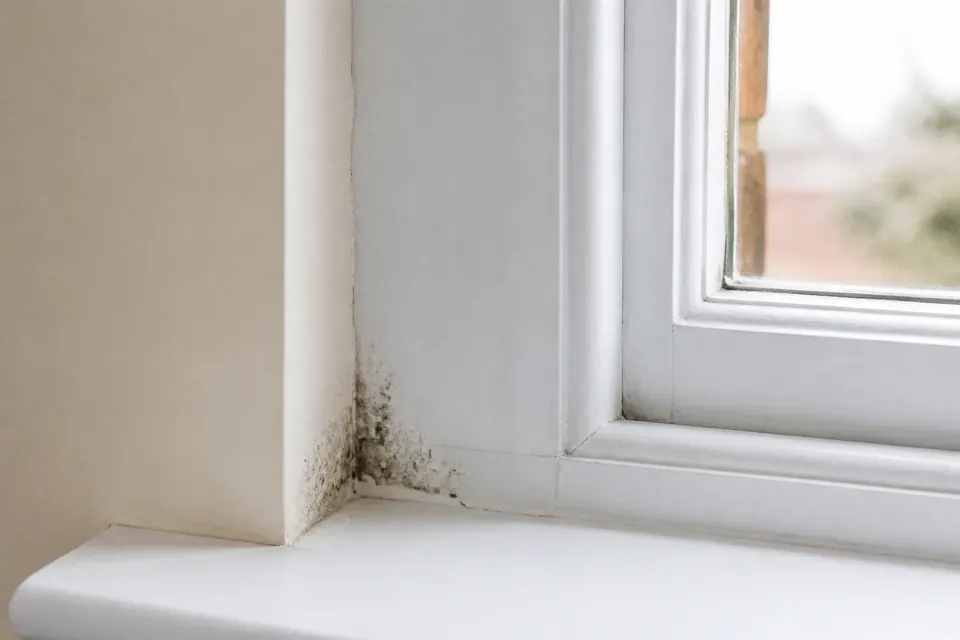
Ceiling beside a window
Show the window and upper wall in the wide image. Report observed water separately; nearby glazing does not establish why the ceiling is marked.
Dagenham / CEILING CHANGES OVER TIME
Separate the old stain from the recent change.
A ceiling can carry a longstanding water stain and newly noticed spotting in the same view. For Dagenham, explain which parts have changed and when so the enquiry does not assume that every discoloured area is current mould or will have the same treatment outcome.
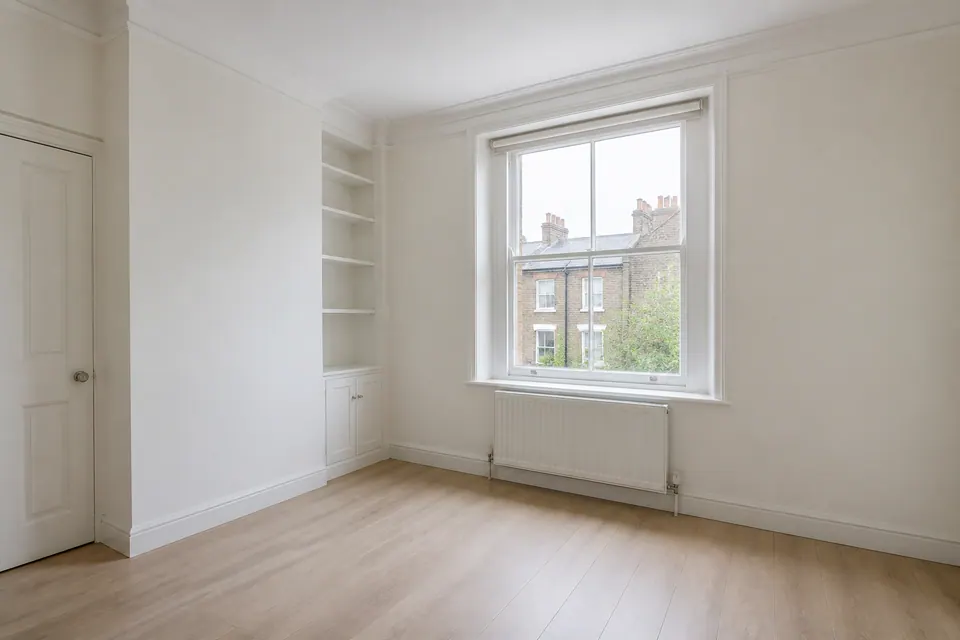
Earlier appearance · new outline · paint condition
01 / LOCATE THE ISSUE
Use the setting to describe the present material and history. Do not climb or disturb the finish to produce a close-up.
Show the window and upper wall in the wide image. Report observed water separately; nearby glazing does not establish why the ceiling is marked.
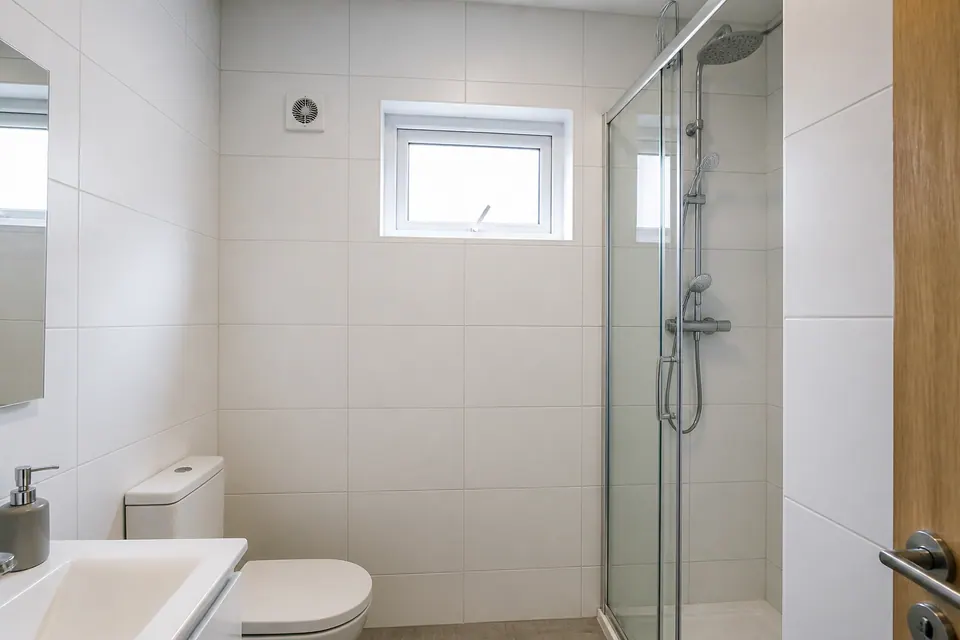
Describe spotting, loose paint and old staining independently. Explain any known water or maintenance event without assuming normal room use is the cause.
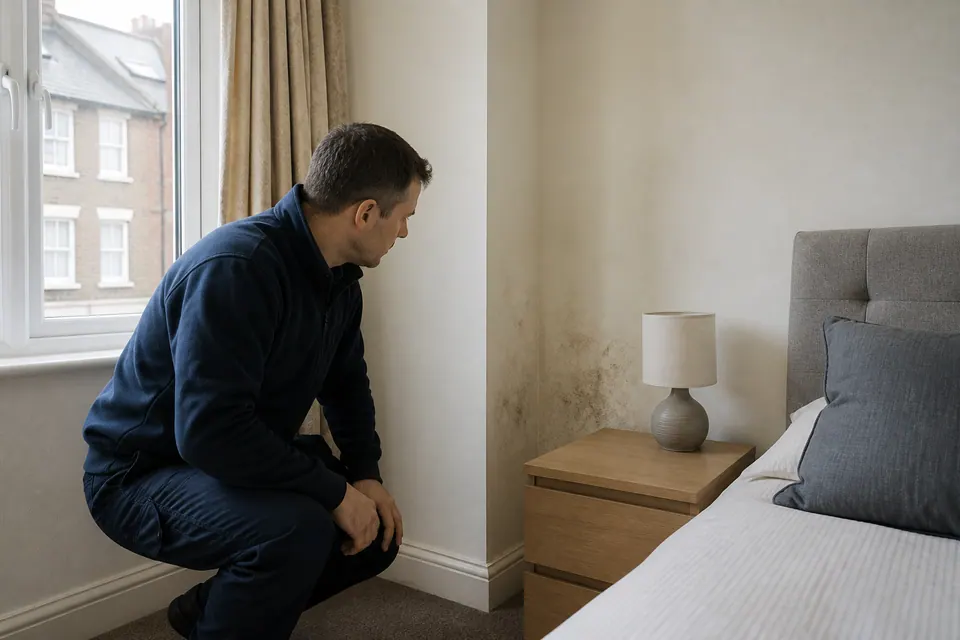
Take a view from the floor and describe the obstruction below. Do not stand on a bed or cabinet to measure the patch.
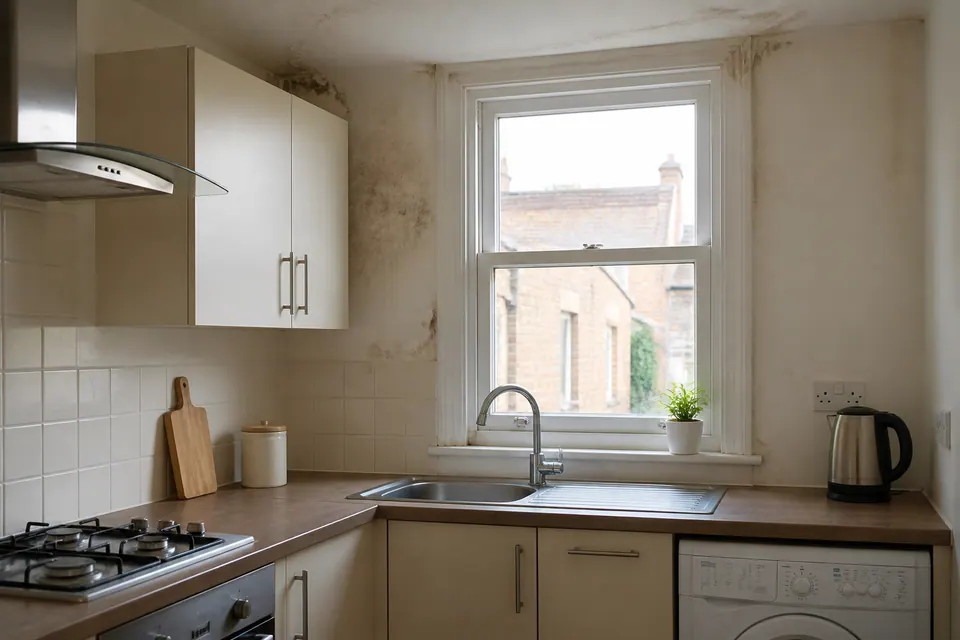
Locate the mark relative to the room and any confirmed history. Cooking activity or nearby pipework should not become an unassessed diagnosis.
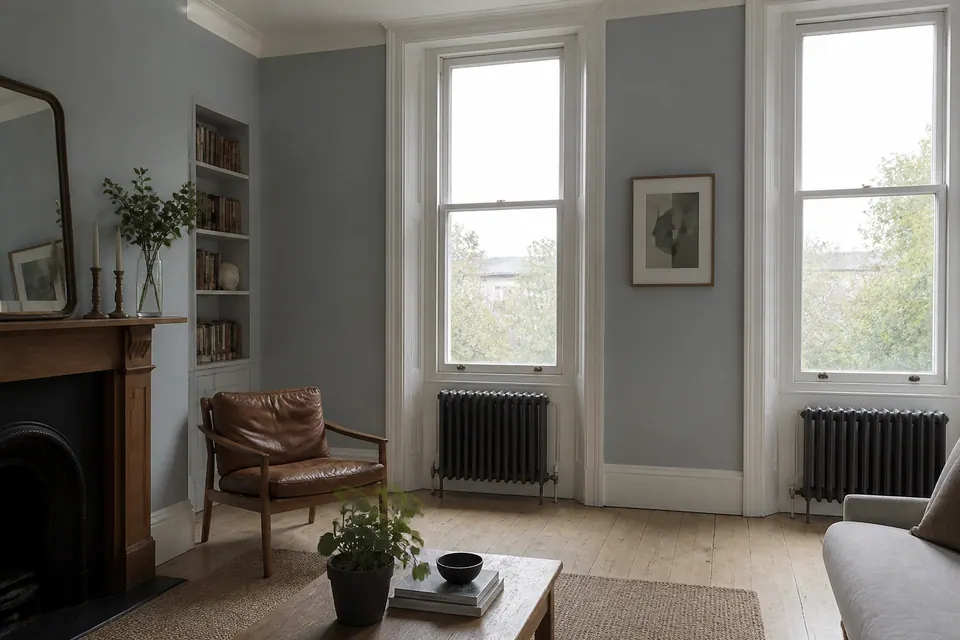
Identify whether the finish has been painted or repaired before, if known. A decorative stain and removable growth may require different decisions.
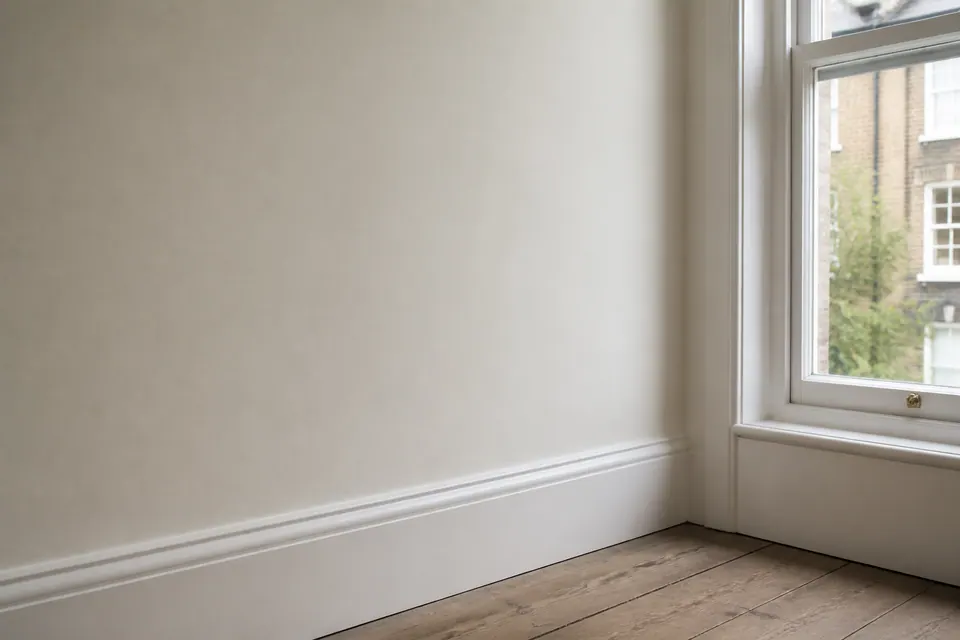
State which surface is changing and whether both have the same history. A continuous-looking outline can cross different materials or conditions.

Explain what can be seen above cupboards and what remains hidden. Do not count inaccessible material as confirmed affected extent.
Colour and age alone do not identify mould. Current appearance, material and documented history need to be considered together.
Dagenham / ACCESS & PEOPLE
Identify what was painted and when, if known. Fresh paint does not establish that the underlying condition was resolved.
Show its boundary and current finish. The repaired portion and adjacent older material may not have identical suitability.
Describe the obstruction and room layout. Safe access needs planning independently of how small the visible patch appears.
Provide the current change and known history to the authorised contact. Do not disturb the ceiling to establish a legal repair conclusion.
Share relevant water and maintenance information for that ceiling. A record for another room should not substitute for the actual surface history.
Separate removal, material repair and redecoration in the enquiry. Ask what can realistically be achieved before planning a uniform cosmetic finish.
Dagenham / THE PROPERTY BRIEF
Different marks can need different expectations.
For a Dagenham ceiling, describe the most recent change first and distinguish it from staining you already knew about. Include a known repair or water event without treating it as proof of the present cause. Ask what outcome is realistic for the current finish: removing suitable growth is not the same as restoring every old stain or damaged coating.
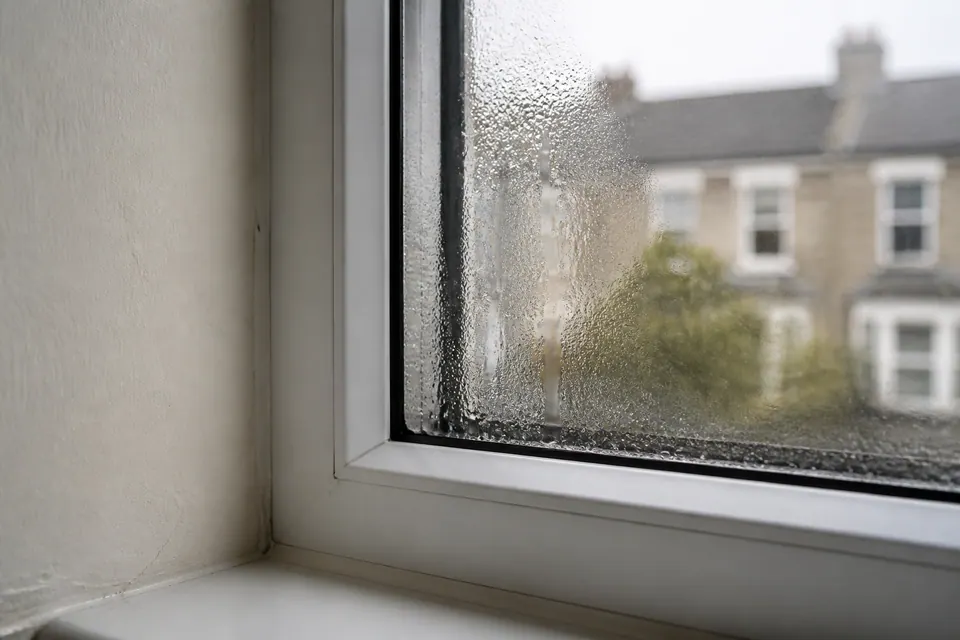
04 / WHEN IT COMES BACK
Say whether fresh spots have appeared, the old stain looks darker or a different area has changed. These are distinct observations rather than interchangeable descriptions of recurrence.
Keep the timeline linked to known water events and previous work. A new assessment should not depend on assuming that the colour alone identifies the same problem as before.
A wider ceiling view with a fixed room feature makes comparison easier without reaching into the affected finish.
05 / A CONTROLLED APPROACH
Compare current evidence with any available earlier view. Identify suitable material and distinguish an old stain from a new concern.
Discuss furniture, fittings and room use. Photographs should remain floor-level; do not disturb loose material to expose a larger area.
Carry out the agreed work on suitable accessible material. Deterioration may require a separate repair decision rather than a broader cleaning claim.
Record residual stain, damage and any unresolved moisture question. Avoid representing a visibly improved area as a newly restored ceiling.
The stages distinguish treatment from a promise that every ceiling mark will vanish.
Keep old and recent observations clearly labelled.
Do not assume leak or board repair is included.
Identify staining and decorative work that remain separate.
The drawings are not customer before-and-after photographs or evidence of a guaranteed cosmetic result.
06 / QUOTATION, NOT GUESSWORK
For Dagenham, provide the current ceiling view and any genuine earlier record. Explain which part is changing so the proposed scope does not confuse removal of suitable growth with complete repair or decorative restoration.
Review the service quotation boundaries ↗| Condition described | Quotation route | Useful history |
|---|---|---|
| Limited suitable reachable growth | Photographs may support pricing | Current extent and clearance |
| Returning or multiple ceiling areas | Assessment informs the proposed work | Timeline and separate positions |
| Wet, loose or damaged material | Specialist quotation may be required | Known water event and repair status |
Confirm what appearance can reasonably be expected and what is excluded. A quote should not imply that historic staining or damaged coating will disappear with surface treatment.
07 / SEPARATE THE QUESTIONS
Old water staining, visible growth and deteriorated paint may overlap while raising different assessment questions.
| What has changed? | History to provide | Question for review |
|---|---|---|
| New spots beside an old stain | Which part is recent | What is current growth versus residual appearance? |
| An outline enlarges after a water event | Confirmed event and repair status | Is moisture or material damage unresolved? |
| Paint lifts while colour stays similar | Previous finish and current deterioration | Is the surface suitable for treatment? |
| Marks return after earlier removal | Interval and treated boundary | What continuing condition needs assessment? |
Leak repair, board replacement and decorative reinstatement require separate agreement. Do not infer a uniform new-looking ceiling from treatment of suitable growth.
A dry-looking stain does not establish the present moisture condition, and a wet area is not automatically confirmed mould.
| Question | Mould | Damp |
|---|---|---|
| What is observed? | Spots or growth-like change on the finish | Water, wet-looking material or known events |
| What can remain afterwards? | Residual staining or damaged paint | An unresolved moisture condition |
| Why distinguish them? | Cosmetic appearance is not the whole treatment question | Repair may be needed beyond surface work |
| What should be agreed? | Suitable removal and realistic appearance limits | Any separate investigation or material repair |
08 / ROOM-BY-ROOM CONTEXT
Describe spotting and peeling independently. The bathroom setting does not prove which moisture condition is involved.
Explain furniture below and when changes were noticed. Plan access without climbing for a closer image.
Add confirmed water or maintenance history rather than an assumption based on cooking. Identify the actual finish.
State any known decoration history and old stain boundaries. Cosmetic restoration should remain a separate discussion.
Identify the location and authorisation boundary. Common parts are not automatically included in a dwelling’s surface quotation.
Give the actual floor level and known history above where available. Do not infer a concealed leak path from position alone.
09 / DIRECT ANSWERS
Do not assume that. Describe the old stain and new change separately so assessment can consider what is actually suitable for treatment.
No permanent result follows from painting over it. Current growth, moisture and damaged finish should be assessed before separate decoration.
Not necessarily. Explain what changed in texture, outline or spotting without diagnosing it from colour alone.
Height and access can matter, but duration depends on the assessed material, extent and proposed method. Ask for the actual scope timetable.
Describe the obstruction and request preparation instructions. Do not climb on or move heavy items merely to improve the enquiry photographs.
Report the deterioration alongside any spotting. Damaged paint or board may require work beyond treatment of suitable surface growth.
It is a possible contextual question, not a conclusion. Supply actual water observations and known history rather than assigning a cause.
Not automatically. Concealed investigation, plumbing and material replacement need separately agreed work.
Dagenham / PLAN THE APPOINTMENT
Send the Dagenham postcode, safe floor-level photographs and the known sequence of changes. Confirm availability and access before arranging preparation below the ceiling.
The area map assists location planning, not diagnosis of the ceiling or a guarantee of its treatment outcome.
Load the map for the address discussion.
Dagenham / BEFORE BOOKING
Describe the current change before choosing a treatment or decorative outcome.
Mention it as history and distinguish it from the recent concern. Do not assume all discoloured ceiling material represents the same condition.
Yes. A safe wider view is useful; do not climb on furniture or reach into damaged material for a closer image.
No. Describe the appearance and timing without diagnosing from colour alone. Material and moisture history need assessment.
Give an honest description of what you remember and state uncertainty. Do not recreate a before condition or invent an exact date.
Not necessarily. Residual staining and growth removal are different outcomes, and decoration may need a separate scope.
Do not disturb it for the enquiry. Report the deterioration and request preparation advice appropriate to the proposed work.
Yes, as confirmed history. It does not by itself prove that the ceiling is fully dry or suitable for treatment today.
Tell the team before assuming it is included. New extent or a different condition may change the assessment and proposed scope.
Ask about the current material and moisture context first. A removal appointment does not automatically establish readiness for decoration.
DESCRIBE THE RECENT CHANGE
Send the postcode, present view and any genuine earlier evidence. Explain which marks are new so suitable treatment and realistic appearance limits can be discussed.
The images provide illustrative property context rather than documented customer ceiling results.
