
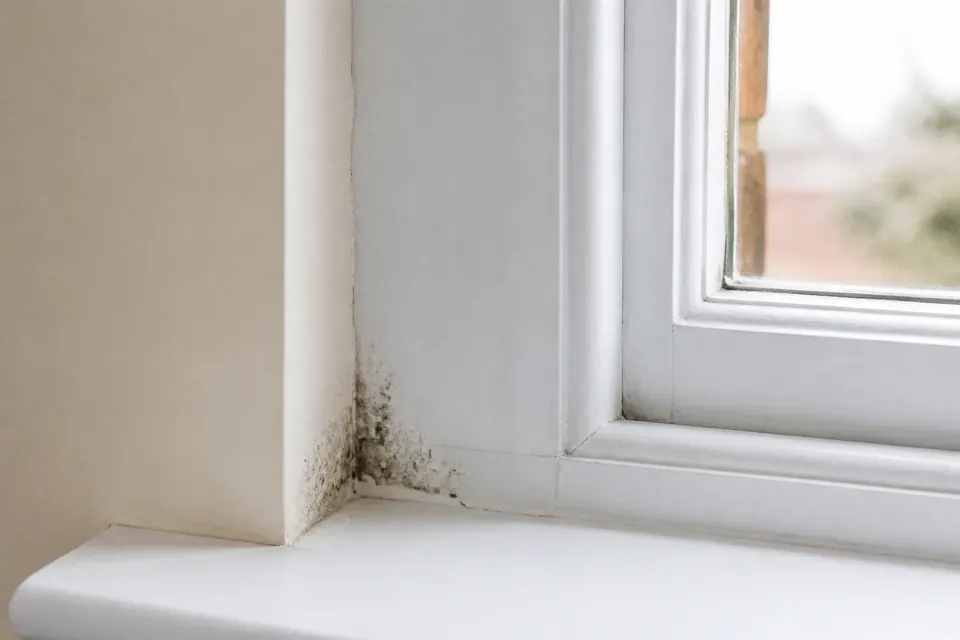
Boxes beside a window wall
Show the visible reveal and wall edges without shifting the stack. Explain if window access is blocked and note any actual water observations separately.
Ilford / ACCESS AROUND BELONGINGS
Define the reachable surface before promising clearance.
A storage room can be easy to enter but difficult to work in. For Ilford, show the available wall and explain the items blocking the rest. Agree preparation and contents handling before assuming that everything can be moved or included in a surface-treatment visit.
Visible wall · blocked section · handling plan
01 / LOCATE THE ISSUE
Choose the room setting and describe the view as it stands. Do not clear potentially affected items simply to provide a larger photograph.
Show the visible reveal and wall edges without shifting the stack. Explain if window access is blocked and note any actual water observations separately.
Describe shelves, cabinets or stored items near the affected material. The team needs to know whether the limitation is a fixed fitting or contents preparation.
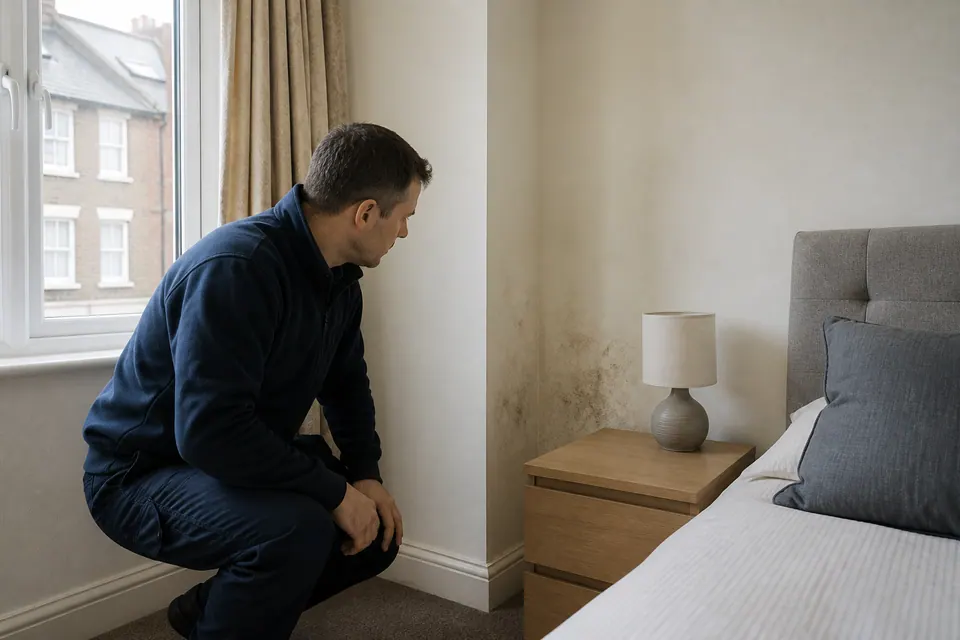
Identify beds, wardrobes and stacked belongings in relation to the patch. A route through the room does not establish enough working clearance at the wall.
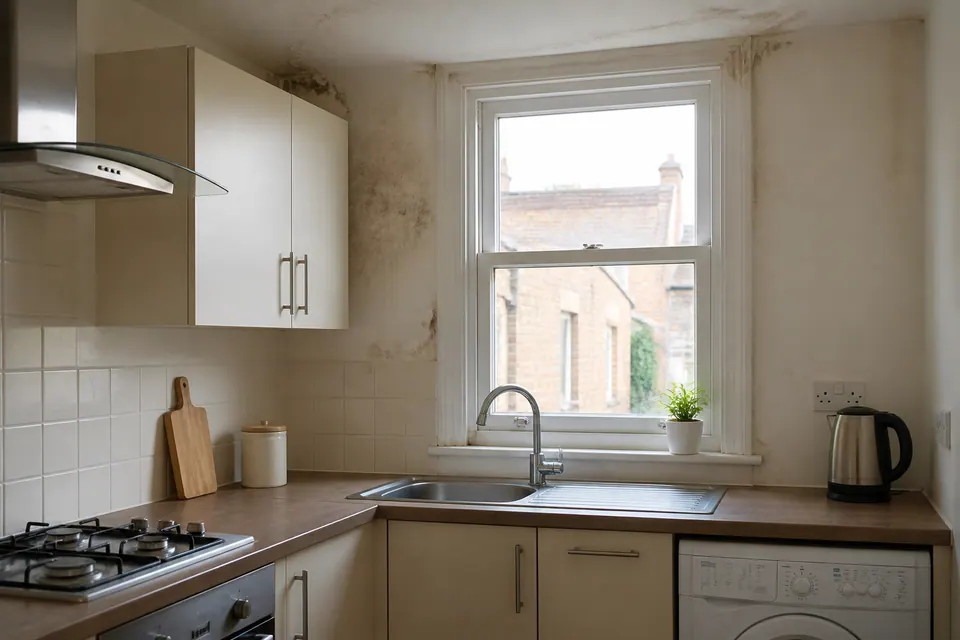
Keep fitted cabinets distinct from stored boxes or appliances. Surface treatment should not be assumed to include moving heavy equipment or dismantling units.
Show available floor space and the visible boundary of the mark. Explain which belongings may need their own handling advice rather than an ordinary furniture move.
Photograph from a safe normal position. The height and obstruction both matter; do not climb on belongings to reach the affected finish.
Describe the accessible panel and what remains hidden. Do not estimate confirmed growth behind contents that have not been moved or assessed.
A blocked area is unknown, not automatically affected or unaffected. Describe the limit so the proposed assessment and preparation remain realistic.
Ilford / THE PROPERTY BRIEF
Wall work and contents work are different requests.
For an Ilford storage room, explain how the entrance, walking route and affected surface relate to one another. State who could help with any agreed preparation and which items cannot readily be moved. Avoid promising a cleared wall before handling guidance is available, especially if contents appear affected or the obstruction is fixed.
03 / SEPARATE THE QUESTIONS
Their position is relevant context, but a crowded room should not be used as an automatic diagnosis of why the wall has changed.
| Observed area | Practical information | Assessment question |
|---|---|---|
| Marks beside stacked boxes | The exposed wall width | What is visible and suitable for treatment? |
| Patch behind a fixed wardrobe edge | The unit’s fixing and available opening | Does access need separately arranged work? |
| Spotting above stored furniture | Height and floor clearance | Can the proposed area be reached appropriately? |
| Belongings appear changed near the wall | A separate description of the contents | What handling or other scope is needed? |
Packing, removal, disposal or restoration of belongings needs explicit discussion. Do not infer those services from a quotation for an accessible affected finish.
Storage can obscure both, so uncertainty should be recorded rather than replaced with an assumed extent.
| Question | Mould | Damp |
|---|---|---|
| What is visible? | Marks on the exposed finish | Any actual wetness or documented water event |
| What remains unknown? | Condition behind blocked sections | The source or path of unseen moisture |
| Why does clearance matter? | Assessment may change when material is visible | Access does not itself repair a moisture condition |
| What must be agreed? | Suitable treatment and realistic working space | Any investigation or contents work outside that scope |
04 / DIRECT ANSWERS
It can begin the discussion, but explain the blocked area. Do not present the visible strip as proof of the whole wall’s condition.
No. Keep the current evidence available and ask for preparation advice. Decoration does not resolve an unassessed surface or hidden moisture question.
It is context rather than a confirmed cause. Describe the layout, timeline and known water history without assigning responsibility to the contents alone.
No. Reach is only one factor; material, affected extent and the proposed treatment also determine the work and timetable.
Ask for appropriate handling guidance if they may be affected. Do not relocate them merely to create space without considering that concern.
Identify whether it is fixed and show the available view. Removal or alteration of fittings should not be assumed in surface treatment.
Describe the blockage and ask what preparation the method requires. Do not dismantle or move heavy items on an assumed instruction.
Not automatically. A concealed concern or access work needs a separate agreement before it is represented as part of the scope.
05 / QUOTATION, NOT GUESSWORK
For Ilford, include the room arrangement as well as the affected finish. The quotation should reflect what can be accessed and prepared, without silently adding contents removal or treating an unseen wall as a measured quantity.
Read the service preparation scope ↗| Current evidence | Quotation approach | Access detail needed |
|---|---|---|
| Limited reachable surface | Photographs may support pricing | Clearance around the visible portion |
| Several or partly blocked areas | Assessment informs the proposal | Separate accessible and unseen sections |
| Damaged material or contents concern | Specialist scope may be required | Handling, access or repair questions |
Confirm the included surface and preparation responsibilities. A wall-treatment price should not be interpreted as a packing, furniture-moving or contents-restoration contract.
06 / A CONTROLLED APPROACH
Review the visible material and record blocked sections as limitations. Do not convert an unseen area into an assumed treatment quantity.
Explain who will handle any permitted clearance and what advice is required. Fixed fittings and potentially affected contents need explicit decisions.
Work on suitable accessible surfaces within the agreed boundary. Additional extent revealed later may need another discussion.
Record what was reached and what remains unassessed. Keep contents concerns and separate repairs distinct from the wall-treatment outcome.
The sequence does not imply that all stored belongings or concealed surfaces have been treated.
Identify the view and the obstruction honestly.
Do not add unagreed moving or disposal tasks.
Distinguish completed work from hidden areas.
These illustrative stages are not customer results or evidence that every item in a storage room has been assessed.
07 / WHEN IT COMES BACK
Explain what changed in the layout and which wall section is now visible. A newly revealed patch should not automatically be described as growth that developed after the previous visit.
Compare it with the recorded treatment boundary and known history. The appropriate question may concern an unassessed area rather than failure of work on the earlier visible strip.
It helps establish which surfaces could actually be viewed and reached before the room arrangement changed.
08 / ROOM-BY-ROOM CONTEXT
Fixed cabinets and everyday contents create different access questions. Identify the obstruction rather than treating them as one movable item.
Show the bed, wardrobes and exposed wall in context. Ask for guidance before relocating potentially affected belongings.
Separate fitted units from freestanding equipment. Plumbing and appliance movement are not automatically included in wall work.
Describe available working space and routes to other rooms. Preparation should not create an unplanned obstruction elsewhere.
Keep access passages and communal boundaries clear in the enquiry. Permission and practical arrangements differ from a private room.
Add stairs and known water history to the description. The floor level does not confirm the condition behind stored items.
Ilford / ACCESS & PEOPLE
Describe the stack and available route without providing unnecessary details of personal belongings. State if any contents appear affected.
Identify attached units and blocked wall edges. Dismantling or reinstatement should be separately agreed, not inferred.
Explain the obstruction before booking. Do not promise movement or clearance without an appropriate plan and assistance.
Coordinate the evidence and access instructions with the authorised booking contact. Do not dispose of or relocate affected contents simply to demonstrate the issue.
Clarify who can provide room access and preparation. A booking should not assume an occupant can move heavy items without assistance.
Separate suitable wall treatment from contents handling, storage changes and repairs. Agree what will be ready before the proposed visit.
Ilford / PLAN THE APPOINTMENT
Include the Ilford postcode, room photographs and a realistic description of clearance. Confirm availability and preparation before promising that the entire wall will be exposed.
The map assists location planning only; it does not establish furniture-handling or contents services.
Load the area map when discussing entry arrangements.
Ilford / BEFORE BOOKING
Clarify access without assuming that belongings, hidden walls and visible finishes form one treatment item.
First show the current arrangement and ask for preparation guidance. Moving potentially affected items simply for photographs may not be appropriate.
Only describe what is actually visible or assessed. Explain the hidden concern separately and do not invent a measured growth area.
That needs an explicit arrangement. Do not assume the occupant or treatment team will move it as part of a surface quotation.
Report the contents concern separately. Wall treatment does not automatically include cleaning, restoration, disposal or replacement of possessions.
Not necessarily. Working space at the affected finish may still be restricted, so show the wall and nearby objects together.
Yes, newly visible extent or damaged material can require a revised assessment. Do not assume everything uncovered is already included.
Do not dismantle it on an assumption. Explain how it blocks the surface and ask whether separate access work is needed.
Tell the booking contact before the visit. Agree a realistic plan rather than presenting unavailable surfaces as ready for treatment.
No removal or disposal service should be assumed. Confirm any such requirement independently from the mould-removal scope.
MAKE ACCESS REALISTIC
Send the postcode, visible surface and current storage arrangement. Ask what preparation is required before arranging movement or assuming a larger treatment area.
The images illustrate room situations rather than documented results for customer walls or possessions.
