
Can the exposed strip be quoted on its own?
A suitable reachable portion may be considered from photographs, provided its boundary and limitations are explicit. Do not assume the quotation includes a larger area hidden behind the furniture.
Luton / PROPERTY CONDITION
The visible strip is not always the whole job.
A cabinet can hide both the extent of a patch and the practical question of reaching it. For a Luton enquiry, describe the wall that is visible, the furniture that remains in place and who could handle any agreed clearance. Check postcode availability before organising a visit.
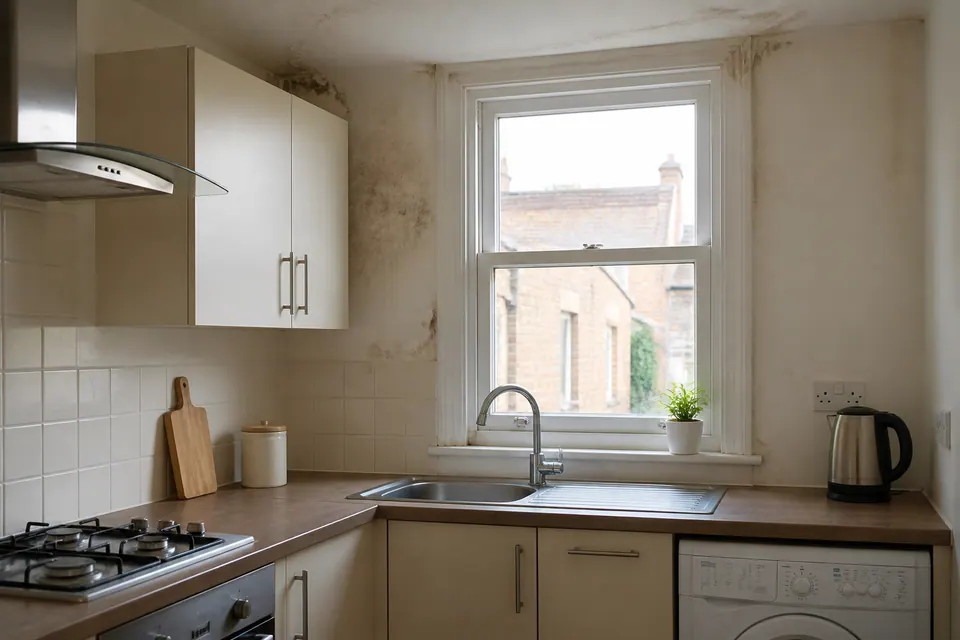
Visible edge · heavy furniture · working clearance
Luton / THE PROPERTY BRIEF
Coverage and furniture handling are separate checks.
Give the complete Luton postcode and explain that the affected wall is partly obstructed. Ask whether attendance can be offered and who is expected to create any working clearance. A confirmed visit should not depend on an unspoken assumption that the person meeting the technician can move heavy furniture.
02 / DIRECT ANSWERS
A suitable reachable portion may be considered from photographs, provided its boundary and limitations are explicit. Do not assume the quotation includes a larger area hidden behind the furniture.
Painting is not a substitute for assessing growth and moisture. It can also change the evidence at the only visible part of an obstructed wall, so discuss the condition before a cosmetic step.
It may change access, but no permanent result should be inferred. The moisture context still needs consideration, and furniture position alone does not establish the reason the marks appeared.
It can affect preparation and what is achievable, so explain it before timing is proposed. Ask who is responsible for clearance rather than expecting the treatment appointment to absorb an unplanned move.
Follow the instructions for the agreed method and room circumstances. The end of the visit is not an automatic instruction to place a cabinet back against the treated finish.
Describe it as fixed and show the reachable finish. Suitable treatment may be considered within that limit, while dismantling or addressing damaged material requires another explicit arrangement.
The finish and access need review together. Explain whether the desk can be moved by agreement, and keep frame repair or equipment handling separate from removal of visible growth.
No such investigation should be assumed. Exposing a surface and opening building fabric are different activities, with different permissions and scope decisions.
Luton / ACCESS & PEOPLE
Be clear if the person attending cannot shift a cabinet or unload heavy shelves. That limitation belongs in the enquiry, not as a surprise when the appointment begins.
Identify who can authorise movement of supplied furniture. Permission to arrange wall treatment does not automatically answer how the landlord’s belongings should be handled.
Describe a built-in unit as fixed rather than implying it can be moved like a chair. Any dismantling or investigation behind it requires a different agreed arrangement.
A tenant can provide the available view and explain which furnishings belong to the property. The enquiry does not determine legal responsibility or require the tenant to disturb affected items to prove a concern.
A landlord should clarify access and any furniture-handling arrangement with the occupant before confirming work. A photograph of an exposed corner is not evidence that the rest of the wall will be reachable.
A homeowner should distinguish clearance, treatment and any concern about stored contents. Ask what can proceed if the cabinet remains in place instead of treating furniture movement as automatically included.
04 / A CONTROLLED APPROACH
Review the visible wall and the obstruction together. Identify where the evidence stops and whether the proposed area can be reached under the existing arrangement.
Agree who handles furniture and nearby contents, with practical instructions for the space available. An occupant’s inability to move a heavy unit must remain part of the plan.
Treat only suitable surfaces within the confirmed reachable scope. Concealed portions or materials requiring another approach should not be implied as completed work.
Explain any remaining access limitation and the instructions for returning the room to use. Make clear whether a hidden area still requires a separate decision.
The illustrated stages do not mean an obstructed wall becomes fully accessible or that moving furniture resolves every underlying question.
Identify the finish that can be viewed now.
Follow the clearance and scope actually agreed.
Record any boundary left by an unmoved unit.
This is a schematic, not a customer transformation photograph. A treated visible strip does not certify the condition of material that remained concealed.
05 / QUOTATION, NOT GUESSWORK
Mould-removal quotations depend on the agreed surface and working conditions. A small visible strip can leave important access questions unresolved. Ask whether the photographs support a quote or whether assessment is needed, and keep furniture handling separate from the treatment price.
See the main mould-removal service ↗| Scope | Quotation basis | Clarification before booking |
|---|---|---|
| Suitable finish already reachable | Photographs may support a quotation | Identify the actual visible boundary and available working space |
| A larger area expected behind furniture | Assessment and access agreement may be needed | Do not price the concealed extent as an established measurement |
| Fixed joinery or damaged hidden material | A different specialist scope may be required | Clarify dismantling, contents and material work separately |
Confirm inclusions and exclusions before accepting. A wall-treatment quotation should not silently include unloading storage, moving heavy furniture, treating belongings or reinstating a fixed unit.
06 / ROOM-BY-ROOM CONTEXT
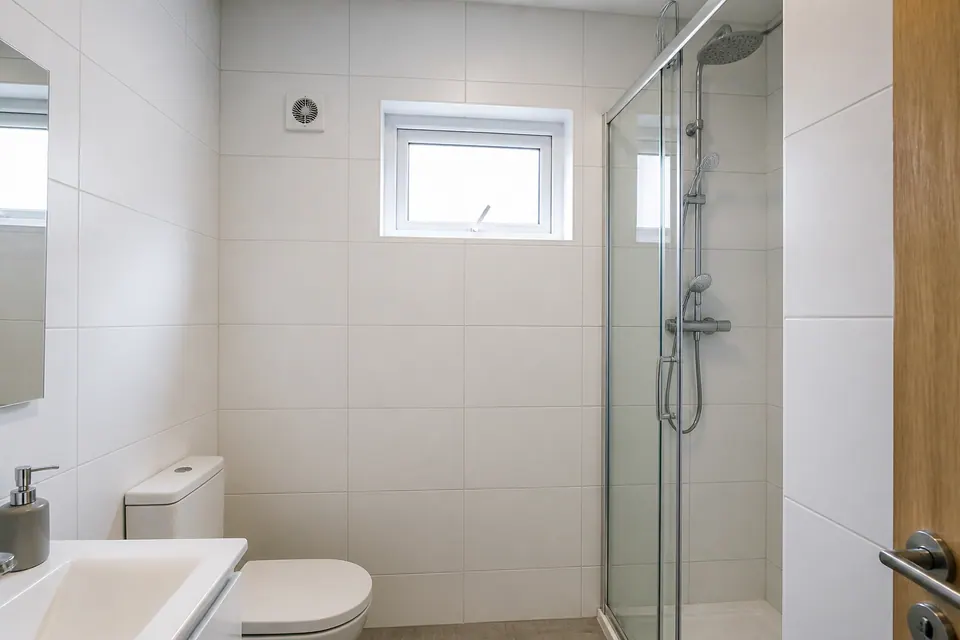
A fixed bathroom fitting can restrict reach even when the floor is clear. Show what sits below the mark and ask how the proposed access will work before agreeing the appointment.
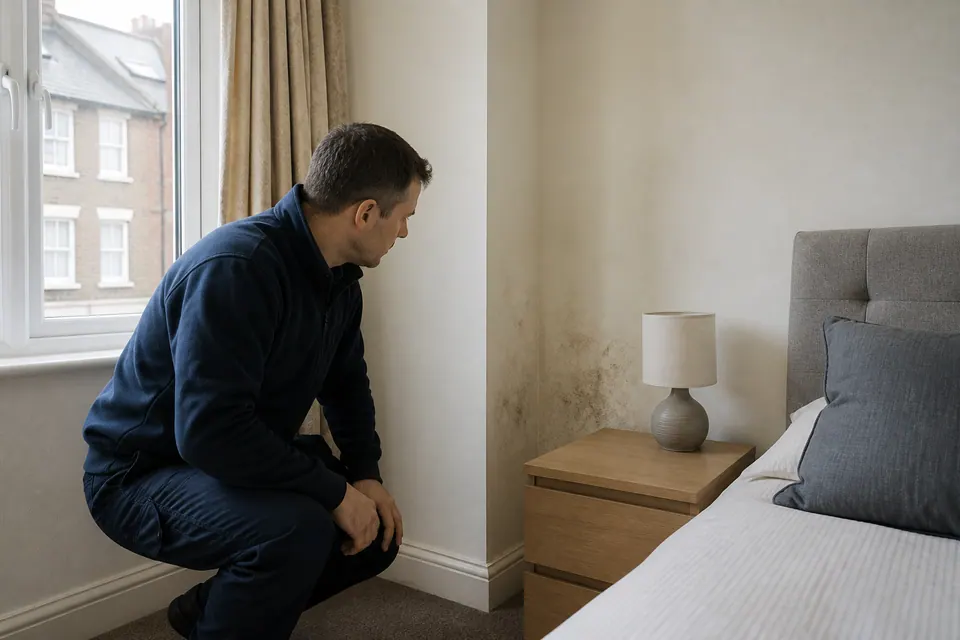
A wardrobe may be heavier than its photograph suggests. Describe the handling limitation and keep bedding or clothes concerns outside an assumed wall-treatment scope.
Kitchen units and connected appliances should not be moved or disconnected merely to expose a wall for enquiry photographs. Identify the available portion and the uncertainty beyond it.
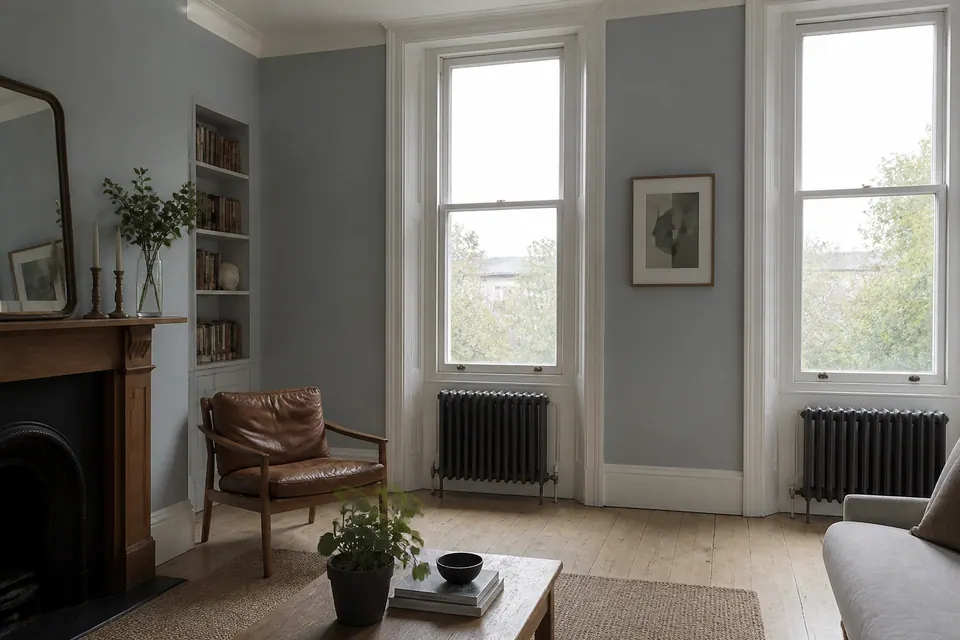
A large cabinet may have no temporary position within the room. Explain that constraint so preparation is realistic rather than based on an empty-floor assumption.
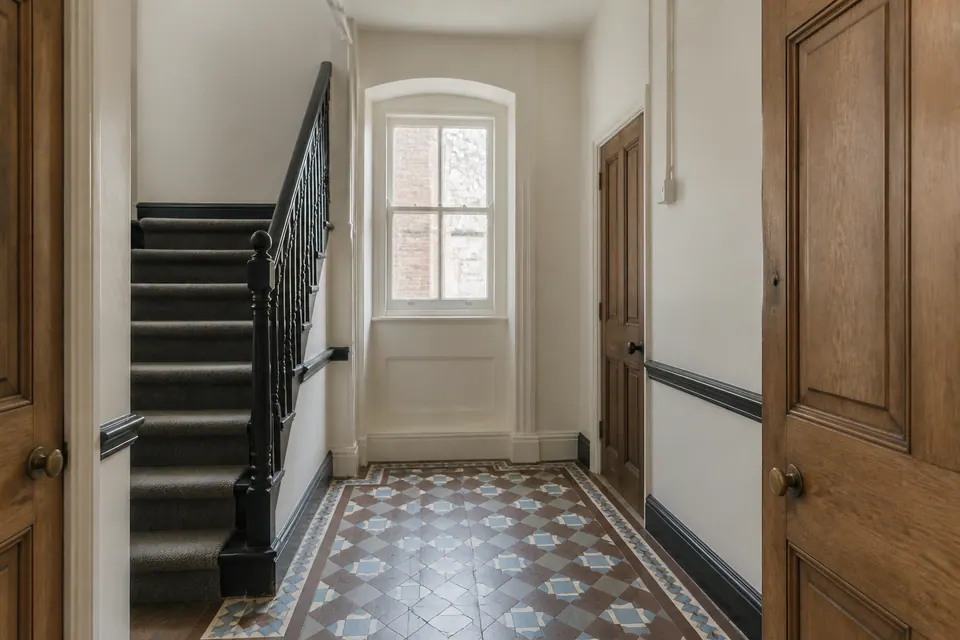
Do not place moved belongings in a shared passage without an agreed arrangement. Access to the affected room must remain distinct from permission to use common space for storage.
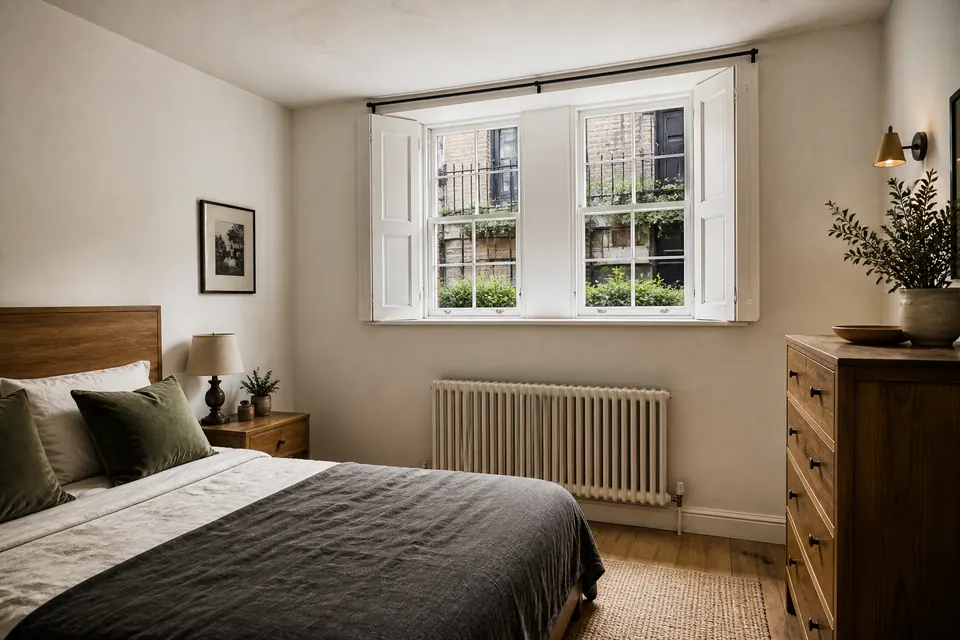
Where lower-ground storage blocks a finish, provide the floor level and any known water history as well as the clearance details. Reaching the wall does not itself resolve persistent wetness.
07 / WHEN IT COMES BACK
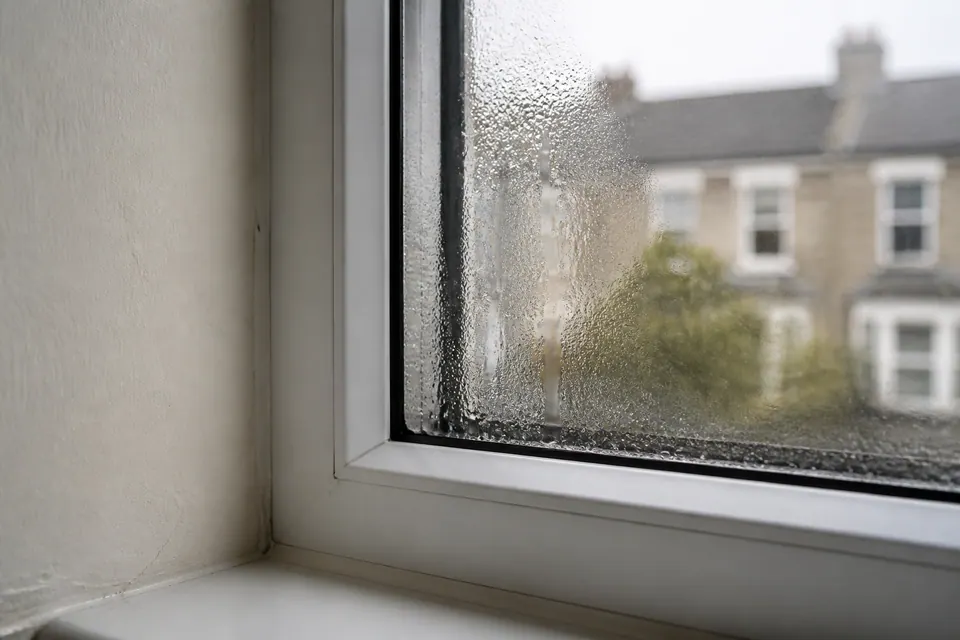
Use an existing picture of the same exposed strip where available. A change beside the cabinet is worth reporting, but it does not establish how far a condition extends behind it or when concealed material first became affected.
Restricted views can make a return difficult to interpret. Continuing moisture may still need assessment, yet moving the cabinet alone should not be presented as a diagnosis or a guaranteed solution to recurrence.
If the unit was moved previously, describe that occasion only from reliable recollection or photographs. Do not repeat the movement merely to reproduce a comparison when handling advice has not been agreed.
08 / SEPARATE THE QUESTIONS
Furniture position is useful context, but the cause of a mark cannot be confirmed merely because a cabinet stands nearby. Keep observations, access questions and suspected moisture contributors distinct.
| Visible issue | Possible contributing factor | What may need checking |
|---|---|---|
| Spotting at an exposed window edge | Moisture near the reveal may contribute | Describe the frame and the obstruction without inferring a hidden extent |
| A bathroom patch above a fixed unit | Repeated wetness may be relevant | Review both the finish and the practical means of reaching it |
| A visible stain beside stored belongings | Past or current moisture may be involved | Provide known water history rather than diagnosing from storage alone |
| The edge changes while the cabinet stays put | An ongoing condition could remain | Compare reliable observations and decide whether further investigation is necessary |
Moving a cabinet can change reach without resolving a leak, ventilation question or damaged substrate. Those matters require their own assessment and scope; they are not consequences automatically achieved by clearing the wall.
Mould refers to growth; damp refers to excess moisture. The unseen area should not be described conclusively using either term solely because the visible edge is marked.
| Question | Mould | Damp |
|---|---|---|
| What does the term mean? | Fungal growth on an affected finish | Excess moisture in the material or setting |
| What can be observed now? | The reachable outline and exposed coating | Reported wetness or known water events |
| How may they connect? | Growth can persist or return where moisture remains | Moisture may support growth without revealing its full extent |
| What remains to decide? | Which suitable surface can actually be treated? | Does the moisture question need a separate investigation? |
09 / LOCATE THE ISSUE
Select the room setting, then describe what can actually be seen. An accessible corner can support an enquiry without establishing the condition of every surface behind the furniture.
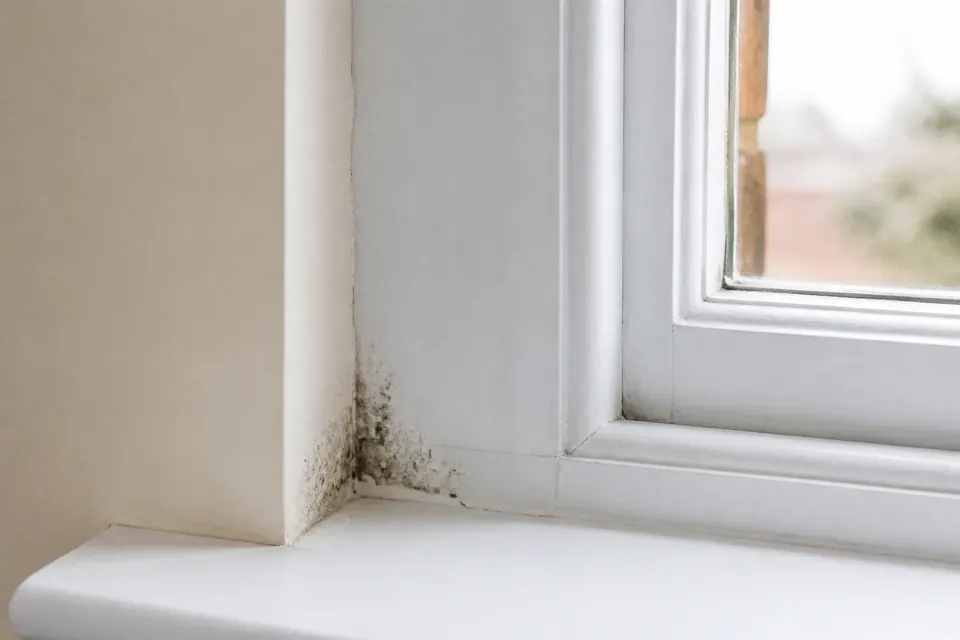
Show the frame and the unit in one view. Distinguish a mark on the reveal from a concern about the cabinet itself, and do not treat the narrow visible edge as proof of what lies behind the unit.
Explain whether a bath, enclosure or storage unit restricts reach. The apparent size of the ceiling mark does not settle access, and unsafe attempts to obtain a closer photograph are unnecessary.
Identify whether the obstruction is freestanding or fitted and whether anyone can move it safely after advice. Do not drag a wardrobe across affected material simply to establish a larger measured area.
Say which part of the wall is exposed and which remains behind a unit or appliance. Disconnecting equipment or dismantling cabinetry is not an assumed preparation step for a surface-treatment visit.
A wider layout image can show whether there is space to move a cabinet at all. Explain the available route and nearby belongings rather than sending a close-up that implies an unrestricted work area.
Describe paint, paper or damaged material where it is visible. The condition of the accessible strip should not be extended by assumption to the unseen wall, especially where the covering changes.
Distinguish stored contents from the cupboard structure and the wall behind it. Handling affected belongings, moving a unit and treating a suitable finish each need an explicit decision.
Keep uncertainty attached to concealed areas. A smell, a narrow view or a marked cabinet back does not justify a confident description of the entire hidden wall.
Luton / PLAN THE APPOINTMENT
Give the full Luton postcode and check availability before making furniture arrangements. Explain the access limitation and who can meet the technician, with any agreed clearance planned in advance.
Explain who will meet the technician and whether that person can perform any agreed movement; do not leave the practical limitation unstated.
View the Luton area map.
Luton / BEFORE BOOKING
Clarify reach, handling and the limits of the evidence so the appointment is not built around an assumed furniture move.
Ask about preparation first. Show the available view and explain the obstruction; moving heavy or affected items to improve a photograph can introduce a handling issue that has not been assessed.
State that in the first enquiry. The proposed arrangement needs to identify who handles any agreed clearance, rather than leaving the task to the person meeting the technician on the day.
Keep the visible measurement and the suspected concealed extent separate. Explain why you think the concern continues, but do not describe an unseen area as confirmed growth.
Not automatically. A concern about the furniture or its contents needs a separate discussion from treatment of the wall, with suitable handling and scope clarified explicitly.
Identify it as fixed and show the accessible edge. Dismantling joinery or investigating behind it should not be inferred from a normal surface-treatment booking.
Ask for a preparation arrangement suited to the property and the items involved. Do not assume a shared passage is available or that affected belongings should be transferred there without guidance.
The agreed scope should state the reachable portion. Material left concealed or inaccessible must remain a limitation, not be presented as inspected or treated.
That possibility should be discussed before confirmation. The proposed work may be limited by the actual access, so do not rely on an unagreed last-minute furniture move.
Follow the return and preparation guidance for the selected approach. Ask specifically about returning furniture near the finish rather than using the technician’s departure as the only cue.
A PROPERTY-SPECIFIC NEXT STEP
Send the postcode and a layout view showing the cabinet, the visible wall and the available clearance. Explain the handling limit so the next step can be agreed realistically.
The images illustrate room settings, not a customer cabinet-clearance job or a verified before-and-after result.
