
TOTTERIDGE · PRESERVE THE STORY BEFORE PLANNING THE WORK
Heirloom Rug Cleaning Review in Totteridge
An older rug may carry family history as well as fragile ends, uneven colour and earlier repairs. The first task is not to make it look new; it is to record what survives and decide how the piece can be handled without erasing evidence.
- Share any purchase, inheritance or repair records
- Photograph borders square-on in natural light
- Keep loose threads, labels and detached fragments
- Identify a clear inspection space away from pets
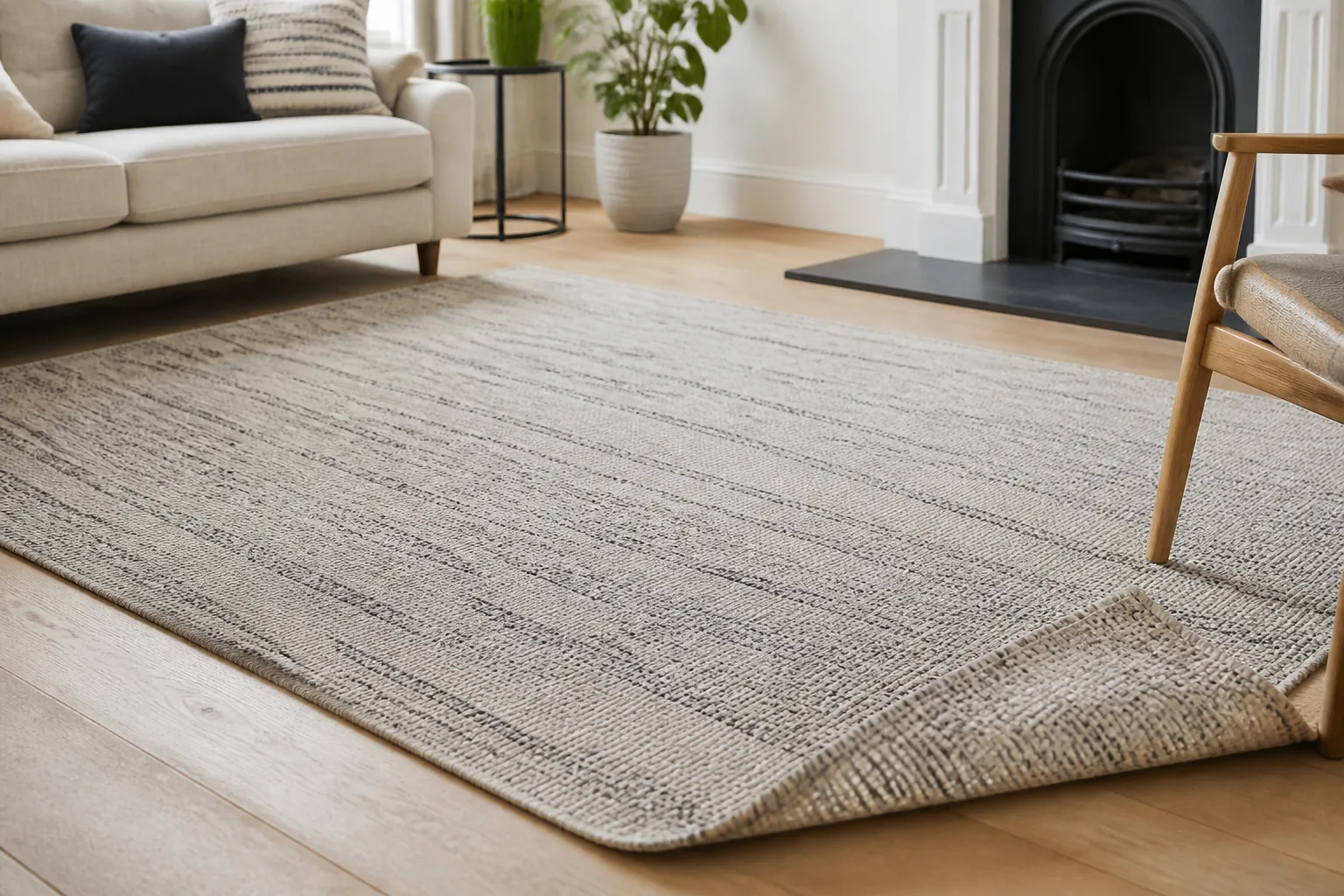
CATALOGUE WHAT IS PRESENT
Build a description without assigning an origin
Appearance can guide questions, but it cannot authenticate age, fibre or provenance.
QUIET SPACE, CAREFUL HANDS
Prepare somewhere the whole piece can be seen
A generous hallway is not automatically a safe work area. Check for sunlight, foot traffic, pets, damp stone and doors that may catch the rug before choosing where an older textile will be examined.
Keep context. Photograph the rug in its usual setting before removing furniture or changing orientation.
Retain clues. A handwritten receipt, old underlay or detached fringe fragment may explain more than a styled close-up.
Totteridge object notes
Identity: Use a family description, not an invented attribution.
Length: Measure without stretching the ends.
Width: Record variations if the sides are uneven.
Front: Capture the field, borders and corners.
Back: Show knot structure only when turning is safe.
Ends: Count detached or thinning sections.
Sides: Note rewrapped or exposed cords.
Repairs: Photograph each intervention separately.
Colours: Record fading direction and irregular bands.
Texture: Mention stiff, powdery or brittle patches.
History: Give approximate dates with clear uncertainty.
Storage: Describe wrapping and location.
Display: Explain sunlight and furniture pressure.
Movement: Say who can assist with lifting.
Destination: Confirm the intended post-review position.
Value: Obtain specialist valuation separately if required.
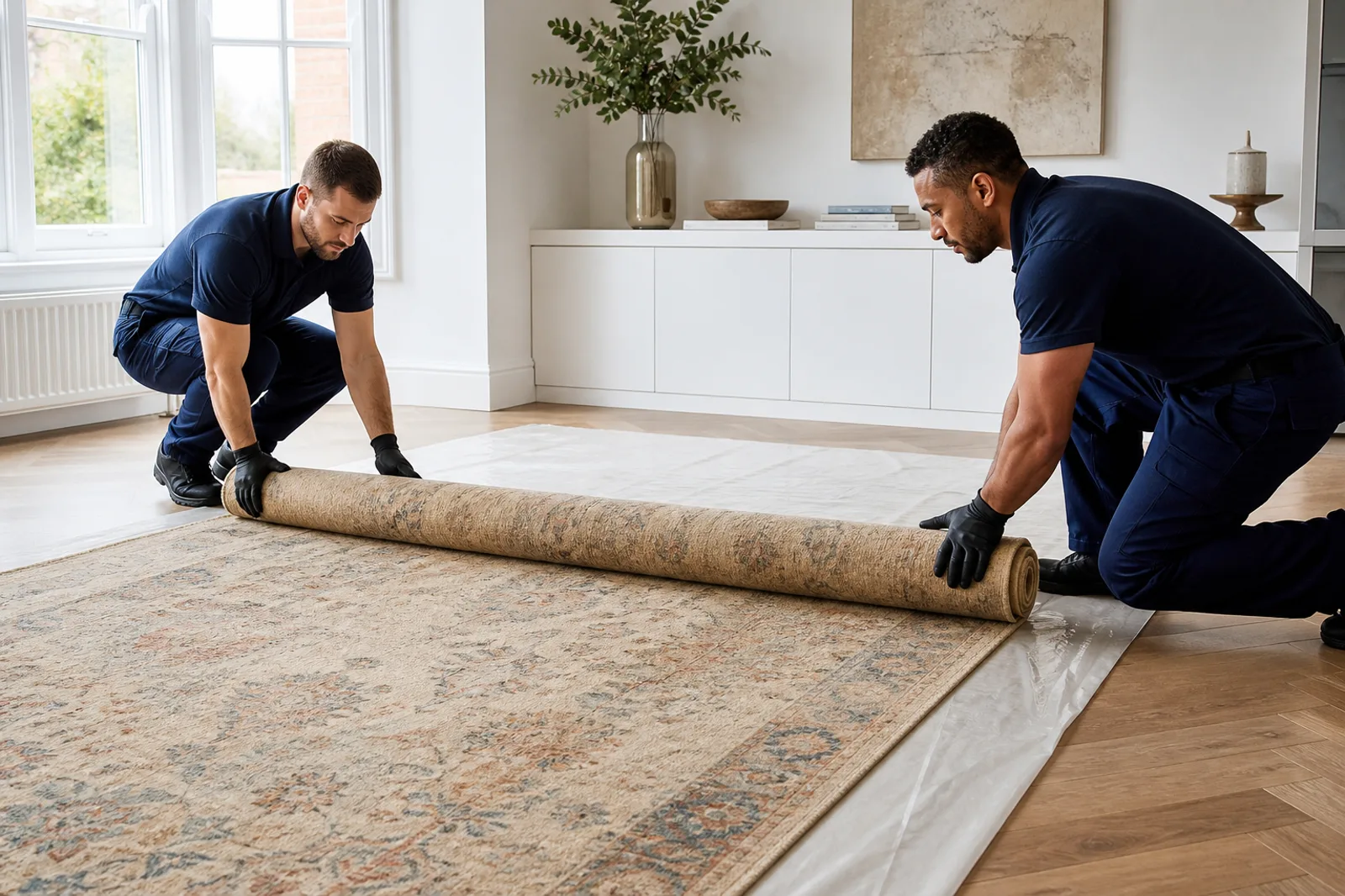
AGE IS NOT A DEFECT
Patina, fading and damage need different language
Abrash may belong to the original weaving, while sunlight can reduce colour and abrasion can remove pile. Recording each phenomenon protects realistic expectations.
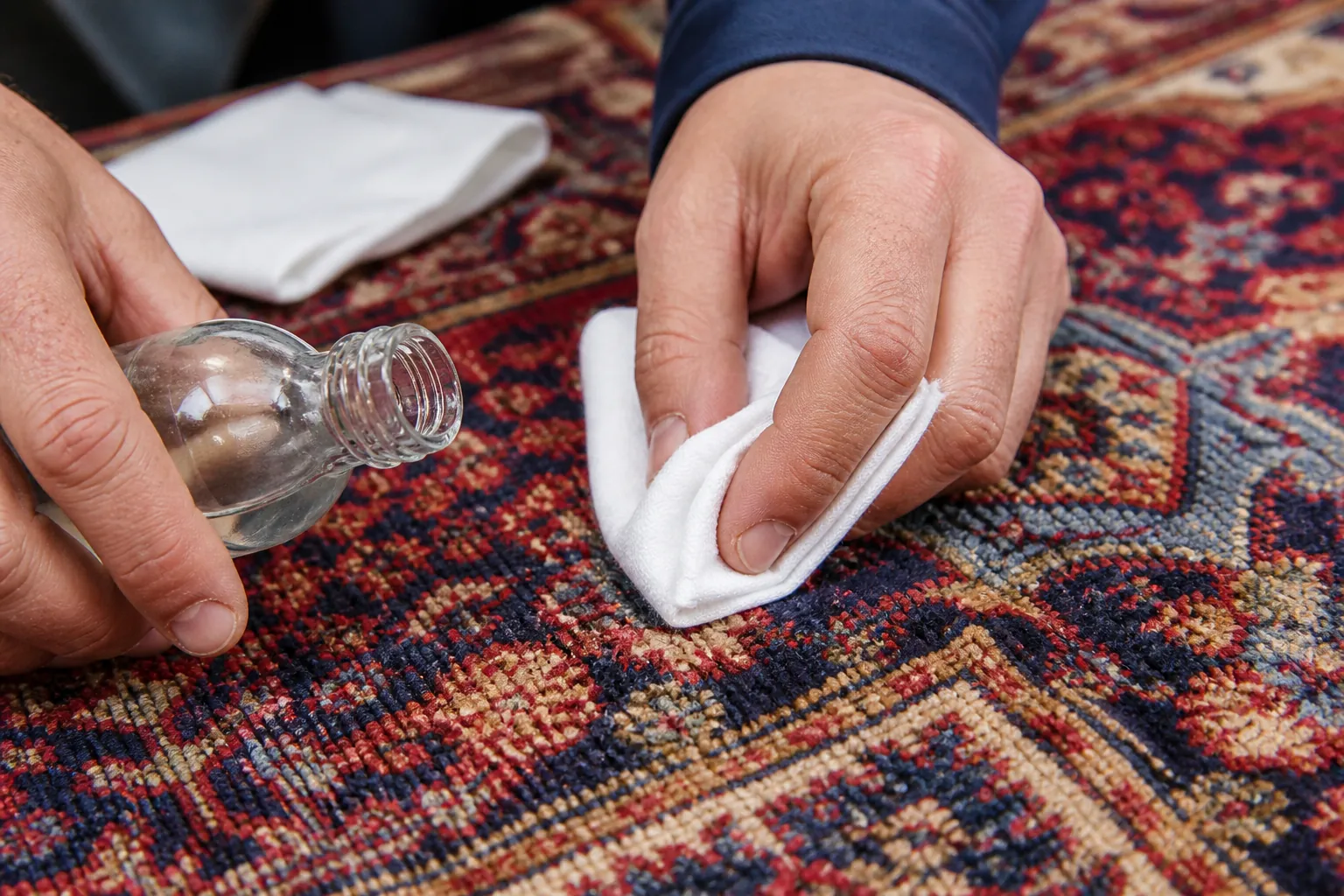
PAST INTERVENTIONS
A repair changes the way stress travels
New yarn, adhesive, stitched patches and replacement fringe may respond unlike the surrounding material.
- Photograph the repair from both accessible sides
- Do not trim projecting threads
- Keep old invoices or restorer notes
- Flag rigid areas before rolling
READ THE WHOLE ASSEMBLY
Four layers of evidence shape the handling plan
The face is only one component of a woven object.
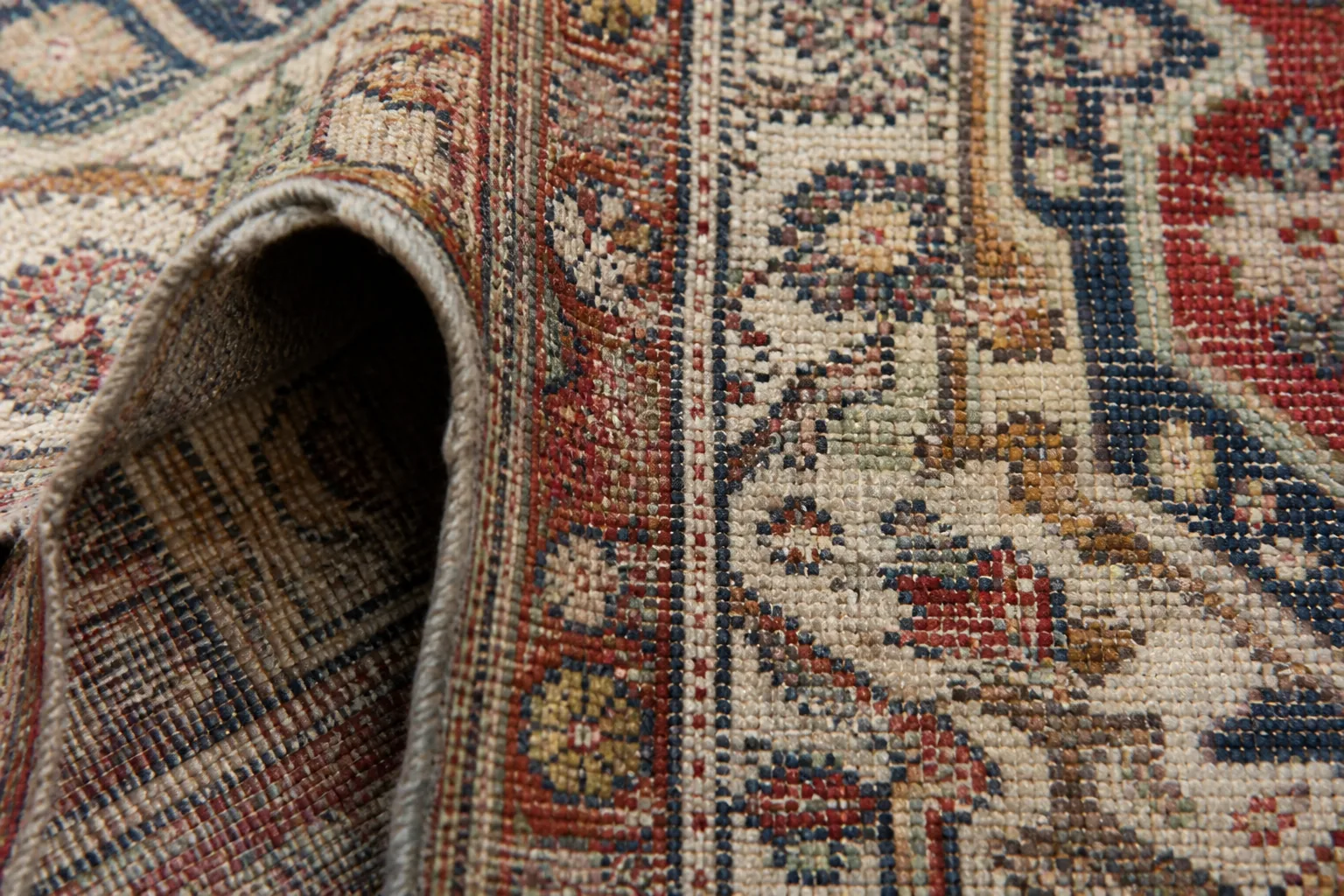
Remaining height
Wear can expose weaker foundation yarns.
Internal structure
Density and damage affect flexibility.
Edge restraint
Later wrapping may conceal losses.
Foundation security
Unravelling requires minimal disturbance.
A RESTRAINED REVIEW PATH
Decisions are made before force is applied
The sequence protects information as well as material.
- 01
Document
Record setting and known history
- 02
Support
Choose a safe way to expose the rug
- 03
Examine
Map wear, repair and instability
- 04
Sample
Use limited checks where justified
- 05
Propose
Explain boundaries before agreement
- 06
Monitor
Watch vulnerable zones throughout
- 07
Rehouse
Give display and storage guidance
DIMENSIONS ARE ONLY THE OPENING FIGURE
Condition and handling qualify every guide band
Older construction, repairs, fragile edges, access and any specialist request require an item-specific quotation.
ASSEMBLE A USEFUL CATALOGUE ENTRY
Let the quotation reader see what makes this rug individual
Provenance is welcome when documented; uncertainty is equally important.
- Totteridge postcode
- Unstretched dimensions
- Front in its normal orientation
- Back and knot detail where safe
- Every weakened edge
- Separate photographs of repairs
- Receipts or family history
- Previous cleaning and storage
- Inspection and carrying access
Handling cautions
Should loose yarn be cut away?
No. Retain it and show its position in a photograph.
Can a picture confirm age?
No. It records appearance but cannot authenticate origin or date.
Is old fading reversible?
Cleaning does not restore missing dye or lost pile.
Can the rug be folded?
Ask first; folds can concentrate stress across brittle foundations.
TOTTERIDGE HEIRLOOM RUG FAQ
Questions worth settling before movement
What makes an older rug enquiry different?
Unknown materials, historic repairs and reduced structural strength require a fuller record.
Can Alesta value or authenticate my rug?
No. Seek an appropriate independent specialist for attribution or valuation.
Should I vacuum before sending photographs?
Leave a vulnerable piece undisturbed until safe handling has been discussed.
Why photograph colour variation?
It helps separate original irregularity, light fading, wear and possible dye movement.
What if the reverse cannot be exposed safely?
Say so. Missing evidence is preferable to damage caused for a photograph.
Do old repairs prevent all cleaning?
Not automatically, but their material and strength may narrow the available choices.
May I tape a loose edge temporarily?
Avoid adhesive contact and request item-specific handling advice.
How is drying planned for a delicate rug?
Construction, colour response, support, airflow and vulnerable areas shape the plan.
Why is area not the final price?
Condition, access, testing and specialist handling add information beyond square metres.
What does the £68 minimum mean?
It is the guide minimum for an eligible visit once the proposed scope is accepted.
MAKE THE OBJECT RECORD FIRST
Give a Totteridge heirloom a careful starting point
Good documentation supports measured decisions and protects the history already present.
