
HOLLAND PARK · A ROOM-SCALE TEXTILE DESERVES A CAREFUL BRIEF
Rug Cleaning in Holland Park for Valuable Room Pieces
A generous wool rug can define an entire Holland Park reception room. Before anyone lifts a corner, we want to understand how it was made, how daylight has changed it, what stands on it and how it can travel safely across the house.
- Frame the whole rug and surrounding furniture in the first photograph
- Show the pale window side separately from traffic marks beneath the sofa
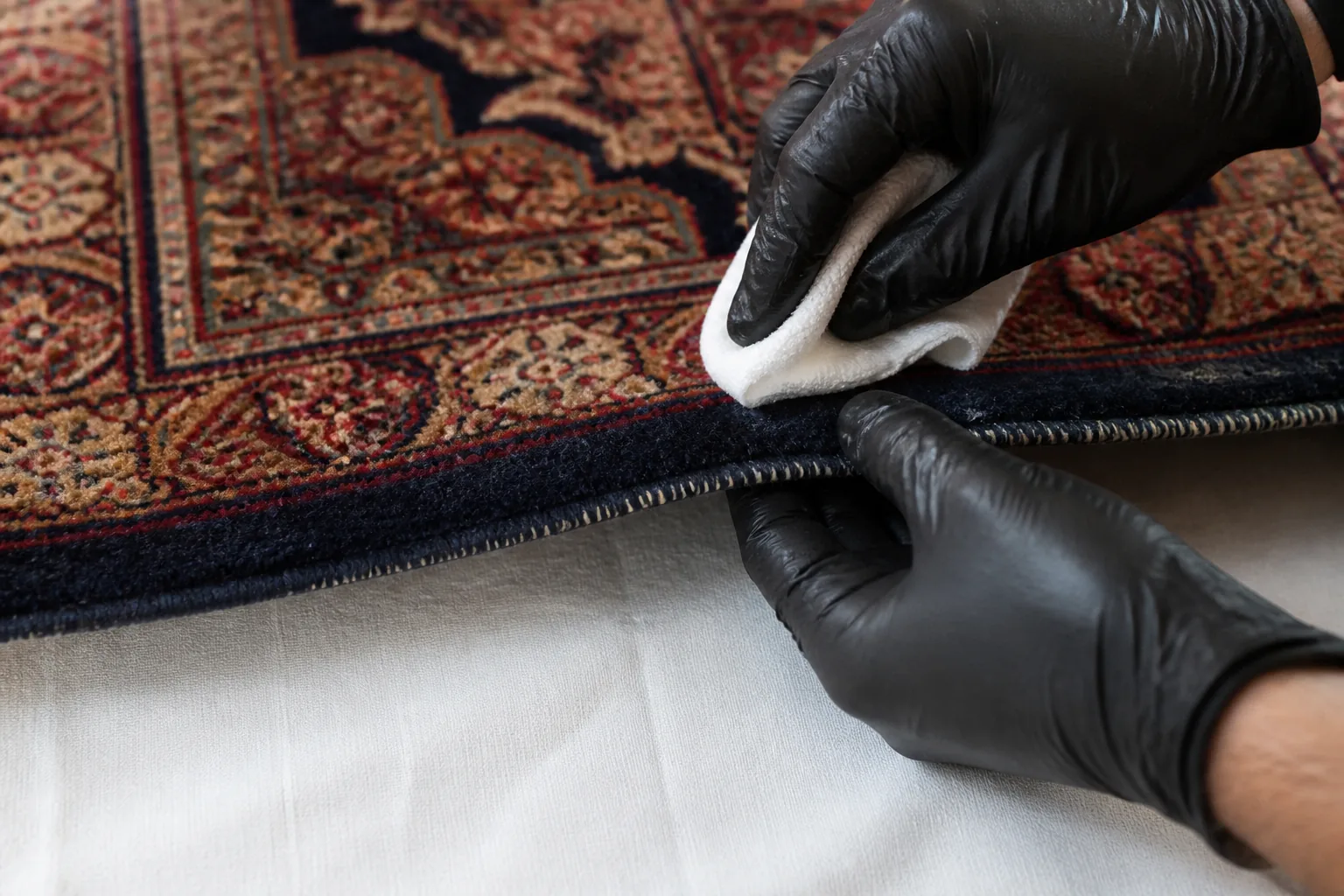
- Photograph the underside, selvedges and fringe without forcing a heavy piece up
- Describe the walk from the driveway to the room and identify the parquet beneath
BEFORE WE PRICE THE VISIT
Build a useful record without moving the room
- Property postcode and a workable appointment window
- Longest and widest measurements, including fringe
- A view from the doorway showing scale
- Close photographs of the window edge and sofa positions
- Any maker’s label or purchase information
- Accessible details of knots, binding and reverse
- Whether the rug has ever been rotated
- Products used after spills or pet incidents
- Doorways, stairs and the long internal carrying route
Four early Holland Park decisions
Can photographs confirm the fibre?
They can reveal clues, not certainty. Touch, construction and colour behaviour still influence the safe working boundary.
Is the lighter window edge dirty?
Possibly not. Exposure can alter dye while neighbouring pile retains its original depth of colour.
Must the sofa leave the room?
Not automatically. Tell us its size and position so practical movement can be agreed before arrival.
Will parquet need protection?
Yes. The surface below is part of the handling plan even though it is not part of the rug treatment.
THE HOUSE AROUND THE RUG
In Holland Park, the route can matter as much as the doorway
Driveway access may be straightforward while the journey through a period house is not. Turns, polished timber, narrow landings and valuable furniture all affect how a substantial rug can be examined and repositioned.
A plausible room brief. A hand-knotted rug sits across oak parquet beneath the front feet of a deep sofa. Its window-facing band is lighter, while compressed areas around the legs hold darker particulate soil.
The owner supplies dimensions, a photograph of the full border and the date of the last rotation. That evidence lets the conversation distinguish colour change, pile compression and removable matter before promises are made.
A room-led Holland Park dossier
Orientation: Mark the window edge and the side facing the fireplace so the original position is not lost.
Scale: Measure the textile itself rather than estimating from the room plan.
Foundation: Photograph a safely accessible corner of the reverse for construction clues.
Daylight: Compare exposed pile with the protected colour beneath movable furniture.
Traffic: Identify the route between doors and seating where dry grit is concentrated.
Compression: Record leg impressions separately from staining or fibre loss.
Edges: Look for open binding, loose ends and previous stitching before lifting.
Fringe: Include its true length in the room record and do not comb weak sections.
Products: Name any household spray already tried and describe the result.
Moisture history: Mention plant-pot leaks, open windows or earlier saturation.
Parquet: Flag waxed, recently finished or visibly sensitive boards below the rug.
Furniture: List pieces touching the textile and any item that cannot be shifted.
Carry: Show tight turns between the reception room and the external door.
Air: Confirm how the room can be ventilated without creating a security issue.
Review: Select two priority areas for comparison at handover.
Limit: Keep fading, abrasion and historic repair outside any removal guarantee.
THE TEXTILE’S FOUR SIGNALS
Let material evidence narrow the options
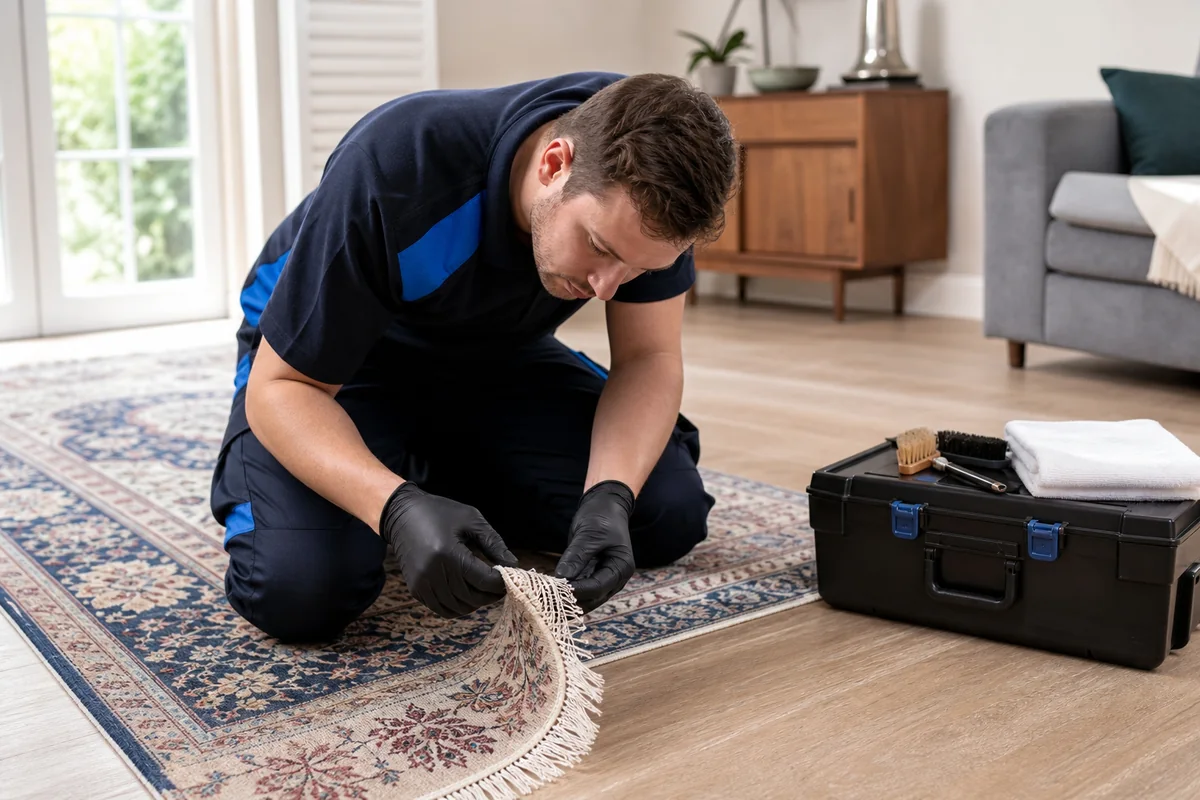
A wool description is only the opening clue. Foundation, knot density, colour contrast and old repair work can each change what constitutes proportionate care.
Feel and resilience
Surface character helps frame handling and agitation limits.
Contrasting dyes
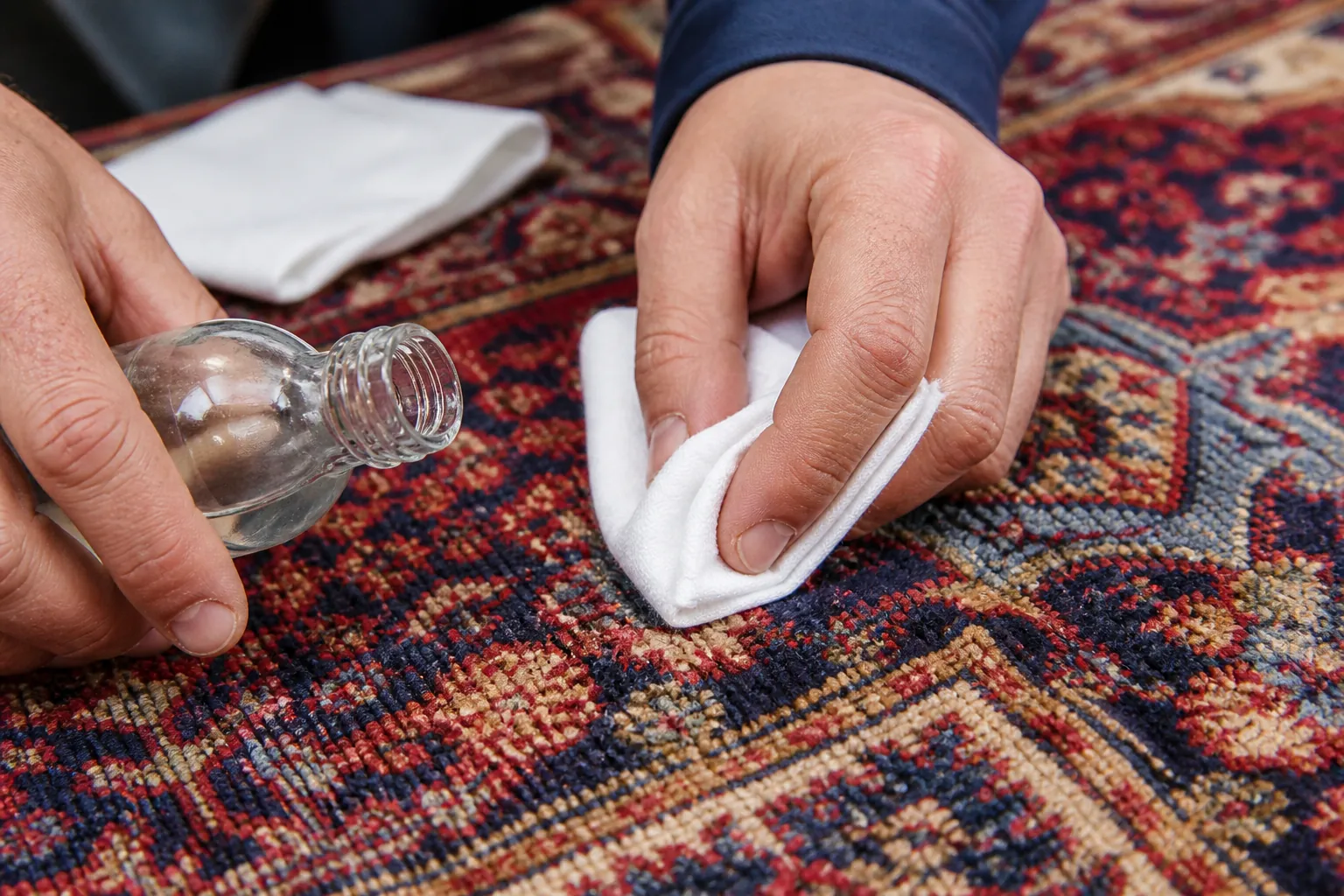
Dark borders beside pale fields deserve deliberate testing.
How the rug holds together
Knots and backing influence moisture movement and support.
Repairs tell a history
Rewoven corners and replaced fringe are recorded before work begins.
MAKE A FIRST-PASS PROFILE
Choose observations, not a treatment
These buttons help describe the Holland Park piece. They are conversation prompts and cannot diagnose fibre, dye or outcome.
FROM ROOM RECORD TO HANDOVER
Seven checkpoints for this Holland Park piece
The route stays conditional until the textile is examined. Absorbency, foundation, colour response and available airflow then determine what happens and how aftercare is explained.
- 01
Orient
Mark window, fireplace and traffic sides before movement.
- 02
Examine
Read yarn, knots, edges, repairs and the reverse.
- 03
Differentiate
Separate loose grit from fading and pile compression.
- 04
Test
Check relevant colours in an appropriate discreet place.
- 05
Work
Use only the scope supported by those observations.
- 06
Settle
Control pile, edge position and remaining moisture.
- 07
Return
Explain ventilation and safe furniture replacement.
PUBLISHED SIZE GUIDES
Measurements open the estimate; condition completes it
Area places the piece in an initial Holland Park band. Construction, colour risk, access and separately requested attention can alter the final quotation after the brief is reviewed.
WHEN LIGHT CHANGES THE PICTURE
Do not price fading as a spot
A pale window edge may reflect dye change rather than contamination. Compare it with protected pile and note whether the border, field and fringe changed equally.
WHEN SMELL HAS A LOCATION
Map the source before discussing odour work
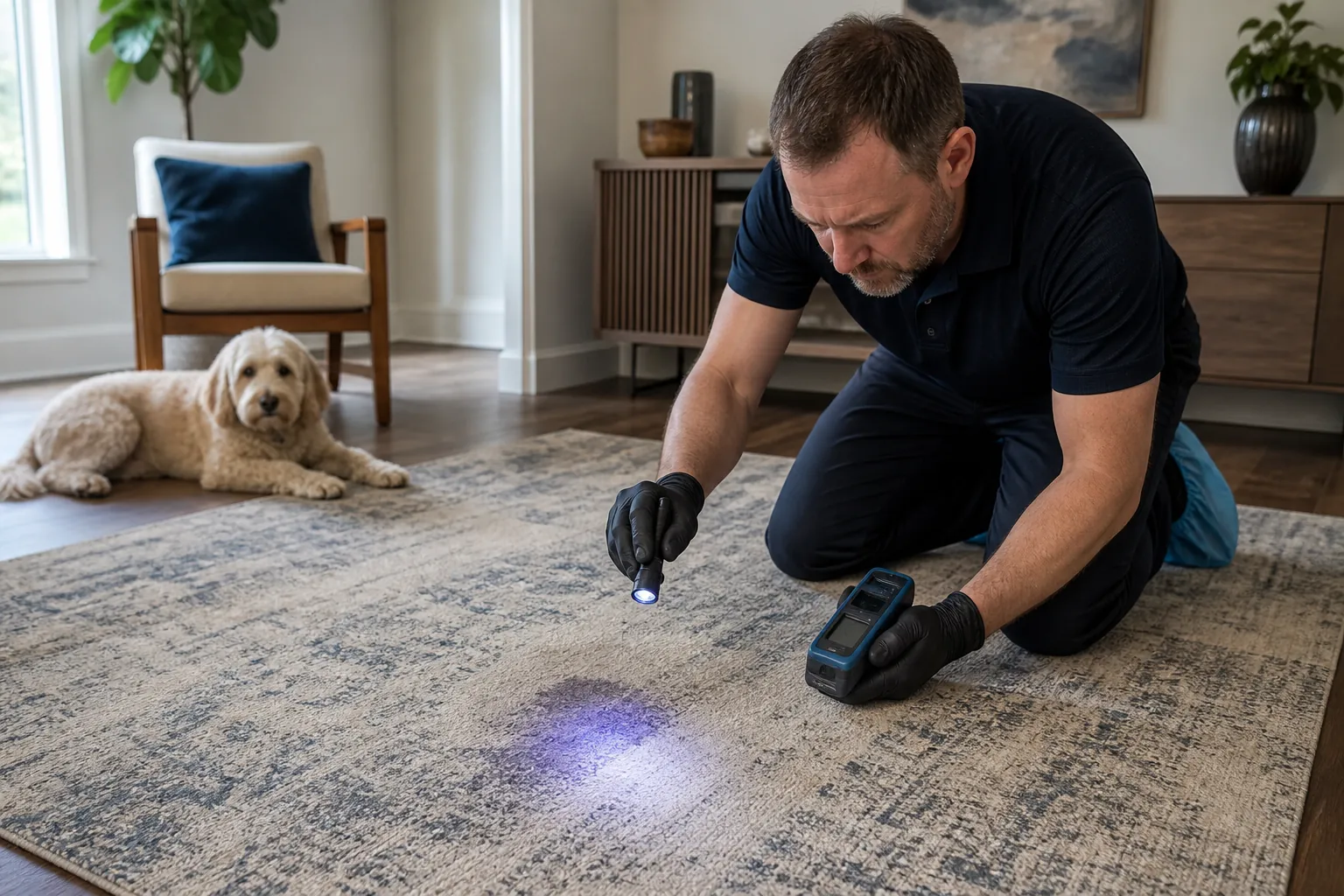
A smell near one sofa foot, plant pot or pet route is more informative than a general label. Share the event, products used and whether the parquet below was affected.
- Circle the smallest reliably affected zone
- Separate recent incidents from long-standing odour
- Check whether moisture reached the reverse
- Leave the outcome open until depth is understood
QUESTIONS FROM HOLLAND PARK ROOMS
What owners often need to settle first
Which photograph should I take first?
Stand far enough back to show all four edges, the furniture touching the rug and its orientation to the windows.
Why record the window-facing side?
It helps distinguish a daylight-related colour shift from dirt concentrated on the walking route.
Can a label choose the cleaning method?
No. It contributes useful information, but construction, colour response and present condition still need assessment.
Should I lift a heavy corner for a reverse photo?
Only if it moves safely and without strain. A missing photograph is preferable to damage or injury.
What if the sofa feet stand on the rug?
Show their positions and dimensions. The practical furniture plan can then be agreed rather than improvised.
Are faded areas expected to regain colour?
No. Cleaning can address suitable soil; it cannot replace dye altered by light, wear or age.
Why mention products used months ago?
Old residue can still affect appearance, feel and later treatment decisions, even when the original spill seems gone.
Can you promise a completion time?
Not before fibre, foundation, selected process and the room’s ventilation have been considered together.
How does parquet affect the booking?
It changes lifting, floor protection and return arrangements while remaining separate from the rug-cleaning scope.
What turns a guide price into a quotation?
Accurate area, the textile’s build, its condition, access and any optional requirements together define the booked work.
BEGIN WITH THE ROOM AND THE RUG
