
CLAPHAM · START WITH THE HOUSEHOLD
Rug Cleaning in Clapham for Rooms That Rarely Stand Still
Shared sitting rooms and busy hallways put their own history into a loose rug. Show us where it lies, how the room is used and what happened before the affected patch was noticed.
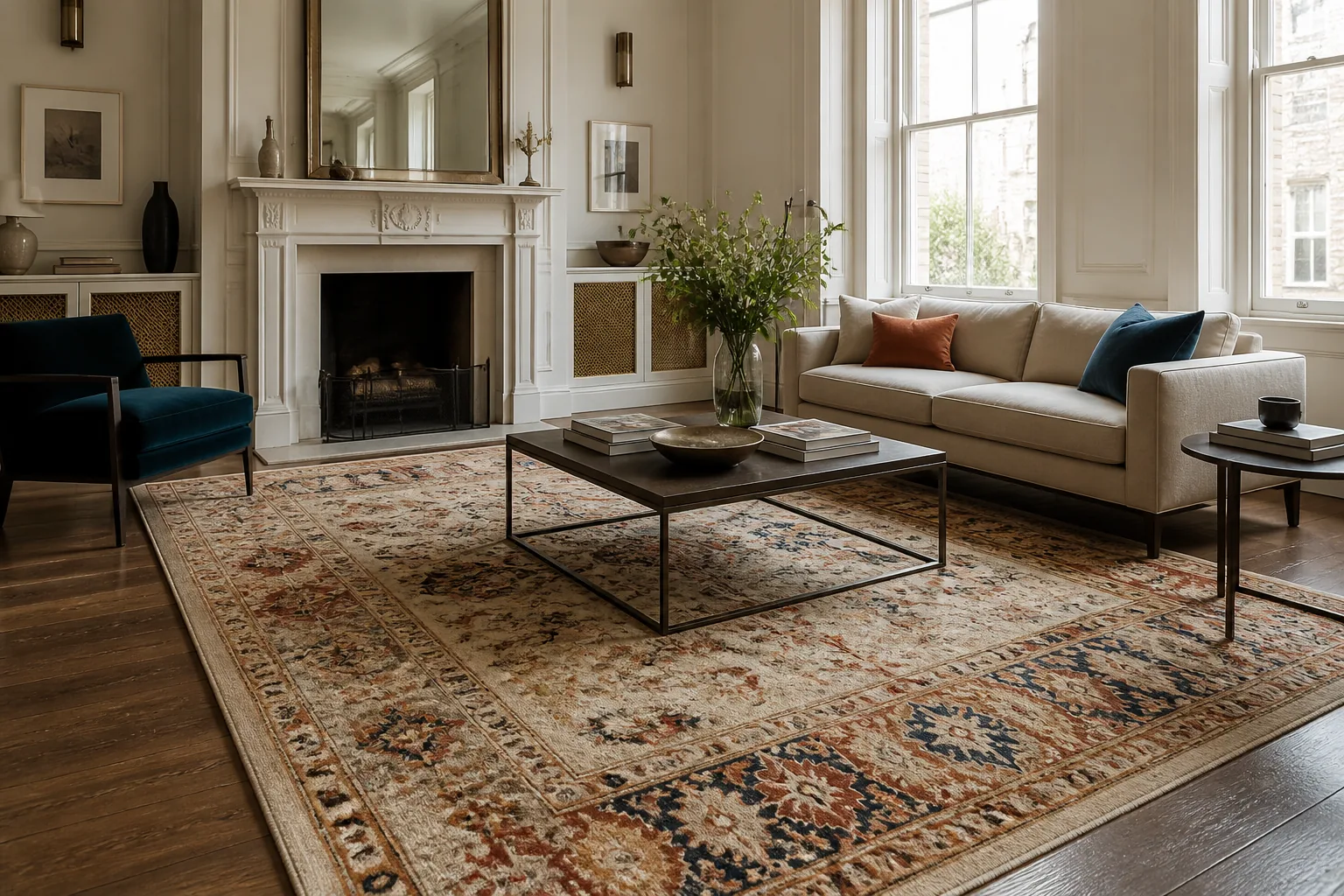
- Take a wide photograph before shifting the furniture
- Measure the textile, including tasselled ends
- Place the spill, worn lane or pet area within the full view
- Explain communal doors, stairs and loading restrictions
REPORT WHAT YOU KNOW
Build an evidence note without choosing the method
These observations direct the next questions rather than promising an outcome.
BEYOND A MATERIAL NAME
Use, colour and construction set different limits
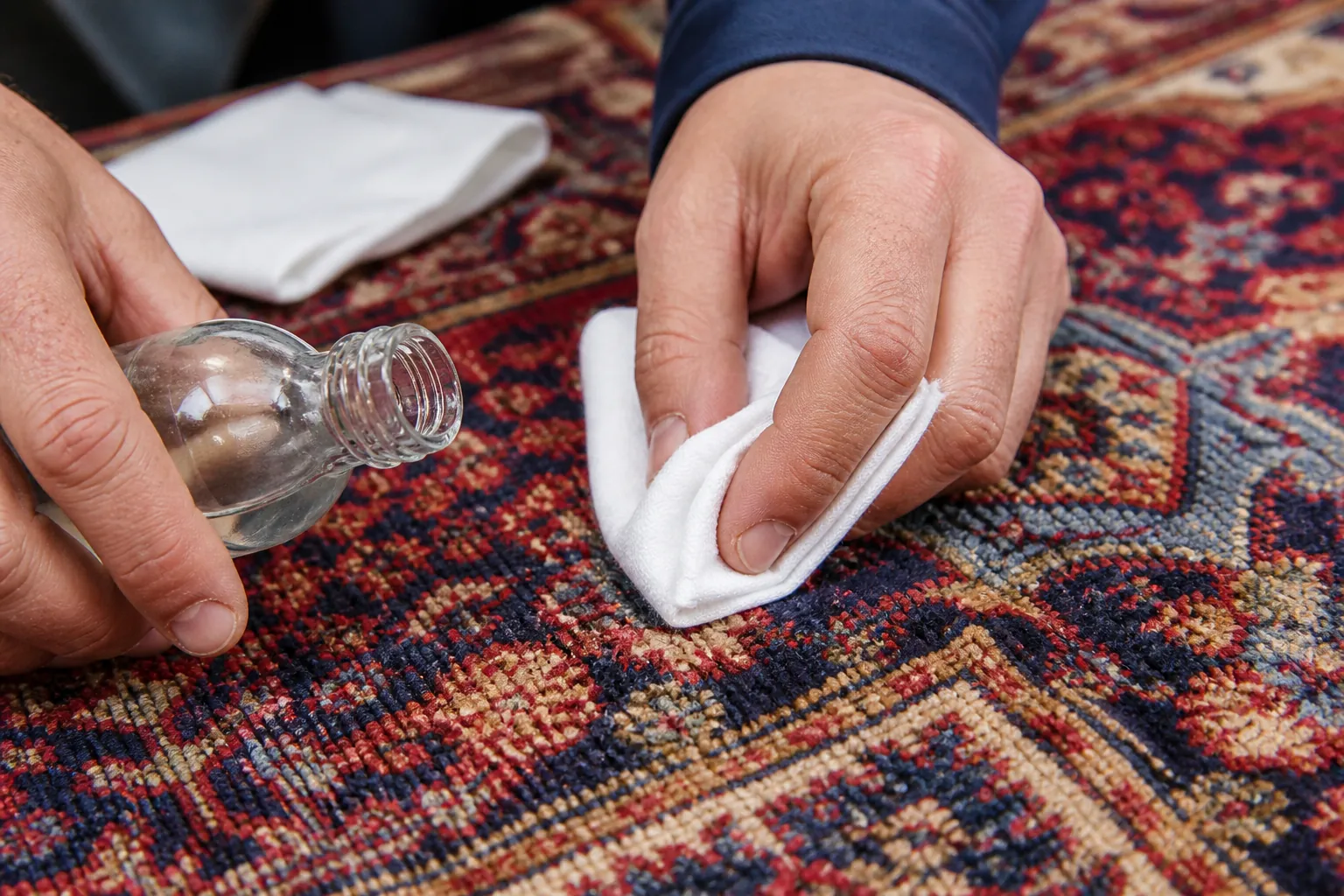
Two wool rugs can require different handling when their dyes, foundation and treatment histories differ.
Map the walking route
Flattening is not automatically removable soil.
Notice contrasts
Strong adjoining shades may need focused checks.
Look below
Foundation, coating and repairs alter handling.
Name earlier products
Sprays and rented machines belong in the record.
THE CLAPHAM ROOM
Coordinate residents, furniture and the carrying path
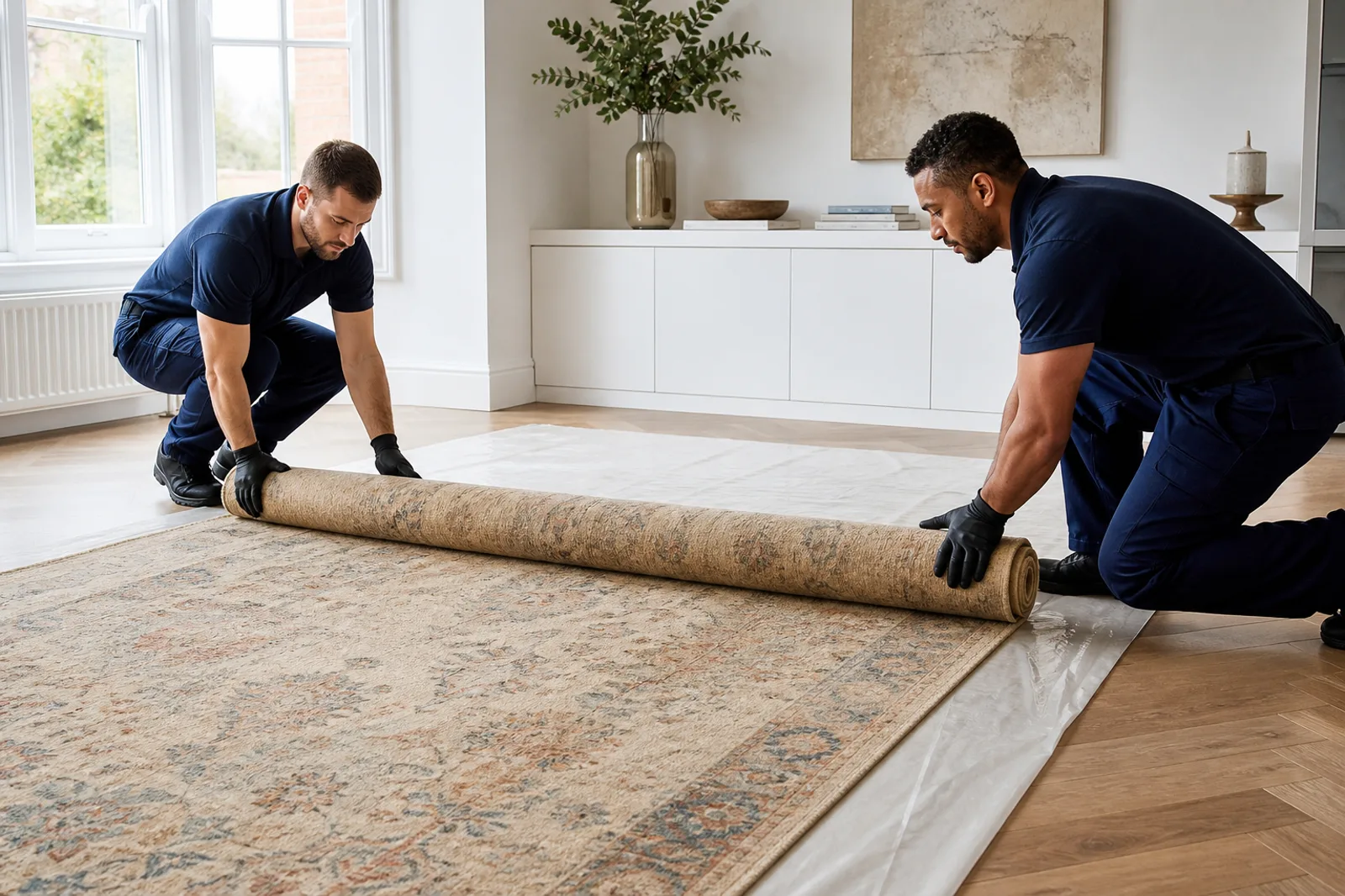
A converted terrace may have a shared entrance and a reception needed again that evening. Record access windows, immovable pieces and somewhere the textile can remain protected.
Use one establishing image. Keep the doorway, seating and rug orientation visible. Detail shots can then locate fraying or a spill without losing context.
If several people tried different remedies, list whatever can be remembered. Honest uncertainty is useful evidence.
Clapham handover notes
Orientation: Mark the doorway end.
Scale: Measure rather than estimate.
Incident: Give an approximate date.
Wear: Show flattened or thin lanes.
Ends: Include binding and tassels.
Reverse: Capture labels and transferred marks.
Products: Retain any packaging.
Floor: Name the surface beneath.
Route: Describe tight turns.
Timing: Share building restrictions.
Limit: Abrasion cannot be washed away.
MESSAGE TO HANDOVER
Seven household-led decisions
The sequence narrows risk while keeping the room plan practical.
- 01
Locate
Place the issue on a room image
- 02
Identify
Read face, label and underside
- 03
Test
Check vulnerable colour
- 04
Prepare
Clear the agreed route
- 05
Attend
Work inside item limits
- 06
Review
Compare field and edges
- 07
Reset
Explain safe room use
CLAPHAM SIZE GUIDE
Measurements provide a starting line
Build, condition, access and any specialist element still qualify the final quotation.
GATHER BEFORE SENDING
Turn a room problem into a useful enquiry
- Clapham address and contact arrangement
- Length, width and tassel allowance
- Full-room view
- Close image of the concern
- Label and underside
- Earlier products
- Weak edges
- Floor below
- Stair and parking notes
Four useful distinctions
Soil or wear?
Assessment separates removable matter from physical change.
Fresh or old?
Age and earlier treatment influence the review.
Quiet space or walking route?
Placement changes the handover plan.
Known fibre or assumption?
Keep unresolved composition marked unknown.
CLAPHAM QUESTIONS
What a shared household may need to settle
Can housemates submit one enquiry?
Yes; nominate one contact for access and scope decisions.
Must all furniture be removed?
No; show its position so preparation can be agreed safely.
Will a faded lane regain its shade?
Not when the difference is caused by abrasion or light.
What if the fibre is unknown?
Send label and reverse photographs without guessing.
Should a drink spill be scrubbed?
Avoid rubbing and report what has already been done.
Why mention the floor below?
It affects protection, transfer risk and placement.
Can a table return immediately?
Use the item-specific handover instruction.
Is collection included?
Handling must be part of the confirmed scope.
Are size bands fixed prices?
No; they guide a quotation qualified by the actual rug.
How does £68 apply?
It is the starting minimum for an eligible confirmed visit.
START WITH THE REAL ROOM
Describe your Clapham rug where it lives
A wide photograph and accurate history make a strong beginning.
