
FULHAM · PLAN AROUND THE RUG AND THE ROOM
Rug Cleaning in Fulham for Busy Family Homes
A rug beside folding doors may collect garden grit, meal spills and the traffic of everyday family life. We begin with what the piece is made from, how it has changed and how it can leave the room—not with a one-method-fits-all assumption.
- Photograph the whole rug in daylight, with its edges visible
- Show the busiest walkway and each separate spill at close range
- Share a readable care label and a view of the underside where possible
- Explain whether access is through the house or along a side passage
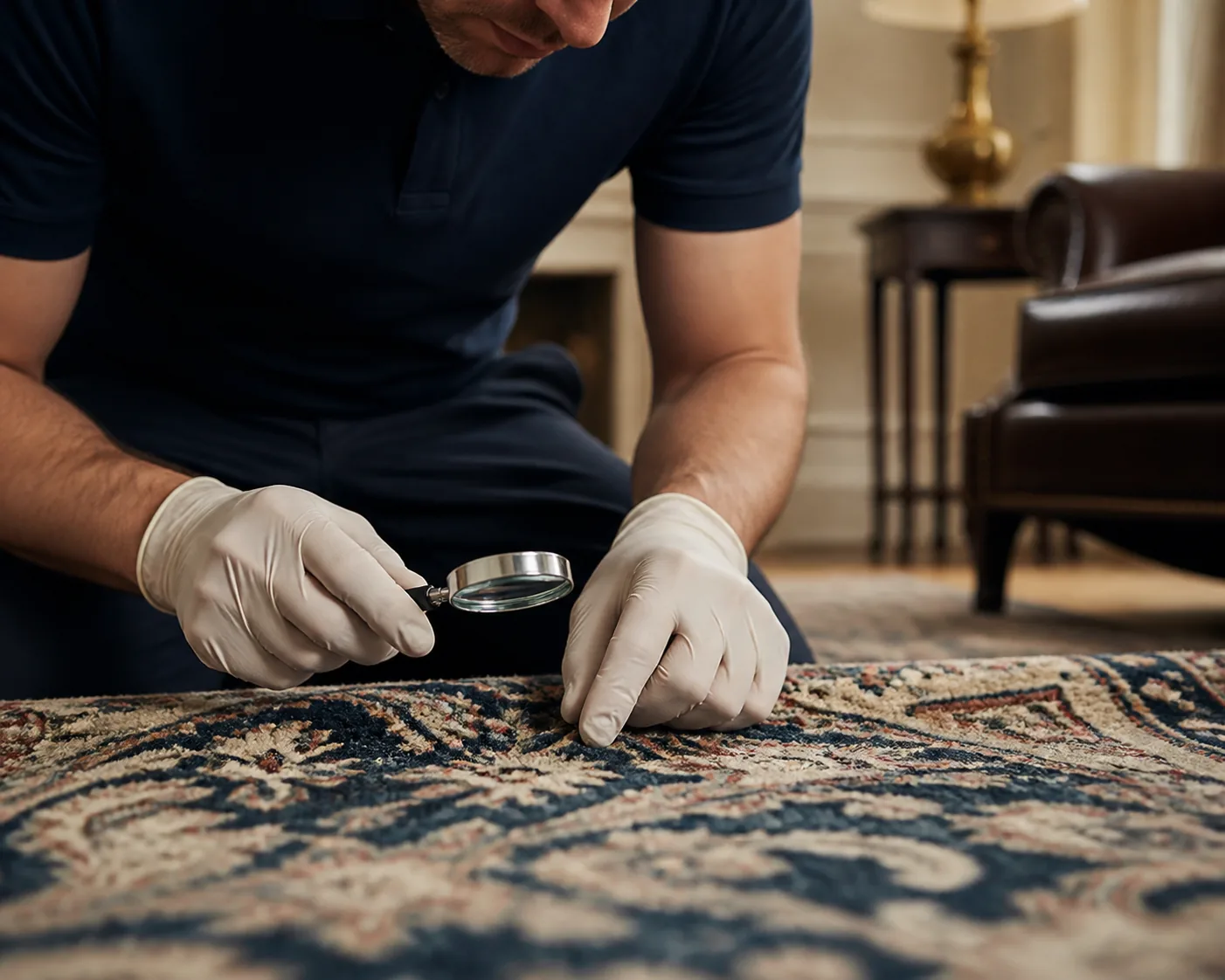
BEFORE ANYTHING IS MOVED
Read the textile in its everyday setting
A Fulham kitchen extension can join cooking, play and garden access in one space. Grit may sit deep in the pile, a splash may have received a household product, and chairs can hide abrasion that no wash can reverse.
Build an honest record. A wide photograph shows scale, orientation and furniture. Detailed images then separate the dining-side mark from the door-side traffic lane.
Dimensions, previous cleaning and products already used complete the picture. If the rug sits on porcelain or timber, note that too, because lifting and temporary protection must suit the supporting floor.
A practical Fulham handover note
Orientation: Record which edge faces the garden and which sits beneath the dining table.
Measurements: Take length and width across the furthest points, noting fringe separately.
Visible change: Mark each spill, traffic lane and pale or dark patch on the overview image.
Loose matter: Mention crumbs, pet hair or garden grit without treating them as the only issue.
Fibre evidence: Photograph the care label, but do not name the yarn by appearance alone.
Construction: Show the reverse so weaving, backing and adhesive clues can be considered.
Edges: Isolate curled corners, split binding, loose fringe and earlier stitching.
Colour: Point out contrasting borders or motifs that may deserve cautious testing.
Spill history: List what landed, roughly when, and what was applied afterwards.
Smell: Locate an unwanted odour instead of describing the entire room as affected.
Movement: Agree who will clear chairs and whether heavier furniture should remain.
Exit: Confirm steps, tight turns and whether a clean carrying route is available.
Floor care: Identify the surface below so contact precautions can be planned.
Air movement: Describe normal ventilation without promising a completion time.
Priorities: Rank the changes that matter most, including the guest-facing area.
Limits: Keep wear, fading and permanent fibre change separate from contamination.
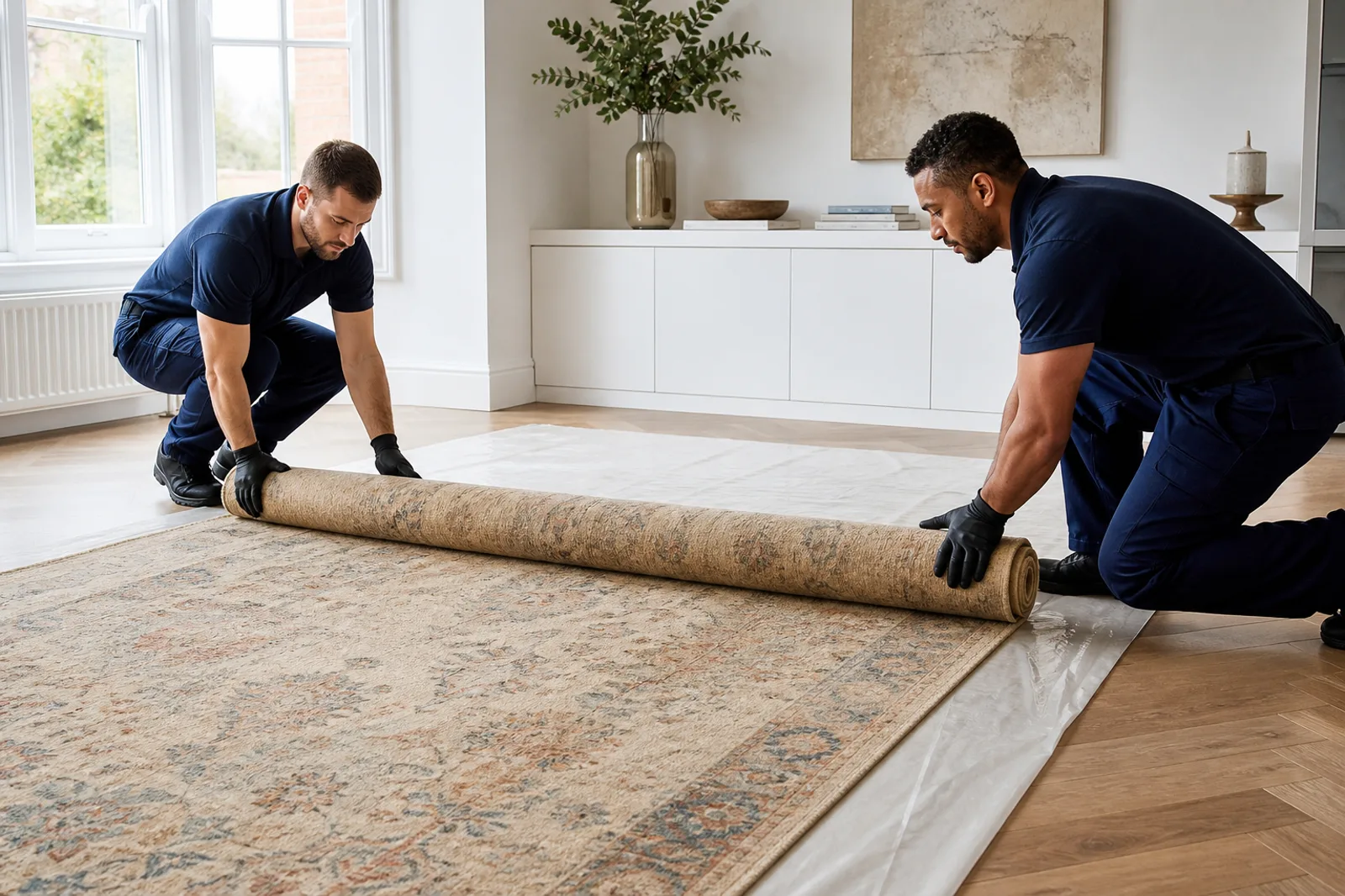
THE DINING SIDE
Describe a spill before describing a solution
Milk, sauce, wine and unknown older marks do not create the same brief. Their age, location, earlier products and the rug’s construction shape what can responsibly be attempted.
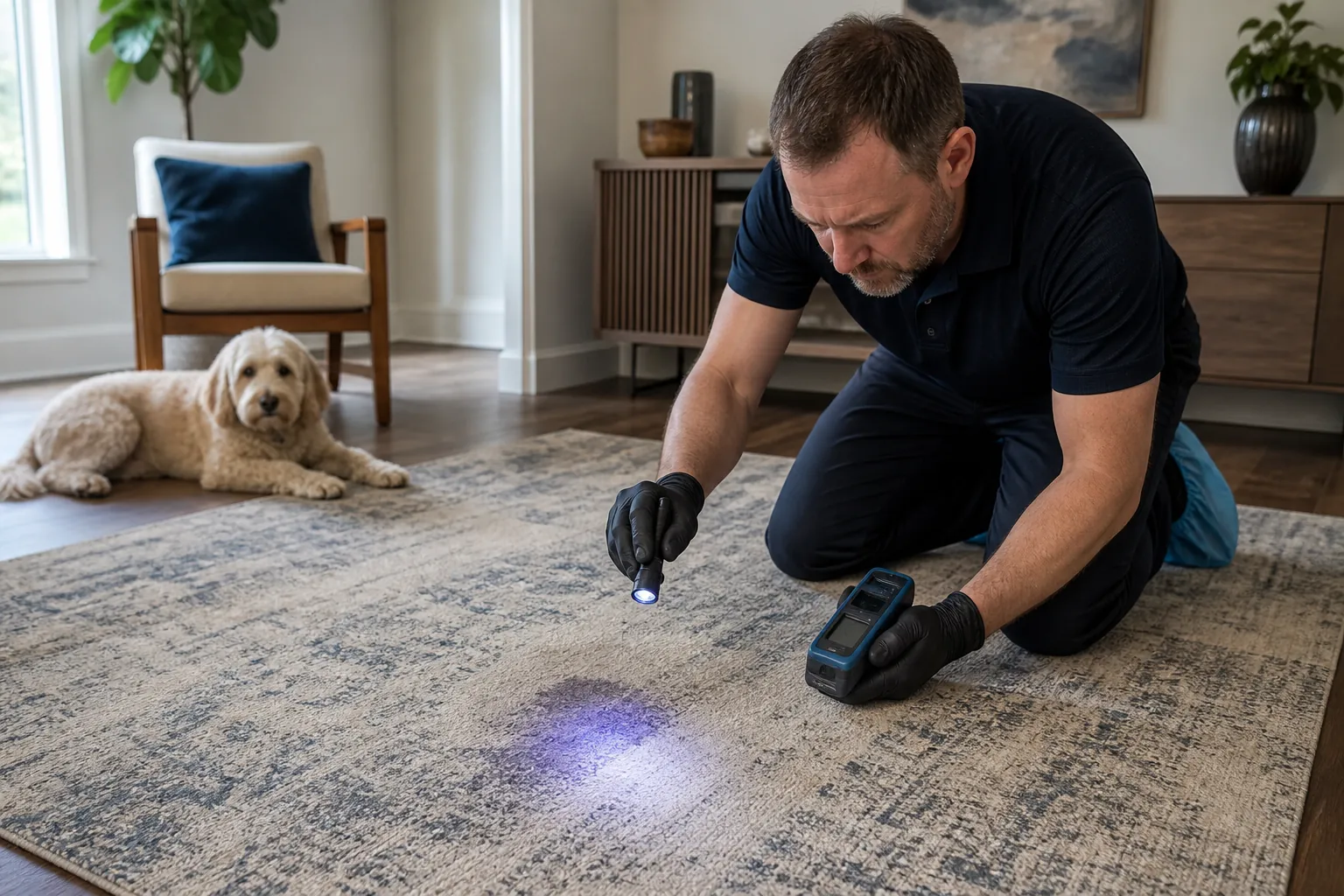
THE GARDEN SIDE
Traffic wear can resemble embedded soil
Tracked grit may be removable, while flattened pile or light damage can remain. Compare the doorway lane with a sheltered area before setting expectations.
- Map separate concerns on a full-rug image
- Disclose home remedies and rented-machine use
- Check the backing and floor at the affected point
- Leave the result conditional on inspection
FOUR CLUES, ONE DECISION
The safest route comes from combined evidence
No single label or photograph settles the treatment. Yarn behaviour, colour, assembly and existing weakness need to agree before a process is selected.
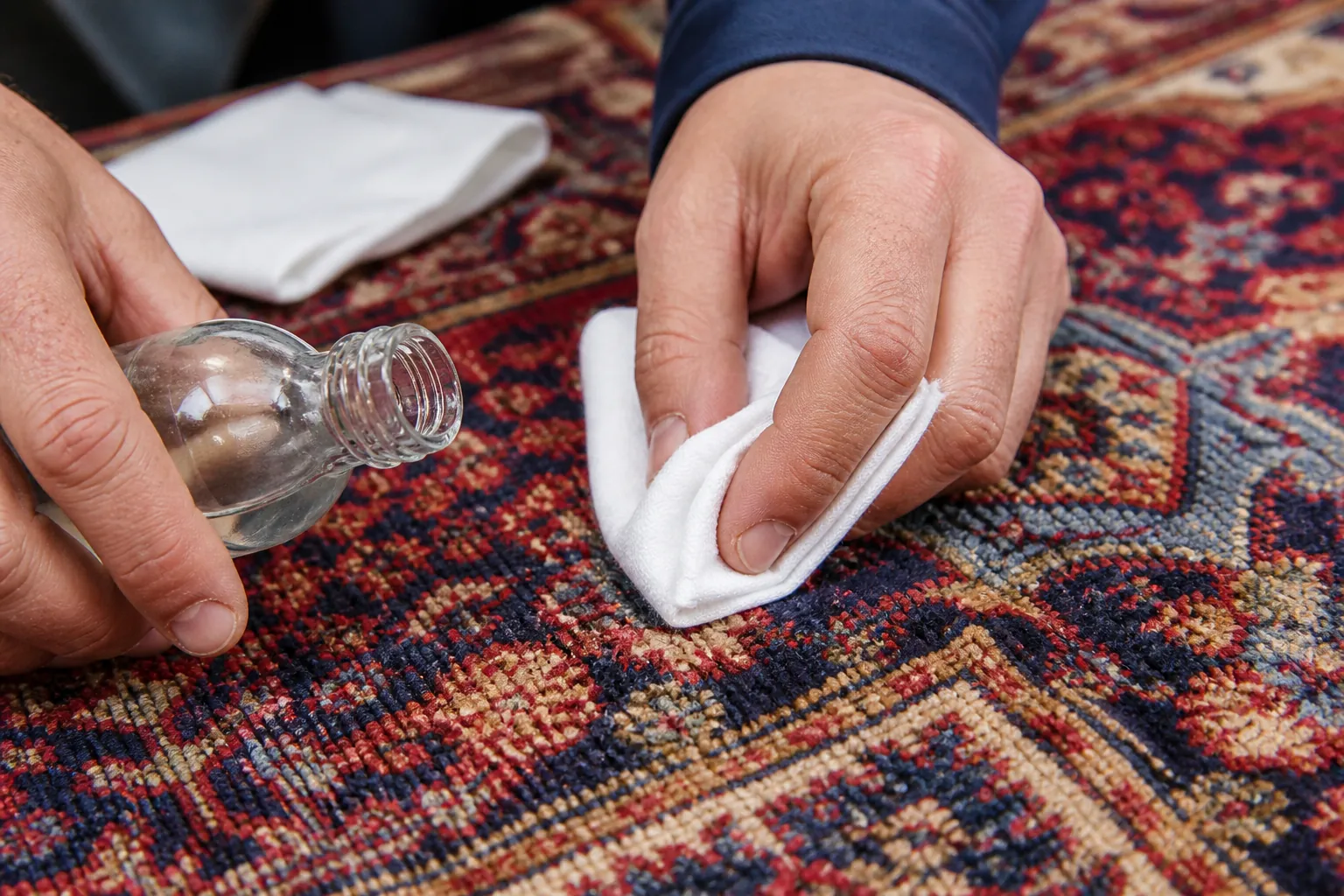
Absorbency and resilience
Material behaviour influences chemistry, agitation and moisture control.
Stable or mobile dye
Contrasting sections may require testing and a restrained working plan.
Woven, tufted or backed
The foundation affects handling, extraction and the way the rug dries.
Fringe, binding and repairs
Existing faults are recorded before movement and protected within the agreed scope.
FROM ENQUIRY TO RETURN
A sequence shaped around this particular rug
The order is deliberate, but the working method is not predetermined. Findings at one stage can narrow or change what follows.
- 01
Brief
Collect dimensions, room photographs, access notes and priorities.
- 02
Inspect
Read the face, reverse, edges, repairs and signs of earlier work.
- 03
Test
Check relevant colour and material responses before committing.
- 04
Prepare
Release suitable dry matter and protect vulnerable details.
- 05
Treat
Work within the moisture, chemistry and handling limits found.
- 06
Finish
Control pile, edges and drying conditions for the construction.
- 07
Return
Explain remaining changes and when normal room use can resume.
A BETTER FIRST MESSAGE
Send facts that can change the scope
- Your Fulham postcode and suitable appointment windows
- Length and width at the furthest points
- A room view with the entire outline visible
- Close photographs of each priority mark
- Care label, underside, fringe and repaired areas
- Known spills and products already applied
- The finish beneath the rug
- Furniture that overlaps or stands on it
- Steps, door widths and the proposed carrying route
Short answers for Fulham households
Will a photograph identify the cleaning method?
It can reveal clues, but touch, construction checks and relevant testing still decide the workable route.
Should every piece leave the property?
Not automatically. Location depends on size, construction, condition, equipment needs and safe handling.
Can dining chairs stay on the rug?
Tell us what is present first. The moving plan is agreed before arrival, not improvised in the room.
Is an old mark guaranteed to clear?
No. It may include residue, dye loss, wear or fibre damage alongside removable material.
SIZE-BAND GUIDANCE
Measurements begin the estimate; complexity completes it
Area places the rug in an initial band. The quotation can then account for build, condition, access, handling and separately requested work. These figures are guidance rather than a promise from a photo.
BUILD YOUR ENQUIRY
Choose observations, not a treatment
These prompts organise information for an assessor. They cannot diagnose fibre or prescribe a process.
FULHAM RUG CLEANING FAQ
Questions worth settling before the appointment
Which photos are most useful for a quotation?
Send the entire rug in its room, then the label, underside, borders and every area you want assessed.
Why ask about the room beneath it?
The floor and furniture affect lifting, protection, access and return, although they do not identify fibre.
Do dimensions determine the final price?
No. They establish a band; build, condition, weak details, access and extra work can alter scope.
What should I say about a food spill?
Explain what spilled, its age, exact position and anything used on it.
Can I apply another stain remover?
It is safer not to add unknown chemistry. Share any earlier product and the resulting change.
How are fringes and repairs handled?
They are photographed and checked before movement. Their stability may narrow the workable scope.
What if the care label is missing?
The enquiry can proceed. Construction clues and physical assessment become more important.
Can you remove a persistent smell?
No universal result is promised. Its source and spread through the foundation need investigation.
When can furniture return?
Advice depends on material, backing, treatment and actual drying conditions.
Does a lighter traffic lane mean dirt remains?
Not necessarily. Flattening, abrasion and colour loss can remain after removable matter is addressed.
START WITH THE EVIDENCE
