
HOLBORN · A CAREFUL START FOR EVERY RUG
Rug Cleaning in Holborn, Built Around Fibre and Colour
A hallway runner may carry years of footfall while its faded fringe tells a different story from the pile. We consider the textile as an individual object, then shape the proposed work around what its yarns, colours and foundation can tolerate.
- Photograph the runner from end to end in daylight
- Show the walking lane and worn hall-end fringe separately
- Capture the underside, label, corners and earlier mending
- Mention reception procedures, corridor distance and stone flooring

CREATE A USEFUL FIRST RECORD
Mark what you know and leave uncertain details open
This profile helps us ask better questions. It is an enquiry aid, not an automatic treatment selector.
READING THE WHOLE TEXTILE
Yarn, colour and assembly must agree with the plan
A maker’s tag can narrow the possibilities, yet it cannot reveal every repair, unstable shade or structural weakness. The runner is read from face to reverse so one reassuring clue does not outweigh a conflicting one.
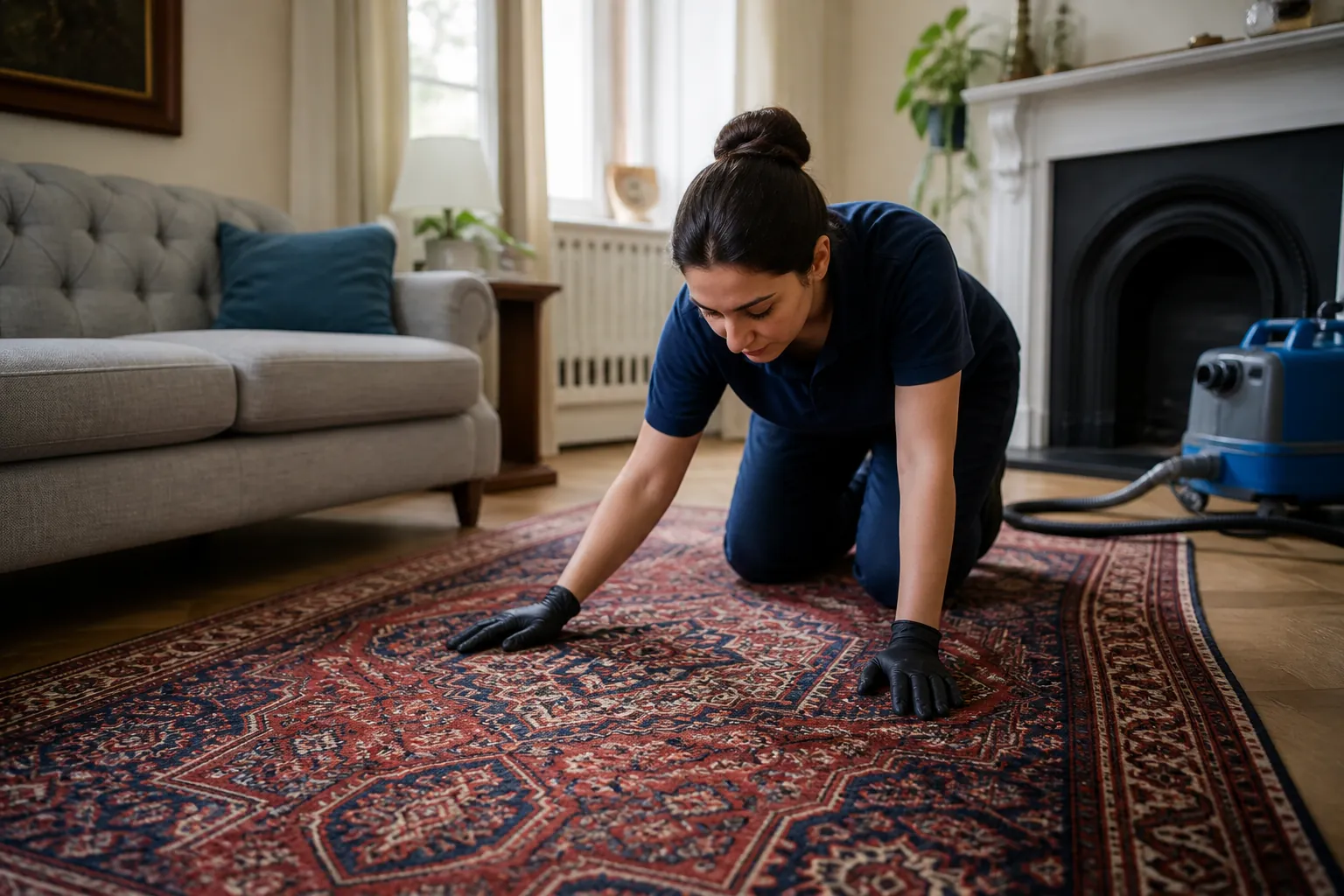
How the pile behaves
Touch, resilience and absorbency help define appropriate limits.
How shades may react
Contrasting and saturated sections receive particular attention.
What holds it together
The weave, foundation and pile attachment influence handling choices.
Fringe, backing and mends
Existing frailty is recorded before movement so expectations remain fair.
A HOLBORN ARRIVAL PLAN
Good access notes protect both rug and building
Our example is a wool runner on the stone floor of an apartment beside legal chambers. Entry through staffed reception and a lengthy corridor matters when arranging people and equipment, although those practical details never replace textile examination.
Picture the complete setting. One wide image shows doors, furniture and turning space. Detail shots then distinguish compacted heel tracks from fraying at the hall end. Photography informs the conversation but cannot prove that discolouration is reversible.
Useful advance notes include measurements, previous cleaning, recent spills and lift restrictions. With those facts available, the visit can be organised sensibly while treatment remains conditional on inspection.
Notes for this Holborn runner
Placement: Record its position through the hall before shifting nearby objects.
Priority: Mark the darkest footfall section and photograph fringe loss independently.
Dimensions: Measure maximum width and length while keeping tassels in the visual record.
Access: Confirm who admits the team and whether the passage includes tight turns.
Surface below: Note loose tiles, delicate sealant or requested floor protection.
Identity: Supply label wording without treating it as definitive fibre analysis.
Palette: Point out deep borders or pale motifs that deserve closer checking.
Weakness: Photograph split binding, thin pile, detached fringe and former stitching.
Past work: List home remedies, hired machines and professional visits accurately.
Spills: Describe what happened, where it landed and the immediate response.
Smell: Indicate the exact zone rather than applying fragrance before inspection.
Wear: Expect abrasion and pile direction to remain when physically altered.
Furniture: Agree which pieces the household will clear from the route.
Drying conditions: Share limits on windows, heating or daytime access.
Estimate: Area provides the first band; complexity and extras complete the quote.
Handover: Await specific advice before replacing objects on the stone.

FROM ARRIVAL TO HANDOVER
Seven decisions keep the work accountable
No universal timetable suits a dense wool runner. Moisture retention, construction, room airflow and the final scope affect readiness, while localised odour is investigated as its own concern.
- 01
Survey
Log dimensions, wear, staining and previous repairs
- 02
Test
Examine fibre clues and sensitive colours where appropriate
- 03
Prepare
Lift particles without confusing abrasion with dirt
- 04
Treat
Work within boundaries established by the survey
- 05
Finish
Attend to pile alignment, edges and controlled moisture removal
- 06
Review
Revisit the walking lane, border and agreed priority points
- 07
Hand over
Explain ventilation and furniture return for this room
HOLBORN PRICE INDICATIONS
Measured area provides the first figure
These bands support early budgeting. A firm scope may also reflect weave, existing condition, building access and any separately requested task.
MAKE THE ENQUIRY SPECIFIC
Nine details sharpen a preliminary quotation
- Your Holborn postcode and appointment window
- The runner’s longest and widest measurements
- A bright photograph containing every edge
- Separate views of footpath and damaged fringe
- Any readable label plus accessible reverse
- Close images of corners, binding and repairs
- What you know about yarn and manufacture
- Products or processes previously used
- Reception, corridor, parking and lift arrangements
Short answers before you book
Will a photograph determine the process?
No. Images expose clues, but testing and hands-on examination set the workable method.
Is every darker lane removable soil?
No. Compressed pile, abrasion, residue and colour loss can resemble accumulated dirt.
May furniture return immediately?
Follow the aftercare at handover; timing depends on the runner’s actual condition.
Does the standard price include odour work?
Not automatically. Cause, extent and requested outcome must first be discussed.
QUESTIONS FROM HOLBORN HOUSEHOLDS
Useful facts before an assessor sees the rug
Which images make my enquiry useful?
Send a clear view of the complete runner, followed by underside, label, worn end, edges and the busiest pile.
Why tell you the floor is stone?
It helps plan lifting, protection and reinstatement, but does not dictate treatment of the movable textile.
Can you promise heel marks will vanish?
No. They could combine soiling with permanent flattening, lost fibre or altered colour.
What access information should I provide?
Give reception hours, entry rules, lift limitations, corridor length and awkward corners.
Is the sewn-in label enough?
Labels help, but may omit dyes, later repairs, backing changes and current stability.
Should I treat a spot while waiting?
Avoid experimenting. Report the substance and every product already applied.
What if tassels are already breaking?
The affected end receives a narrower handling margin; severe weakness may alter scope.
How should I report a smell?
Identify its boundaries and mention pets, damp or spills; surface odour does not reveal depth.
When will the rug be dry?
Density, foundation, chosen work and indoor conditions prevent a responsible advance promise.
How is the final amount calculated?
Size starts the calculation. Construction, condition, access and approved extras may modify it, subject to the visit minimum.
START WITH WHAT YOU CAN OBSERVE
