
LIMEHOUSE · FROM QUAYSIDE DOOR TO WOVEN CORE
Rug Cleaning Planned for Limehouse Living
A rug beside an open-plan dining area collects a particular story: chair movement, towpath grit, the occasional meal spill and light from broad apartment windows. We begin with that story and the actual weave, then account for the journey through reception, lift and corridor.
- Measure the full rectangle and show how dining chairs overlap its edges
- Circle the old sauce mark instead of describing the whole field as stained
- Photograph the woven face, underside and each finished end in daylight
- Include concierge hours, loading restrictions and usable lift depth
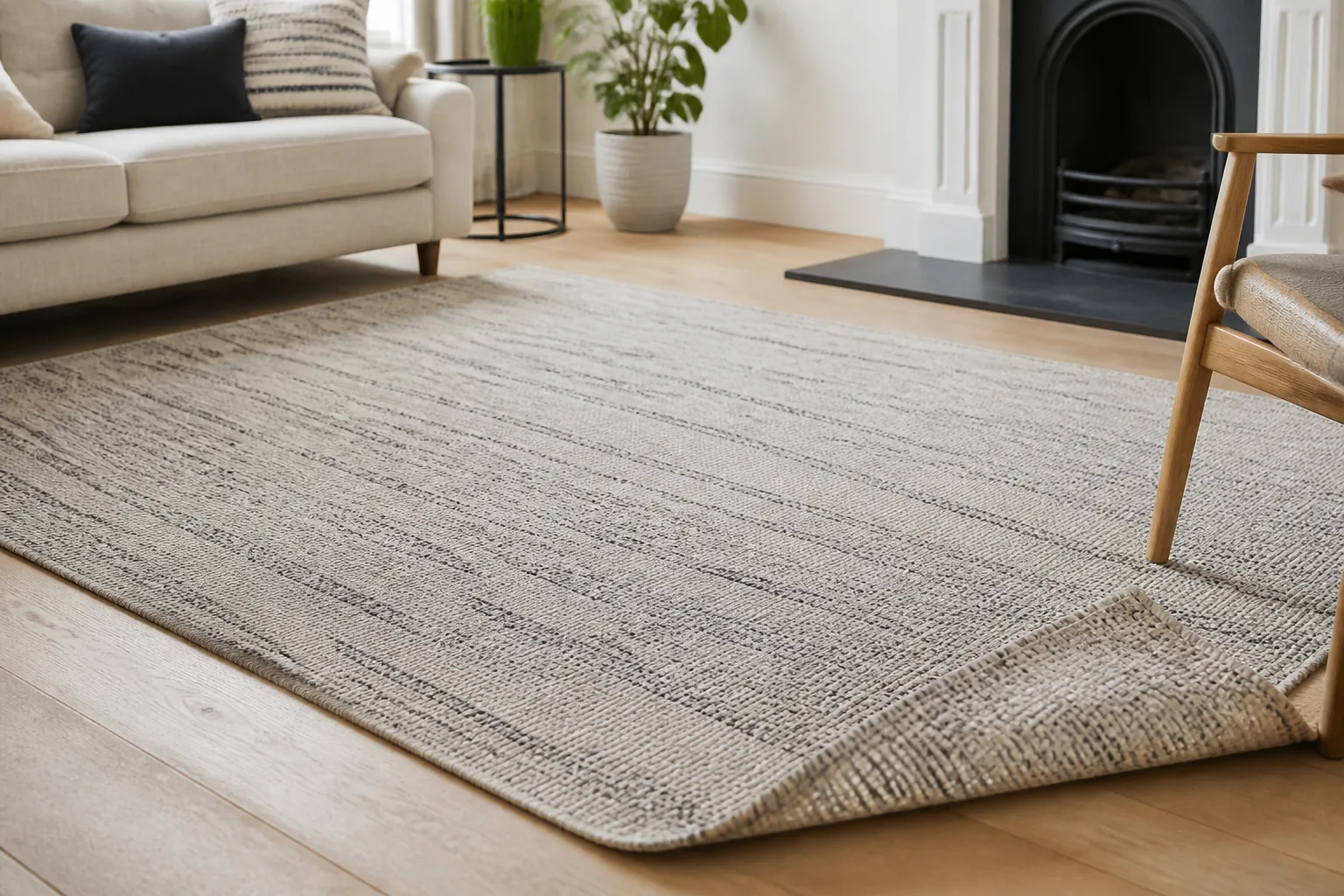
MAKE A FIELD RECORD
Build the enquiry from facts you can see
Use these choices as labels for your photographs. They help us ask better questions; they do not identify fibre or approve a process from a screen.
THE LIMEHOUSE CARRYING ROUTE
Plan the movement before rolling a large rug
Waterside developments often provide excellent lifts but controlled loading bays; older terraces may offer the reverse. Neither can be guessed from the postcode. We ask where a vehicle may pause, who releases the entrance, which corners are tight and where the rolled textile can rest without blocking a shared passage.
Example brief. A 2.4 × 1.7 metre wool rug runs beneath a dining table near balcony doors. The centre looks grey along the walking line and a set sauce mark sits by one chair. The client supplies a wide photograph before moving furniture, followed by a ruler view of the mark and a clear shot of the reverse.
Room protection. Engineered boards are treated as a separate surface. The enquiry notes whether an underlay is present, whether it has adhered, and where the rug could remain flat without damp contact during the agreed handover.
A Limehouse evidence ledger
Dimensions. Give length and width in centimetres, then add fringe separately so the measured treatment area is unambiguous.
Orientation. Mark the window side and busiest doorway on an overview; this helps interpret uneven fading and tracked soil.
Spill. State what the sauce contained if known, when it happened and which blotting or household product followed.
Chairs. Show pressure lines, worn corners and any section permanently concealed beneath furniture feet.
Underside. Photograph the foundation, maker’s label, discoloration and contact with any anti-slip layer.
Ends. Treat fringe loss, binding separation and curling as condition notes, not stains awaiting removal.
Colour. Include a neutral daylight view rather than relying on a warm lamp or edited image.
Storage. Mention folding, damp storage or a recent move because creasing and odour may have different origins.
Access. Record reception procedure and lift limits without sending private entry credentials in an open message.
Pets. Identify repeat locations individually; a general room smell gives too little information about depth.
Floor. Check the engineered timber once the rug can be lifted safely and report marks separately.
Products. Name sprays, powders and rented-machine solutions even when they appeared to have no effect.
Priority. Decide whether the aim is overall soil reduction, food-mark attention, odour assessment or presentation.
Limit. Sun change, abrasion and missing fibre cannot be promised away as removable deposits.
Timing. Note a gathering or handover, but leave margin for inspection and item-specific drying.
Quotation. The scope joins area, construction, condition, handling route and optional work agreed in writing.
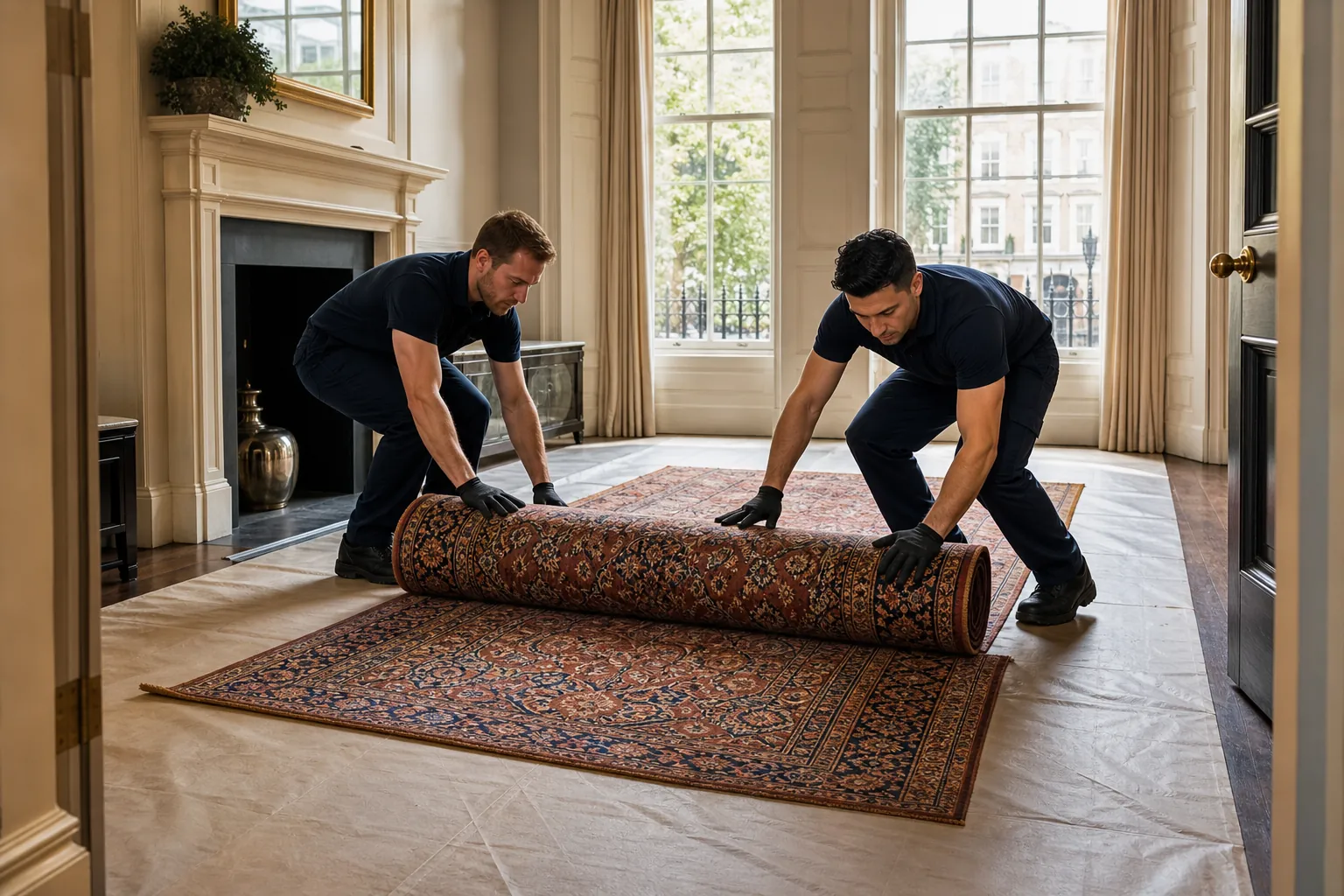
DINING MARK OR MATERIAL CHANGE?
Compare the sauce spot with an unaffected corner
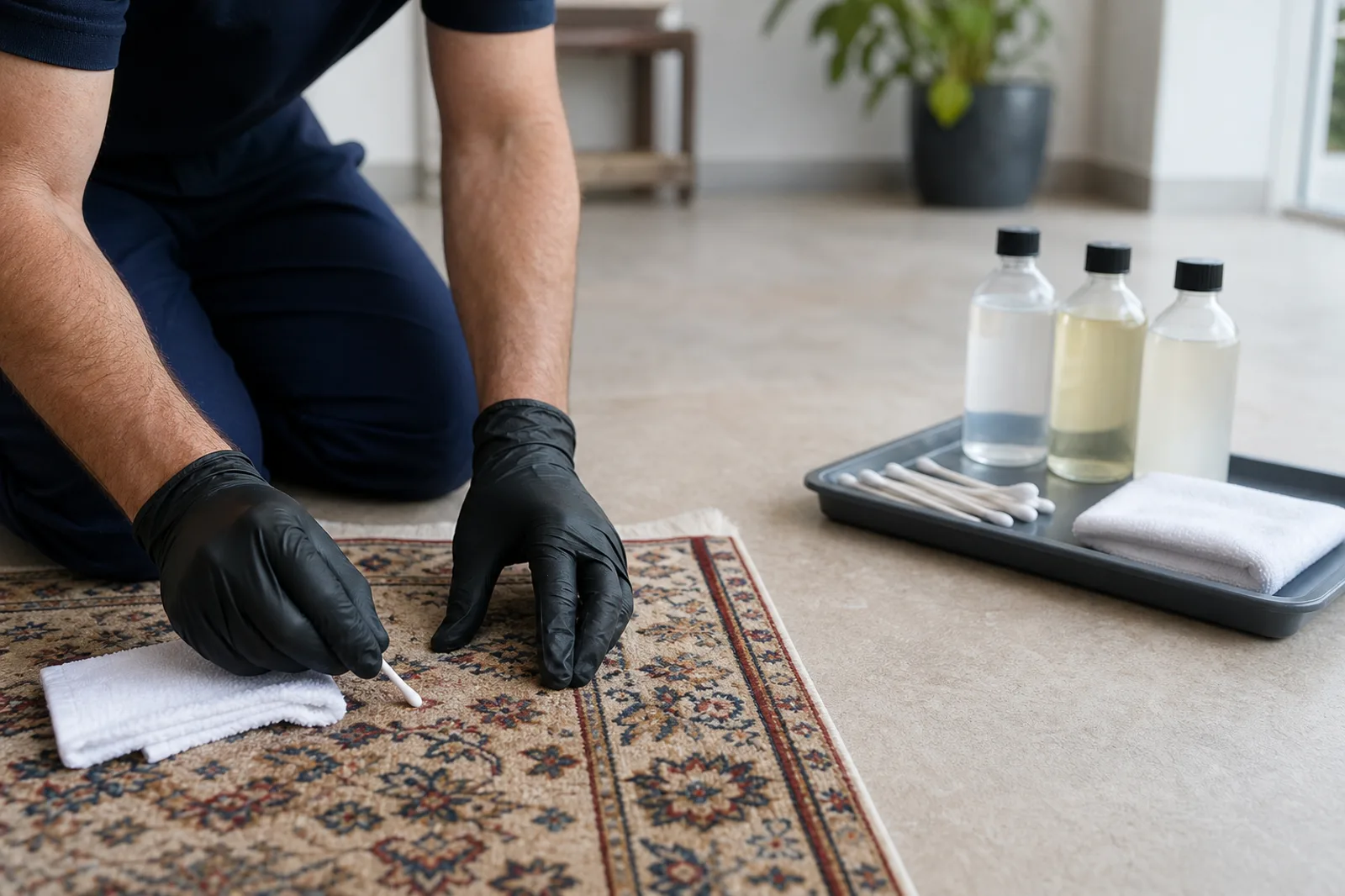
A darker patch may contain food residue, but repeated rubbing can also distort pile and remove colour. Photograph its edge, centre and surrounding weave from one angle. That comparison is more useful than increasing saturation or placing flash directly over it.
WHEN AN ODOUR TRAVELS
Trace layers rather than masking the room
Note whether the smell changes after balcony doors close, during humid weather or when the rug is lifted. The source could sit in pile, foundation, underlay or floor, and each layer needs its own evidence.
- Mark the strongest point on a simple photograph
- Check the corresponding reverse without soaking it
- Describe frequency, age and any repeated incident
- List fragrance sprays and deodorisers already applied
READ THE WEAVE IN FOUR DIRECTIONS
The visible face is only the first layer
A useful assessment connects what the hand feels above with what the camera records below.
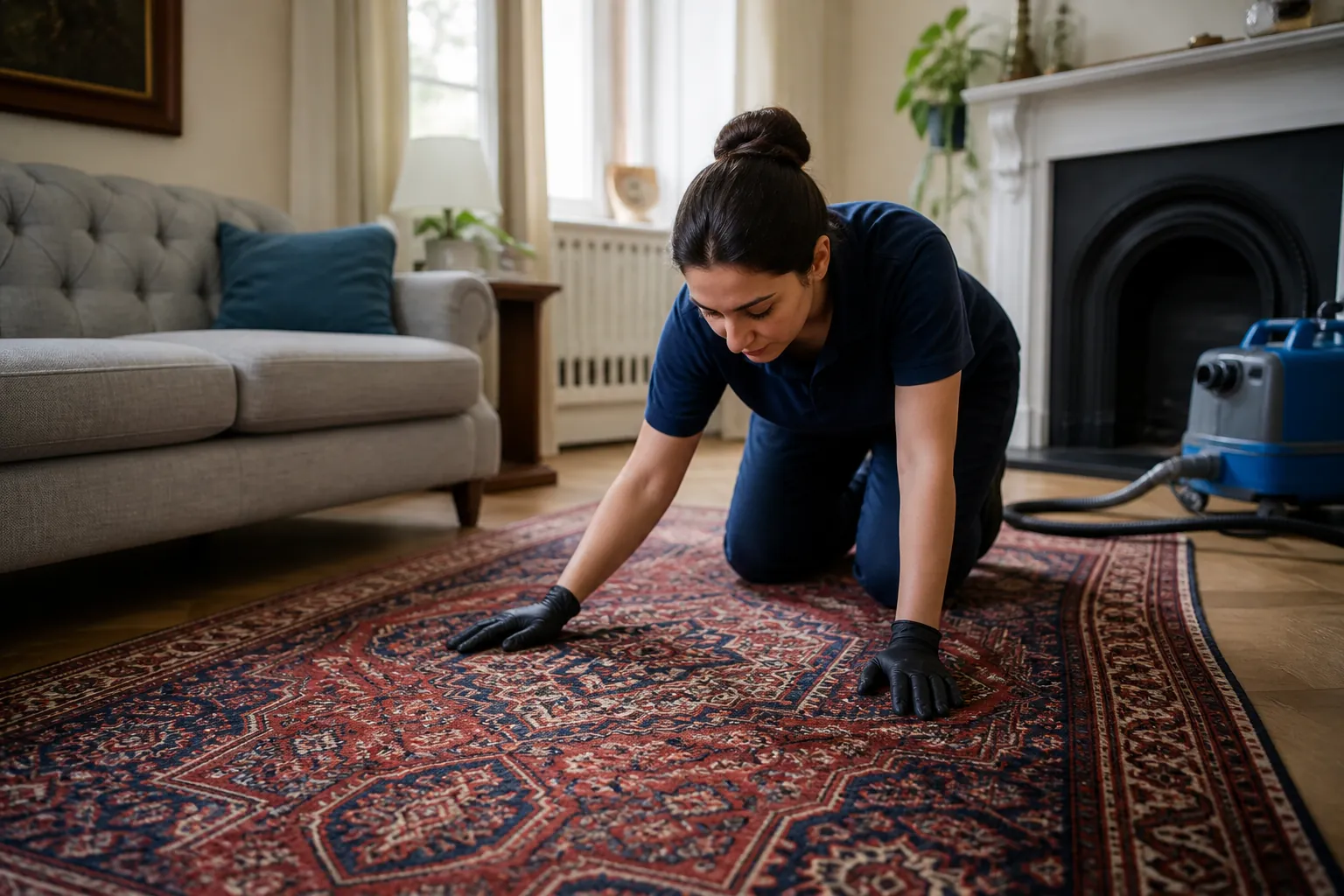
Feel, sheen and resilience
Fibre clues guide relevant checks; appearance alone is not proof.
Borders versus open field
Contrasting motifs may behave differently and deserve individual checks.
Foundation and added backing
Construction determines weight, moisture movement and handling.
Fringe, selvedge and repair
Loose or previously stitched areas establish practical boundaries.
A QUAYSIDE-READY WORKFLOW
Seven decisions from reception to handover
The sequence keeps building logistics and textile judgement connected without letting either replace the other.
- 01
Receive
Confirm access contact, parking window and carrying route
- 02
Survey
Read face, reverse, finishes, repairs and room placement
- 03
Test
Choose checks for fibre clues, dyes and previous residue
- 04
Release
Remove accessible dry grit before local concerns
- 05
Control
Match moisture and action to the observed build
- 06
Review
Compare dining mark, traffic lane, edges and reverse
- 07
Hand over
Set placement advice for the actual apartment
MEASURED GUIDE FOR LIMEHOUSE
Use size to begin the conversation
Area supplies a consistent starting reference. Fibre response, food residue, fragile finishes, furniture preparation and restricted arrival arrangements can alter the agreed work.
PACK THE REQUEST LIKE A USEFUL DOSSIER
Nine details remove avoidable guesswork
Put overview, measurements and route in one message. Follow with close-ups at original resolution.
- Property postcode and appointment contact
- Centimetre dimensions excluding loose fringe
- One frame containing the entire rug
- Daylight images of walking lane and sauce mark
- Front-and-back views of the concern
- Readable label or confirmation it is absent
- Any weakened edge, curl or former repair
- Exact DIY products and approximate dates
- Reception, lift and loading-bay arrangements
Before choosing a date
Must the dining table be removed first?
Not automatically. Send the layout so smaller clearance and heavier furniture can be agreed.
Can an old food mark disappear completely?
Its response depends on residue, fibre, dye change and earlier action; inspection supports a realistic aim.
Will engineered flooring be cleaned too?
No, not by implication. It is the supporting surface and any separate service needs its own agreement.
Can concierge restrictions affect the quote?
They may alter arrival and handling time, so accurate building information belongs in the request.
LIMEHOUSE QUESTIONS, ANSWERED PLAINLY
What waterside households often need to clarify
How do I measure an irregular-shaped rug?
Give maximum length and width, then show cut-outs or curved ends instead of estimating a smaller rectangle.
Should I lift the rug for a reverse photograph?
Only when weight and furniture make that safe. A partial corner is better than risking strain or damage.
Why photograph the window side?
Strong daylight may alter colour gradually. Orientation helps separate that change from tracked soil.
What if the fibre label has been removed?
Say it is missing. Fibre remains unconfirmed until relevant inspection; a visual guess is not a fact.
Is a curled edge part of cleaning?
It is important evidence, but its cause may involve construction or distortion rather than contamination.
May I use bicarbonate powder before the visit?
Avoid adding material. Powder can remain deep in the rug and complicate assessment.
How soon can dining chairs go back?
Follow the handover instruction because timing depends on the textile, work and ventilation.
Do lift limits matter for a flexible textile?
Yes. A rolled rug has length, weight and turning needs that should be checked in advance.
Can traffic dulling be permanent?
Some is loose soil, while abrasion or pile change can remain. Side-light images help show the difference.
What does the £68 figure mean?
It is the current minimum visit guide, not a promise that every rug costs that amount.
START AT THE APARTMENT DOOR
Send a Limehouse brief that travels from access to fibre
One measured overview, honest close-ups and precise building notes give the quotation a sound foundation.
