
WAPPING · OLD BOARDS, RIVER AIR, INDIVIDUAL WEAVES
Rug Cleaning for Wapping’s Converted Homes
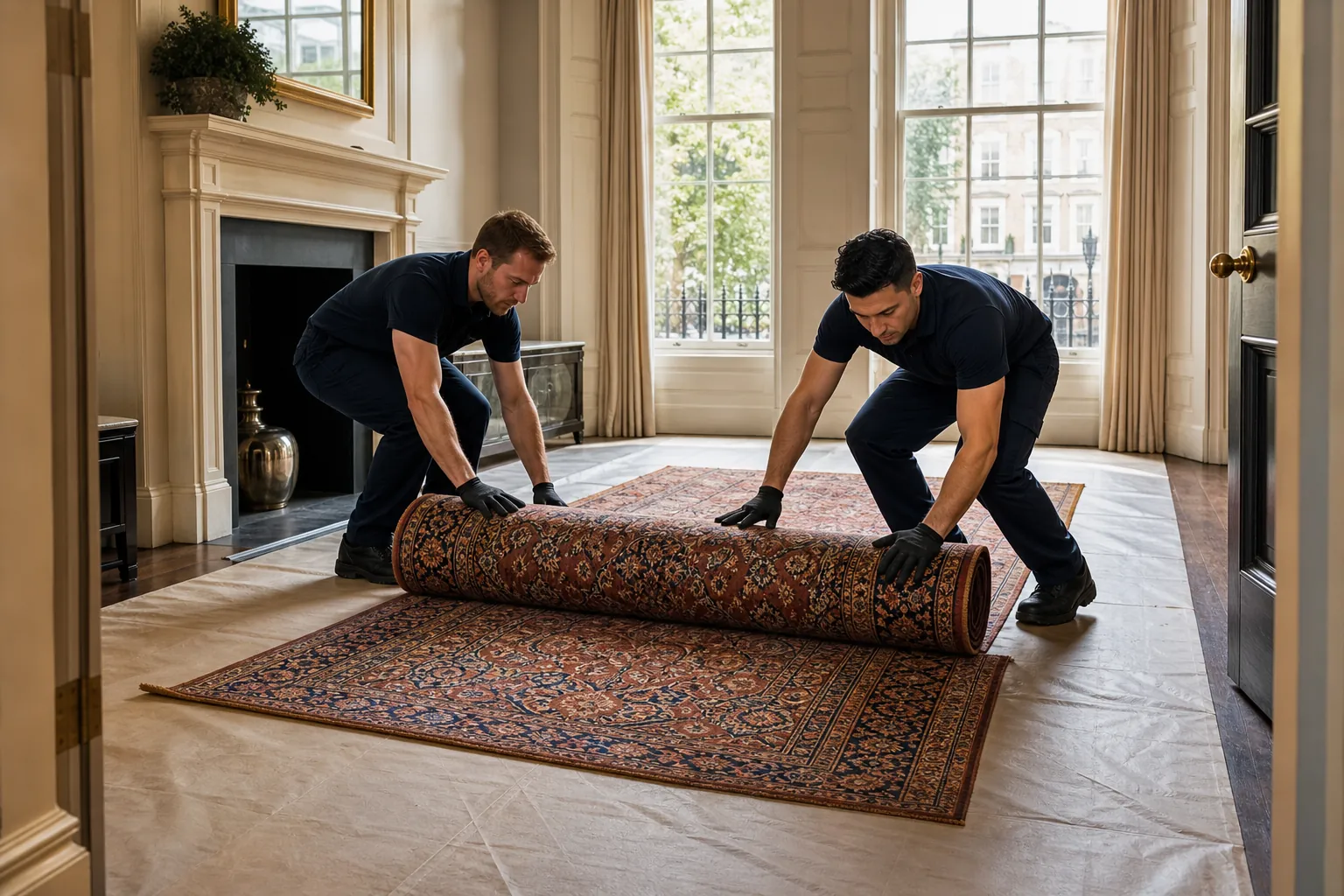
Warehouse proportions can hide a surprisingly awkward carrying route. We build the enquiry from the weave outward: dust trapped through a flat construction, rippling near an edge, timber below and the gates or narrow lift between the rug and the street.
- Lay a tape beside the full textile and include the long diagonal if access is tight
- Show rippled edges at floor level instead of flattening them for the photograph
- Describe draughts, condensation or earlier damp storage without assuming a cause
- Trace the route across cobbles, through controlled gates and into the lift
THE FIRST MESSAGE
Capture the weave, the floor and the carrying path
Useful evidence arrives as a small sequence rather than one flattering room shot.
- Wapping address and floor level
- Length, width and rolled diameter if known
- Overhead image showing the true outline
- Low view across rippled or lifting edges
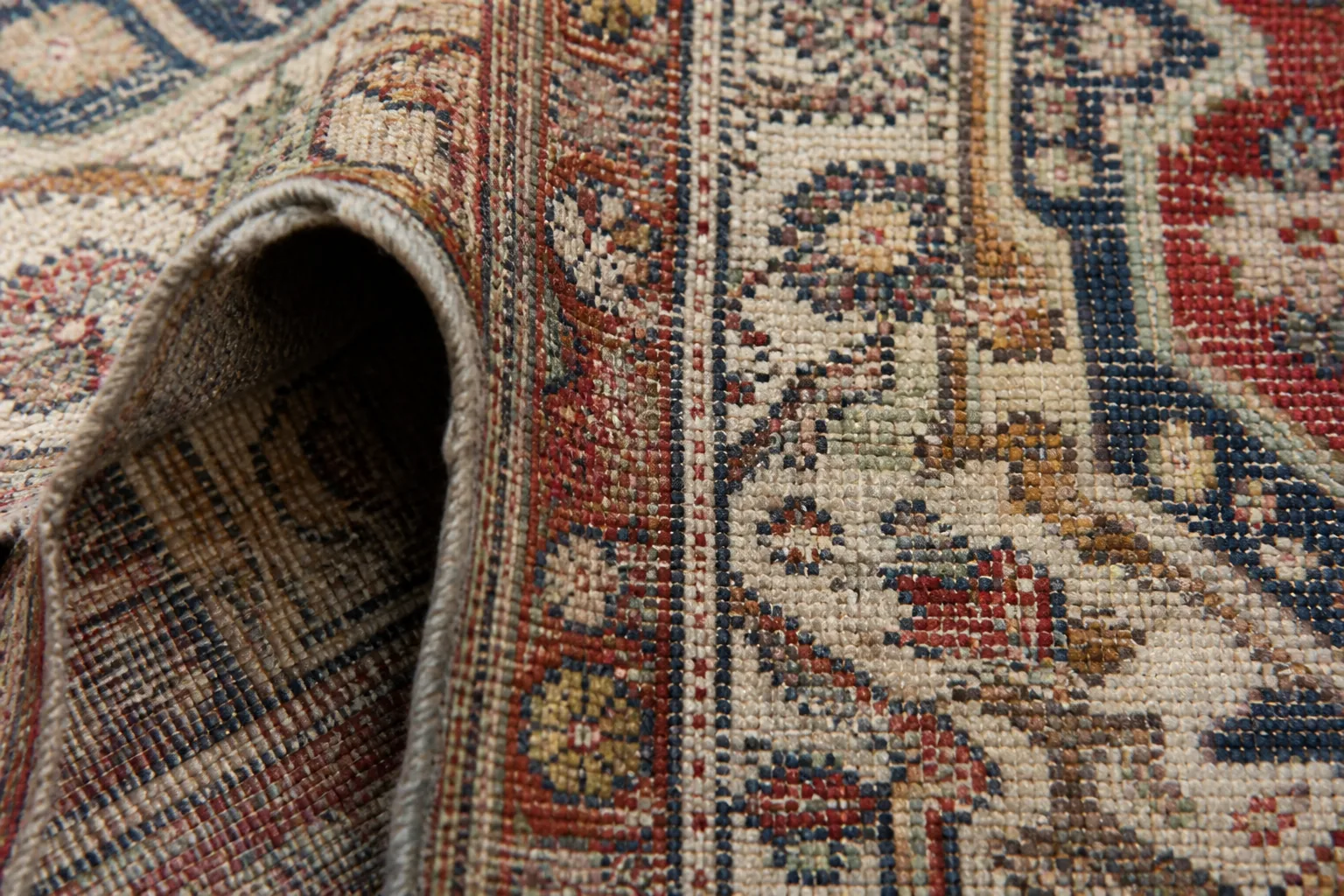
- Face and reverse detail of the woven structure
- Label wording or an honest “not known”
- Dust, mark and odour notes kept separate
- Information about old timber, underlay or grip mat
- Gate, cobble, stair and lift dimensions
Before moving anything
Should a curled corner be taped down?
No new adhesive should be introduced for the enquiry. Photograph the corner naturally and keep any old tape for the history.
Does river air mean the rug is damp?
Not necessarily. Room humidity, an external wall and previous storage are clues, not proof of moisture within the textile.
Can it be shaken over the balcony?
That can stress edges and spread particles. Leave dry-soil handling to the agreed plan.
Why measure the rolled bundle?
A long roll that fits the room may not turn through a gated lobby or compact lift.
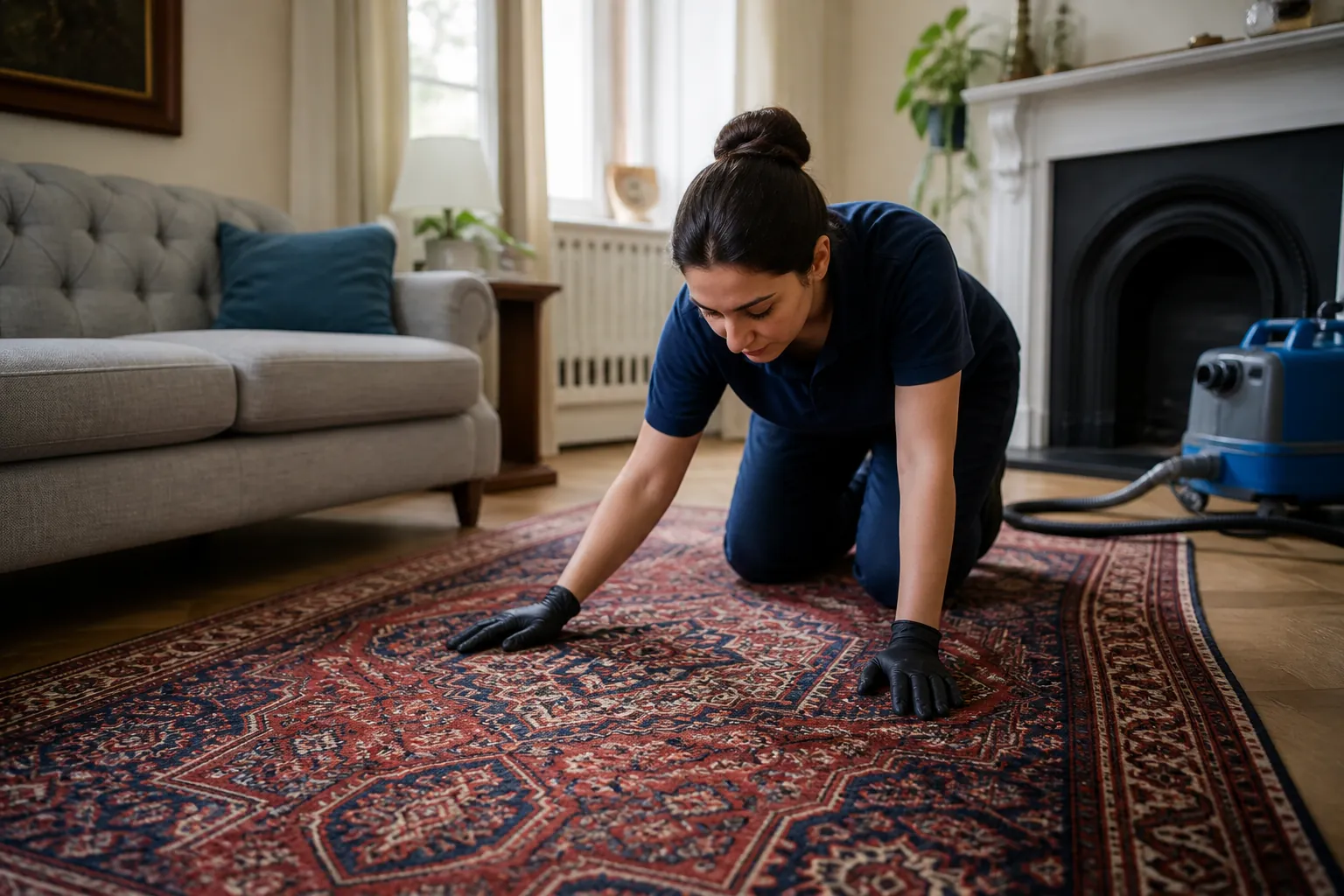
READ A FLAT WEAVE IN LAYERS
The absence of pile does not mean the absence of risk
Face yarns, structural warps, border joins and an optional backing each respond differently. Edge distortion may be mechanical even when surface dust is removable.
What fibres cross the face?
Absorbency and abrasion response begin here.
How is tension distributed?
Loose intersections can limit brushing and movement.
Is the perimeter still square?
Rippling, pulled corners and weak joins are mapped.
What has touched the boards?
Residue, pads and earlier repairs belong in the record.
CITY GRIT
Fine particles settle deeper than a quick vacuum reveals
Open-plan rooms collect material from entrances, exposed brick and busy walking lines. A photograph cannot quantify embedded grit, so we ask where shoes enter, where the textile flexes and which sections feel noticeably dull.
RIVERSIDE CONDITIONS
Map the room before naming an odour
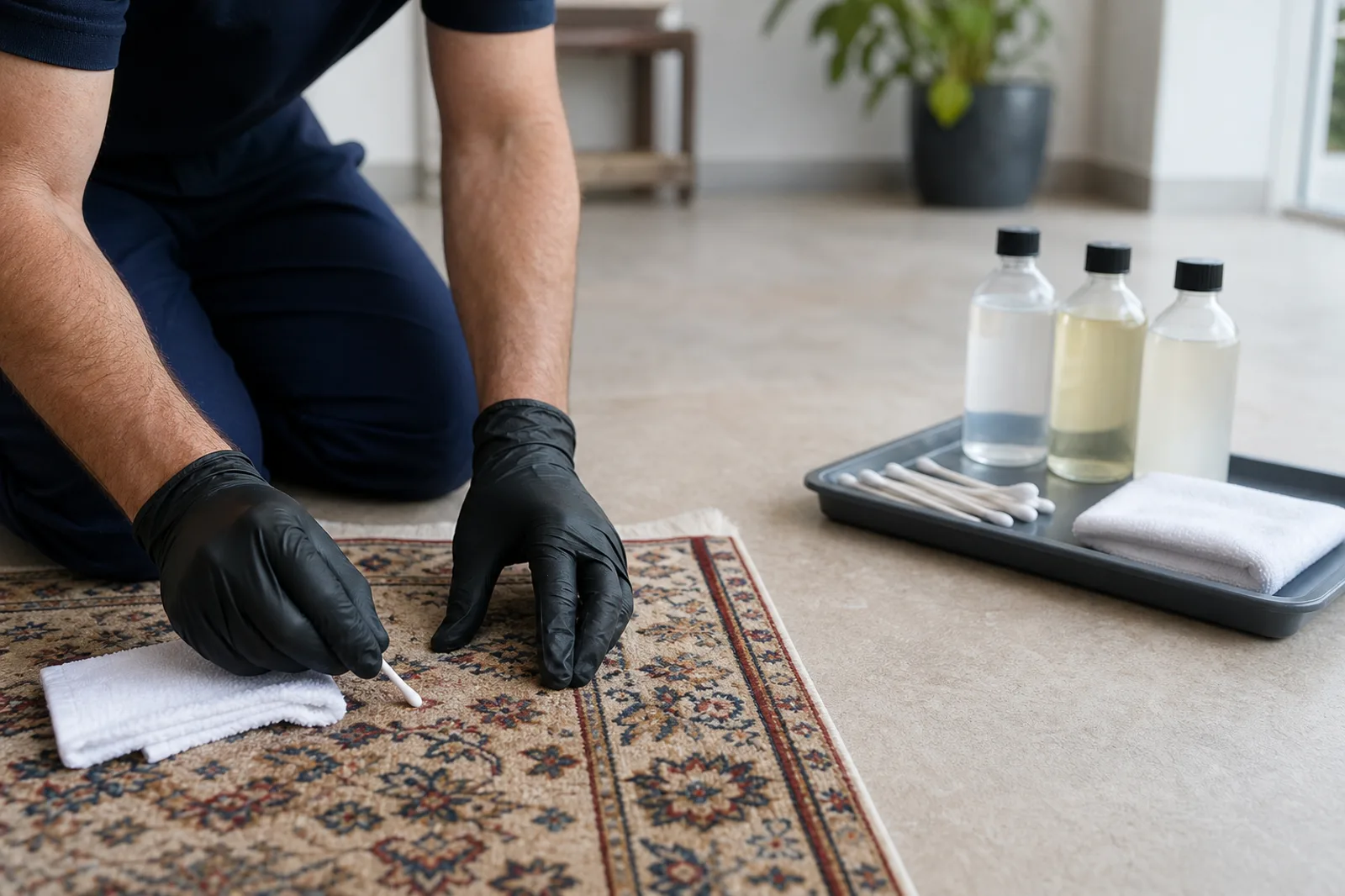
A closed window, external brick, timber void or past spill can each affect perception. Note when the smell appears and whether the reverse differs from the face.
- Compare the wall side with the room side
- Photograph any pad after lifting is agreed
- Record storage and leak history
- Keep ventilation observations factual
BUILD A WAPPING FIELD NOTE
Choose the clues present in this converted room
The tool records vocabulary for review. It cannot identify a fibre or decide whether distortion can be corrected.
THE RUG WITHIN THE CONVERSION
Historic fabric changes logistics, not textile science
Old boards can be uneven; brick walls can make room conditions vary; former loading entrances may now be controlled residential gates. Each fact matters, but none replaces material and colour checks.
A Wapping example. A striped flat weave crosses two floorboard runs beside a cast-iron column. One long edge waves, while the centre looks grey near the hall. Images show the shape without weights and distinguish distortion from the walking line.
A route worth measuring. The apartment has generous ceiling height but a small modern lift behind two fob doors. The diagonal through each turn matters more than the apparent openness of the main room.
Wapping weave ledger
Outline. Photograph the unweighted perimeter so waves and skew remain visible.
Crossing yarns. Close images show where colours and fibres interlace.
Traffic. Trace the path from entrance to seating rather than calling all greying a stain.
Reverse. Note dust fall-through, old tape and separate anti-slip material.
Boards. Record gaps, finish and any historic darkening independently.
Wall zone. State distance from brick and whether the textile was stored there.
Odour timing. Explain whether it changes after rain, heating or closed windows.
Products. Name powders, foams or hired machines used previously.
Fringes. Show pulled groups and missing yarn rather than hiding them.
Doors. Measure the tightest leaf and each ninety-degree turn.
Lift. Give internal depth, door width and booking requirement.
Cobbles. Identify the stable unloading point and distance to reception.
Preparation. Remove small objects but agree heavy furniture in advance.
Outcome. Soil reduction, odour change and shape distortion are separate aims.
Drying. Available airflow is assessed for the chosen route.
Return. A flat, safe placement follows only when appropriate.
A WEAVE-LED SEQUENCE
Eight moments from outline to placement
Shape and structure remain visible throughout, so cleaning is not confused with repair or reshaping.
- 01
Survey
Record perimeter, room and approach
- 02
Trace
Follow warps, wefts, joins and borders
- 03
Screen
Check colours and vulnerable history
- 04
Release
Address compatible dry particles
- 05
Attend
Work the agreed priorities selectively
- 06
Balance
Control moisture across the structure
- 07
Observe
Review edges without promising correction
- 08
Place
Return only with suitable floor guidance
SIZE BANDS FOR THE ENQUIRY
Measured area is one input among several
Flat weave does not automatically mean simple. Loose borders, residue, access turns and the agreed objective can change the final quotation.
WAPPING QUESTIONS
Answers grounded in converted-property details
Is an edge ripple simply dirt?
No. It may involve weave tension, storage, floor unevenness or physical deformation, so it is documented separately.
What does fine grey dust indicate?
Only that particles are visible. Their depth and relationship to abrasion need inspection.
Why photograph old timber boards?
They establish the support condition and any pad or residue without making the floor part of the rug scope.
Can a musty smell be guaranteed away?
No. Source, depth, duration and room conditions first need to be understood.
Should fringe be combed before pictures?
Leave it natural so pulls, losses and attachment points remain readable.
Are warehouse apartments easy to access?
Large rooms may still sit behind tight lifts, gated courts, steps and restricted stopping.
Will treatment flatten a wavy border?
Cleaning addresses compatible soil; structural distortion is not promised as a cleaning outcome.
How is readiness for use decided?
By the actual material, structure, selected work and observed room conditions.
May another cleaning task join the visit?
Yes only when eligible, described and included in the confirmed combined scope.
Is £68 the rug price?
It is a minimum visit guide. The rug quotation still reflects area and complexity.
START WITH THE UNWEIGHTED OUTLINE
Show us how the rug really sits in your Wapping room
Add weave details, floor context and the complete route to make the quotation useful.
