
SHOREDITCH · DESIGN OBJECT, WORKING ROOM
A Studio-Specific Rug Clean in Shoreditch
A low-profile rug can define a studio without looking delicate, yet its printed colour, bonded underside or finished edge may impose exact limits. Add pavement dust from an often-open window and residue from a spot spray, and the correct starting point is a provenance-and-condition record—not a standard treatment claim.
- Send the maker, collection and care-label wording where available
- Show the powdery traffic film separately from the sprayed patch
- Record concrete contact, anti-slip material and any transferred backing
- Map red-route stopping, keypad entry and the exposed stair flight

PROVENANCE BEFORE PRESCRIPTION
Start with the maker’s clues and the room’s reality
Converted workshops, warehouse floors and compact new-builds can all sit within a few Shoreditch streets. Their rugs may be editioned design pieces, mass-produced graphics or inherited flatweaves. A useful record names what is known without upgrading a guess into a material claim.
Studio scenario. A rectangular rug separates desk and lounge zones on polished concrete. Fine grey dust follows the window-facing half; a darker halo surrounds a patch treated with an aerosol product. The owner photographs both under neutral daylight and includes the product can in a separate frame.
Why provenance helps. A maker’s code, fibre percentage, backing symbol or cleaning restriction can direct the inspection. When none survives, we record “unlabelled” and work from appropriate tests rather than inventing certainty.
The Shoreditch object record
Identity. Note brand, range, purchase year and stated composition, quoting label language rather than paraphrasing it.
Edition. If the piece has a limited number, signature or certificate, photograph those details without assuming commercial value.
Plan. Supply an overhead room shot so desk wheels, sofa feet and the main door path can be related to visible change.
Dust. Compare the window edge with a protected zone; urban sediment can settle differently from tracked grit.
Spray. Name the product, active claim and application date, then show the halo at normal exposure.
Touch. Report stiffness, tackiness or a crunchy feel around the DIY-treated patch, but do not wet it again for the photograph.
Backing. Look for foam, latex, fabric or adhesive layers and show any fragments left on polished concrete.
Print. Distinguish surface-applied graphics from coloured yarn where that is evident; leave ambiguous construction unclassified.
Edge. Photograph every corner because low-pile rugs can hide separation along a narrow finished border.
Wear. Desk-chair abrasion and permanent flattening are physical changes, even when loose soil is also present.
Scale. Measure the object itself, not just the exposed area between furniture pieces.
Weight. Mention an unusually rigid or heavy backing since it affects rolling and staircase manoeuvres.
Entry. Provide a meeting procedure for coded doors; never place a live security code in publicly visible notes.
Stopping. State the nearest lawful loading option rather than assuming a red route can be used briefly.
Expectation. Separate dust removal, residue improvement and permanent colour or texture change in the desired outcome.
Decision. Acceptance, process and final price follow the assembled evidence and relevant checks.
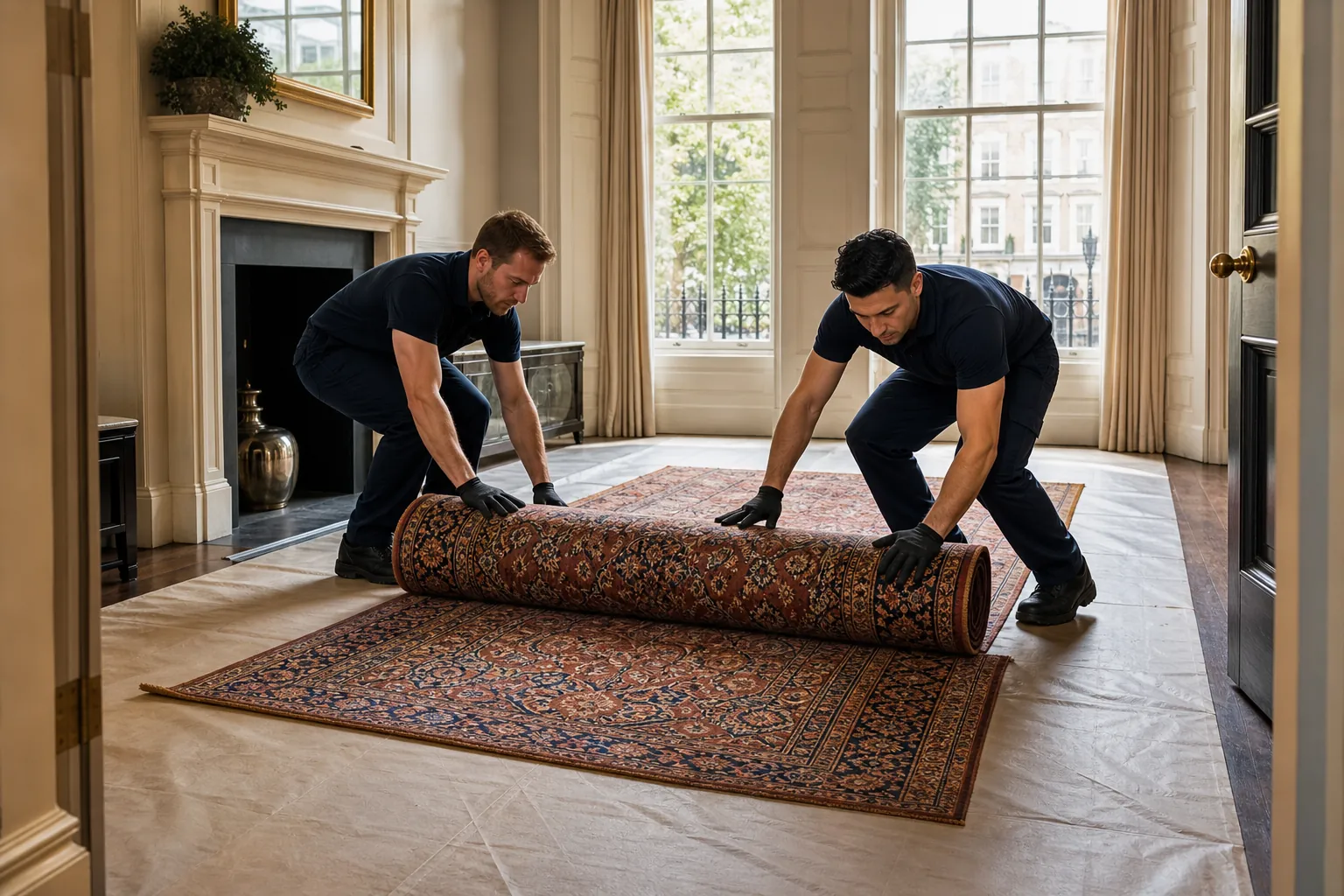
THE DESIGNER-RUG CHECK
Four specifications can alter the safe route
Visual simplicity does not mean structural simplicity. Surface, pigment, laminate and finish each deserve a separate reading.
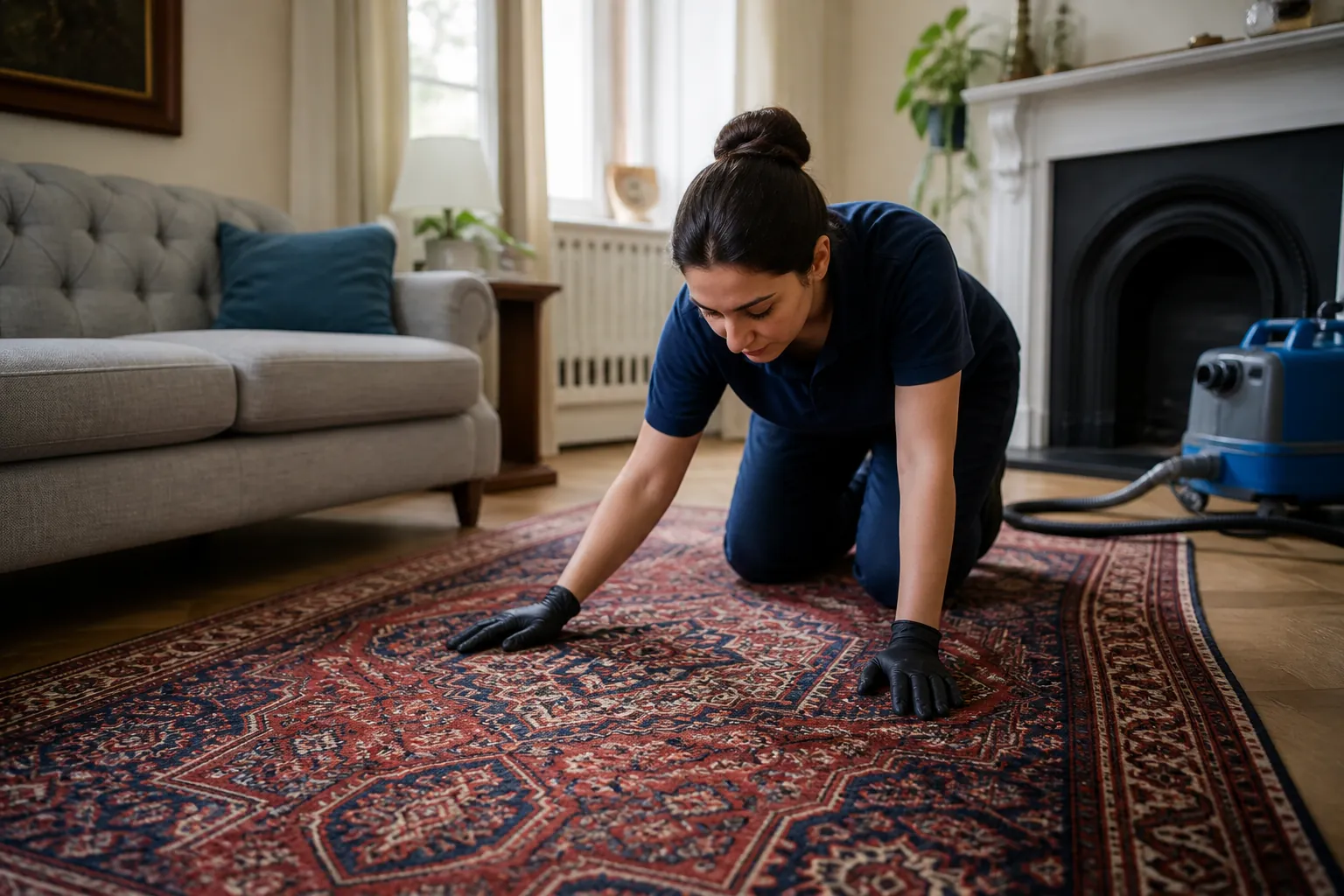
Yarn, felt or printed face
Texture and labelling guide how dry soil and local residue are approached.
Dye, pigment or transfer
Bold colour boundaries call for stability evidence before broad action.
Layered, coated or woven
A bonded base can respond differently from the decorative face.
Cut edge and corner integrity
Small separations are logged before movement changes them.
THE SPOT-SPRAY HALO
Residue may extend beyond the original mark
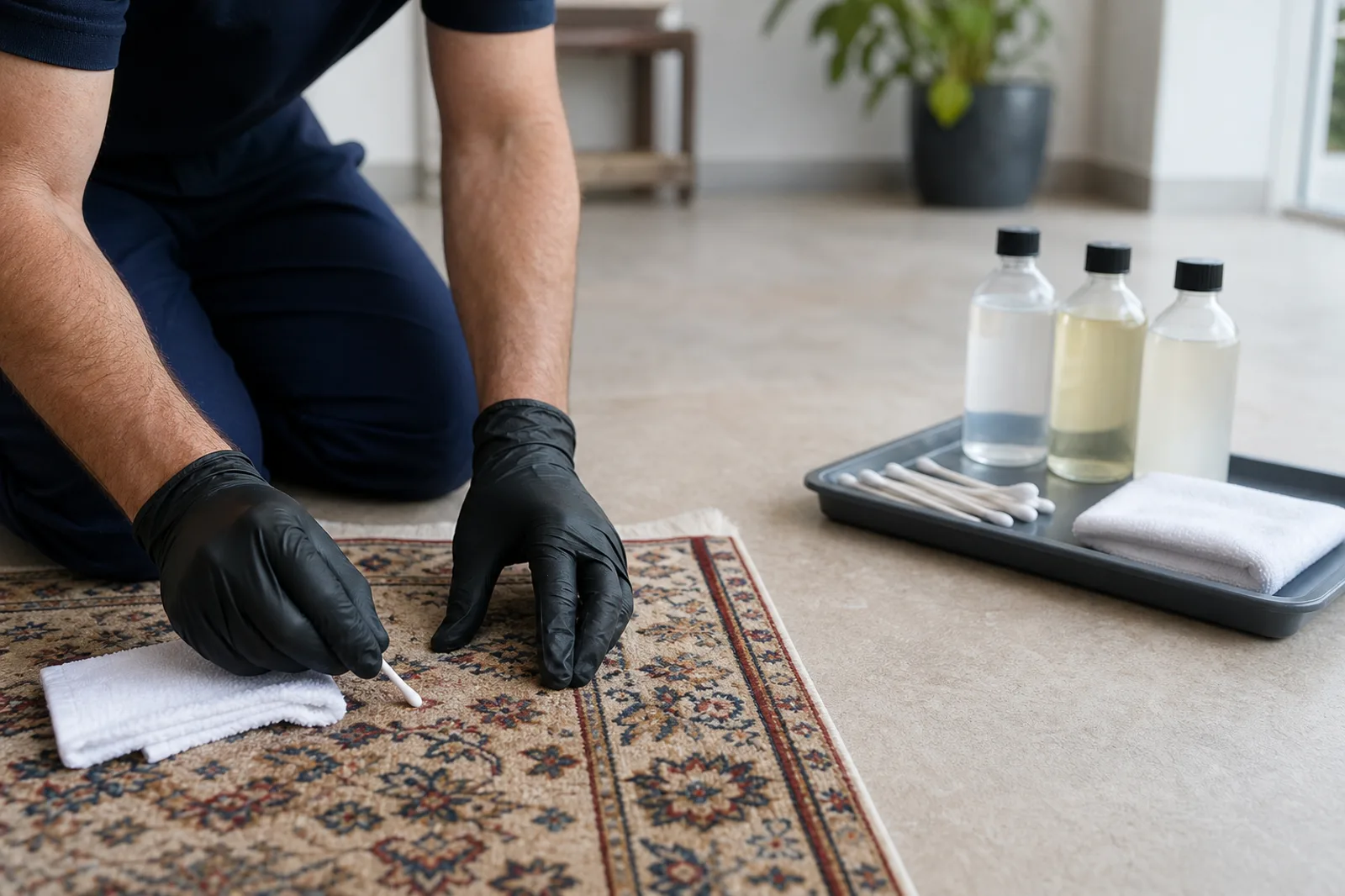
A household aerosol can leave surfactant, fragrance, optical brightener or redistributed soil. Photograph the central patch, the outer ring and a nearby untouched section. Keep the container or ingredient list available; product history is evidence, not an admission of fault.
DUST FROM THE STREET-FACING SIDE
Map deposition before calling it discolouration
Fine particulate matter may settle uniformly near an open sash while shoes create a sharper route from the entrance. Turning the rug or brushing one test patch before assessment destroys that useful pattern.
- Photograph with blinds open but without direct glare
- Include the skirting, window and doorway orientation
- Show the protected field beneath a light movable object
- Report soot-like transfer on a dry white tissue if already observed
FROM OBJECT FILE TO FINISHED ROOM
A seven-part Shoreditch sequence
Each stage answers a different question, preventing a striking surface from concealing an incompatible foundation.
- 01
Catalogue
Match label, purchase details, dimensions and room photographs
- 02
Partition
Separate street dust, sprayed residue and structural wear
- 03
Probe
Select stability checks for colour, face and bonded layers
- 04
Lift
Remove dry particulate within the object’s physical limits
- 05
Refine
Address agreed zones without extending unsupported claims
- 06
Audit
Review graphic field, halo, corners and underside
- 07
Re-stage
Give a room return plan for concrete and furniture
TAG YOUR OBSERVATIONS
Turn a photo set into an organised object file
Choose only what you genuinely know. The resulting note guides follow-up questions and never substitutes for inspection.
SUBMIT A MINI CONDITION REPORT
The best enquiry resembles a careful catalogue entry
Short, labelled evidence beats a long general message. Keep original photographs so texture and edges remain visible.
- Shoreditch address area and preferred reply channel
- Maker, model or “no identifying label”
- Exact length, width and pile height if practical
- Full-face image aligned with the rug edges
- Window-side and doorway-side comparison
- Macro view of spray residue and surrounding halo
- Underside material and concrete contact points
- Corner wear, delamination or former repair
- Lawful loading point, entry procedure and staircase count
Four studio checks
Should a product link replace photographs?
No. It may describe the original specification, while images show the individual item’s current state.
Does a short pile always dry quickly?
No. Backing, absorbency, treatment choice, airflow and ambient conditions also influence timing.
Can adhesive transferred to concrete be ignored?
It should be documented because it may indicate backing deterioration and affect lifting or return.
Will a desk chair be moved automatically?
Send the room setup. Clearance and replacement are agreed according to weight and the accepted work.
SHOREDITCH AREA REFERENCES
A price band cannot describe a design object
Square metres establish the guide below. The accepted amount can also reflect layered construction, colour checks, aerosol residue, edge condition and time needed to move the rug safely from a controlled-access studio.
SHOREDITCH RUG NOTES
Ten answers for design-led interiors
Is the manufacturer’s care label decisive?
It is valuable evidence, but current wear, previous products, repairs and colour behaviour must also be considered.
Can the DIY spray simply be rinsed away?
Not as an assumption. Its composition, amount, age and interaction with the rug require review before a route is set.
Why show the polished concrete?
It can reveal backing transfer, moisture history and placement constraints that a face-only photograph misses.
Does black street dust mean soot damage?
Colour alone cannot establish the source. Distribution, texture and the surrounding room evidence help frame the question.
May I vacuum immediately before taking photos?
Photograph first if the dust pattern is relevant. Routine dry care may then be discussed without erasing useful evidence.
What if my rug was bought second-hand?
State that provenance is partial. Mention known storage, odour and products while leaving earlier history explicitly unknown.
Are printed rugs handled like woven coloured yarn?
Not automatically. Colour placement and construction can be fundamentally different, so compatible checks matter.
How should an exposed staircase be measured?
Photograph landings and sharp turns, and provide the narrowest width plus any low overhead obstruction.
Can abrasion under a desk chair be cleaned out?
Loose material may improve, but lost fibre and changed texture are wear rather than deposited soil.
Why is the minimum shown as £68?
That is the present visit threshold. The written quotation still depends on the object and agreed attendance.
OPEN THE OBJECT FILE
Frame the Shoreditch rug clearly before requesting a date
Maker information, untouched photographs and a realistic carrying route turn a vague enquiry into a reviewable piece of work.
