
A new arrangement
A new room layout may leave furniture waiting until its final position is decided. Keep the intended use alongside the item reference.
East Dulwich / Storage for the Furniture You Are Retaining
Keep useful furniture without keeping every room full.
A changing room layout can leave good furniture temporarily without a place. For East Dulwich household storage, decide which pieces you intend to retain, then discuss their preparation, collection and eventual return. Unwanted furniture needs a different instruction from belongings you expect back.

Direct answers before you book
Yes, explain the retained furniture and likely waiting period. The individual items, collection work and storage conditions still need assessment.
Keep it separate. A storage instruction means you intend the belongings to return; disposal or donation transport needs its own discussion.
List the cabinet as the main item and identify its shelves and fittings beneath the same reference. Ask what preparation is appropriate.
Its outside shape still matters. Give assembled measurements and confirm any dismantling rather than estimating by the contents removed.
State the intended room and any changed route. Access at return must be reviewed, even if the collection address is unchanged.
Mark the return plan as provisional. Ask about term changes and the information needed to arrange delivery later.
Request the particular wrapping, materials or labour you need. Those tasks must appear in the agreed scope.
Raise that requirement before storage is arranged. Separate retrieval depends on the selected procedure, notice and charges.
Show the complete piece, relevant dimensions and difficult parts of the exit route. Include visible condition or loose components.
Ask which options and conditions apply to the proposed arrangement. Do not infer cover from the storage quotation alone.
Use the counters for quantities and the notes for furniture details. Review and send the email draft to start the assessment.
A useful first conversation
Enter items you actually want assessed for storage. Notes can explain removable shelves, furniture condition and dimensions; leave undecided additions outside the confirmed list until discussed.

East Dulwich, before collection day
Walk through the East Dulwich home with the proposed room arrangement in mind. A dresser moving to a different room may need only a short pause elsewhere; a piece without any future use needs a household decision before it enters the storage list.
Your item-list example: A retained chest, labelled shelf components and household cartons can be described separately. Replace these examples with your own dimensions and quantities, including whether furniture remains assembled.
Check the path out of the current room and the space at the intended destination. If the next layout is undecided, say so. The collection can be assessed from known facts while return requirements remain provisional.
Plan the route out of your property ↓Choose your starting point
Use the categories to distinguish cartons from furniture with handling questions. A room makeover may produce both, but each needs its own description.
Inventory focus
Give cartons references that remain useful after the room changes. Identify delicate household contents without putting valuables or essential records into the ordinary load.
Add this to your inventory ↓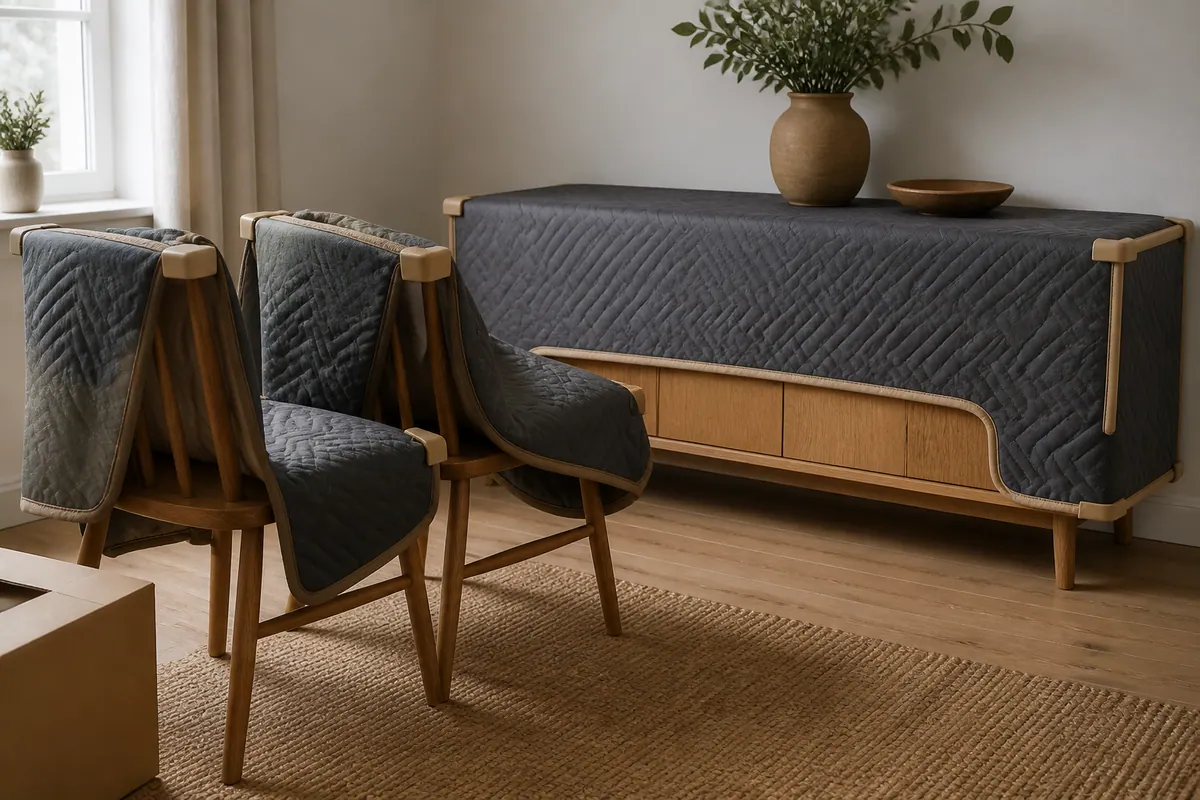
The timetable can change
| Planning point | A shorter gap | A longer arrangement |
|---|---|---|
| Typical purpose | A room being rearranged | Furniture retained for a later layout |
| Preparation | Preparation for the known journeys | Protection suited to the proposed longer wait |
| Retrieval | Return to the first available space | Identify any intermediate release requests |
| Duration | State the expected room-ready date | Review an uncertain end date explicitly |
| Quotation | Quote the selected furniture load | Clarify ongoing and later transport costs |
A provisional room plan can change. Discuss how to extend the arrangement and what notice is needed for a return, rather than assuming flexibility is included.
One connected arrangement
Name the piece and record its relevant measurements.
Describe its route from the room to the loading point.
Ask what wrapping or separation should happen first.
Confirm that the agreed furniture is ready to be released.
Review the proposed term and conditions for those items.
Check room readiness and arrange the return stage.

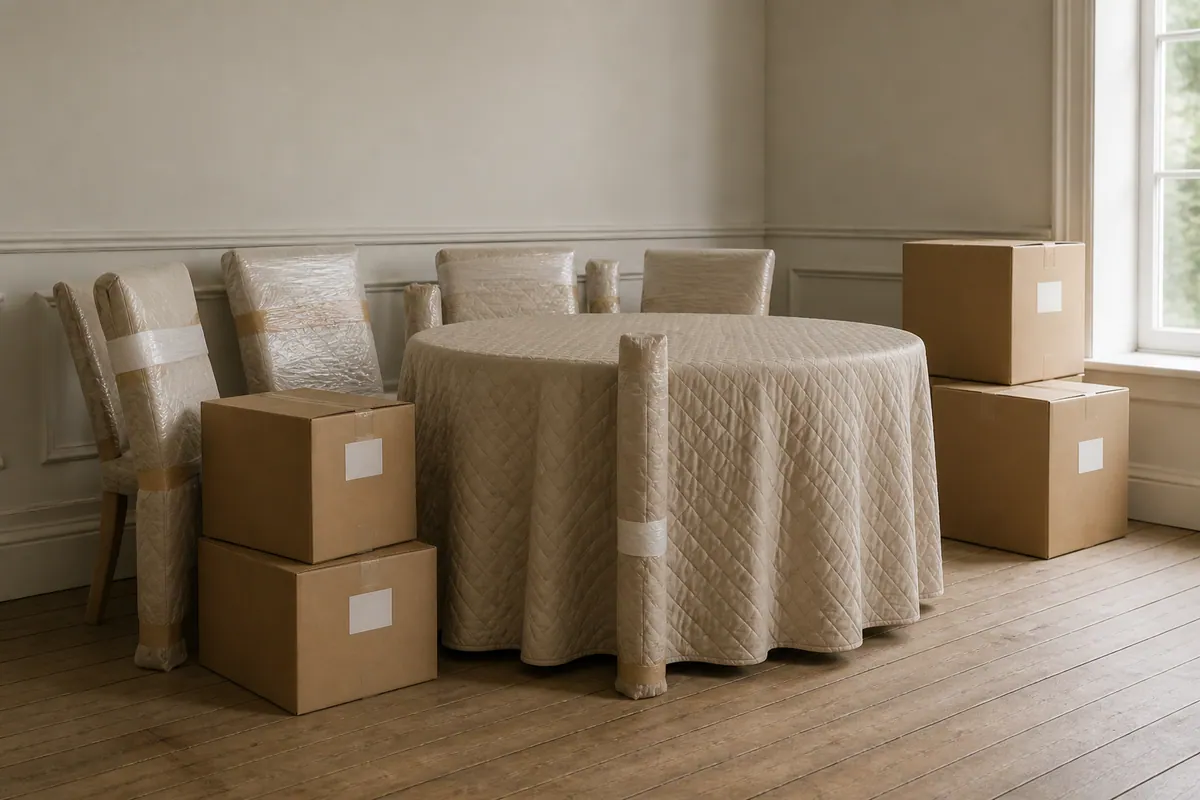

What changes at home?
A new room layout may leave furniture waiting until its final position is decided. Keep the intended use alongside the item reference.
When decorating selected rooms, mark furniture from unaffected spaces as excluded instead of clearing the whole property by default.
During a move, separate retained furniture from anything being sold or given away. Storage is not a disposal instruction.
If the room must serve another purpose temporarily, identify the household essentials that remain available throughout.
Dimensions before estimates
An empty-looking cabinet may still occupy its full outside dimensions. Describe how each piece would travel rather than estimating space from how full it is.
Measure the larger piece alongside the carton count.
Distinguish one bulky item from several compact ones.
Show which pieces cannot safely take another load above them.
Ask for assessment when a retained room contains mixed shapes.
Protection and the agreed arrangement affect usable space. The visual categories introduce the load; they do not calculate a unit or approve sensitive items.
Plan the return before the departure
Think about the first room that will genuinely be ready to receive furniture. A requested order should be discussed before storage starts, particularly where one large piece would block later work.
Need earlier
Need later
Tell the team which carton references belong with the first furniture delivery. A request for staged access needs agreement on notice and charges.
Match fittings and loose components to their furniture reference so a later delivery is understandable without reopening every carton.
Identify surfaces, glass and projecting parts that need individual protection. Avoid treating protected furniture as an improvised stacking platform.
Keep less urgent pieces visible on the inventory, even if their return date is not yet known.
Collection is part of the storage plan
Measure fixed projections as well as the cabinet body. Describe furniture originally assembled in place.
Show stair turns and landings that affect the largest piece, not just the front entrance.
Identify a realistic loading point and ask about known building restrictions.
Agree who can provide entry and which items they are authorised to release.
A changed room layout may alter the route back. Recheck that route before confirming delivery.
Flats and apartments: Check the route for pieces changing rooms.Mansion blocks: Verify lift and loading permissions before relying on them.Houses: Include stairs and the outside carry for retained furniture.Rental or managed properties: Identify who can confirm what is kept.
Scope first. Quote second.
The East Dulwich quote should identify the furniture being handled, its preparation and the expected storage period. If loose components need attention, raise that work before collection.
| Service scope | Price approach | Main factors |
|---|---|---|
| Volume & access assessment | Assessment of the selected furniture | Outside dimensions, shape and protection |
| Collection & placement | Collection proposal for this address | Stairs, doorway turns and preparation tasks |
| Ongoing storage | Storage terms for retained belongings | Expected duration and the proposed conditions |
| Final retrieval / delivery | Return arrangement quoted separately as needed | Room access, remaining contents and release notice |
Collection access, item dimensions, protective materials, time in storage and the return destination influence the scope. Check which elements are included and which remain to be confirmed.
Keep the move connected
Coordinate a household move when retained furniture needs a storage interval.
Discuss smaller selected loads without assuming the required crew or vehicle.
Request suitable preparation for delicate household pieces before they leave.
Plan transport for the furniture when its new place is ready.
Alesta customer feedback / Furniture removal & packing
“I used Alesta Services for furniture removal and packing when I moved houses. The team was incredibly careful with my belongings and made the whole process seamless.”
James W. · Existing Alesta review, not a storage testimonial for East Dulwich.
East Dulwich / Service area
Provide the East Dulwich postcode, retained pieces and the route out of their current rooms. Review the household scope at Storage Services.
The eventual storage location and its conditions should be explained in the proposal. Confirm those details alongside your collection and return requirements.
A little space. A clear next step.
Send the selected East Dulwich item list, measurements and expected room changes. Include the pieces whose preparation or return order needs discussion.
