
Personal cartons
Record container sizes as well as quantity.
Tooting / Storage for a Small Move with Clear Boundaries
A small move still needs an exact list.
When only your belongings are leaving a Tooting property, make the boundary unmistakable. Identify owned furniture, packed personal contents and anything that belongs to a landlord or another resident.

Choose your starting point
Use the category closest to your own items. Add the exceptions that a general description such as ‘room contents’ would conceal.
Inventory focus
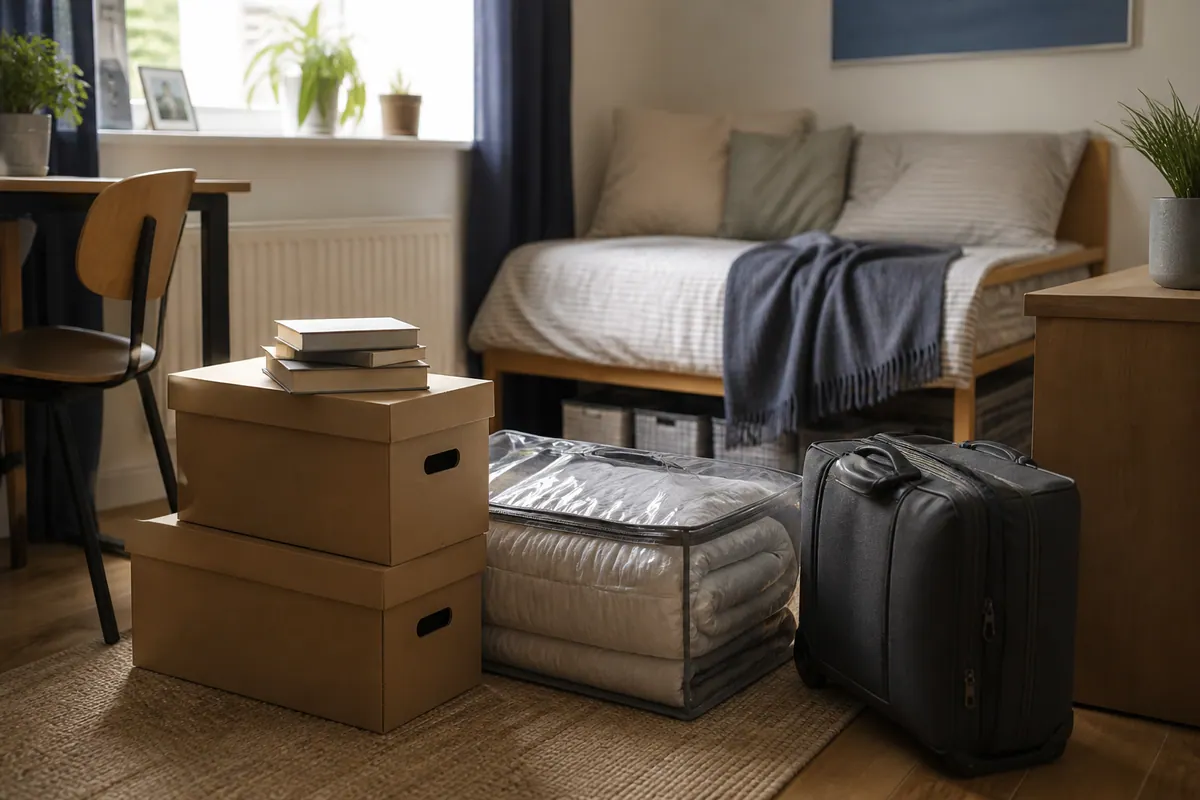
Identify cartons as your personal load and record what needs delicate handling. Retain travel essentials rather than relying on rapid retrieval.
Add this to your inventory ↓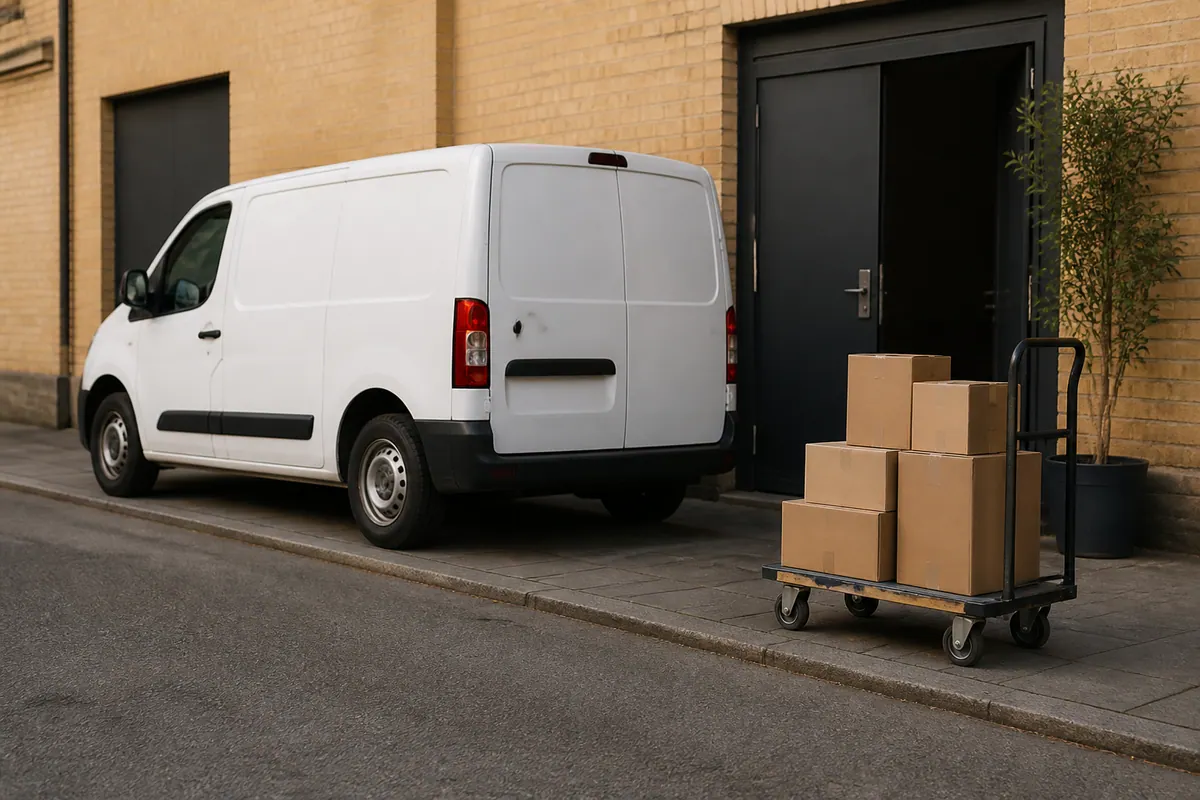
A useful first conversation
Count only the belongings you intend to store. Furniture supplied with the accommodation should remain outside this working list.

Tooting, before collection day
For a Tooting room or selected-household collection, clarify ownership before discussing the move. A photograph may show furniture that stays with the property as well as your own pieces. Mark that distinction on the list so the intended scope can be checked by another person.
For this enquiry: A bed frame and small chest still need measurements and route notes. Keep fittings associated with the named frame and explain who can confirm the selection if someone else provides access on the day.
Confirm whether collection involves the whole property or only the listed room. Keep bed fittings referenced to the frame rather than mixed into general boxes.
Plan the route out of your property ↓Dimensions before estimates
Ownership determines what is included; dimensions help assess the space. Neither a room photograph nor a total carton count tells the whole story.
Record container sizes as well as quantity.
Measure the bed frame or chest independently.
Keep another resident’s items outside your estimate.
Ask for review if the confirmed load grows substantially.
Explain unusual contents before packing them into a general household box. Acceptance depends on the proposed storage rules.
What changes at home?
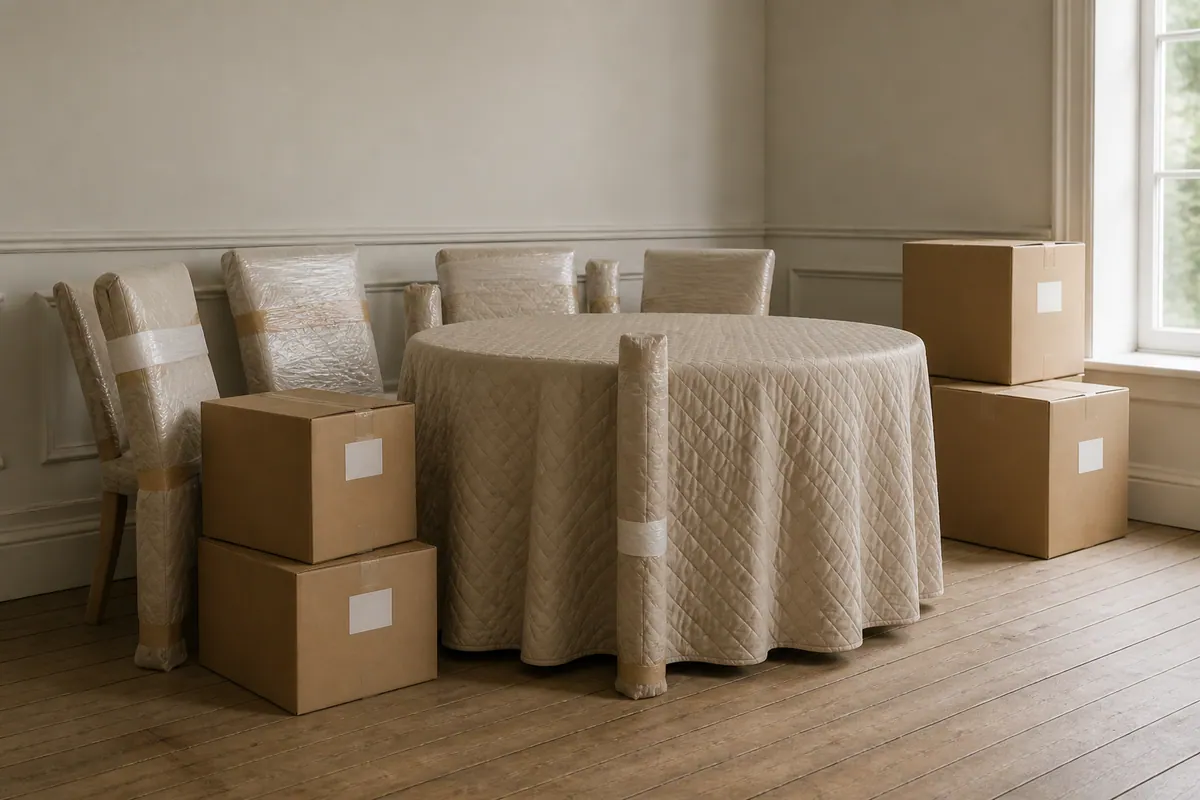
Record your pieces individually. Furniture already supplied with the room should not be assumed to travel because it appears in a photograph.
A handful of substantial items can require careful access planning even when there are few cartons.
State the date your belongings must leave and describe the expected gap without assuming the next address will be ready.
Decide which items are retained before requesting storage. Unwanted belongings do not become disposal work by default.
One connected arrangement
Confirm the items belong to this collection.
Describe the route from the named room to loading.
Agree preparation for the owned furniture only.
Have someone verify the departing item list.
Review the terms applying to the accepted belongings.
Confirm the new room’s access before return delivery.

Plan the return before the departure
Make a short list of what you will need when your next room becomes available. Keep immediate personal essentials with you.
Need earlier
Need later
Discuss the process and price of a separate retrieval request. Essential documents and valuables need an appropriate arrangement outside ordinary household storage.
Use references that distinguish your boxes from other people’s belongings.
Keep the identity of bed components and fittings linked to the corresponding frame.
List items intended for a later return without mixing them into the first-room group.
The timetable can change
| Planning point | A shorter gap | A longer arrangement |
|---|---|---|
| Typical purpose | A gap between accommodation dates | Belongings retained during an extended stay |
| Preparation | Prepare the listed personal load | Check protection for the longer interval |
| Retrieval | Identify the first-room essentials | Ask about later selected-box requests |
| Duration | A departure deadline is not a return booking | Discuss changes before the term expires |
| Quotation | Use the actual owned-item list | Include ongoing and return arrangements |
The agreed term must cover your circumstances; no minimum period or automatic extension is implied. Check conditions, access procedures and insurance arrangements directly.
Scope first. Quote second.
A Tooting quote should cover your defined load, not an entire room’s visible contents. Ownership notes prevent the assessed job from becoming a different collection.
| Service scope | Price approach | Main factors |
|---|---|---|
| Volume & access assessment | Assessment of listed personal belongings | Dimensions, count and item suitability |
| Collection & placement | Room-specific collection proposal | Floor, shared access and preparation |
| Ongoing storage | Confirmed storage term | Accepted load and selected conditions |
| Final retrieval / delivery | Agreed onward return | New address, timing and handling |
The size of the chest or frame, its preparation, stairs and loading route can influence the work more than the number of pieces. Confirm duration and return costs too.
Collection is part of the storage plan
Give the room’s floor and any internal steps between it and the entrance.
Explain common corridors, doors and where the vehicle could load without obstructing shared access.
Photograph the largest owned piece and note whether it is assembled, with preparation discussed separately.
Identify who can confirm ownership and release the listed contents on collection day.
A collection from one room is not permission to clear other belongings from the property.
Flats and apartments: Specify the particular room and shared exit.Mansion blocks: Confirm permissions for communal routes.Houses: Identify any furnishings excluded from collection.Rental or managed properties: Make the ownership boundary clear to the contact.
Direct answers before you book
Describe exactly which items are yours and intended to leave. Label the working inventory clearly so another resident’s or landlord’s furniture is not included.
It helps explain the setting but not ownership or dimensions. Add an item list and mark anything visible that should remain at the property.
Describe the frame, mattress if proposed, components and fittings separately where useful. Agree preparation and identification before assuming dismantling is part of collection.
No fixed rate is stated. Stairs, furniture size, preparation, transport and storage duration still need assessment for the actual job.
Give the expected gap and any uncertainty. Confirm storage terms and the notice needed for return instead of treating the date as guaranteed.
Discuss an authorised contact and ensure they have the current list. They should know what is leaving and what must stay.
Keep essential documents and valuables in a suitable separate arrangement. A retrieval process may require notice and should not support urgent everyday access.
Provide dimensions and an updated inventory before collection. Ask whether the changed handling and space requirements alter the quotation.
Ask about the proposed location and conditions during the enquiry. Confirm the conditions and access arrangements for the location proposed before accepting the quote.
No. Declare sensitive, unusual or restricted contents and obtain confirmation. The inventory builder records your request rather than approving it.
Give the destination room, floor, entrance details and the items needed first. Confirm the return process and any separate handling charge.
Keep the move connected
Coordinate storage if the personal move forms part of a larger household relocation.
Ask about transport for a defined small load, with furniture handling still assessed.
Discuss suitable preparation for your own belongings before the room is vacated.
Arrange movement of the listed furniture rather than an assumed room clearance.
Alesta customer feedback / Furniture removal & packing
“I used Alesta Services for furniture removal and packing when I moved houses. The team was incredibly careful with my belongings and made the whole process seamless.”
James W. · Existing Alesta review, not a storage testimonial for Tooting.
Tooting / Service area
Give the Tooting collection postcode, named room and authorised entry contact. For the household offering, see Storage Services.
Confirm the actual storage arrangement and return conditions before relying on any proposed dates.
A little space. A clear next step.
Identify your cartons and furniture, the room they leave from and the date you need the collection discussed.
