
A spare room is ready early
A spare room can be prepared before the main rooms, but all selected goods must still match the agreed collection inventory.
West Hampstead / Storage for a Room-by-Room Move
Walk through the home once, with a list that follows you.
Organise West Hampstead storage room by room, recording each substantial item’s starting floor, destination and preparation needs.
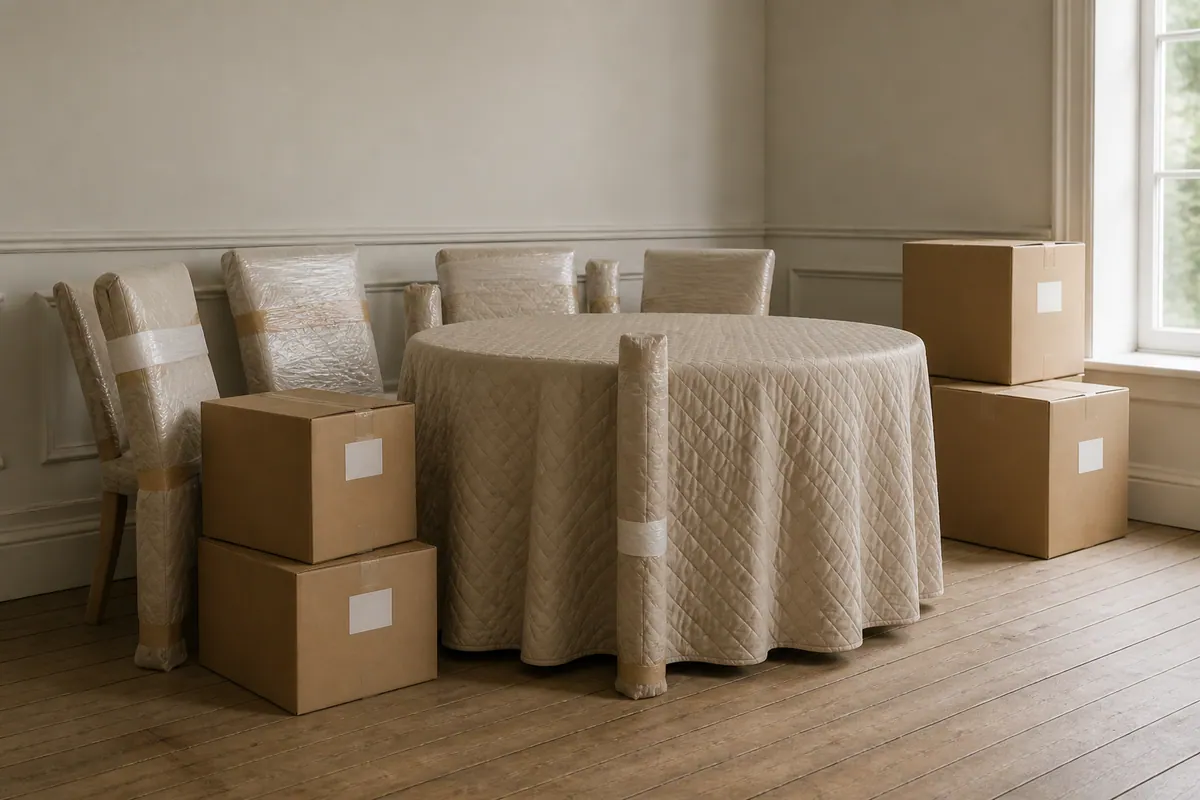

West Hampstead, before collection day
A room-by-room approach suits a West Hampstead enquiry when the home will not empty all at once. The list can show what is prepared early and what remains in use until departure without losing track of either group.
A bedroom chest needs its floor and dimensions beside its name. The home-office desk may have detachable pieces, while book cartons need their own count and preparation notes.
Give each item a destination as you work through the rooms. This avoids confusing a direct-moving load with belongings needing storage simply because they start in the same space.
Plan the route out of your property ↓What changes at home?
A spare room can be prepared before the main rooms, but all selected goods must still match the agreed collection inventory.
If personal work continues until departure, identify the late-packed equipment rather than guessing its carton count.
Where goods have two destinations, divide the lists before collection begins.
A staged return can prioritise the working space if feasibility and extra transport are agreed.
Choose your starting point
Use each category as a check against the rooms you have walked through. It helps catch omitted furniture without adding goods that are not selected.
Inventory focus
Add West Hampstead carton counts room by room, then reconcile the total. Identify home-office contents needed earlier without mixing them with spare-room boxes that can wait.
Add this to your inventory ↓
Dimensions before estimates
Room-by-room recording improves accuracy but does not allocate a fixed unit per room. Furniture shape, carton sizes and protection still need assessment.
Count the chosen objects from the first room.
Include furniture shape alongside each room’s cartons.
Combine lists without duplicating direct-moving goods.
Check the household total against individual room records.
A complete room list still needs suitability checks for sensitive or unusual contents; quantity alone does not establish acceptance.
A useful first conversation
Count by room, then review the combined total. Use notes for the starting floor and destination so the quantity list remains useful for handling.
Plan the return before the departure
Think in terms of the first usable rooms at the destination. Home-office belongings may matter before spare-room furniture, but the request needs a specific list.
Need earlier
Need later
Keep indispensable work records and valuables separately. A room-priority list supports a request but does not guarantee immediate partial release.
Keep essential work necessities available yourself rather than relying on unconfirmed early retrieval.
Link desk fittings and accessories to the same inventory identity.
Later rooms can form a separate group only within the agreed access and duration terms.
The timetable can change
| Planning point | A shorter gap | A longer arrangement |
|---|---|---|
| Typical purpose | A room-by-room preparation followed by a short gap | A household transition with rooms available at different times |
| Preparation | Keep early and late-packed goods clearly referenced | Review preparation for the anticipated waiting period |
| Retrieval | Return the items needed for the first usable rooms | Discuss a separately agreed later-room group |
| Duration | Distinguish packing dates from the booked storage interval | Ask about changes if room availability shifts |
| Quotation | Quote the reconciled list and stated collection | Clarify staged returns and longer-term implications |
Different packing dates do not create separate automatic terms. Confirm the arrangement’s duration, notice and coverage.
Collection is part of the storage plan
Record the starting floor of the desk, chest and other substantial furniture.
Describe stair turns between rooms and the exit, including any changes along the route.
Keep prepared cartons within an appropriate area without obstructing daily access.
Confirm who can reconcile late-packed items with the final inventory.
Record which floor each substantial piece starts on.
Flats and apartments: keep late-use rooms distinct from prepared ones. Mansion blocks: check shared access for the full selected collection. Houses: record the starting floor in each room’s list. Rental or managed properties: appoint someone to reconcile final additions.
One connected arrangement
Walk West Hampstead rooms and record selected belongings.
Add each large item’s starting floor and route.
Reconcile early-packed rooms with late-use equipment.
Confirm the final inventory before the complete collection.
Check the recorded goods against the proposed conditions.
Request the first usable-room group or full return.


Scope first. Quote second.
Ask what the quote assumes about preparation and a single complete collection. Late additions, separate stages or early-return requests should be declared.
| Service scope | Price approach | Main factors |
|---|---|---|
| Volume & access assessment | Assessment from the reconciled room records | Selected quantities, furniture dimensions and destinations |
| Collection & placement | Quote the complete agreed collection | Starting floors, late preparation and carrying routes |
| Ongoing storage | Price for the intended waiting inventory | Suitable arrangement and declared interval |
| Final retrieval / delivery | Scope return by the requested room needs | Item references, receiving access and release stages |
Check whether the proposal assumes one collection and return. Additional visits, later additions, packing and insurance choices need separate clarity.
Keep the move connected
Coordinate the wider move using clear room and destination records.
Discuss the appropriate transport for the selected room groups.
Arrange preparation around the rooms still occupied until departure.
Plan furniture return in the sequence explicitly agreed.
Alesta customer feedback / Furniture removal & packing
“I used Alesta Services for furniture removal and packing when I moved houses. The team was incredibly careful with my belongings and made the whole process seamless.”
James W. · Existing Alesta review, not a storage testimonial for West Hampstead.
Direct answers before you book
Walk through each room, listing selected items with their floor, dimensions and intended destination.
Yes, keep its list accurate and maintain safe access while other rooms remain in use.
Identify it as late preparation and confirm the final count before collection.
Yes. Its starting position helps explain the handling route.
Show them separately so they are not counted as storage contents.
No, it produces a briefing inventory rather than an exact space allocation.
Request the specific items and confirm partial retrieval conditions.
Keep irreplaceable or immediate-use records under a suitable separate arrangement.
Have the changed load reviewed before collection or a further visit.
No. Explain the construction and agree any preparation work.
Discuss the sequence, notice and transport costs before assuming multiple deliveries.
West Hampstead / Service area
For West Hampstead, share the collection postcode and room-by-room route information when enquiring about Storage Services.
If different groups have different destinations, identify them separately. Agree the holding location and receiving arrangements for the stored group.
A little space. A clear next step.
Organise West Hampstead storage room by room, recording each substantial item’s starting floor, destination and preparation needs.
