
Does a lift guarantee easy access?
No. Its dimensions and the route beyond it still need consideration.
Watford · Home technology, considered
Define the job before comparing the price.
For TV mounting in Watford, send the television, bracket, wall and access details together. The quote should reflect the agreed installation and any requested cable or electrical additions, not a price band based only on inches.
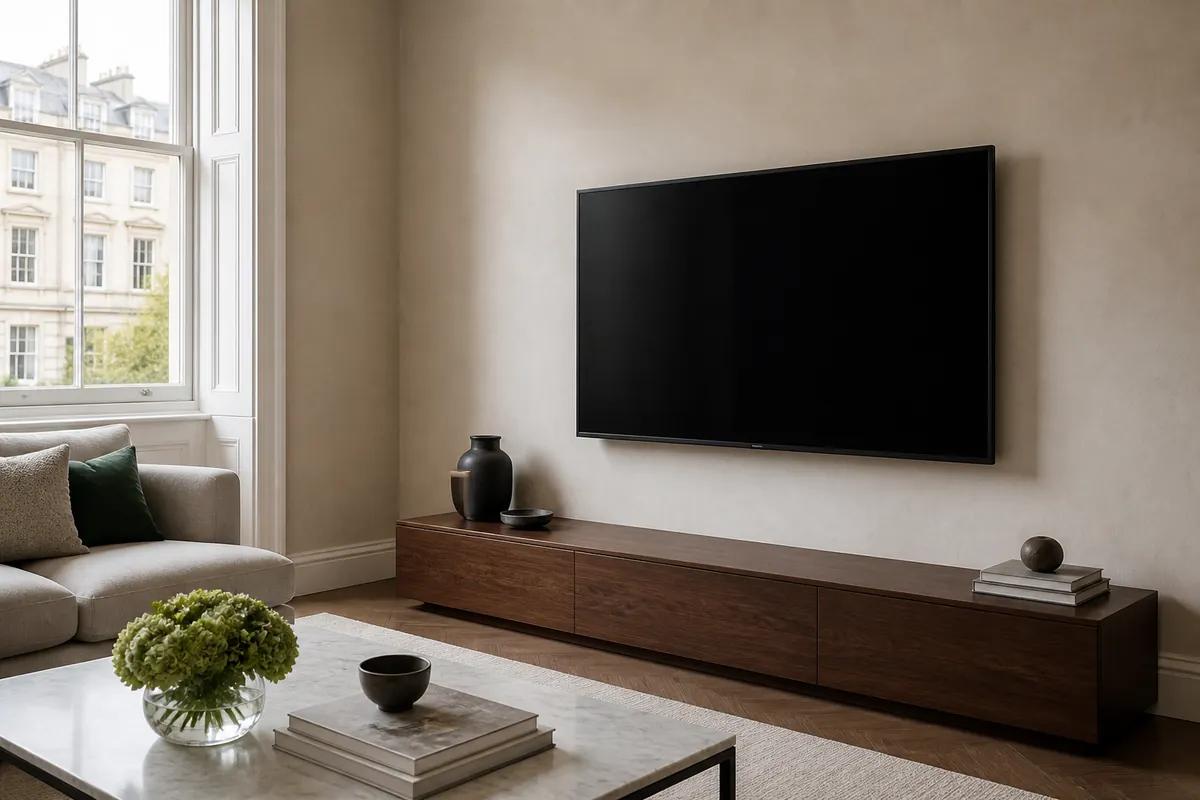
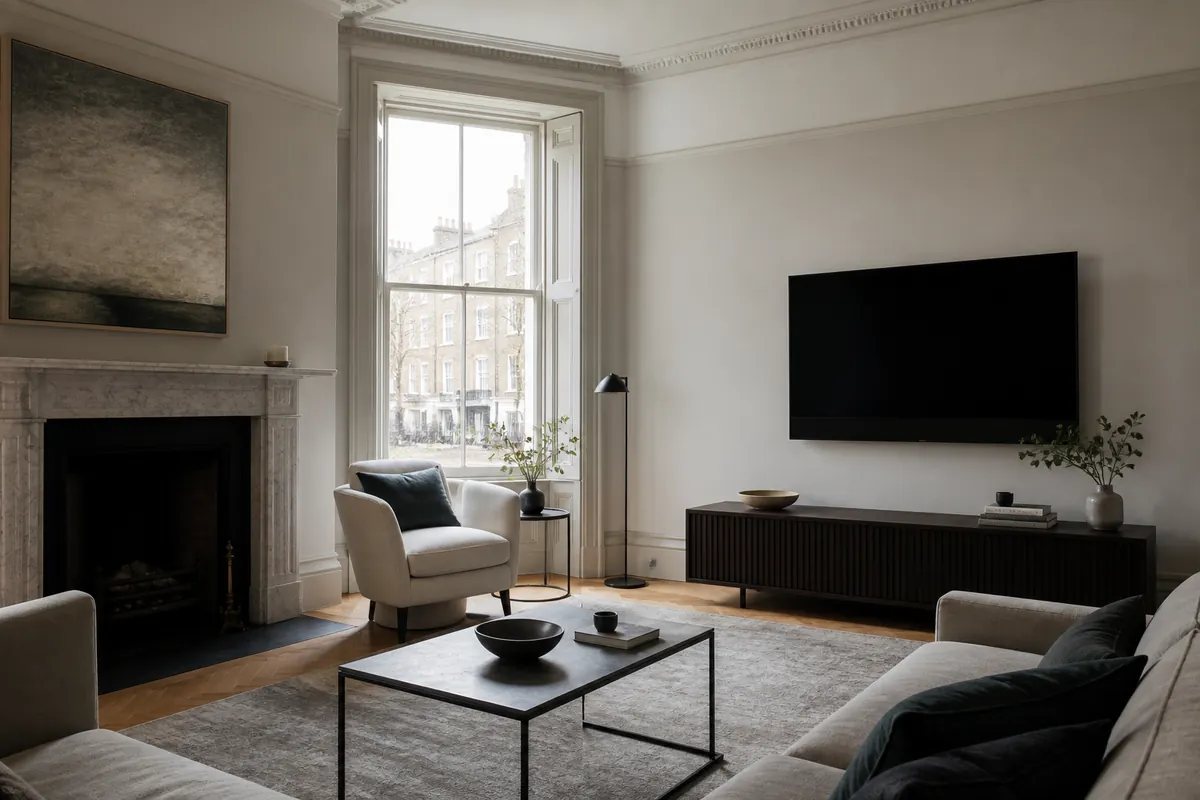
Watford / room by room
A Watford setup described as mounting and hiding cables can mean several different things. Explain whether you want accessible cable organisation, a surface route or a separately assessed concealed arrangement.
The same clarity helps with old brackets or wall marks. Removal and making good should be identified in the quotation rather than assumed to accompany the new screen installation.
Describe your Watford installation ↗Dimensions, load and movement
A taller replacement panel can reduce the gap over a console even if its centre stays unchanged. Include the real screen dimensions and anything that needs to remain beneath it, such as a soundbar or storage lid.
Compatibility still rests on the actual weight, VESA and bracket arrangement. The desired lower clearance is a positioning constraint, not permission to use an unsuitable mounting point.
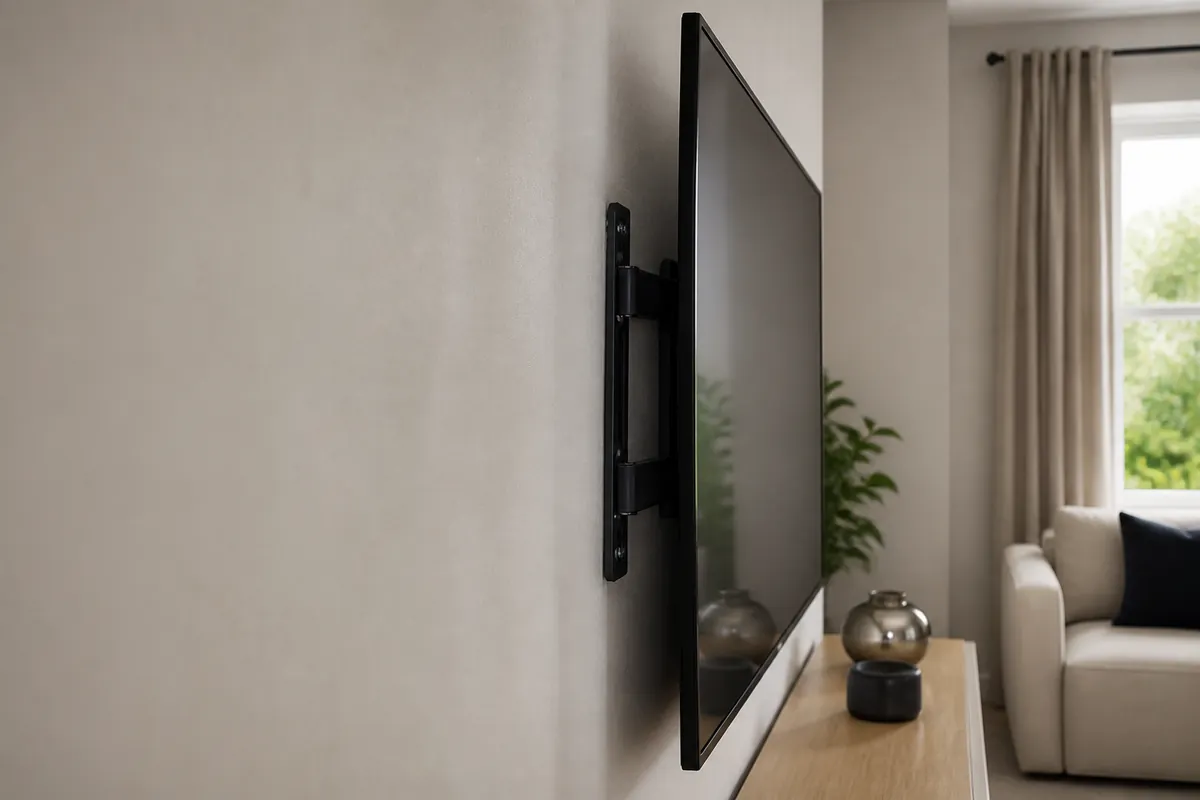
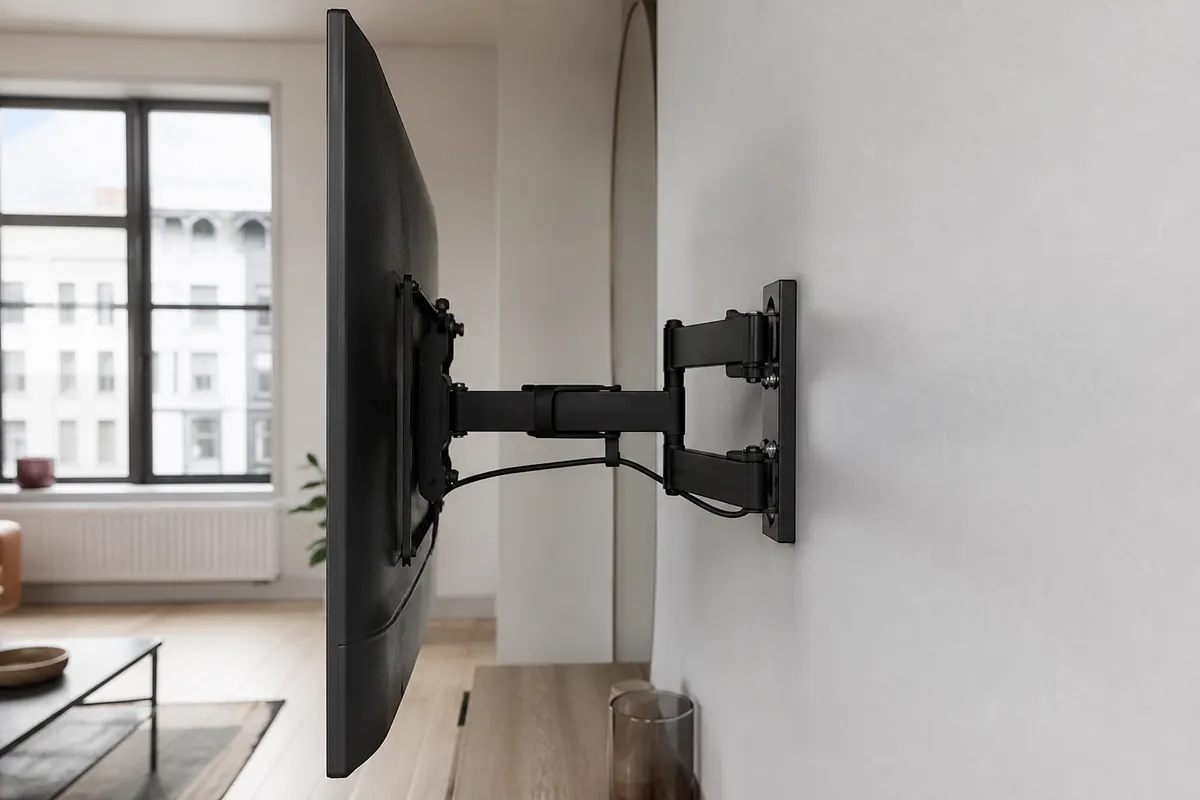
Fixed hardware depends on the chosen height; tilt needs clearance below and behind; arm movement must avoid the furniture throughout its travel.
| Bracket | Best suited for | Movement | Key consideration |
|---|---|---|---|
| Fixed | A fixed lower edge agreed above the furniture | Minimal | Compare real screen height with the console and accessories. |
| Tilt | Vertical adjustment without furniture contact | Vertical adjustment | Allow clearance below the panel as its angle changes. |
| Full motion | A moving outline above or beside storage | Extend and swivel | Review the lower edge throughout the intended travel. |
Practical questions
No. Its dimensions and the route beyond it still need consideration.
Dimensions, construction, manufacturer guidance and the carrying route also matter.
Yes. A modest diagonal does not eliminate awkward access or handling constraints.
Include them with the postcode and entry arrangements before the visit.
Identify usable space near the room without assuming the floor can support any handling method.
No, but make both arrangements clear before arrival.
Do not attempt an unsuitable lift; discuss the route and handling plan first.
Only agreed removal tasks are included; identify existing screens, brackets and disposal requests.
Address and access details
For a Watford visit, provide the full postcode and explain where unloading is possible. Describe the route from that point through the entrance to the room, including any stairs, doors or lift restrictions that matter for the panel. Confirm how the team will gain entry before the appointment. A postcode identifies the destination but does not establish practical access for a large screen and equipment.
For the wider service scope, see TV mounting in London .
Load the map when you need it.
Open map in a new tabThe support behind the surface
A packet supplied with a bracket is not a universal wall specification. The relevant question is whether the fixing arrangement suits the identified material, condition and installation load.
Sound brick and different types of block may call for different approaches; a generic masonry description is insufficient.
Plasterboard suitability depends on the wall system and available support, not the presence of board plugs in the box.
Timber support has to be suitably positioned and capable of accepting the intended connection arrangement.
Tile, stone or other specialist surfaces may need additional preparation or may restrict the proposed drilling location.
When the wall cannot be identified confidently, do not select a fixing merely because it is readily available.
Before drilling, hidden services must be considered; a detector cannot certify that the entire area is free from pipes and wiring.
Your practical starting brief
Keeping the familiar location can conceal changed requirements. Identify the old television, the replacement model and the bracket that remains, then show any difference in screen width or connection positions. Describe the proposed new arrangement in the controls. Existing fixings, equipment condition and completeness must be checked; the fact that a smaller panel once hung there is not confirmation.
Reusing components is an assessed option, not an automatic reduction in the work.
Your setup brief
Small screen · Fixed bracket · Masonry wall · Visible cables.
Send this setup by email ↗Need a new socket? Plan the electrical work separately
The view in everyday use
The diagram illustrates relationships; supply the real screen dimensions before its edges are agreed.
Marking only the proposed centre misses the screen’s upper, lower and side edges. Use the actual dimensions to compare the panel with shelving, switches and furniture that must remain usable.
Where the mount can move, assess the outline in the intended viewing position as well as when folded back. A clear wall at rest may become a collision point during rotation.
Include sockets and device routes in the comparison so an apparently better centre does not leave connections inaccessible.
Check the wall-plate footprint separately from the visible outline of the panel.
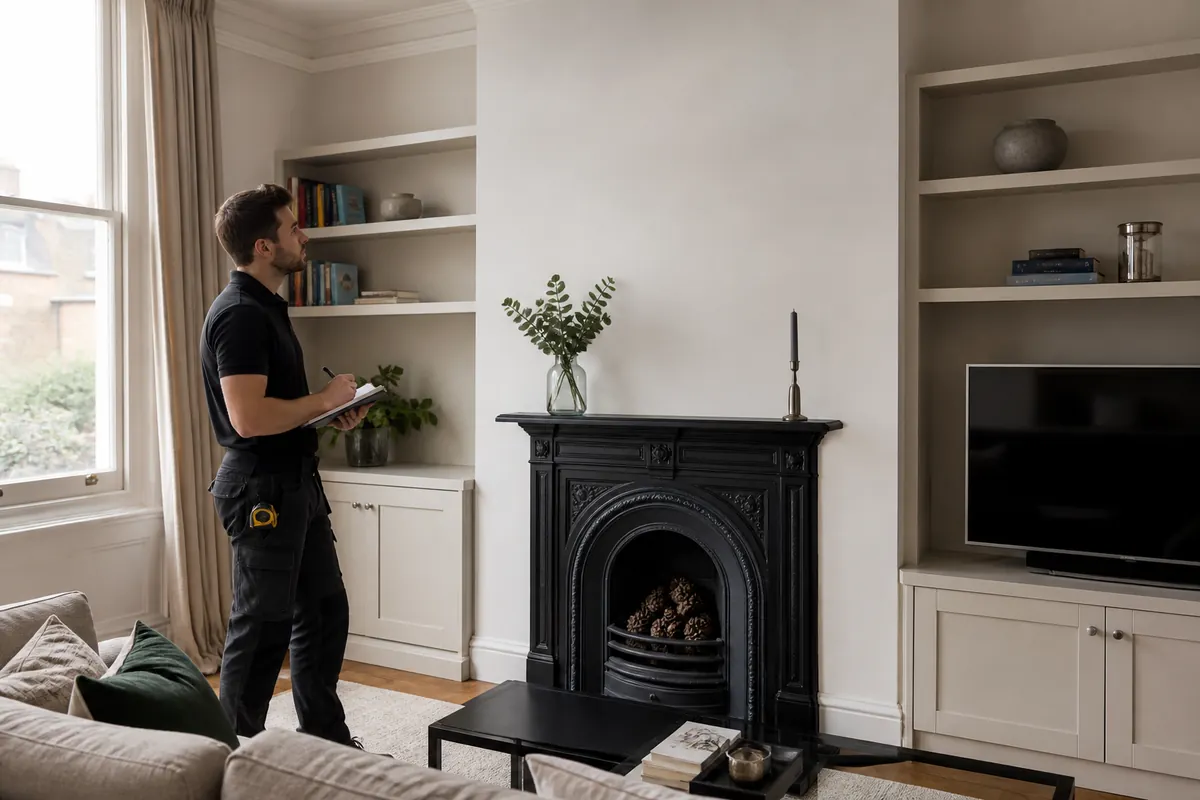
A fireplace is a separate question
Above-fireplace placement also requires heat, chimney or flue, wall and concealed-service assessment; decorative symmetry alone does not make that location acceptable.
A rejected fireplace position may alter both the screen outline and the available connection path on another wall.
The route between screen and devices
The illustrated furniture is an example; supply your own unit dimensions for cable planning.
A console can hide a short route today but leave it visible when replaced. Show the intended furniture dimensions and device positions rather than relying on the current unit to explain a permanent finish. Accessible cable organisation can follow an agreed surface path. Cutting into the wall, concealing connections or repairing decoration is a different scope and requires explicit agreement.
New sockets or relocated power are electrical work assessed separately; an ordinary mains lead must not simply disappear inside the wall.
Discuss a new socketIllustration only. No claim of a completed customer before-and-after installation.
An assessed scope for your installation
For a Watford installation, identify any existing screen, bracket, cables or packaging that needs attention. Explain what should remain, what you want removed and whether disposal is being requested.
These tasks should be separated from fitting and checking the new television. A clear quotation also distinguishes accessible connections from electrical alterations, concealment and making good, with no assumed additions.
Request my mounting quote ↗| Installation | Pricing | Main variables |
|---|---|---|
| Standard fixed-bracket mounting | Quote after assessment | New screen fitting and agreed basic checks |
| Large TV / full-motion bracket | Quote after assessment | Separate removal or handling of existing equipment |
| Mounting + additional cable / electrical work | Detailed quote | Disposal requests and restoring redundant fixing areas |
The complete supported arrangement
The screen, wall plate and wall fixings can each have a different history. Identify what is being retained so one familiar component does not become assumed approval for all the others.
| Factor | What is checked | Why it matters |
|---|---|---|
| TV | Replacement specification rather than the former television’s size | The replacement can differ despite a familiar screen size. |
| Bracket | Identifiable model, condition and all necessary retained parts | Reuse depends on condition and complete compatible parts. |
| Wall | Condition of existing fixing areas and suitability for the new load | Old success is not approval of a different supported load. |
| Position | New dimensions relative to the former centre and nearby furniture | Retaining the wall plate may change the finished outline. |
| Cables | Existing cable types, endpoints and reach for the replacement | A formerly useful lead may not reach the new input. |
The work in an agreed order
Gather the television and bracket model information and identify missing components. This helps separate a ready-to-assess installation from one still waiting on suitable equipment.
The wall review establishes construction, condition and service concerns. Compatibility includes the load, VESA and required bolts or spacers, while access determines the handling arrangements.
Missing or unsuitable hardware needs resolving before the assembly can be accepted.
Check the final screen position against the assembled bracket geometry.
Agree the viewing centre and use the assessed fixing method. The screen is then lifted with sufficient support and the mount’s engagement and securing features completed.
Complete every required securing component; a hanging panel is not enough.
Keep the connection work within the agreed and compatible assembly.
Connect only the agreed accessible equipment, review alignment and permitted travel, and explain adjustment. If parts or support prove unsuitable, the plan needs discussion before proceeding.
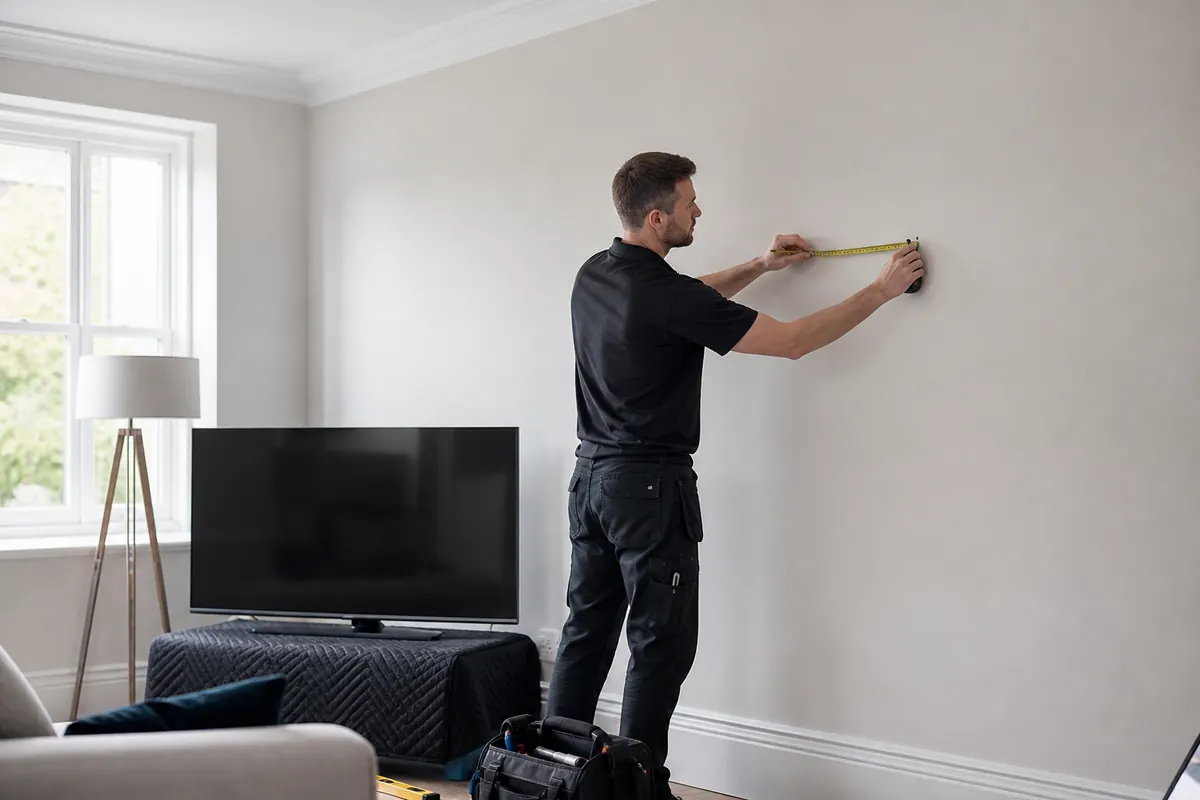
The proposed equipment and room before assessment.
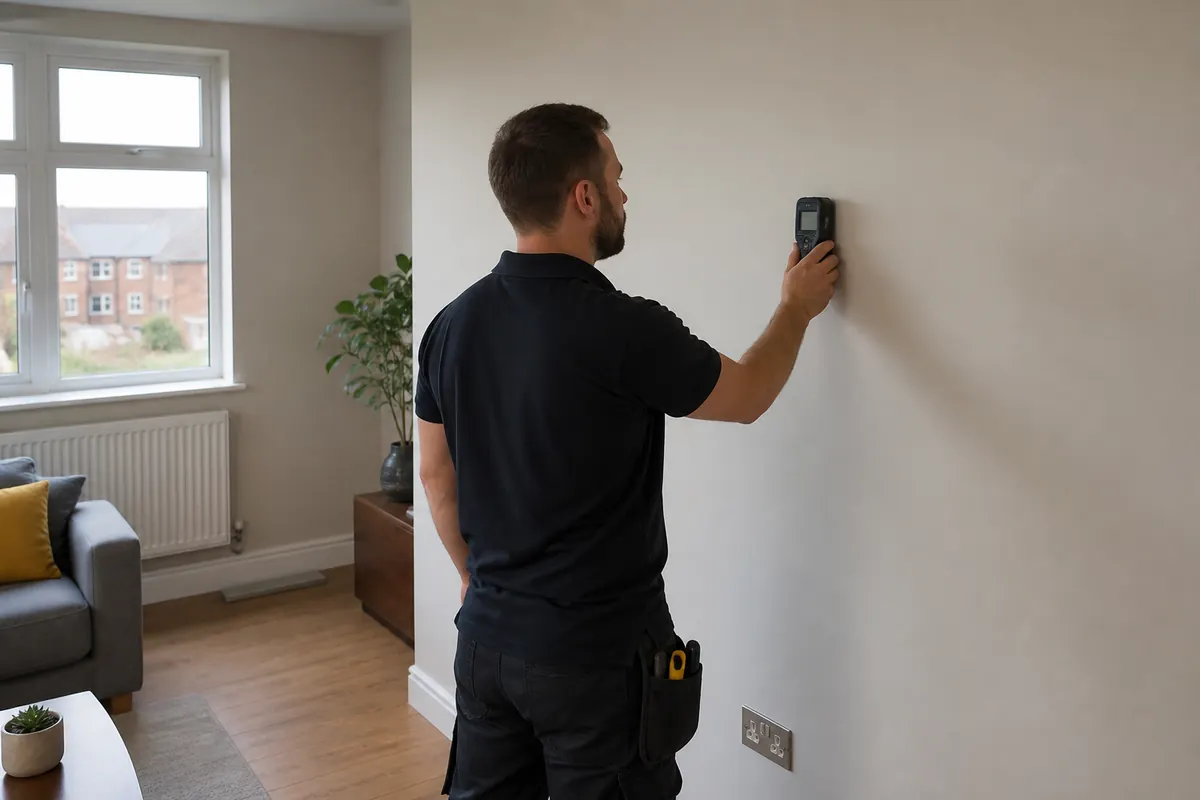
The accepted support and viewing arrangement.
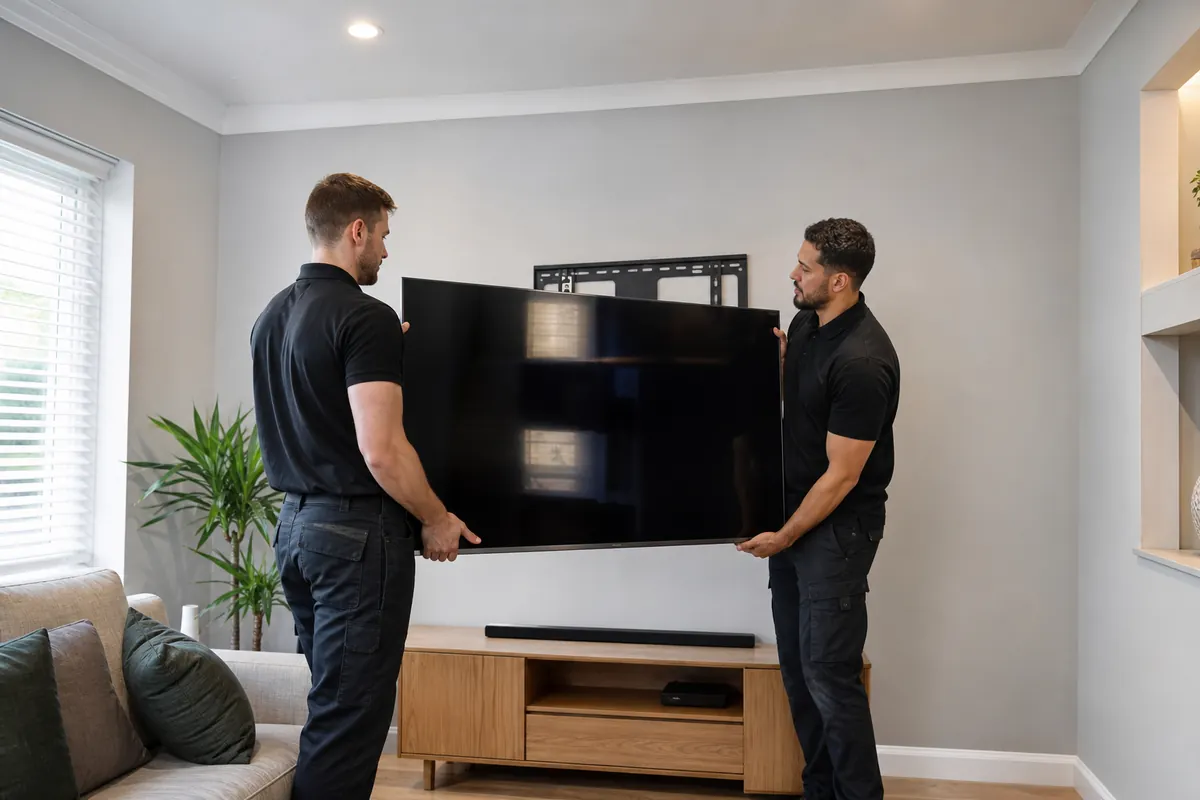
A supported panel secured to its compatible bracket.
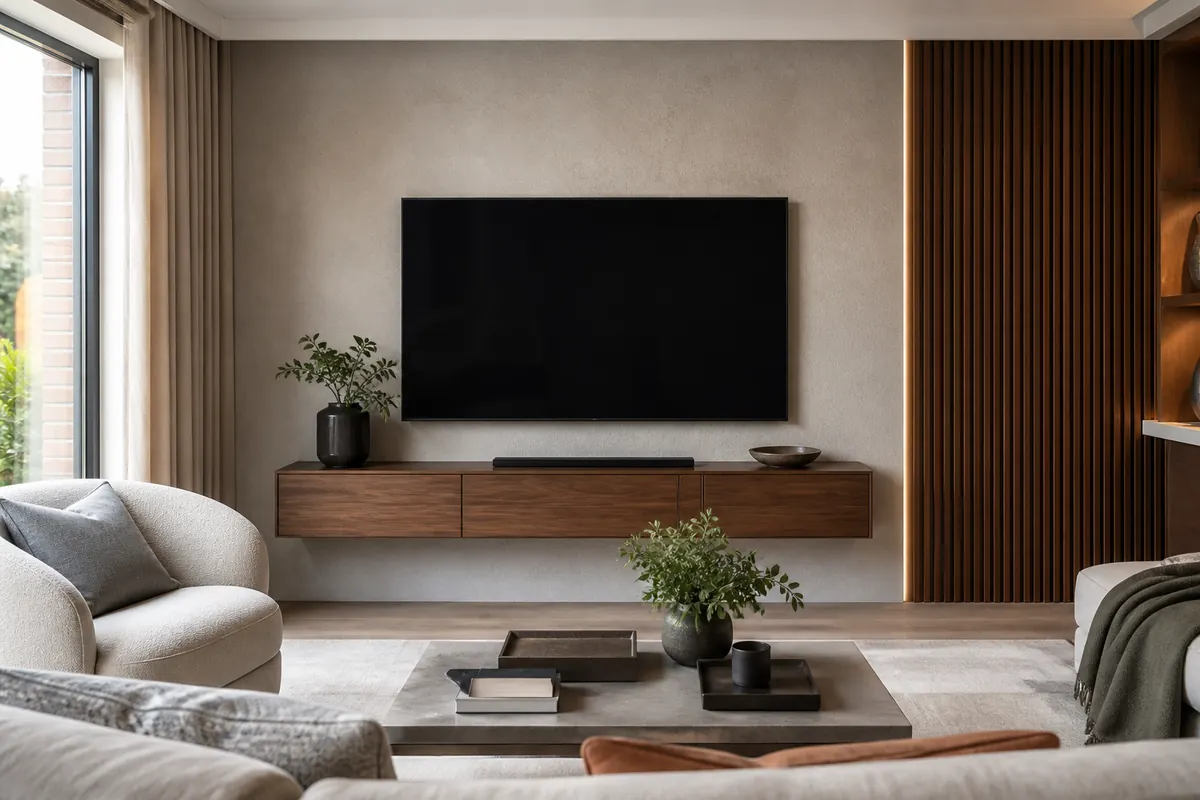
The agreed connections and usable final view.
Illustrative stages shown in different interiors, not one documented customer installation.
The individual room and building
If equipment is moving into your Watford property, photograph the destination rather than relying only on the previous installation. The new wall, access and connection locations need their own review.
For a flat, establish entry arrangements and permission for the proposed work before assuming the old setup can be recreated.
In an older room, note decorative or chimney features that differ from the previous location.
In a newly finished room, share wall information and the intended furniture layout before choosing the centre.
In a house, explain where the television is stored and its route to the destination floor.
When the destination is non-domestic, have the setting and requested work confirmed independently of the previous home setup.
Practical details
Keep them if available. They can identify the mount, its components and its intended assembly. Instructions help the review but cannot establish the condition of concealed wall fixings or confirm compatibility alone.
No. Supplied hardware must be assessed against the actual substrate and load. A bracket’s included components do not override wall condition, construction or the requirements of the chosen fixing method.
There is no single gap that resolves every installation. Screen dimensions, furniture use, accessory clearance, manufacturer guidance and the view from the seat all influence the arrangement that should be agreed.
Flag the switch before choosing the location. Its use and access need consideration, and nearby wiring creates a separate service-risk question. Do not assume a screen can simply conceal any fitting on the wall.
Possibly, once its dimensions and the connection endpoints are known. Leave practical access and suitable cable routing; do not assume that hidden behind furniture means every connection can be permanently blocked.
No. Mention removal and disposal as specific requests when enquiring. The agreed installation scope should make clear what happens to existing equipment and packaging rather than leaving those arrangements to assumption.
That depends on the mount system and its approved components. Do not mix parts because they appear to engage; the complete bracket arrangement and wall fixing suitability need checking for the new screen.
Missing equipment should be reviewed rather than bypassed. The bracket must be assembled and secured as required; an incomplete arrangement should not be treated as finished merely because the screen appears to hang in place.
Not automatically. The equipment may remain the same, but wall construction, service risks, viewing layout and access can differ. The destination needs its own assessed installation plan.
Yes, if restrictions or unloading arrangements could affect arrival. Describe the actual access available rather than assuming the address alone explains where equipment can be safely brought into the property.
The room comes first
For TV mounting in Watford, send the television, bracket, wall and access details together. The quote should reflect the agreed installation and any requested cable or electrical additions, not a price band based only on inches. Separate electrical changes from accessible connections.
