
Collection planning · Marylebone

Marylebone waste collection with access agreed before arrival

Describe the material, show the full load and explain the route from item to vehicle. Those facts are checked before collection scope or timing is agreed.

  • Photographic load assessment
  • Access and carrying route considered
  • Restricted material declared first
  • Quotation based on the assessed work
Call 020 3608 3976
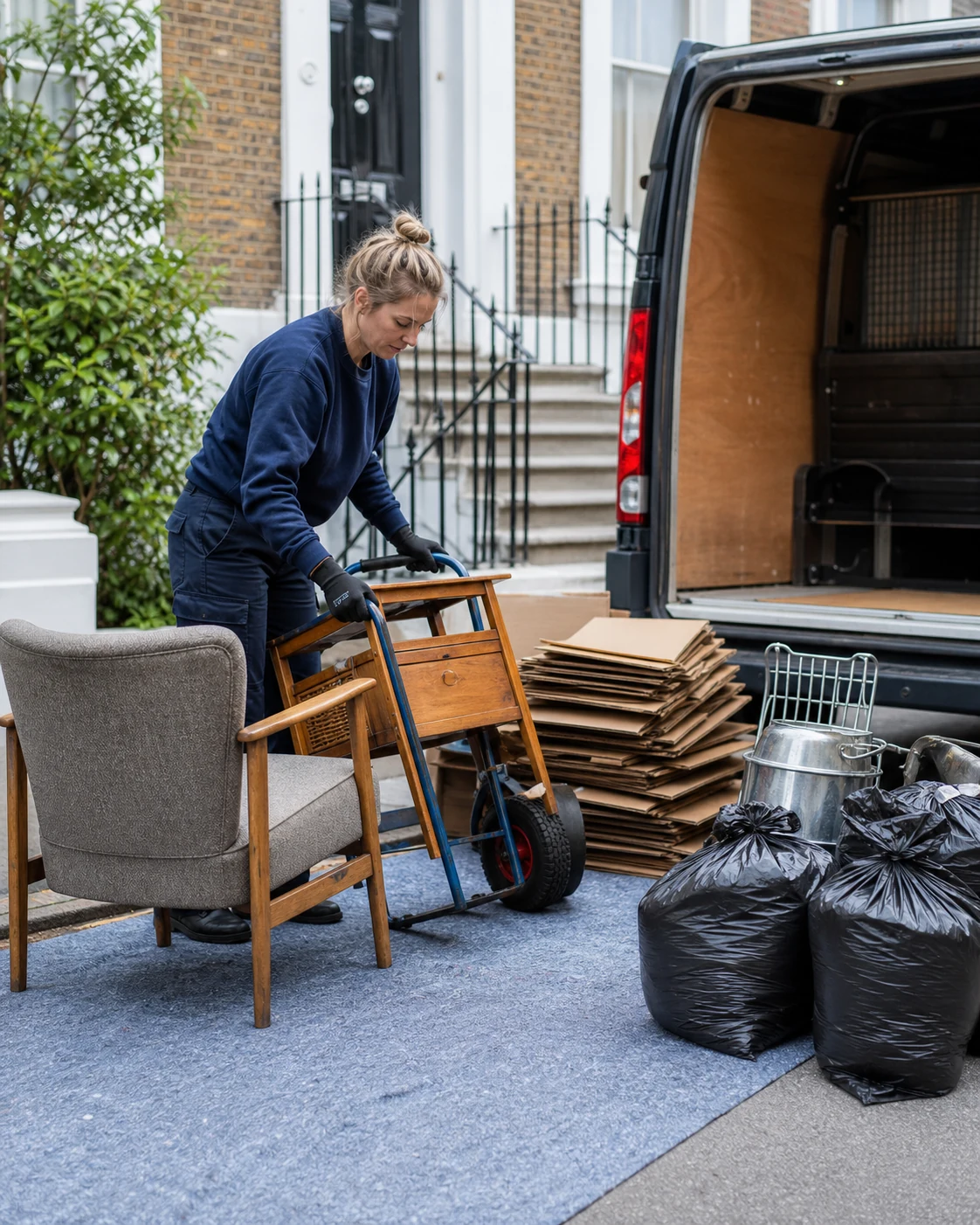
Waste removal team loading sorted household items outside a London home
stored items from internal and outdoor areas planned around limited kerb space and longer internal carries

Make the load visible For the wider booking boundaries, review Alesta's complete waste removal service.

Keep Marylebone volume and density as separate facts

Rubble and other dense project material should never disappear inside a general volume estimate. Name the substance, show its containment and provide close photographs that indicate condition. Separately count household sacks and measure large furniture, noting every storage area involved. Several modest groups can create significant gathering work even when their combined size looks small. Photograph unidentified objects away from accepted contents and disclose sharp edges or unstable panels. This approach lets likely weight, vehicle space, manual handling and loading stability be reviewed independently, while the material descriptions support selection of appropriate onward routes.

Property context in Marylebone Bulky household pieces can be assessed separately through the responsible furniture disposal.

Document a Marylebone carry before the loading window

Marylebone access notes should begin inside the property, not at the postcode. State where each item is stored, the floor, lift availability and every shared threshold on the way out. Photograph the narrowest turn beside a bulky piece and explain any building arrangement needed for entry. Continue to the street and identify the practical loading position, as limited kerb space may leave a longer carry than the nearest doorway suggests.

Prepare the contents record separately. Show furniture, bagged household material, green waste and declared renovation debris as identifiable groups. Include approximate dimensions, bag numbers and close views of heavy, sharp or damaged pieces. Keep reusable-looking objects visible rather than burying them beneath loose waste. Unknown liquids and restricted substances must be isolated and declared. The resulting plan connects material, weight and shape with the actual route, providing a sound basis for labour and disposal decisions without inventing a universal Marylebone price.

Before the team arrives Declared renovation material should follow the separate separate construction-waste service rather than an ordinary mixed load.

Secure Marylebone access and removal authority

Confirm that the person arranging collection may release every listed item. Mark belongings that remain, particularly in shared or occupied areas. Recheck building entry, lift status, doorway clearance and current loading information, then report changes before arrival. Keep the route free of ordinary obstructions without making unsafe stacks. Restricted contents remain labelled and separate from household bags. Do not remove fixed fittings or disconnect services; those preparations require the appropriate trade and prior arrangement.

  • Send clear, recent photographs
  • Mention stairs, lifts and carrying distance
  • Confirm current parking restrictions
  • Separate material where requested
  • Highlight unusually heavy items
  • Declare restricted or hazardous material

Quotation basis

The operational details within a Marylebone quote

What is the biggest cost factor?

The assessment combines the declared quantity, material, weight, disposal charges, crew time and property route. Limited loading access, upper floors and agreed safe dismantling may affect labour, but they do not create a blanket neighbourhood surcharge. The quotation is specific to the evidence supplied. Added furniture, underestimated dense debris, an unavailable lift or a more distant vehicle position changes that evidence. Report variations plainly and provide updated photographs, allowing capacity and price to be reviewed before arrival rather than expecting an earlier figure to cover a materially different collection.

Volume and weightMaterial typeCrew and loading timeStairs, lift and carryVehicle positionAgreed dismantlingDisposal requirementsMultiple collection points

Identify the material

What is being cleared from this Marylebone address?

Describe every group that is present. Do not place uncertain liquids or unlabelled containers inside an ordinary mixed load.

01

Furniture

Freestanding sofas, tables, wardrobes and other bulky household pieces.

02

Bagged household material

Closed bags with their general contents described and unusual weight highlighted.

03

Green material

Cuttings and garden material kept visible and separate where accepted.

04

Renovation debris

Compatible non-hazardous project debris, declared before the quotation.

Material route and limits

The disposal route starts with identification

Reusable and recyclable material is separated where practical. The actual route depends on what is presented, so no fixed recycling percentage is promised.

If the contents or material are uncertain, keep them separate and send a close photograph or label information before booking. Asbestos, chemicals, clinical waste, gas cylinders and unidentified containers are not ordinary mixed waste.

Access changes the work

Record the practical loading position

Ground floor

Show steps, gates and the distance from door to vehicle.

Flats and stairs

State the floor, stair turns and shared areas.

Lift access

Confirm the working size and any booking rule.

Rear access

Photograph gates, alleys and surface changes.

Restricted parking

Use current signs or authority information.

Bulky pieces

Supply dimensions before dismantling is considered.

Collection sequence

From load photographs to the final sweep

  1. 01

    Describe

    Send photographs and identify material.

  2. 02

    Check access

    Explain limited kerb space and longer internal carries, floors and vehicle position.

  3. 03

    Agree scope

    Confirm the expected work and quotation basis.

  4. 04

    Compare and load

    The presented load is checked before loading.

  5. 05

    Route material

    Suitable material follows the appropriate disposal route.

Questions for this collection

Before booking waste removal in Marylebone

Why does a Marylebone brief need wide and close photographs?

Wide views establish total scale and show hidden groups, while close images reveal labels, density, damage and sharp edges. Both are required because neither viewpoint alone describes volume and handling accurately.

How should an upper-floor route be explained?

Record floor level, lift dimensions, stair flights, landings and shared doors. Add the outdoor distance to the likely vehicle position so the assessment covers the entire carry rather than only the interior.

Why can a small-looking pile still affect capacity?

Dense debris may carry considerable weight while occupying little room. Material identification helps assess safe lifting, stable loading, vehicle limits and disposal requirements separately from the visible size of the group.

Can batteries or fuel be placed inside household bags?

No. Batteries, fuel and other restricted material must be separately declared and clearly identified. Hiding them among routine contents prevents proper assessment and does not make them suitable for ordinary mixed collection.

Who should authorise objects for a Marylebone clearance?

The organiser should confirm ownership or permission to release the listed goods. Separate anything remaining at the property, especially within communal or occupied spaces where the collection boundary may otherwise be unclear.

What could make an additional journey necessary?

An expanded scope, greater volume, unexpected heavy material or capacity constraints may prevent completion as originally planned. Updated evidence allows the collection arrangement and quotation to be revised before the visit.

Does collection include cleaning the entire room?

No full clean should be assumed. A practical sweep of the immediate loading area may be possible, but deep cleaning, repairs and making good are separate requirements that need their own arrangement.

How should an access change be reported?

Describe whether the change concerns the lift, shared doorway, internal route or vehicle position, and attach new photographs where useful. Early notice allows labour, timing and capacity to be reviewed properly.

Collection area

Marylebone collection map

Use the map to identify the collection address and describe the actual vehicle approach. Current access restrictions still need to be checked for the proposed date.

Nearby waste removal pages

Return to the Waste Removal Services hub for the service scope.

Chat