
Ground floor
Show steps, gates and the distance from door to vehicle.
Collection planning · Notting Hill
Describe the material, show the full load and explain the route from item to vehicle. Those facts are checked before collection scope or timing is agreed.
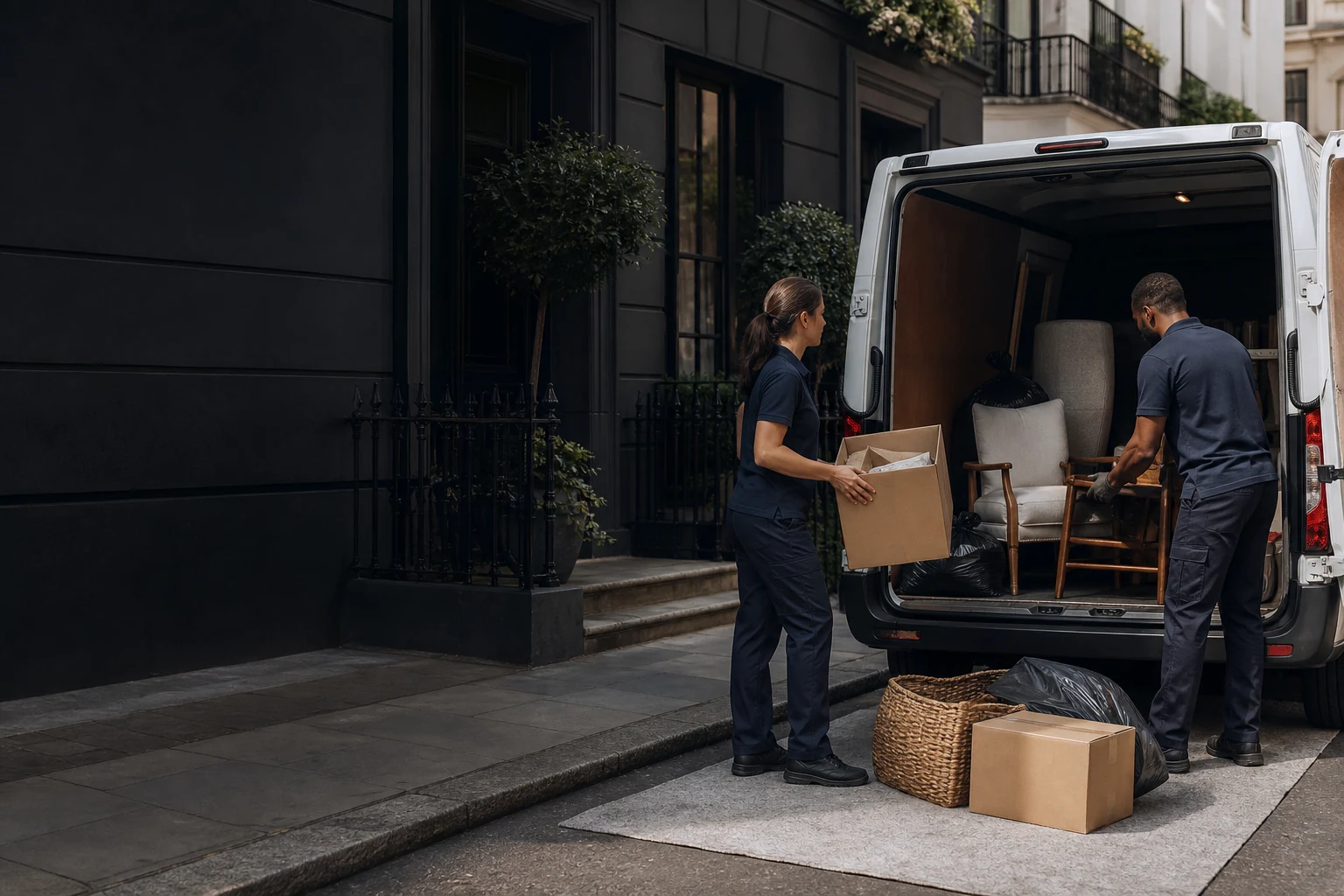
Access changes the work For the wider booking boundaries, review Alesta's waste collection service.
Show steps, gates and the distance from door to vehicle.
State the floor, stair turns and shared areas.
Confirm the working size and any booking rule.
Photograph gates, alleys and surface changes.
Use current signs or authority information.
Supply dimensions before dismantling is considered.
Before the team arrives If several rooms or stored areas are involved, the managed home clearance may be the more useful scope.
Check that the lift, shared doors and loading arrangements still match the assessment. Keep each included floor accessible and identify the order in which rooms can be opened. Separate possessions that remain, and avoid moving heavy items into an unstable corridor stack. Report added bags or a blocked route with updated images. Restricted materials stay identified away from general waste. Fixed fittings and service disconnections require suitable trades; furniture dismantling occurs only when previously agreed and safe.
Property context in Notting Hill Declared renovation material should follow the separate project waste removal rather than an ordinary mixed load.
In Notting Hill, the largest object often provides the best starting point for a clearance brief. Measure furniture that must pass a narrow hall, landing or shared entrance, and photograph both the item and the restrictive turn. State the floor, lift size and alternative staircase, then continue the route to the place where a vehicle may load. Communal access or controlled parking should be described as it operates now.
Build the inventory separately. Show the whole quantity, count household sacks and identify green material or renovation debris by type. Broken furniture, dense contents and unstable bags need closer views because condition changes handling. Keep chemicals, unknown liquids and other restricted goods apart. If dismantling could help, raise it during assessment rather than assuming it will happen on arrival. These details connect the physical load with its real route and allow labour, capacity and appropriate disposal to be considered without a postcode-based promise.
Identify the material
Describe every group that is present. Do not place uncertain liquids or unlabelled containers inside an ordinary mixed load.
Freestanding sofas, tables, wardrobes and other bulky household pieces.
Closed bags with their general contents described and unusual weight highlighted.
Cuttings and garden material kept visible and separate where accepted.
Compatible non-hazardous project debris, declared before the quotation.
Material route and limits
Reusable and recyclable material is separated where practical. The actual route depends on what is presented, so no fixed recycling percentage is promised.
Unknown liquids, paints, solvents, fuel and refrigerants must be declared before any collection is discussed. Batteries, specialist electrical items and hazardous substances need to be identified rather than hidden inside bags or boxes.
Make the load visible
Photograph a bulky piece assembled and record its height, width and depth before comparing it with doorways and stair turns. Then inventory the remaining material by location and type, not as a single vague pile. Count bags, distinguish lightweight household contents from dense debris and show garden waste in its actual containment. Mark objects that appear in more than one view so the total is not overstated. Uncertain containers need their own photographs and clarification. This combined evidence explains vehicle space, manual handling and loading stability while preserving the differences between materials that may require separate onward routes.
Quotation basis
Cost follows the declared material, volume, weight, crew time, disposal charges and complete carrying route. A floor number alone cannot show narrow turns, lift limits or distance to the loading point. Agreed safe dismantling may also add work. No fixed Notting Hill rate replaces those facts. The estimate remains tied to the photographs and access description. If another room is added, dense contents were omitted or the lift becomes unavailable, send the change early because labour, capacity or the collection arrangement may need revision.
Collection sequence
Send photographs and identify material.
Explain narrow halls and stair turns, floors and vehicle position.
Confirm the expected work and quotation basis.
The presented load is checked before loading.
Suitable material follows the appropriate disposal route.
Questions for this collection
Use wide photographs for each included space, bag counts and approximate furniture measurements. Add close views of dense or damaged contents, while noting repeated viewpoints so the same object is not counted twice.
Yes. Give its internal dimensions, floor served and the fallback staircase. Report an outage before arrival, as furniture handling and crew time can change substantially when the expected lift is unavailable.
It can carry significant weight without occupying much space. Naming the material and showing it separately supports safe lifting, accurate capacity planning, stable loading and selection of a suitable disposal route.
No. Isolate them and provide clear label photographs. Unknown liquids, chemicals, solvents, paint and fuel cannot be treated as ordinary mixed waste and must be declared before any suitable handling is discussed.
Measurements allow comparison with tight doorways, stairs and lift space. They reveal possible route problems and whether agreed safe dismantling needs discussion before the visit, rather than improvisation once the crew arrives.
Explain access codes, keys, internal steps, restricted times and any resident or building contact required. The team should not arrive assuming unrestricted use of shared doors or managed spaces.
Deep cleaning, repairs and making good are separate requirements, not automatic parts of collection. A practical sweep near the loading area may be possible, but any wider expectation should be agreed independently.
As soon as a loft, basement, cupboard or second room is included. Supply pictures and access notes because the additional area may alter volume, material mix, carrying time and planned capacity.
Collection area
Use the map to identify the collection address and describe the actual vehicle approach. Current access restrictions still need to be checked for the proposed date.
Return to the Waste Removal Services hub for the service scope.
