
Gutters Overflowing in Heavy Rain: Blockage, Downpipe or Roof Problem?
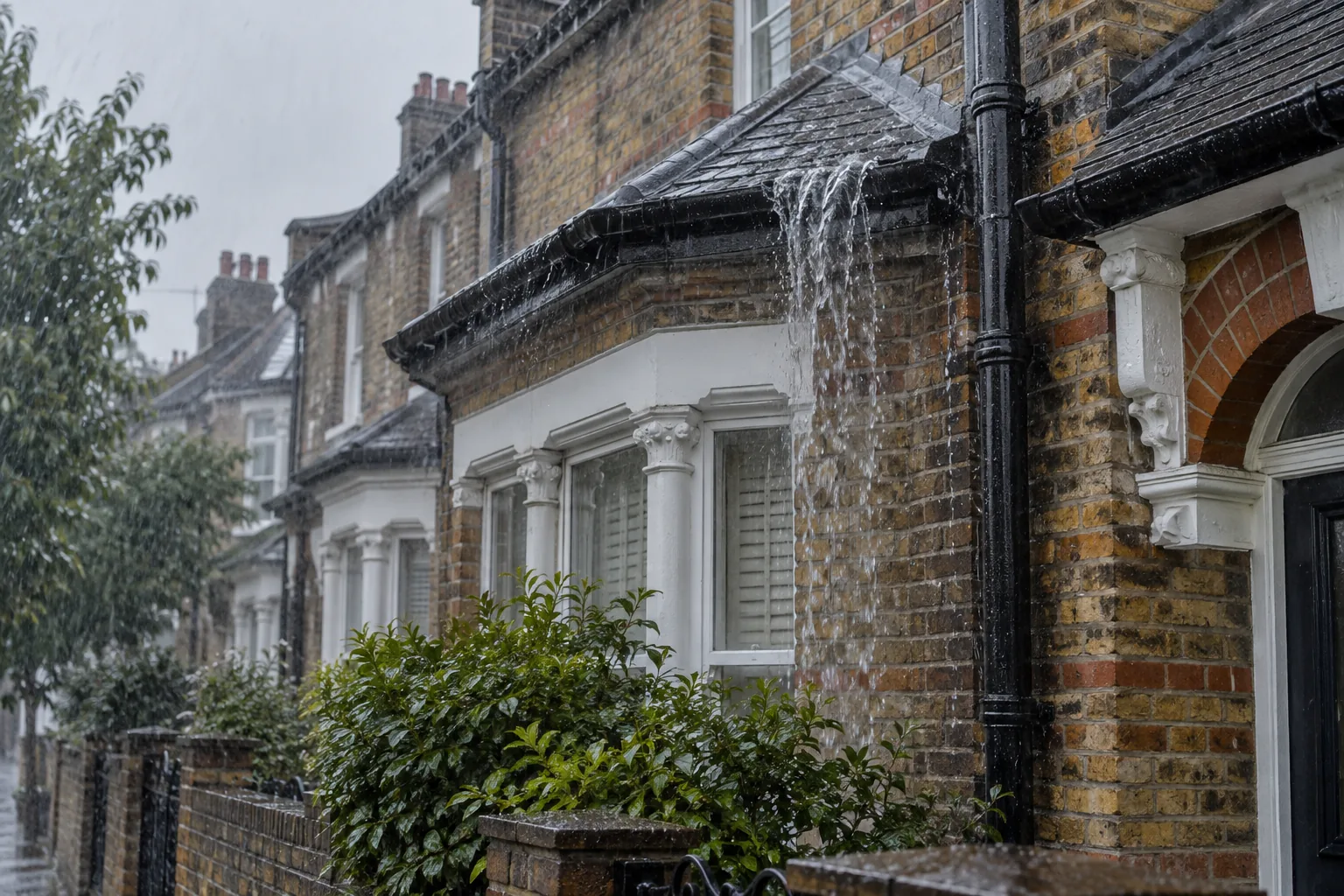
A gutter that overflows during a downpour is giving you a useful clue, but it does not automatically mean the whole run needs replacing. Where the water escapes, how quickly it starts and what happens after the rain can help you describe the problem accurately. You can make these observations from the ground or a safe indoor window. There is no need to climb a ladder in wet weather.
The immediate priority is the water’s destination. If it is pouring against a wall, above a doorway or towards an electrical fitting, keep the area clear and arrange a prompt assessment. Take a short video while the rain is falling if you can do so safely; by the time someone visits, the gutter may look normal again.
Quick decision guide
The pattern of overflow is useful when you describe the problem to a gutter specialist. Note what you can see safely from ground level.
| What you notice | What it may mean | Next step |
|---|---|---|
| Spill near downpipe | Outlet or pipe restriction is possible | Request a full flow check |
| Water behind gutter | Fixing or roof edge may be involved | Ask for inspection beyond debris removal |
| Leak at one joint | Joint or alignment may have failed | Record a short video during rain |
| Overflow only in intense rain | Capacity may be exceeded | Note rainfall and whether it repeats |
Start with the pattern, not a guess
Stand where you can see the affected elevation without going beneath falling debris. Note whether water spills from one short section, over the entire length, at the corner joint or from the top of the downpipe. Look for a stream running behind the gutter as well as one coming over its front lip. Those patterns are useful evidence, though none proves a cause on its own.
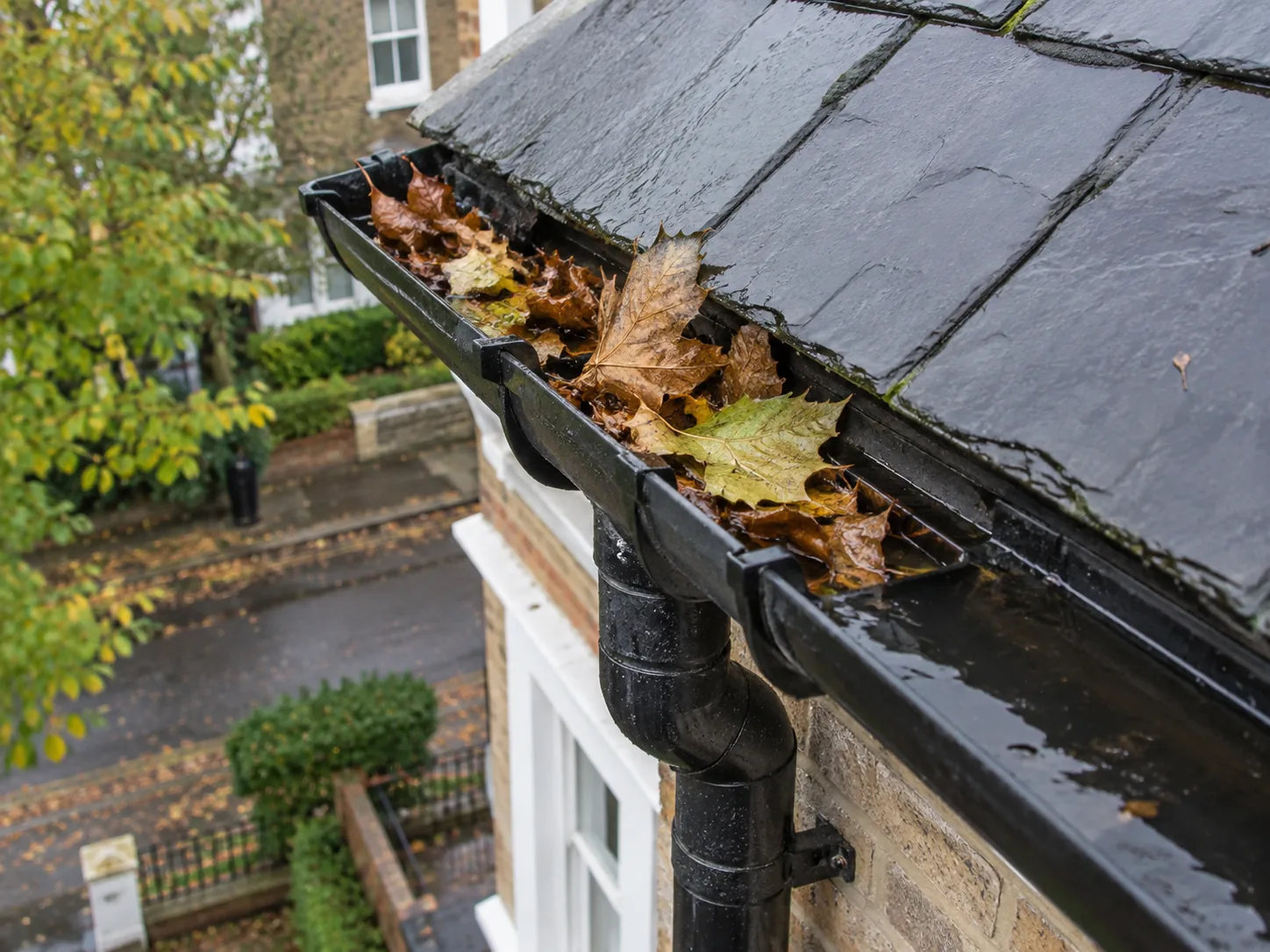
If the overflow starts soon after rain begins and is concentrated near the downpipe, debris may be restricting the outlet. If the gutter fills along a longer run, it could be packed with leaves or silt, set at an ineffective fall, or receiving more water than the outlet can discharge. Water behind the gutter, particularly in one place, may point to a loose fixing, a gap or a roof edge detail that needs closer inspection. Wind-driven rain can make the source harder to judge from below.
Clues that suggest a blocked gutter or outlet
Leaves, moss and grit can collect around the outlet even when the rest of the gutter looks fairly clear. Water then rises and spills over at the nearest low point. On a dry day you may see vegetation above the gutter line, streaks on the fascia or a line of staining below the overflow point. These are clues rather than a reason to reach across a roof or lean out of a window.
A blockage might also be further down the pipe. If the downpipe appears quiet while a gutter beside it is overflowing, record that. Equally, water may emerge at a pipe joint or pool at the base. The lower outlet and drain may be involved, so asking for the entire route to be checked is more useful than asking only for visible leaves to be removed.
Alesta’s gutter cleaning service is the relevant starting point when debris or restricted flow appears likely. Explain whether the problem happens in ordinary rain or only during a heavy burst, and whether access is straightforward. That helps establish the scope of a visit.
When the gutter may not be the only problem
A clean channel cannot compensate for every fault. A sagging section can hold standing water and spill before it reaches the outlet. A separated joint may leak through the gap, while a loose bracket may let water pass behind the gutter. If the roof covering, flashing or the edge where roof meets gutter is damaged, the water may be bypassing the channel entirely. These issues need someone to inspect the relevant parts in person; a ground-level video cannot settle the diagnosis.
The position of staining matters. A narrow mark directly below a joint differs from a broad damp patch below a roof edge. Interior damp or a water stain on a ceiling can have more than one source, so avoid painting over it until the water route has been investigated.
If the gutter overflows only in exceptional rainfall, note the intensity and duration rather than assuming a fault is absent. A brief surge can exceed the capacity of a particular run. Repeated overflow in moderate rain, or persistent water against the building, deserves attention sooner.
What to do during and after the rain
First, keep people away from a slippery patch beneath the overflow. Move loose items away from the splash zone if this can be done without standing under the water. Photograph the outside wall and any indoor staining, recording the date. Check whether water is entering a room; active ingress warrants a more urgent call than a dry wall with an occasional drip.
After the rain, look from ground level for a continuing drip or pooled water. Do not attempt to remove debris from a ladder, reach from an upstairs window or use a pressure washer from below. Wet surfaces, overhead cables and an unstable ladder turn a maintenance issue into a serious risk. A professional can assess safe access, including whether a high or awkward section needs different equipment.
When you book, give the address, approximate height, photos or video, and the exact overflow point. Mention conservatories, extensions, narrow side passages or shared boundaries that may affect access. Ask whether the visit covers the gutter run, outlet, downpipe and a flow check, and whether repairs will be quoted separately if damaged components are found. This is more useful than requesting a generic clean and hoping it resolves everything.
Prevent a repeat without over-maintaining
There is no universal cleaning interval for every London home. A gutter below deciduous trees has a different debris load from one on an exposed roof. Inspect from ground level after leaf fall and after severe weather, and keep a record of any repeat overflow point. If water begins to mark brickwork or collect at the foot of the wall, arrange a check instead of waiting for the next season.
The aim is a clear route from roof to drain and a dry building surface. Observing the pattern, documenting the rain event and describing the location will make the next visit more effective, whether the answer is a simple clearance or a repair.
