
End of Tenancy Cleaning Checklist UK: Room-by-Room Guide for 2026
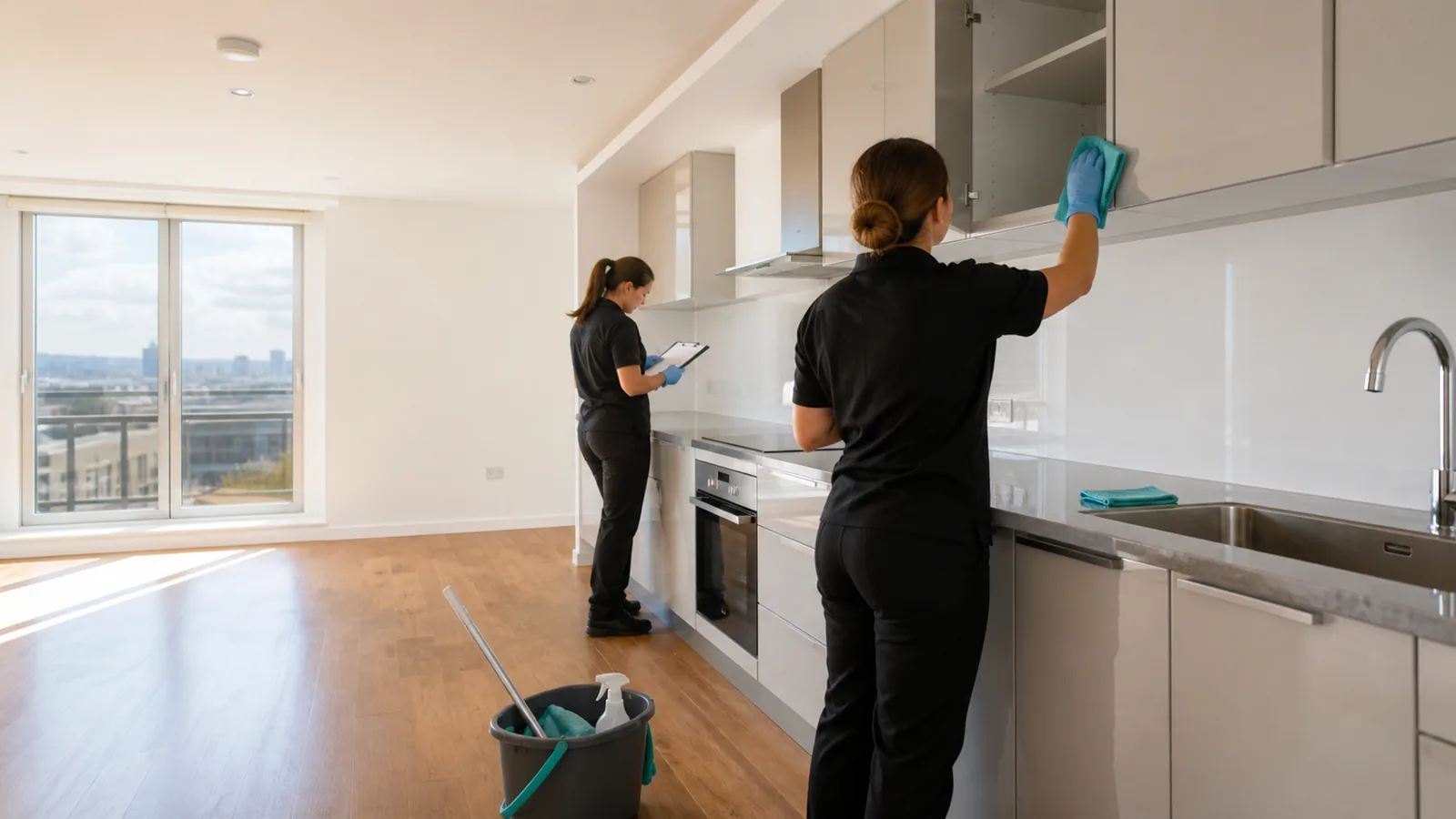
Work from the tenancy inventory, clean from high surfaces down, complete ovens and appliances early, and leave floors until the final stage. Photograph each finished room and keep invoices where professional work is required by the agreement. This guide explains the safest useful checks, the mistakes that can make the situation worse and the point at which a trained specialist should take over.
Why this problem happens
- missed areas inside cupboards and appliances
- grease left on extractor filters or oven components
- limescale around taps, screens and toilets
- dust on high ledges, frames and radiators
- marks that were already recorded on the check-in inventory
Safe checks you can make now
- compare the property with the signed inventory before starting
- remove belongings and rubbish so every surface is accessible
- clean kitchen appliances, cupboards and splashbacks
- descale bathroom fittings without damaging finishes
- dust doors, skirting, sockets and reachable fittings
- vacuum and clean floors last, then take dated photographs
Mistakes to avoid
- using an abrasive product on delicate finishes
- forgetting keys, bins, balconies or storage spaces
- leaving the oven until the final hour
- treating fair wear and tear as a cleaning problem
How to document the problem clearly
Take a wide photograph showing the room or appliance position and a closer image showing the affected detail. Record the date, recent weather or appliance use, any smell or sound, and whether the symptom changes after compare the property with the signed inventory before starting. If it is safe, repeat the observation at the same time on the following day. A short, accurate timeline is more useful than guessing at a diagnosis.
Preparing for a professional visit
When professional help is the better choice
Arrange an assessment when the source is uncertain, the issue returns, access requires dismantling or there is a safety concern. In particular, seek help when the property is large or time before checkout is limited; carpets, upholstery or appliances require specialist equipment; the tenancy agreement requests professional evidence.
For related help, view Alesta’s end of tenancy cleaning service, or call 020 3608 3976 to discuss access and availability.
Frequently asked questions
When should I stop and call a professional?
Professional help is sensible when the property is large or time before checkout is limited.
What is the most common cause?
The common causes include missed areas inside cupboards and appliances, grease left on extractor filters or oven components, limescale around taps, screens and toilets. The pattern and timing usually provide the best clues.
Can I deal with a small problem myself?
How can I prevent it returning?
Prevention starts with descale bathroom fittings without damaging finishes, dust doors, skirting, sockets and reachable fittings, vacuum and clean floors last, then take dated photographs. Address the source rather than repeatedly hiding the symptom.
