
Who Is Responsible for Mould in a Rented Property in England?
In England, mould responsibility depends on its cause. A landlord normally deals with leaks, defective supplied heating or ventilation, structural disrepair and hazards; a tenant should heat and ventilate reasonably where possible, use extractors and report defects promptly. A tenancy clause cannot remove statutory repair duties. Document the problem and obtain housing advice if a serious condition is ignored.
This is general information, not legal advice.
Build a cause file
Photograph the whole wall and close detail with dates. Note room, smell, weather and whether growth worsens after rain, bathing or appliance use. Record failed fans, cold radiators, loose gutters, staining and damaged seals. Save messages and visit reports.
A humidity meter shows trends but does not assign blame. High humidity may follow occupation, a leak, poor ventilation or a home that cannot be heated effectively. Evidence needs both building and living conditions.
The repair framework
Section 11 of the Landlord and Tenant Act 1985 covers landlord obligations for structure, exterior and installations for water, gas, electricity, sanitation, heating and hot water within its terms. Fitness duties under the same Act, expanded by the Homes (Fitness for Human Habitation) Act 2018, can include damp-related conditions.
Notice matters. Report in writing with enough detail for action and offer reasonable access. A leak needs an urgent channel; recurring mould still deserves dated notice before checkout.
Condensation is not an automatic verdict
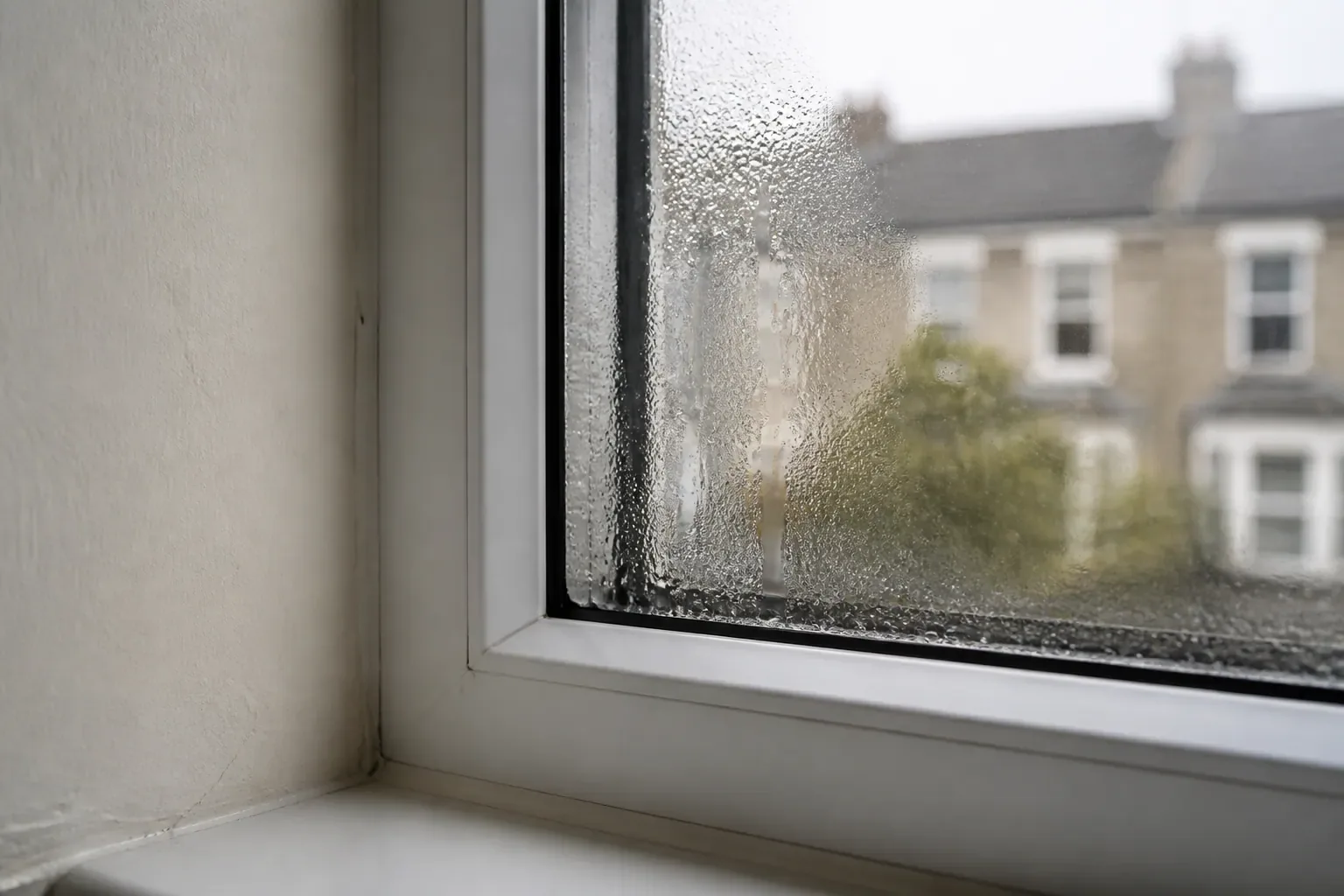
People create moisture through cooking, bathing, breathing and laundry. Tenants should use working extractors, vents and reasonable heating. But “open a window” is incomplete where a fan is broken, windows cannot ventilate safely, insulation creates severe cold bridges or heating fails.
A tenant may contribute by disabling ventilation or not reporting growth. More than one cause can coexist. Inspection should examine fabric, services and actual use rather than issuing a stock accusation.
Match the pattern to the inspection
Staining below a bathroom or near pipework suggests escape of water. Marks that grow after rain near roofs or windows suggest penetration. Low-level salts and damaged plaster need building assessment. Visual diagnosis is imperfect; a plumbing leak investigation fits suspected supply, waste or heating pipes.
Photograph before cleaning. Removing surface evidence while moisture continues creates a cosmetic pause, not a repair.
Local-authority involvement
Councils assess conditions through the Housing Health and Safety Rating System, which includes damp and mould growth as a hazard. Advice or enforcement depends on evidence, severity, tenure and legal tests. Private tenants can contact the council’s housing or environmental-health team; social tenants also have complaint and ombudsman routes.
Awaab’s Law brings specified time-bound duties in social housing through regulations. Do not assume a headline timetable applies identically to private renting. Check current GOV.UK guidance for tenure and date.
Write a report that requests a cause
- State first observation and every affected room.
- Attach labelled photographs and identify failed equipment or visible water.
- Describe urgency without diagnosing illness.
- Request source inspection and a written plan, not paint alone.
- Offer access dates.
- Record cleaning and ventilation already attempted.
Use an urgent route for sewage, unsafe electrics or collapse risk. Otherwise, a clear paper trail gives an opportunity to repair and evidence for escalation.
Remediation follows moisture control
Small surface growth may sometimes be cleaned using appropriate product and protection, but widespread or porous contamination needs assessment. Never mix bleach with other cleaners. Painting over active growth hides rather than proves resolution.
After repair and drying, professional mould removal can address affected finishes. Ask about containment, dryness and occupant protection. An end of tenancy clean cannot repair building defects or decide liability.
Rent and deposit disputes
Do not withhold rent or deduct repair costs without legal advice; that can create a separate dispute. Shelter, Citizens Advice, a law centre or housing solicitor can advise. Deposit schemes have evidence and dispute procedures. Keep check-in records, invoices and correspondence.
Questions for the inspection
Ask what moisture source was tested, which readings were taken, what must dry before decoration, and how recurrence will be monitored. If the answer is solely occupant behaviour, request the evidence that ruled out leaks, ventilation failure and fabric defects. If tenant actions contribute, ask what feasible change and building support will control them.
The useful legal and practical question is not landlord versus tenant in the abstract. It is what brought moisture there, who can reasonably remove that cause, when notice was given and what action followed.
Health information should be specific and private
Tell the landlord if an occupant has a vulnerability that makes delay especially serious, but share only what is necessary and use a secure channel. A GP can address symptoms; a surveyor or environmental-health officer assesses property conditions. Photographs of a rash do not prove a mould species or building cause.
If a clinician supplies advice about avoiding a room, retain it. Ask the landlord what temporary measures or alternative accommodation process applies while urgent work is assessed. Do not sleep in a room with unsafe electrics or falling material simply to preserve evidence.
Drying is part of repair
Stopping a leak does not dry plaster, timber or insulation immediately. Ask how moisture will be measured, what ventilation or dehumidification is planned, and when finishes can be replaced. Decorating too early can trap moisture and produce another bloom. Tenants should receive clear instructions for equipment, electricity use and access.
Record the dry-down period and any machine readings supplied. If mould returns in the identical outline, that comparison helps show whether the source persisted or a different moisture route exists.
Independent reports and proportionality
Before paying for a private survey, ask the council or adviser what evidence would help and whether the report writer has appropriate competence and independence. A report should describe inspection limits, readings, likely sources and recommended repairs. A sales quotation for one treatment product is not automatically an impartial diagnosis.
Keep the scope proportionate. A small window-edge patch and widespread growth across bedrooms do not require identical escalation, but repeated growth after reported disrepair should not be normalised.
At checkout
Use dated photographs after belongings are removed. Provide earlier correspondence showing when the issue was reported. A cleaning invoice proves work performed, not the legal cause of mould. If deposit deductions are proposed, respond through the tenancy-deposit scheme with the chronology, inspection records and repair evidence rather than an emotional summary.
Temporary measures must not replace the plan
Moving a wardrobe away from a wall, running an extractor or using a dehumidifier can reduce immediate moisture and exposure, but record who supplies equipment, who pays electricity and how long it should run. Ask for the repair timetable in parallel. A temporary step becomes unreasonable when it is repeated indefinitely while the leak, cold bridge or failed fan remains untouched.
Keep furniture clear enough for inspection and airflow without blocking exits. Do not remove fixed vents, wall linings or contaminated plaster yourself to search for proof.
