
Oven Not Heating Up: How the Symptoms Point to the Fault
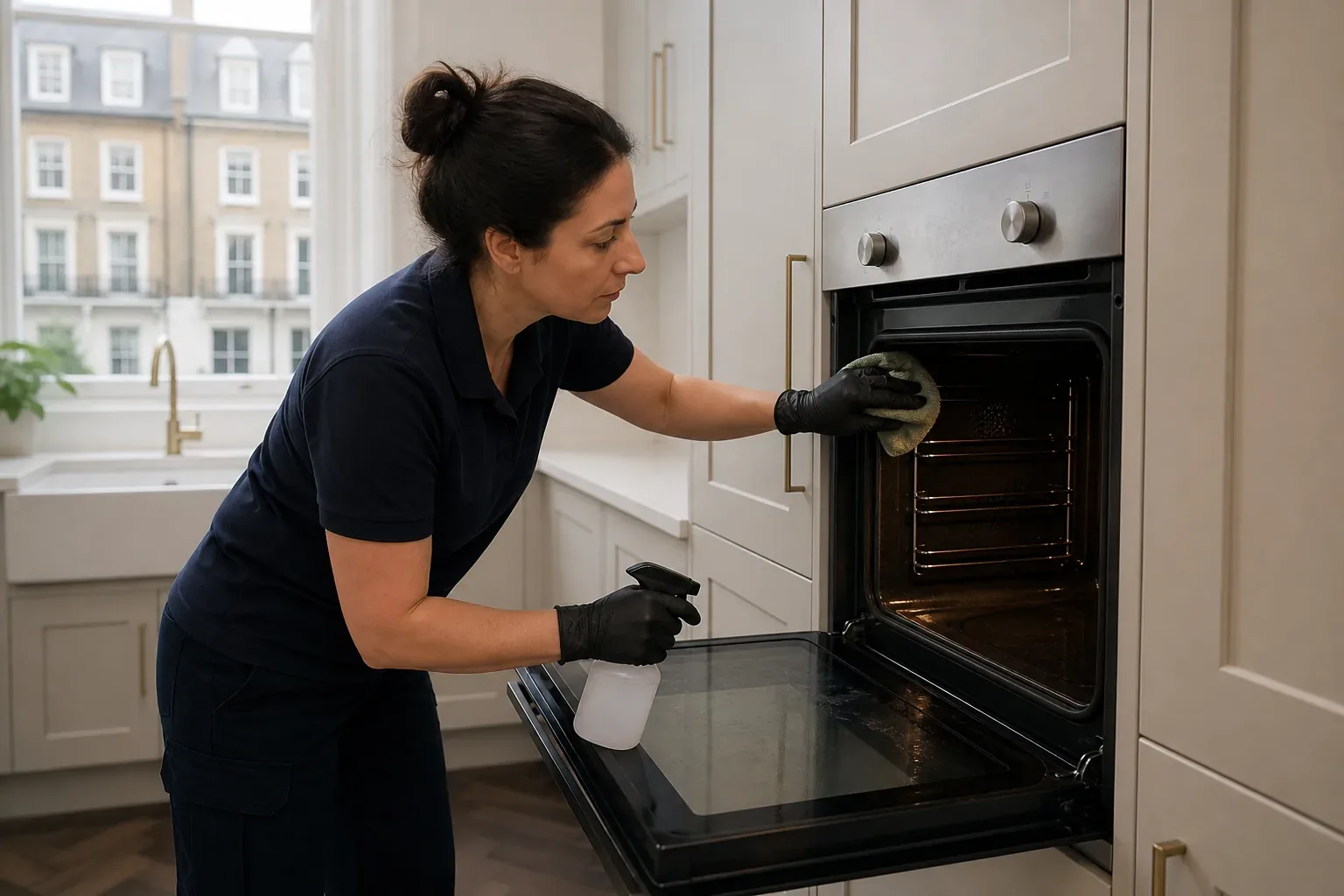
If the oven light and fan work but the cavity remains cold, a failed heating element is a common suspect; if the whole appliance is dead, check its supply and timer before blaming the element. Use normal controls only. Do not remove panels. Stop if it trips, sparks, smells of burning or has damaged wiring. Gas work requires a Gas Safe registered engineer.
Use the functions as a fault map
With the cavity empty, select one mode at a time only long enough to observe indicators. Does the lamp illuminate? Fan rotate? Grill glow? Does conventional heat work while fan heat stays cold? A working mode proves some supply is present and narrows the circuit.
Never touch an element to judge heat. Stop any test that produces unusual noise or smell. Write the sequence down; “fan works, grill heats, fan-oven mode cold” is far more useful than “not heating”.
After a power cut, read the clock
Many ovens will not heat until the clock is set after power loss. A flashing display, AUTO symbol or timer icon is a strong clue. Use the exact model manual to restore manual cooking. Random button combinations can set delayed operation rather than cancel it.
View the consumer unit from the front only. Do not repeatedly reset a breaker or RCD. A second trip indicates a fault even if the appliance briefly warmed.
Fan turning does not clear the element
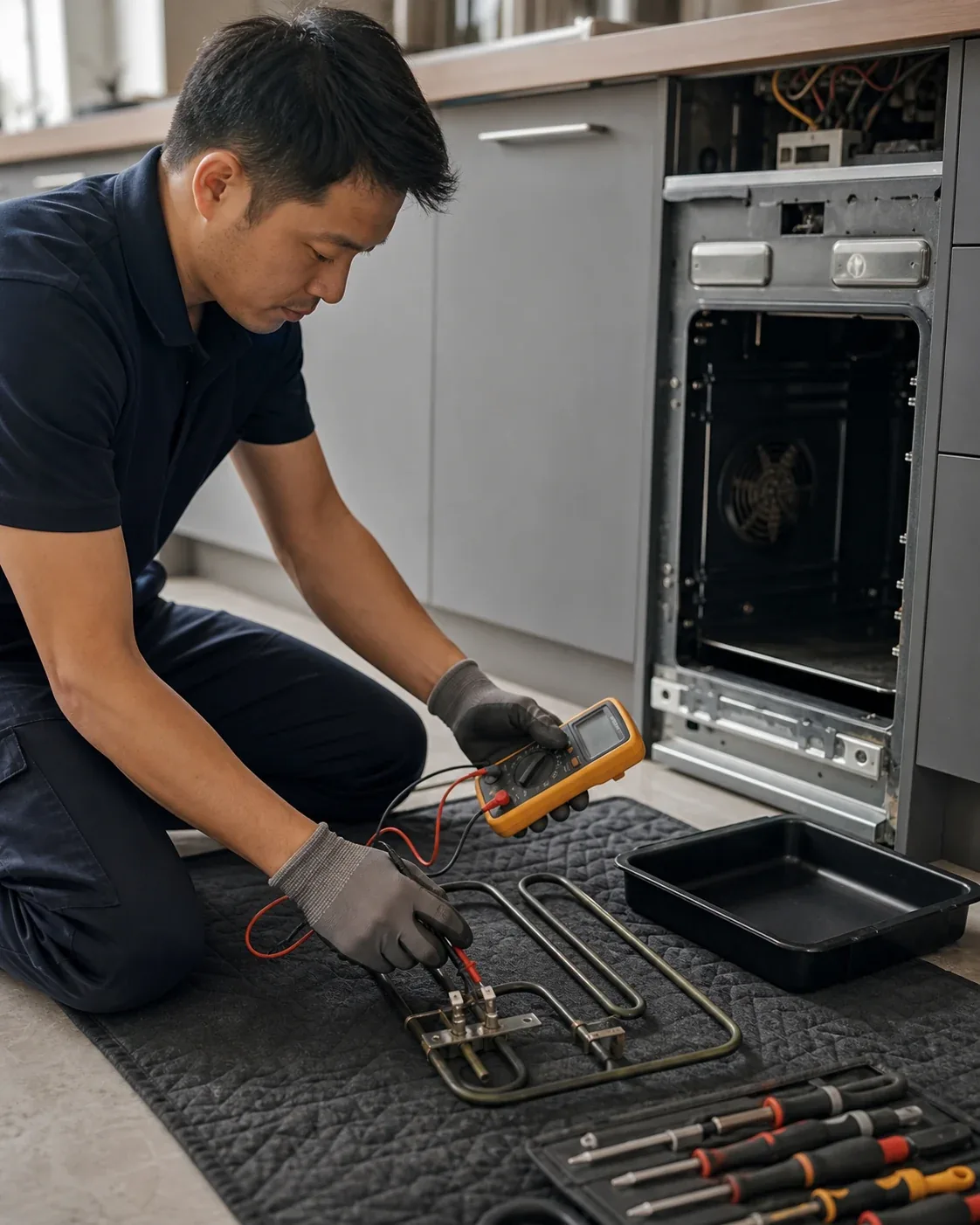
In many fan ovens, a circular rear element supplies heat while a separate motor turns the fan. The element can split visibly, but an intact appearance does not prove electrical continuity. Thermostat, selector, relay, sensor and wiring faults can create similar symptoms.
Continuity and voltage testing exposes mains components. Book an oven and cooker repair with the model number and function map rather than ordering a part from appearance.
Grill works, oven cold
The grill usually has its own element and control path, so it can work when an oven circuit fails. Test whether conventional top-and-bottom heat warms and whether the temperature lamp cycles. A selector contact can fail on one position, especially after earlier intermittence.
Describe a stiff control or previous crackling, but do not spray cleaner into a switch. Liquids behind the fascia introduce another hazard.
Slow heating is a different complaint
An oven that warms but never reaches setting may have a weak element, sensor or thermostat error, door-seal loss or control problem. A domestic oven thermometer gives only a rough comparison; one slow-reacting reading is not calibration.
Inspect a removable seal only when cold. Refit it as the manual shows. Broken hinges, glass or locking parts need service; never wedge a door closed.
When it trips
Record whether the circuit operates immediately, as heating starts, after several minutes, or only on one function. An insulation fault can emerge as an element warms. Moisture after cleaning may contribute, but waiting does not justify repeated energising. Leave it off and arrange appliance diagnostics.
If the isolator, socket or cable is hot, noisy or discoloured, do not move a hard-wired cooker. The fault may extend beyond the appliance.
Cleaning and repair have separate jobs
Carbon can obscure components and grease can smoke, but cleaning cannot restore an electrically open element. Conversely, spraying through vents, soaking controls or fitting foil against elements can cause damage. Follow manufacturer rules for liners and pyrolytic cycles.
A professional oven clean addresses residue, not a no-heat fault. Tell the cleaner about cracked glass, loose seals or earlier electrical symptoms.
What the engineer needs
- Model and product number.
- Function-by-function results.
- Indicator, fan, lamp and grill behaviour.
- Error or timer symbols.
- Exact timing of any trip.
- Recent power cut, cleaning, installation or impact.
Ask for diagnosis before parts and a quote covering parts, labour and final testing. Repair should end with a controlled heat-up, thermostat cycling and confirmation that protective devices remain stable.
Repair or replacement?
Consider appliance age, overall condition, part availability, energy performance and repair cost together. A single accessible element in an otherwise sound oven is different from corrosion, damaged wiring and repeated control failures. Request the fault and proposed part in writing before deciding.
The practical answer is a symptom map, not a guessed element. Supply, clock, individual heat modes and trip timing can be observed safely. Everything behind the panels belongs to someone equipped to test it.
Prevent a repeat caused by use
Keep vents clear, avoid foil on cavity floors unless expressly permitted, wipe spills after cooling and use self-cleaning functions exactly as instructed. Do not hang heavy trays on an open door. These habits protect airflow and hardware, but they are maintenance—not an explanation for a confirmed electrical failure.
Built-in ovens need safe access planning
Tell the engineer whether the appliance is built under a hob, fitted at eye level or part of a range. Send cabinet photographs and explain any trim that blocks removal. Do not pull a heavy built-in oven onto an open door or worktop. The engineer needs a protected landing area and access to the correct isolation point.
If a recently installed unit never heated correctly, preserve the installer’s paperwork and check warranty terms before authorising third-party work. A supply configuration or installation defect can present differently from a component that failed after years of use.
Food results are clues only when the method is controlled
A pale cake does not prove low temperature if the wrong shelf, tin or function was used. Compare the same simple item using the manufacturer’s stated mode and preheat instruction. Do not conduct a culinary test when electrical symptoms exist. Where only one side browns, record shelf position and fan behaviour; damaged door seals, airflow obstruction and element distribution can all matter.
Do not block vents with oversized trays. Leave the clearance required in the handbook so hot air can circulate and controls remain cooled.
Pyrolytic and self-cleaning complications
A pyrolytic cycle operates at very high temperature and uses a door lock. Remove accessories the manual excludes and never attempt the cycle with a damaged seal, heavy loose deposits or an existing fault. If the door remains locked after cooling, do not force it. A lock, sensor or control fault needs model-specific diagnosis.
Catalytic liners and steam-assisted programmes are different technologies. Applying caustic cleaner to a catalytic panel can ruin it. Identify the oven before selecting a cleaning method.
Questions before approving a part
Ask what test identified the component, whether the replacement is manufacturer-approved or compatible, what warranty applies, and whether the quote changes if another fault appears. Request the old part where safe and lawful, or an explanation if it must be retained. Final testing should include each affected mode, temperature control and a check that no fault code or protective trip returns.
