
Dishwasher Not Draining? Safe Checks Before You Call an Engineer
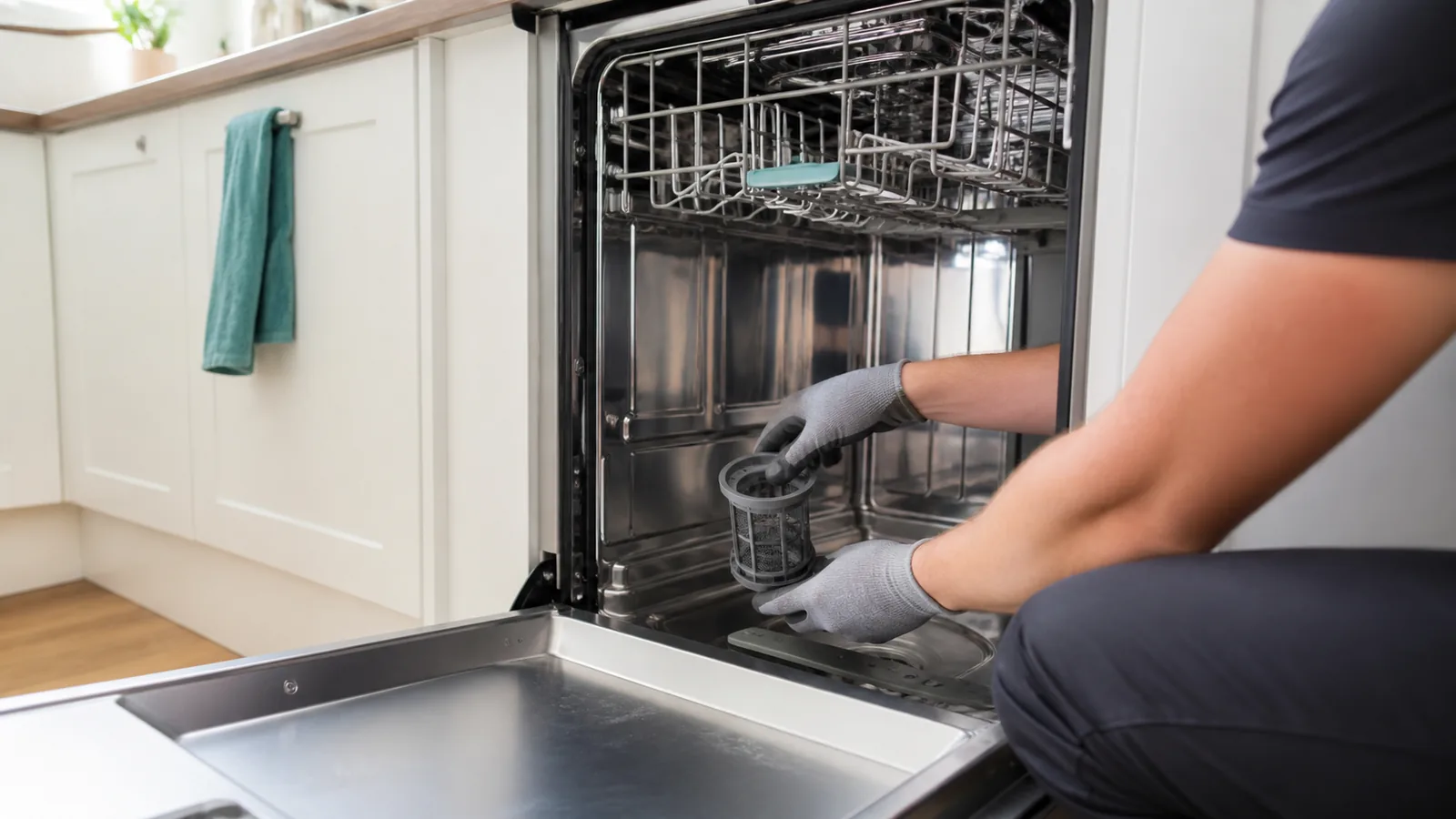
Switch the dishwasher off, remove standing water carefully, clean the accessible filter and check the visible waste hose for a kink. If the pump hums, the machine leaks or the fault returns, arrange an appliance engineer rather than dismantling it. This guide explains the safest useful checks, the mistakes that can make the situation worse and the point at which a trained specialist should take over.
Why this problem happens
- a filter blocked with food debris
- a kinked or obstructed drain hose
- a blocked sink waste connection
- a pump obstruction or failed pump
- a control or sensor fault
Safe checks you can make now
- disconnect power before reaching into the filter area
- remove water with a cup and absorbent cloths
- clean only user-accessible filters shown in the manual
- check whether the kitchen sink drains normally
- inspect the visible hose without pulling the machine unsafely
- record any error code before resetting the appliance
Mistakes to avoid
- putting a hand into an unseen pump area
- using drain cleaner inside the dishwasher
- repeatedly running cycles while water remains
- tilting an integrated appliance without safe access
How to document the problem clearly
Take a wide photograph showing the room or appliance position and a closer image showing the affected detail. Record the date, recent weather or appliance use, any smell or sound, and whether the symptom changes after disconnect power before reaching into the filter area. If it is safe, repeat the observation at the same time on the following day. A short, accurate timeline is more useful than guessing at a diagnosis.
Preparing for a professional visit
When professional help is the better choice
Arrange an assessment when the source is uncertain, the issue returns, access requires dismantling or there is a safety concern. In particular, seek help when there is leakage, burning smell or an electrical trip; the pump makes an unusual noise or does not run; the blockage returns after accessible parts are cleaned.
For related help, view Alesta’s dishwasher repair service, or call 020 3608 3976 to discuss access and availability.
Frequently asked questions
When should I stop and call a professional?
Professional help is sensible when there is leakage, burning smell or an electrical trip.
What is the most common cause?
The common causes include a filter blocked with food debris, a kinked or obstructed drain hose, a blocked sink waste connection. The pattern and timing usually provide the best clues.
Can I deal with a small problem myself?
How can I prevent it returning?
Prevention starts with check whether the kitchen sink drains normally, inspect the visible hose without pulling the machine unsafely, record any error code before resetting the appliance. Address the source rather than repeatedly hiding the symptom.
