
An intact covering
Describe the visible surface and any known specification without testing it. Its appearance should not be used to assume compatibility with a treatment approach.
Stoke Newington / PROPERTY CONDITION
Keep the covering and the painted return identifiable.
A patch can cross a wallpaper seam into a painted area without creating one uniform surface. For Stoke Newington, show where each visible change stops and describe any lifted edge without peeling it back. Agree suitability and limits before assuming the covering will be removed, cleaned or replaced.
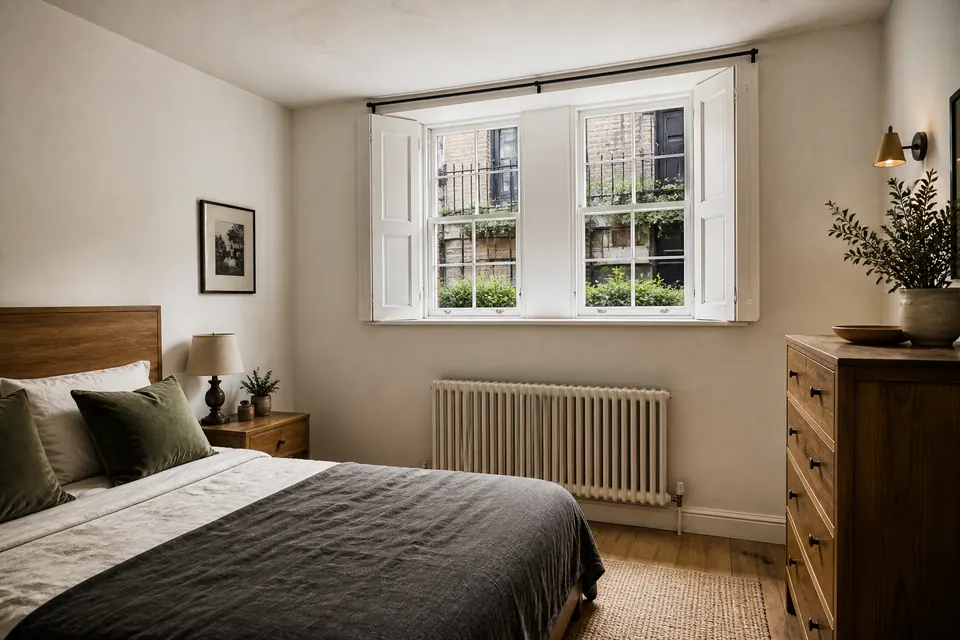
Seam · painted return · visible limits
Stoke Newington / ACCESS & PEOPLE
Describe the visible surface and any known specification without testing it. Its appearance should not be used to assume compatibility with a treatment approach.
Report what is already loose and leave it undisturbed. The condition may affect suitability, and a treatment proposal should not promise to restore adhesion by implication.
Keep its dimensions and condition separately identifiable. One uninterrupted outline can cross a material boundary that changes the scope.
Tenants can document the seam and obtain permission for proposed work without stripping the wall. The enquiry should not require damaging a covering to demonstrate an underlying concern.
Landlords should identify any intended stripping or re-covering separately from treatment. A general instruction to address the mark should not silently include reinstating the decorative finish.
Homeowners can explain the desired result while asking what the existing materials allow. A matched decorative outcome is not automatically part of removing suitable growth.
02 / LOCATE THE ISSUE
Choose the setting and identify the finish boundary. A continuous-looking mark does not establish that both materials can be treated in the same way or that the backing has been assessed.
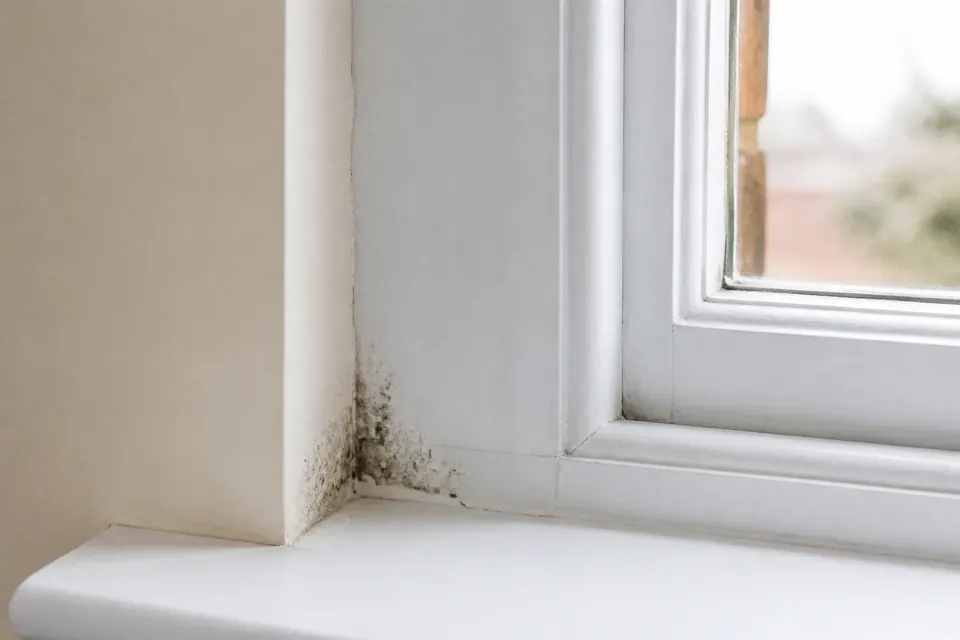
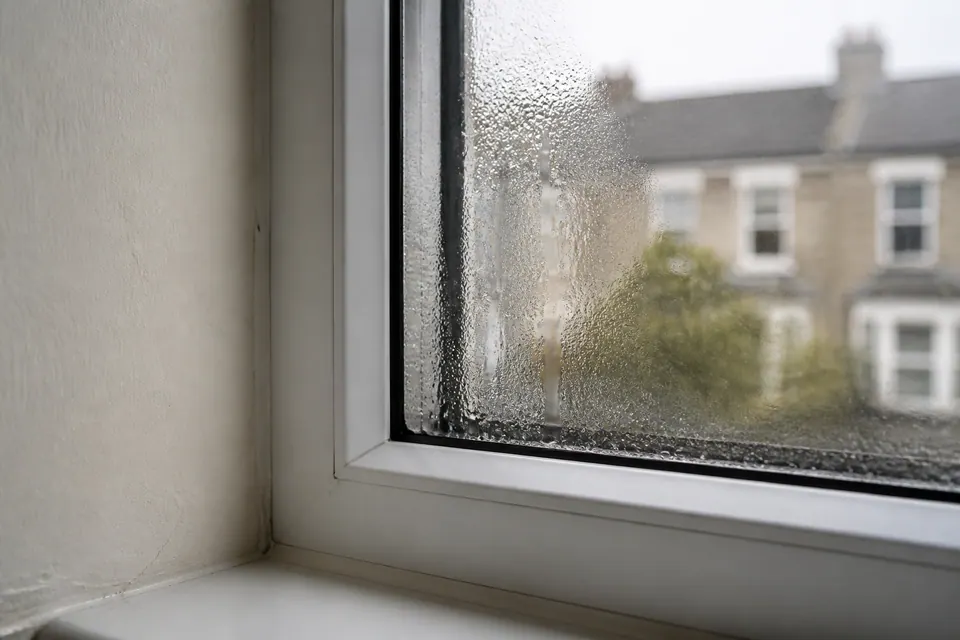
Show the paper edge, painted reveal and frame together. Describe the mark on each material separately, keeping any moisture observation at the window distinct from a conclusion about the paper backing.
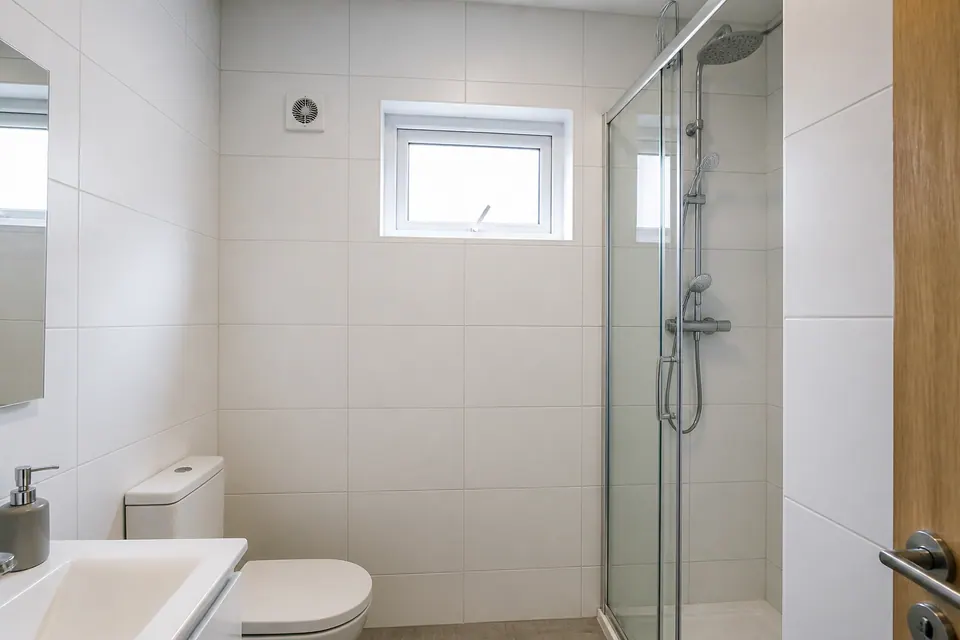
Identify the actual coating or covering rather than assuming every bathroom surface is washable. A lifting edge or damaged component may need a different decision from suitable surface treatment.
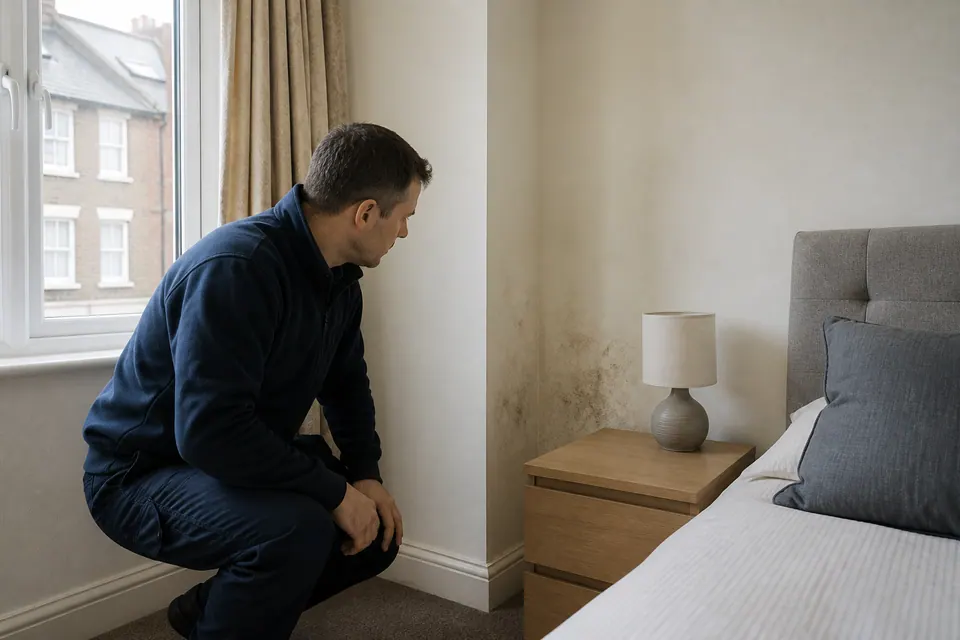
Include the furniture that restricts the view and leave the covering intact. The accessible edge can support an enquiry without exposing the entire backing or moving affected belongings prematurely.
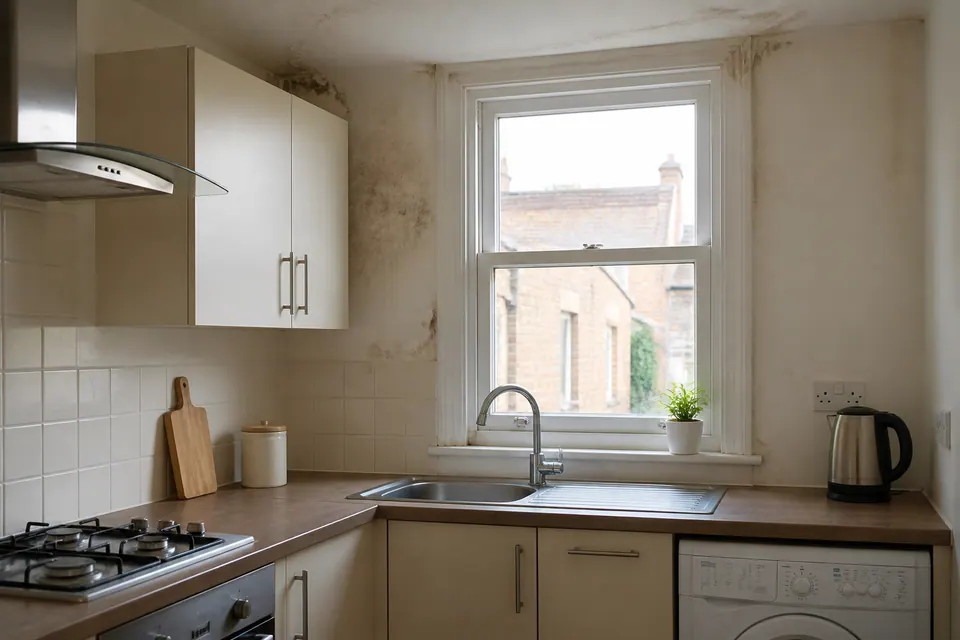
Distinguish wall covering from painted or coated joinery where they meet. Known cooking or plumbing observations can be reported without assigning a single cause to all materials.
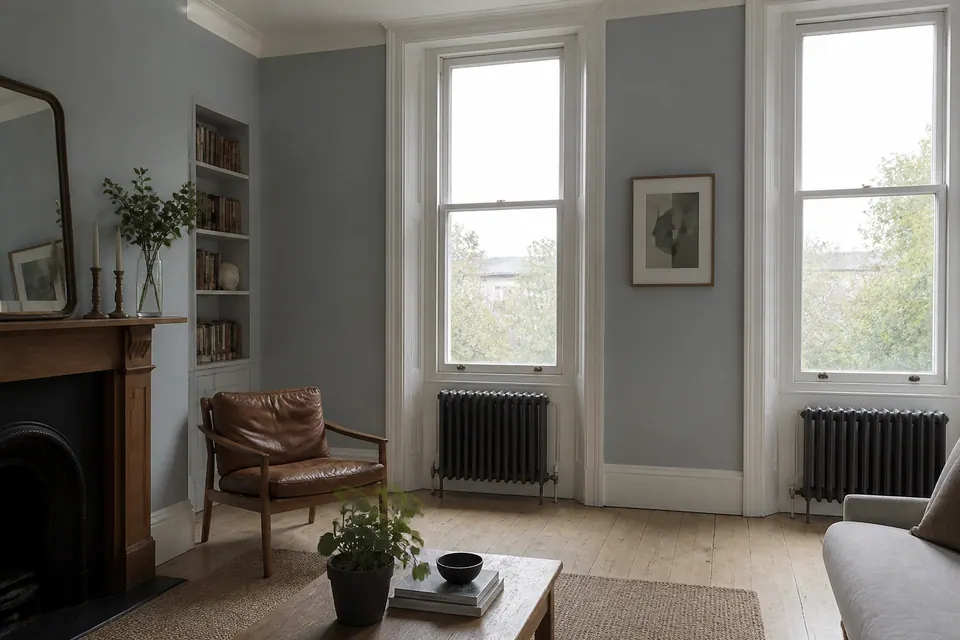
Use the wider wall view to show where the covering begins and ends. A detail image should not hide that only part of the affected area is papered.
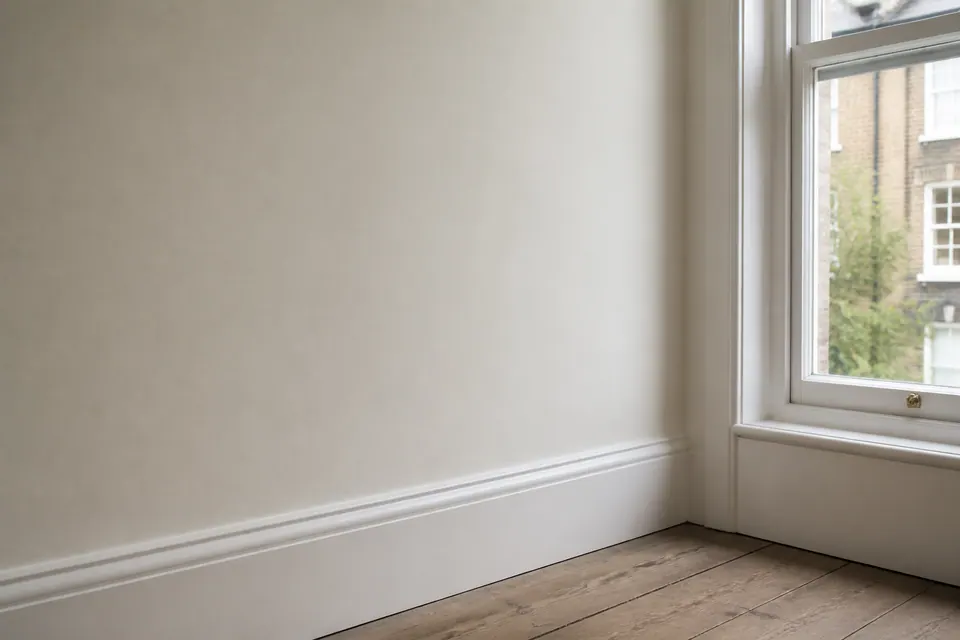
Describe only what is already exposed, including any damaged edge. Do not peel more material to identify the backing or assume a hidden portion is suitable for the same work.
Explain the visible limit and the obstruction. A suspected continuation behind belongings or a covering should remain unconfirmed rather than becoming a measured treatment area.
Growth, staining and failure of a covering can be different observations. Describe them separately so a removal enquiry does not imply restoration of an already damaged finish.
03 / SEPARATE THE QUESTIONS
Describe the visible pattern without using the material boundary as a diagnosis. A lifted covering, a stain and growth on an adjacent coating may require different questions.
| Visible issue | Possible contributing factor | What may need checking |
|---|---|---|
| A mark at the papered window edge | Moisture near the reveal may be relevant | Separate frame observations from the condition of the covering |
| A damaged edge near bathroom use | Repeated wetness may contribute | Review the actual finish rather than assuming a washable surface |
| Staining across two coatings after known work | Past or current moisture may matter | Provide the repair history and condition on each side |
| A return follows the same seam | An ongoing contributor may remain | Assess recurrence without treating the seam as the source |
Source investigation, leak or ventilation work, backing replacement and decorative reinstatement need separate agreement where relevant. A surface proposal should not imply that a new covering resolves every underlying question.
Mould describes fungal growth and damp describes excess moisture. Loss of adhesion or a damaged seam is another condition to report, not a substitute for either diagnosis.
| Question | Mould | Damp |
|---|---|---|
| What is being described? | Growth on a particular finish | Excess moisture affecting material or surroundings |
| Evidence to supply | The outline on each side and the existing edge condition | Known wetness and reliable water history |
| How may they relate? | Growth can persist where moisture remains | Moisture can contribute without identifying the seam as its origin |
| The decision ahead | Which material is suitable for treatment? | Does the moisture question need further assessment? |
Stoke Newington / THE PROPERTY BRIEF
The seam belongs in the scope description.
Show the covering and painted area together, with separate details of their condition. Mention any lifting without removing it and identify the finish only where known. Ask which material can be considered for treatment and whether stripping, backing work or replacement needs a separate decision.
05 / QUOTATION, NOT GUESSWORK
The quotation should identify the covering and adjoining coating, their condition and the visible extent. Photographs may support a suitable defined area, while damage or uncertainty can require assessment. Stripping and replacement should not be presumed included simply because the mark crosses a seam.
See the main mould-removal service ↗| Scope | Quotation basis | Material distinction to retain |
|---|---|---|
| Suitable accessible finishes with clear boundaries | Photographs may support pricing | Identify which side of the junction is included |
| Recurrence or uncertainty across the seam | Assessment may be required | Keep the histories and conditions separately described |
| Lifted covering or damaged backing | Specialist quotation may be needed | Clarify stripping and reinstatement outside an assumed removal scope |
Ask for the total and exclusions by material where useful. Removing a covering, treating backing and applying a new finish are not automatically included in a surface-removal quotation.
06 / DIRECT ANSWERS
It can describe an agreed combined scope, but the materials and limitations should remain clear. A single price should not hide a different suitability decision on one side.
A new decorative layer is not a substitute for considering growth and moisture. Ask which condition needs assessment before another finish is planned.
No. The position helps locate the observation, but it does not establish the moisture source or the condition behind the covering.
Do not assume it. Removal of a covering and work on the backing need explicit agreement and may involve a different scope.
Ask what material conditions and instructions apply before the next decorative task. Completion of surface work is not an automatic re-covering deadline.
Describe the existing damage without pulling it further. Suitability and any replacement decision need assessment rather than an assumed cleaning-only outcome.
The materials and condition should be reviewed separately. A continuous mark does not establish identical treatment or cosmetic expectations.
Not by itself. A moisture contributor may need separate investigation or repair, distinct from surface treatment and decorative replacement.
07 / A CONTROLLED APPROACH
Review the covering, painted return and any existing damage independently. Identify uncertainty about the backing or specification before defining suitable surface work.
Agree preparation without unrequested stripping or peeling. Explain nearby furniture and any restriction that prevents a clear view of the junction.
Carry out the confirmed approach within the material-specific limits. Replacement of a covering or work on concealed backing should not be implied where it was not agreed.
Explain any residual mark, damaged edge or separate decorative decision. Keep return instructions distinct from permission to re-cover the wall.
The illustration does not promise restoration of a covering or identical results on both sides of a material boundary.
Record the papered and painted portions separately.
Follow the suitability limits agreed for each finish.
Distinguish remaining damage from addressed growth.
These stages are illustrative, not customer wallpaper-restoration evidence. A treated surface does not establish the condition of concealed backing or guarantee a decorative match.
08 / ROOM-BY-ROOM CONTEXT
A bathroom-area covering should not be assumed equivalent to an intact painted ceiling. Identify its material and damage before expecting the same approach.
A bedroom seam behind furniture needs both a finish description and an access plan. Do not peel or clear affected material simply to enlarge the photograph.
Kitchen coatings and wall coverings can meet in a small area. Keep them separately labelled so the enquiry does not assume one uniform surface.
For a living-room elevation, show the full boundary of the covering. A close-up alone can hide which portion of the mark lies on the painted return.
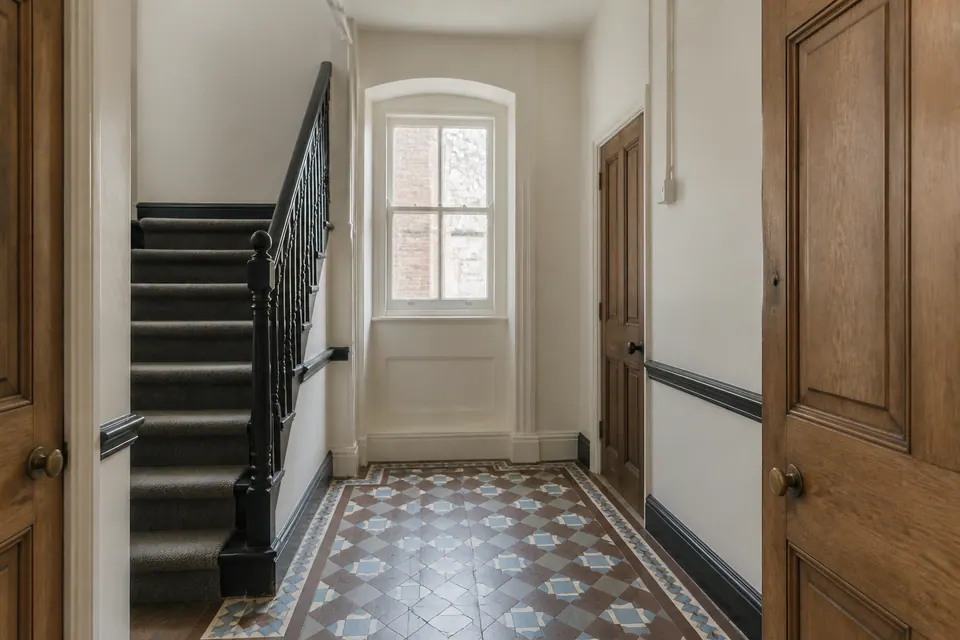
If a covering belongs to shared space, permission for treatment and any replacement needs separate clarity. Access through the area does not settle that scope.
In a lower-ground room, include reliable moisture history as well as the covering. Persistent wetness or damaged backing may require work beyond accessible surface treatment.
09 / WHEN IT COMES BACK
Keep earlier images showing the seam and painted return if available. Record whether the visible change remained on one side or appeared on both, without peeling the covering to reconstruct an earlier condition.
A continuing moisture contributor may remain relevant, but the seam itself does not identify the source. The material transition and the recurrence timeline should inform assessment without becoming an automatic diagnosis.
Document changes from the same room reference and state any known decorating work between observations. Avoid extending a lifted seam to make the sequence appear more complete.
Stoke Newington / PLAN THE APPOINTMENT
Send the postcode and a wider image that includes the covering and painted return. Explain any obstruction and identify known decorating information without guessing the hidden backing.
Keep any planned stripping or replacement appointment separate until the suitable scope and sequence have been clarified.
View the Stoke Newington area map.
Stoke Newington / BEFORE BOOKING
Keep the existing edge intact while clarifying what suitable treatment, removal and replacement would each mean.
No peeling should be assumed necessary. Show the edge already visible and describe any uncertainty about the backing without enlarging the opening.
State that it is unknown and provide a clear view. Do not test the surface to choose a label; suitability may need further assessment.
Keep them separately identifiable where safely possible. A combined total can otherwise hide different conditions or limitations.
Do not assume restoration of adhesion or appearance is included. The damaged covering may require another decision distinct from treating growth.
You can explain a decorative plan, but ask what must be clarified about the existing material and moisture before committing to the next layer.
Yes, where reliable. Give the date and known work without assuming an unrecorded preparation or treatment method.
No. A visible edge is evidence about what can be seen, not confirmation of the entire backing or concealed extent.
Show the available view and explain the obstruction. Agree preparation before moving affected belongings or assuming the hidden portion is included.
Suitable work on each finish, existing damage, any unassessed backing and separate stripping or reinstatement. Those distinctions prevent a surface quote becoming an assumed decorative restoration.
A PROPERTY-SPECIFIC NEXT STEP
Send the Stoke Newington postcode, the covering junction and any known finish history. Ask what can be treated suitably and what needs a separate replacement decision.
The illustrations show property contexts, not a customer covering replacement or proof of the condition behind wallpaper.
