
Leaves
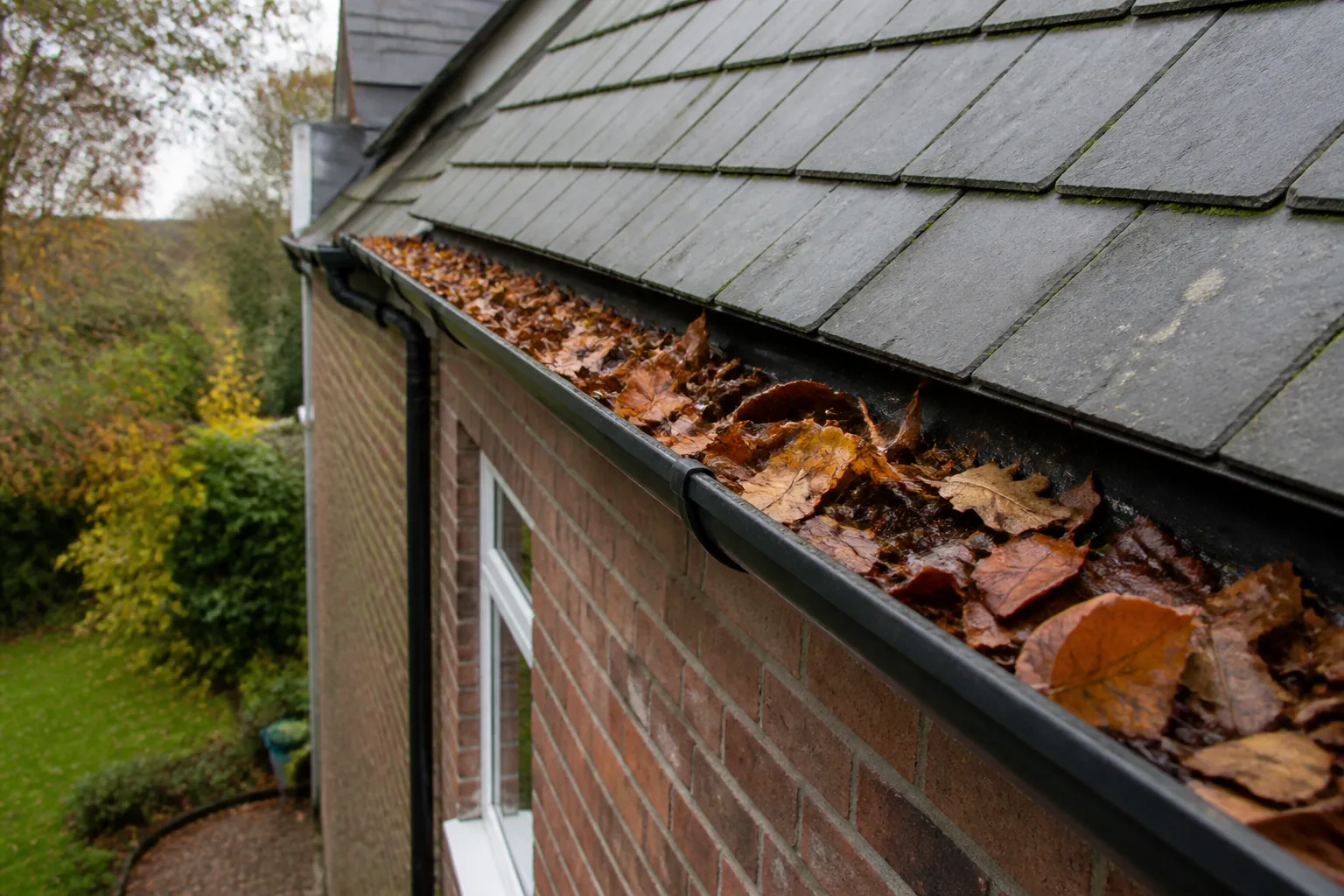
Wet leaves can settle into layers and slow water moving towards an outlet.
Rainwater routes · access · clear scope
Where water appears matters, but so does when it starts and whether it continues after rainfall. Coulsdon gutter cleaning removes routine leaves, loose moss, silt and small debris from the accessible channels selected. A reachable outlet mouth may be included by agreement. Joint repairs, deeper downpipe restrictions, underground drainage and specialist access sit outside ordinary clearance and need separate assessment.

Seasonal context
Heavy leaf fall is only one source of accumulation. Wind-blown grit, seeds and loose moss may arrive gradually, and sheltered sections can retain damp material longer. Base future attention on repeated symptoms and what previous clearing finds at the individual property.
Nearby trees, roof moss, gutter shape and exposure can all affect how quickly material accumulates. A visible symptom is more useful than applying one fixed timetable to every address.
Common causes
Leaves can bunch at an outlet, but fine sediment and moss fragments may also slow water across a wider length. Clearance deals with loose deposits in the accessible run requested. It does not confirm what lies within enclosed pipework or drainage below.

Wet leaves can settle into layers and slow water moving towards an outlet.
Loose roof moss can collect in the channel and hold other material in place.
Small twigs can bridge narrow points and trap lighter debris behind them.
Loose surface material may wash down from the roof during wet weather.
Older material can become dense and reduce the channel available for runoff.
Fine deposits can gather beneath larger debris and close to an outlet.
Local property context
At a Coulsdon address, water may cross the outer rim during rain, drip from a connection afterwards or emerge close to the point where a pipe meets the channel. Those observations do not prove a cause, but they help locate the part needing attention. Note the elevation, roof level and timing, along with any leaves, growth or sediment visible without approaching the roof. If the property has more than one building or roof section, say which one shows the symptom rather than describing all gutters as affected.
A quick overflow after rain begins can be consistent with restricted capacity, while a persistent drip beneath a seam may raise a component question. Either sign can have other explanations, so the sensible first boundary is the agreed accessible channel rather than a guaranteed diagnosis. Routine clearing removes loose accumulation and can include the exposed outlet opening when specified. If poor discharge remains after that area is clear, attention should move downstream or towards the gutter's physical condition instead of assuming that more of the same cleaning will solve it.
The front approach cannot establish conditions at the side or rear. Gates, confined passages, lower roofs, conservatory-style structures, slopes or shared ground may change the options by elevation. Actual suitability is confirmed for each requested run before inclusion.
| Property situation | Access or gutter consideration |
|---|---|
| Home with several outlet positions | Match the overflow to its nearest channel and pipe without assuming every outlet has the same condition. |
| House with a rear lower roof | The lower run may show a different symptom and may affect access to the eaves behind it. |
| Property on changing ground levels | The apparent height and practical approach can vary along one continuous elevation. |
| Building with communal rainwater goods | The responsible party, permitted access and exact shared section need to be established. |
A clear service sequence
Structured service guide
| Rainwater part | Routine action when agreed | Outside ordinary clearance |
|---|---|---|
| Named accessible gutter run | Remove leaves, silt and loose moss | Unlisted or inaccessible roof edges |
| Exposed outlet opening | Lift reachable debris when requested | Internal downpipe bends |
| Gutter joint or support | Clear ordinary matter around it | Repair or realignment |
| Drain beneath the pipe | No channel-cleaning action | Underground investigation |
Structured service guide
| Symptom | What clearing can address | Possible separate concern |
|---|---|---|
| Debris visible above the rim | Remove accessible loose build-up | None if normal discharge returns |
| Drip below a seam | Reduce any nearby accumulation | Failed seal or fitting |
| Clear channel retaining water | Rule out routine deposits | Fall, outlet or support issue |
| Outlet mouth clear but water rises | Keep the opening unobstructed | Restriction farther downstream |
Structured service guide
| Quotation input | Effect on assessment |
|---|---|
| Total length selected | Establishes the extent to clear |
| Different roof levels | Creates distinct access considerations |
| Routes to front, side and rear | May change which sections are suitable |
| Quantity and type of routine deposits | Shapes the work needed in each run |
Structured service guide
| If you notice | Useful distinction |
|---|---|
| Water over the outer edge during rain | Channel capacity may need attention |
| A drip continuing beneath a clear joint | A component may need repair |
| Little flow from the pipe after its mouth is cleared | The restriction may be concealed |
| Different behaviour on separate roof levels | Scope each run on its own condition |
Quick answers
Notice where water first appears, whether it crosses the rim or escapes below a joint, and how long it continues. Also identify the building, elevation and roof level involved.
It can be consistent with reduced capacity, but it does not identify the material or rule out alignment, outlet and pipe problems. The affected channel and downstream route need sensible separation.
Yes, provided the section is clearly described, accessible and agreed. Limiting the work to one run does not imply that the remaining elevations, separate roofs or connected drainage have been checked.
They can be when reachable and expressly included with the selected run. This covers loose material at the exposed opening, not bends or obstructions farther down the enclosed downpipe.
A split fitting, separated joint, displaced bracket or clear channel that still holds water can point beyond debris removal. Cleaning may still be useful nearby, but cannot correct the physical defect.
Timing helps distinguish water crossing a full edge during rain from moisture continuing beneath a joint afterwards. It is useful context for scoping, although inspection is still needed to determine the cause.
Coulsdon service area
Nearby gutter-cleaning pages
Before booking
Name the affected building, elevation and roof level, then explain where water appears and whether visible material is present. Mention other runs only if they are wanted. This gives the enquiry a clear boundary while leaving the cause open for assessment.
It helps identify the channel to examine, but debris may sit nearer an outlet or around a bend away from the spill point. Poor fall, a fault or a concealed restriction can create similar behaviour, so location alone is not conclusive.
It removes accessible leaves, loose moss, silt, grit, seeds and similar small deposits from the channels agreed. Fixed roof growth, unusual materials, damaged parts, hidden pipes and drains below ground do not become included through that description.
Retained water may be escaping slowly through a seam or sitting where the channel does not drain freely. Debris is one possible influence, but a fitting or alignment issue may remain after clearing and would need separate attention.
Not as part of ordinary channel clearance. Water at ground level may involve the pipe connection, drainage below or another source. Describe it separately so it is not mistaken for work at the reachable gutter and outlet opening.
They can show the general layout and visible obstacles, but perspective may hide route widths, ground changes and boundaries. The actual address determines suitability, so images assist the discussion without guaranteeing that the rear section can be included.
The next concern may lie inside the downpipe, within underground drainage or in the channel's arrangement, although assessment is required. Repeating routine debris removal cannot resolve a hidden obstruction or physical defect that sits outside its scope.
No. Loose fragments resting inside an agreed gutter can be removed, while moss attached to tiles or another roof surface is beyond routine channel cleaning. Keep the requested rainwater goods distinct from wider roof work.
The selected channel lengths, number of levels, access conditions and amount of build-up all matter. Separate structures and short lower runs count when requested. Repairs, concealed pipe clearing and underground drainage need their own assessment and price.
There is no dependable interval for every address. Consider earlier build-up, nearby planting, roof condition, shelter and any recurring overflow. The most useful schedule responds to the individual runs that repeatedly collect material rather than an area-wide rule.
Discuss the actual roofline
Price follows the amount of selected channel, its levels, the way each elevation can be approached and the volume of loose material. A difficult section may be excluded or assessed differently. Repairs and investigation beyond the visible outlet are separate tasks.
